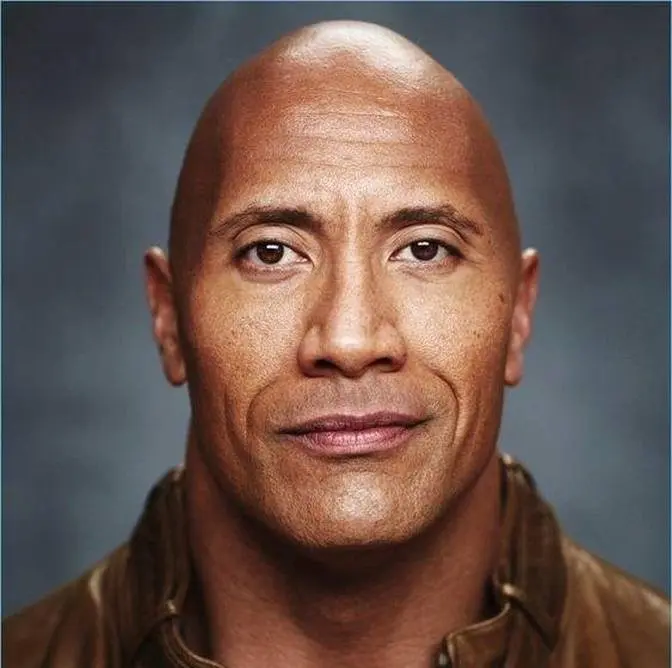
5 Dwayne Johnson’s Mistakes That Killed Black Adam. This is the full, unflinching autopsy of Dwayne "The Rock" Johnson's Black Adam disaster. We reveal how Johnson's own miscalculations—not studio politics—caused the historic DC film flop. Discover the five fatal mistakes: from vetoing the crucial Shazam cameo to isolating his character, greenlighting a broken script, and declaring war on DC's new leadership. This is the inside story of the ego, power plays, and brand mismanagement that led to a $100 million loss and Johnson's expulsion from the DC Universe.
Dwayne Johnson's attempt to center the DC Universe around *Black Adam* ended in failure due to his prioritization of personal branding over narrative quality. By undermining studio leadership and isolating his character from the broader DC mythology, Johnson transformed a high-profile project into a cautionary tale of ego and professional miscalculation.
I think Black Adam was one of those movies that got caught in that web of new leadership.
Dwayne The Rock Johnson spent over a decade fighting to bring Black Adam to life,
positioning it as a game-changer that would alter the hierarchy of power in the DC universe.
He poured his immense star power and reputation into what was supposed to be
his superhero crown jewel. But the film's historic box office failure and its abrupt cancellation
The shocking truth is that Johnson engineered his own downfall through a series of catastrophic
miscalculations, from vetoing a crucial Shazam cameo to isolate his character,
to greenlighting a broken script he thought his brand could fix, and finally, by declaring war
on DC's new leadership in a failed power play that made him impossible to work with.
This is how Dwayne Johnson killed Black Adam.
1. The Fatal Miscalculation Behind The Mask
Before a single frame of Black Adam ever reached theaters, the foundation was already cracked.
Not because the script was weak, but because Dwayne Johnson approached the role as a brand,
not a character. This was the original sin. For decades in the comics, Black Adam was never meant
to be a clean-cut savior. He was a tyrant, a fallen champion, a weapon forged in rage and tragedy.
His mythology was tied to Shazam, his eternal rival. Their destinies were locked together
long before Hollywood tried to turn either one into franchise material.
But Johnson saw something else. To him, Black Adam wasn't a character to inhabit. He was a platform,
a launchpad, the cornerstone of a future cinematic empire he believed he could command.
And that's where everything began to unravel. Instead of grounding Black Adam in his own
mythology, Johnson pointed every spotlight toward a future he hadn't earned. He teased it in
interviews. He teased it on social media. He teased it so often that by the time the film
was released, the public believed the movie was the fight. But it wasn't. There was no narrative
foundation for that showdown. No emotional stakes. No rivalry. No shared history. It was a marketing
fantasy, not a story. Inside DC's halls, this caused friction. Black Adam's entire story was
being rewritten to orbit a character who wasn't even supposed to be in the film, a character the
studio had already put on ice. By skipping the essential step, making the world care about Black
Adam himself, Johnson created a hero with no soul. General audiences were confused. Was he a villain?
A savior? A god? A mercenary? A rage-fueled antihero? He was everything and nothing at once,
a figure sculpted not by storytelling, but by branding. And core DC fans, the people whose
passion could have saved this film, felt betrayed. They wanted the Black Adam who crushed empires,
who wrestled with morality, who challenged gods. Instead, they got a sanitized, franchise-ready
titan designed to protect the Rock's image more than honor the source material. By prioritizing
where the character could go over who he actually was, Johnson made a disastrous mistake. He built
a future on a character the audience never connected to in the first place. This wasn't a
film. It was a pitch deck for a cinematic universe that did not yet exist. And the cost of that
ambition would haunt every decision that followed. 2. The Creative Veto That Broke the Universe
If mistake one cracked the foundation, mistake two shattered the entire cinematic blueprint.
Because behind the polished trailers, the red carpet smiles, and the relentless marketing push,
there was a creative decision so short-sighted, so self-serving, that it crippled the film before
it even had a chance to breathe. It wasn't made by a writer, not by a director, not by DC's
executives. It was made by Dwayne Johnson himself. According to multiple insiders, the film originally
included a post-credits scene linking Black Adam directly to Shazam! Fury of the Gods. A natural
connection. A necessary connection. The connection the comics had established for nearly 80 years.
But Johnson shut it down, not because it didn't make sense, not because fans wouldn't understand
it, but because, according to those present, Johnson did not want Black Adam associated with
Shazam! at all. He was building his empire, and Shazam! wasn't part of the throne room,
so he pulled the plug. With one decision, he severed the artery that fed Black Adam's entire
mythos. This veto didn't just rewrite a scene, it rewrote the future. Without that connection,
Black Adam floated freely with no tether to the DC Universe. No rivalry, no shared lore,
no narrative foundation to stand on, no emotional stakes that tied him to any of the heroes fans
already loved. Instead of being the spark that expanded the DC Universe, Black Adam became a
lone island, isolated by design. Inside DC headquarters, this sent a clear message,
Dwayne Johnson was not joining their universe, he wanted the universe built around him.
Audiences felt it immediately. Instead of a character stepping into an established world,
Black Adam behaved like a guest who refused to follow the house rules. The Justice Society
appeared out of nowhere, the lore felt disconnected, the story felt like a detour,
not a continuation, of anything fans already cared about. Black Adam wasn't entering the DC
Universe, he was hijacking it. DC was fragile already, internal turmoil, leadership shakeups,
competing visions. Johnson's veto didn't just add pressure, it snapped the last thread of cohesion.
By rejecting the Shazam! connection, he effectively forced the studio to treat Black Adam as a
separate franchise, an orphan storyline demanding its own ecosystem, its own villains, its own arc,
with no guarantee of success. It was a gamble that required the film to perform flawlessly,
it did not. In the end, this was the fatal truth, Black Adam was supposed to join a universe,
but Johnson tried to replace it. A franchise cannot thrive when its cornerstone refuses to
share the foundation, and the decision to isolate Black Adam wasn't just a creative misstep,
it was the moment the entire DC experiment began to implode.
3. Greenlighting a script that never stood a chance
While the world was distracted by Dwayne Johnson's grand declarations,
the Superman clash, the hierarchy of power, the dawn of a new DC era, something far more dangerous
was happening behind the curtain. Something no amount of charisma, box office reputation,
or marketing muscle could disguise. The script, the very foundation of Black Adam,
was broken before a single frame was shot. And Johnson approved it anyway.
From the beginning, Johnson promised a darker, more morally complex character, a brutal anti-hero,
a force of mythology, a DC villain forged in betrayal, rage, and ancient tragedy. But what
audiences saw on opening night was none of that. Instead, they were given a paint-by-numbers plot,
endless slow-motion set pieces, a villain so forgettable audiences struggled to name him,
dialogue that played more like a parody than a story, and emotional arcs that evaporated
the moment the credits rolled. The film wasn't just flawed, it felt manufactured,
a corporate artifact wearing the costume of a superhero epic. The complexity Johnson promised
never materialized, the moral ambiguity never surfaced, the character depth never arrived.
Black Adam didn't feel complicated, he felt unfinished. Insiders later revealed that the
writing process was chaotic. Dress were revised to accommodate Johnson's creative demands,
scenes were added, not because the story needed them, but because they made Black Adam appear
more unstoppable. And as a producer with enormous pull, Johnson had the power to demand better.
He didn't. He looked at a script filled with cliches, structural weaknesses, and hollow
character motivations, and he said yes. Because in his mind, the brand would carry the film,
his star power would elevate the cracks, his presence alone would be the glue that held
the narrative together. But even the biggest action star in the world can't out-muscle bad
writing. When critics weighed in, the reaction was brutal. Lifeless. Emotionally vacant.
A CGI firework show with no soul. A superhero film without a heartbeat.
Audiences echoed the sentiment. They didn't hate Black Adam, they simply felt nothing for him.
Without a meaningful arc, without a rich origin, without emotional stakes, Black Adam became
exactly what Johnson swore he wouldn't be. Just another cape in an overcrowded genre.
The tragic irony is this. Johnson spent years engineering the future of the character,
the sequels, the crossovers, the Superman rivalry, yet never ensured the first chapter
could stand on its own. He built a skyscraper on a foundation of wet cement. And when the
box office receipts came in, when reviews landed, when DC leadership changed, that foundation
collapsed. Black Adam wasn't defeated by critics, or audiences, or DC politics. He was defeated by
his own script. A script that Dwayne Johnson believed he was too big to fail. And Hollywood
never forgets when a star bets on invincibility and loses.
4. Declaring war on the new regime
If Black Adam's box office stumble placed Dwayne Johnson in dangerous territory,
what he did next pushed him off the cliff entirely. Because in Hollywood, a flop can be forgiven,
but a political miscalculation, one that challenges the wrong people at the wrong moment, is fatal.
In late 2022, as Black Adam struggled to recoup its staggering budget,
another seismic shift shook the studio. DC Studios, a brand already bruised by years of
misfires, was placed under the control of two new architects. James Gunn, the creative mind
behind Guardians of the Galaxy. Peter Safran, one of DC's most experienced producers.
Their mission? Destroy the old, chaotic version of the DC universe and rebuild it from the ground
up. For most actors, this transition meant one thing. Stay quiet. Stay humble. Wait to see what
new bosses want. Dwayne Johnson did the opposite. A move that looked less like collaboration and
more like rebellion. Instead of aligning himself with the new DC hierarchy, Johnson made a stunning
public end-run around them. Insiders confirmed that Johnson went directly to Warner Brothers
Discovery CEO David Zaslav, the one executive above Gunn and Safran, to secure the now-infamous
Henry Cavill cameo. A cameo Gunn had never approved. A cameo that did not fit the new DC
narrative. A cameo that contradicted the reboot plans in motion. To Johnson, it was a power move.
A way to force DC's hand into building a universe centered on his Black Adam versus his Superman.
To Gunn and Safran, it was a declaration of war. There is one unwritten rule in Hollywood. You
never publicly undermine the people who control your future. And Gunn, more than anyone, understands
how franchises collapse when actors attempt hostile takeovers. He lived through it at Marvel.
He witnessed it at DC. 5. The Refusal to Accept Blame
If the downfall of Black Adam had one defining moment, one final misstep that sealed Dwayne
Johnson's fate, it wasn't the flop. It wasn't the politics. It wasn't even the creative overreach.
It was the silence. Not the kind that shows humility. Not the kind that signals reflection.
But the kind that reveals a man still clinging to the myth of his own invincibility.
In the days following the film's implosion, after sequel plans evaporated and DC's new
leadership quietly removed Black Adam from their future slate, Hollywood waited for Johnson's
reckoning. Would he address the weak story? The fractured universe? The behind-the-scenes power
plays? The financial loss that insiders estimated at nearly $100 million? He didn't. Instead,
Johnson framed the demise of his DC ambitions as nothing more than a scheduling issue,
a change in Chapter One of the new DC universe. A restructuring problem. A leadership quirk.
A timing inconvenience. Black Adam was one of those movies that got caught
in that web of new leadership. And that will always be one of the biggest mysteries,
I think, not only for me. He avoided meaningful reflection, sidestepped criticism, and continued
to insist that Black Adam was a profitable success, a claim DC leaders, analysts, and financial
reports disputed. To the industry, it didn't look like optimism. It looked like denial.
For years, Johnson's brand had been built on certainty. The hardest worker in the room.
The man with a plan. The star who could bend franchises to his will. But Black Adam revealed
something Johnson had never confronted. Star power has limits. Box office numbers do not lie.
No one is bigger than the universe they enter. By refusing to accept blame, Johnson unintentionally
highlighted the very flaws that had sunk the project. A movie built as a brand launch,
not a character story. A universe fractured by personal ambition. A script approved for
spectacle, not substance. A power play that alienated the new studio heads.
Instead of signaling growth, he doubled down on the myth that his decisions were never the problem.
That the hierarchy of power had changed. Everyone simply failed to notice.
But the industry noticed something else entirely. A star who couldn't read the room,
didn't understand the politics, and refused to learn from the failure.
The only hierarchy that changed was his own.
In the end, Johnson didn't lose Black Adam because the film failed.
He lost it because the studio saw no future in an actor unwilling to evolve.
James Gunn and Peter Safran didn't just remove him from the franchise.
They removed the idea of him, the narrative of him, from the next decade of DC storytelling.
Because the truth was simple. Black Adam wasn't cut from the new DC universe.
Dwayne Johnson was. Not because he made a bad movie,
but because he made it impossible for the studio to build anything around him.
The tragedy of Black Adam is not that it failed. It's that the failure was avoidable.
Had Johnson embraced collaboration, had he prioritized character over brand,
had he accepted responsibility rather than reframed it,
the hierarchy of power could have shifted. But not the way he imagined.
Instead, the only hierarchy that changed was Johnson's standing in Hollywood.
A descent from franchise architect to franchise cautionary tale.
Not because he wasn't powerful, but because, in the end,
he believed he was powerful enough to ignore the storm he created.
Johnson didn't just challenge their authority, he humiliated them.
Imagine this. Before Gunn could announce his vision, before Safran could approve a single
slate, before the new regime could plant a flag, Dwayne Johnson had already planted one for himself.
He had. Reintroduced Henry Cavill without approval.
Claimed the hierarchy of power had changed. Promised sequels DC had no intention of
greenlighting. Used press tours to frame himself as the future of the franchise.
It was a bold political gamble, and a catastrophic one. The fallout was immediate.
The new DC leadership wasted no time. Within weeks, Henry Cavill was removed again.
Black Adam 2 was quietly canceled. Johnson was excluded from early DCU planning.
All ties to his storyline were dissolved, and the message was unmistakable.
Hollywood insiders later described it as a hostile veto from the inside.
A studio pushing back against a star who had flown too close to the sun.
What made this mistake truly devastating wasn't the business loss, it was what it revealed.
Johnson wasn't seen as a team player anymore, he was seen as a destination actor.
Someone who enters franchises and bends them into shapes that serve him,
even at the expense of the story. The moment he challenged Gunn and Saffron's authority,
the curtain dropped. The People's Champion wasn't fighting for the DC universe,
he was fighting for dominance. And in Hollywood,
the moment a star becomes a political threat, the system closes its gates.
Because the one thing more fragile than a franchise is the ego of the people hired to rebuild it.
Dwayne Johnson didn't just lose a movie, he lost the studio's trust.
And trust is the one currency even seven bucks can't buy.