
What Actually Fills the Space Between Us and Alpha Centauri? | Space Documentary
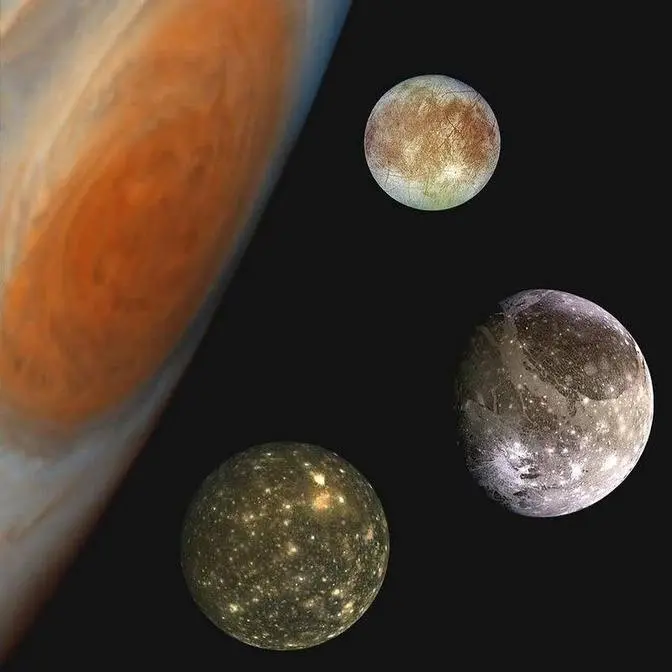
Alpha Centauri is our closest neighboring star system, yet approximately 4.37 light-years separate it from the Sun. What actually exists inside this enormous stretch of apparently empty space?
Our journey begins within the heliosphere—the vast magnetic bubble created by the solar wind. After crossing the heliopause, we enter interstellar space, where the Voyager probes are currently measuring thin plasma, magnetic fields and cosmic rays.
Farther away may lie the Oort Cloud, a vast and still-unobserved reservoir of icy objects. NASA estimates that it could begin between 2,000 and 5,000 astronomical units from the Sun and extend as far as 100,000 AU—potentially reaching a significant fraction of the distance to the next star. NASA
Beyond it lies the extremely thin interstellar medium: scattered hydrogen, helium, microscopic dust and high-energy particles. The Sun itself is currently traveling through a tenuous region called the Local Interstellar Cloud.
In this space documentary, we cross the boundary of the Solar System and travel through the darkness toward Proxima Centauri and the binary stars Alpha Centauri A and B. We will discover why interstellar space is not truly empty—and why crossing it remains one of humanity’s greatest technological challenges.
#AlphaCentauri #InterstellarSpace #Voyager #Astronomy #SpaceScience #SpaceDocumentary
Video Summary
AI GeneratedThis text examines the scientific and engineering complexities of a hypothetical journey to Alpha Centauri. It details the transition from the solar system's heliosphere into the interstellar medium (ISM), analyzing the physical hazards of relativistic travel and the technical requirements for autonomous, gram-scale probes to navigate and measure the void.