
Unlisted
Walz-Pardoned Child Rapist Deported; FED’s Changing Course; MN Learning Center Owner Pleads Guilty
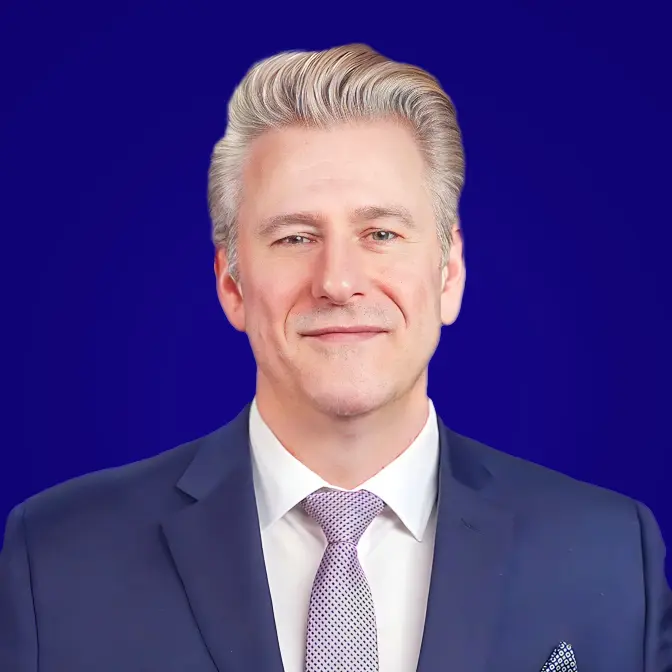
📍Walz-Pardoned Child Rapist Deported
📍#Minnesota (MN) Learning Center #Daycare Owner Pleads Guilty
📍#Trump Fires 2 #Election Assistance Commission Members
📍Being Sanctioned For 60 Years, Why Hasn't #Cuba Changed Yet?
AI GeneratedMay contain errors
Video Summary
AI GeneratedThis news summary covers the deportation of a convicted sex offender, fraud pleas in Minnesota's \"Feeding Our Future\" scheme, U.S.-Iran diplomatic shifts, the restructuring of the Election Assistance Commission, Federal Reserve policy reforms, and an in-depth analysis of Cuba's power crisis and the history of international sanctions.
Hello all you freedom loving people. Marco Rubio announced that Thu Lu Vong was removed from the
United States. President Trump fired two election commissioners after the Supreme Court granted the
President broader authority to remove members of independent federal agencies and Fahim Mahmoud
pled guilty to fraud charges regarding Future Leaders Early Learning Center. Okay, let's get
into it. Today, Secretary of State Marco Rubio announced that Thu Lu Vong was removed from the
United States. Vong was born in a refugee camp in 1983 and he came to the United States as a child
with his family as part of the Hmong refugee community from Laos via Thailand. Then he was
convicted in 2006 of first-degree criminal sexual conduct involving a 10-year-old girl. So Rubio
stepped in and terminated Vong's legal status so that a pardon that was granted to him in Minnesota
would not prevent the Department of Homeland Security from deporting him. Just weeks earlier,
Minnesota Governor Tim Walz pardoned Vong shortly before he was scheduled to be deported.
In a video on X, Rubio explained that Vong admitted to sexually abusing a 10-year-old
girl in Minnesota. He tried to pay the victim to stay silent and he later described the abuse
as a minor thing. So now, after his legal status was terminated, Vong was removed from the United
States. So how did this case get here? Back in 2006, Thu Lu Vong was convicted of first-degree
criminal sexual conduct according to the case he repeatedly raped a 10-year-old girl between 2002
and 2004. Authorities said that after he was arrested, Vong told investigators that in his
culture it was common to marry and have sex with girls as young as 12. After that conviction,
immigration authorities determined that he was removable and an immigration judge issued a final
order of deportation. But years later, while facing deportation, Vong applied for clemency
in Minnesota. His request was first reviewed by the nine-member Minnesota Clemency Review Commission.
Then the commission recommended that he receive a pardon. In a letter, a commission member told Vong
that receiving a pardon reflected the work that he had done since his conviction.
Then on June 10th, Minnesota Board of Pardons approved the recommendation. The board is made
up of Governor Tim Walz, Attorney General Keith Ellison and Chief Justice Natalie Hudson. At the
time, the Department of Homeland Security said that it was concerned that the pardon could protect
Vong from deportation. DHS Acting Assistant Secretary Lauren Biss said that Governor Walz
pardoned an illegal immigrant who was convicted of sexually assaulting a child. She argued that
Minnesota sanctuary officials were protecting criminal and illegal immigrants, but Governor
Walz defended the decision. Walz said that Vong had become a critical member of the community
since leaving prison. Walz also referred to Vong as a taxpaying U.S. citizen during the pardon hearing.
Walz said that he did not believe Minnesota would be safer if Vong was deported to a country
that he had not lived in since he was a child. He also said that Vong was supporting his family,
paying taxes, creating jobs and living without new criminal activity. But then Rubio stepped in,
terminated Vong's legal status and cleared the way for DHS to remove him from the United States
and he was removed. Meanwhile, there is another major development regarding Minnesota and the
Feeding Our Future fraud scheme. Yesterday, Fahima Mahmood pled guilty to fraud charges. Mahmood
pled guilty to one count of wire fraud and one count of conspiracy to defraud the United States.
She ran Future Leaders Early Learning Center, which she operated since 2015. Some viewers may
recognize the Learning Center. It was one of the daycares that was featured in independent journalist
Nick Shirley's investigation in Minnesota. Prosecutors said that Mahmood received more than
$850,000 through the Feeding Our Future meal program and she used most of that money to buy
real estate. Last year, Mahmood's daycare received $3.7 million through the Child Care Assistance
program. That was more than any other daycare in Minnesota. Prosecutors also said that she filed
separate claims for about $4.6 million through the same program. They said that this part of the case
was not about fake attendance numbers. Instead, they said that Mahmood did not collect the small
payments that some families were required to make while the government paid the rest of the daycare
costs. Mahmood admitted that she did not collect those required payments. So, because those program
rules were not followed, the entire $4.6 million connected to those claims should be repaid.
Currently, no date has been set for her sentencing. Yesterday also brought another guilty plea.
Jillian Mertens pled guilty to daycare fraud involving $426,000. She will also be sentenced
at a later date. After two days of military action and diplomatic signals, the situation
between the United States and Iran has already changed quite quickly. Today, President Trump
announced that the Iranian government has asked the United States to continue negotiations and
he agreed to keep talking. But he also said that Washington had made it very clear to the Iranian
government that the ceasefire has ended. New diplomatic efforts are underway and according
to the Iranian state media, a Qatari delegation traveled to Iran today to hold talks with their
officials. But they said that Foreign Minister Arashi was in another province due to the funeral
of slain Supreme Leader Khamenei. So, the Qatari delegation will likely travel there as well.
Meanwhile, Khamenei was buried yesterday after 131 days. Fars News Agency, which is affiliated
with the Islamic Revolutionary Guard Corps, the IRGC, claimed that more than 40 million people
attended the funeral and they called it the largest funeral in world history. But Iran International,
which is a London-based media outlet, estimated that the crowd was only around 140,000 people.
Iran International made this estimation based on aerial and satellite images. The final funeral
prayer was held by his eldest son Mostafa. Reports also said that Mostafa, the current
leader of the Iranian government, did not attend any part of the funeral or burial ceremonies.
Yesterday, President Trump removed the remaining three commissioners from the Election Assistance
Commission. The Election Assistance Commission is an agency that was established by Congress
under the Help America Vote Act of 2002 and it is responsible for assisting election officials
nationwide in carrying out their duties. The committee has a total of four members who are
nominated by the President and who are subject to confirmation by the U.S. Senate. But the committee
must be comprised of two Democrats and two Republicans. One of the committee's four members
stepped down in April of this year and the remaining three members also left the committee
yesterday in different ways. One Republican member resigned while the other two Democratic members
left. This was after they received termination notices via email from the White House Presidential
Personnel Office and the White House confirmed the personnel change. They cited a recent Supreme
Court ruling that granted the President broader authority to remove members of independent federal
agencies. A White House official said in a statement, the President and head of the Executive
Branch reserves the right to remove individuals that may not be totally aligned with the important
task of securing America's elections and ensuring every legal vote is counted. Some Democrats
criticized the move. Chuck Schumer said that President Trump is gutting the independent
agency that certifies voting systems and helps election officials run secure elections. But
Republicans said that President Trump was right to take action and to change the EAC.
The Fed announced yesterday that it is establishing five independent working groups
to examine areas that are central to the broad conduct of monetary policy. These five newly
established working groups will be responsible for examining monetary policy communications,
balance sheet policy, economic data, productivity and jobs in the AI era and inflation frameworks.
They will be co-led by external experts from academia, the private sector and former
central bank officials, with each working group headed by three co-leaders. Each working group
will operate independently with administrative and research support from Federal Reserve staff
and they will submit their findings to the Federal Open Market Committee.
And the relevant reports are expected to be completed by the end of this year. Federal
Reserve Chairman Kevin Warr stated that the Federal Reserve's dual mandate of maintaining
price stability and promoting employment remains unchanged. However, profound structural changes in
the U.S. economy in recent years make it necessary to reassess the appropriateness of its decision
making tools, its analytical methods and its policy framework for the current environment.
He noted that he hopes to ensure the Federal Reserve's analytical tools and policy framework
can adapt to changes in the current economic environment by incorporating diverse perspectives
from external experts. The communications group will explore how to more effectively communicate
policy discussions and decisions during periods of high market uncertainty. The balance sheet
policy group will assess the costs, benefits and institutional implications of the current
balance sheet framework. The data group will focus on improving the quality and timeliness
of the economic data that inform the Federal Reserve's policy decisions. In this reform,
research related to AI has attracted significant attention. And the productivity and jobs group
aims to assess the impact of next-generation general-purpose technologies, including AI,
on the economy and employment. And the inflation working group is tasked with reassessing the
Federal Reserve's understanding of the drivers of inflation and its policy responses.
Cuba experienced another nationwide power outage on July 6th. This was the third such outage this
year. But Cuban authorities said that most areas had been reconnected to the national power grid
by that evening. However, many areas remained without power due to fuel shortages, leaving
them in complete darkness after dark. The following day at the United Nations,
representatives from many countries called for an end to the U.S. sanctions against Cuba. However,
U.S. officials say that the power outages, fuel shortages and food shortages faced by the Cuban
people are primarily due to the Cuban communist regime's years of incompetence, plunder and
corruption. Rubio, who is of Cuban descent, said that Cubans have suffered from power outages for
many years and the real reason they lack electricity, fuel and food is that the ruling
class controlling the country has plundered the nation's wealth without using those funds to help
the people. It is true that the United States has been imposing sanctions on Cuba for many years.
Cuba is the country that has been under sanctions for the longest period of time since World War
II. In 1958, the United States first banned U.S. companies and individuals from selling weapons to
Cuba. Castro's revolution overthrew the pro-American Batista government. Cuba embarked on the socialist
path and became very close with the Soviet Union. On October 19, 1960, Fidel Castro's government in
nationalized U.S. oil refineries in the country. This prompted the United States to reimpose a
trade embargo on Cuba. However, this did not include food and medicine. In 1962, the Cuban
Missile Crisis broke out. The U.S. and the Soviet Union confronted each other in Cuba, nearly
triggering World War III. Therefore, the intensity of these sanctions increased by several orders of
magnitude. In 1963, Kennedy issued a Cuban Asset Control Act. This is a comprehensive ban on all
Cuban imports and strict restrictions on exports. It thus initiated a complete trade blockade
against Cuba. After that, the sanctions were further escalated. Cuban assets in the United
States were also frozen, and the money that Cuban companies had earned and deposited in the United
States was frozen. So, how effective has this tough sanctions policy been? Not very. After 1963,
Cuba's economy and foreign trade continued to grow. So, why don't sanctions work on Cuba?
First, let's look at an example of successful sanctions. We will then analyze the conditions
necessary for sanctions to succeed. The purpose of economic sanctions is to cripple a country's
economy. An economic crisis will then lead to a change in government or institutional reform.
But historically, there have been few instances in which sanctions have truly achieved their
objectives. A typical successful one is South Africa. South Africa was condemned by countries
around the world for implementing the apartheid system. In the 1980s, almost all countries in
the world unified in imposing economic sanctions on South Africa. South Africa was heavily reliant
on its gold and mineral exports. Therefore, the country was severely affected by the cutoff of
trade and exports. This led to sharp economic downturn and the rapid spread of internal
resistance movements. It successfully forced the South African government to release Nelson Mandela
in 1990, gradually abolishing apartheid. Once the goal was achieved, the West gradually lifted its
sanctions against South Africa. The difference between the cases of South Africa and Cuba is that
the sanctions against South Africa were global in scope. Virtually every country imposed sanctions
on it. The impact of these sanctions was therefore very significant. However, U.S. sanctions against
Cuba have not been supported by other countries. In the 1960s, Cuba's main allies were the Soviet
Union and the socialist countries of Eastern Europe. The Soviet Union and several socialist
countries in Eastern Europe counted for three-quarters of Cuba's foreign trade. Not only did
they purchase Cuban exports at prices above market rates, but they also provided Cuba with substantial
subsidies in the forms of goods and energy. At the time, the Soviet Union was purchasing sugar
from Cuba at a price six times higher than the market rate. This transaction could also be viewed
as a gift of money. This substantial strategic support naturally greatly weakened the impact of
U.S. sanctions. Then, on December 25, 1991, Gorbachev announced the dissolution of the Soviet Union
and Cuba lost its main ally. The situation then changed overnight. In the early 1990s,
Cuba experienced the worst economic crisis in its history. From 1990 to 1993, its GDP
shrank by about one-third, foreign trade declined by 60 percent, there was a severe shortage of food,
many areas experienced power outages for 8 to 16 hours a day, food supplies were strictly limited
to the point that average adult weight in Cuba dropped by 5 to 10 kilograms. However, despite
such a huge impact, Cuba recovered quickly. This special period lasted less than five years.
So what happened? This was because the Chinese Communist Party, the CCP, replaced the former
Soviet Union as Cuba's new ally. In November 1993, Zhang Zemin, the then leader of the CCP,
visited Cuba. This was the first visit to Cuba by a senior CCP leader. It was also the first visit
to the Caribbean and Latin America. Then, in December 1995, Fidel Castro, the leader of Cuba,
visited China for the first time since the Cuban Revolution of 1959. Cooperation between the two
sides in areas such as trade, credit, and infrastructure began in 1990 and has continued
to expand. Today, China is Cuba's largest trading partner in goods, while Cuba is China's second
largest trading partner in the Caribbean. Furthermore, since the dissolution of the
Soviet Union in 1992, the United Nations General Assembly has adopted an annual resolution
condemning the U.S. embargo against Cuba, declaring it violates the U.N. charter and
international law. Israel is the only country that has consistently voted against this resolution
alongside the United States. In other words, the majority of countries worldwide do not support
U.S. sanctions against Cuba. After the year 2000, Cuba gained a new partner, Venezuela.
On February 2, 1999, Hugo Chavez was sworn in as president of Venezuela. He regarded Fidel Castro
as his mentor and father figure. Castro invited Chavez to visit Cuba during the lowest point of
his life, and he personally met him at the airport. This strong sense of solidarity between
the two naturally led Chavez to commit all of Venezuela's resources to supporting Cuba.
In October of 2000, Chavez and Castro signed an agreement under which Venezuela would supply Cuba
with 53,000 barrels of oil per day in exchange for Cuba's support in the fields of health care,
education, sports, science and technology. And this figure continued to rise. Thereafter,
at its peak, Cuba received nearly 100,000 barrels per day of heavily discounted Venezuelan oil.
Venezuela helped Cuba weather its most difficult period and spurred a resurgence in the Cuban
economy. Cuba's GDP growth rate was 1.4% in 2002 and rose to 12% by 2006. In 2009,
Barack Obama was elected president of the United States. Relations between the United States and
Cuba began to thaw. The two countries even established diplomatic relations in 2015.
In 2016, Obama issued an executive order easing Cold War-era travel restrictions,
allowing commercial flights and cruise ships to operate between the United States and Cuba.
And in 2017, after President Trump took office, the U.S. government quickly reversed its policy
of normalizing relations with Cuba, calling it a one-sided deal. And they reverted U.S. policy
toward Cuba to an economic embargo. The U.S. government has also tightened travel restrictions
on Cuba and announced new limits on remittances to Cuba. During President Joe Biden's term in
office, he decided not to resume the thaw policy toward Cuba, but he did ease some of the
restrictions imposed by the Trump administration, particularly those related to travel, visas,
and remittances. After going through this analysis, I'm sure everyone now understands
why Cuba has managed to survive for more than 60 years under the United States' severe sanctions.
Upon his return to the White House after the NATO summit, President Trump resumed his maximum
pressure policy toward Cuba. And that's a wrap for this episode. Thank you so much for your
support of FrontPage. Please remember to leave a comment below the video. This is really helping
us to be seen all around the world. The more people who watch FrontPage, the more freedom-loving
people the world will have. And please hit the like button and hit the notification bell after
subscribing. And please share this video with your friends and family because everybody deserves to
know the truth.