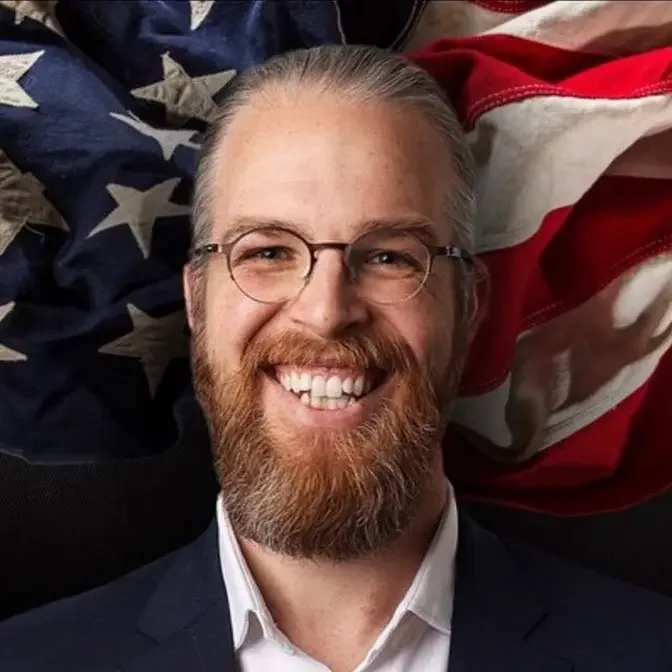
In this episode, I sit down with Collin Plume, the CEO of Noble Gold, to unpack why so many major warning lights are now flashing red: Bank of America says 70 percent of its bear‑market indicators have been triggered, over a trillion dollars just vanished from the markets in a single day, and a massive Blackstone private credit fund suddenly refused to let investors pull more than a sliver of their money out. Collin explains why this kind of locked‑door illiquidity is such a dangerous sign, how the new Fed leadership and a shift in how inflation is measured could force rates higher instead of lower, and why the much-hyped AI and IPO boom may be masking a deeper, dot‑com‑style bubble that could unwind brutally when reality catches up.
To learn more about investing in gold & silver, visit http://goldwithseth.com, or call 877-646-5347
For high quality storable foods and seeds, visit http://heavensharvest.com and use promo code SETH to save 15% on your order.
Kimchi One from Brightcore – Improve your health, improve your life. 25% Off with code: MANINAMERICA at https://mybrightcore.com/maninamerica Or dial (888) 575-6488 for up to 50% OFF and Free Shipping – ONLY when you call!
To learn more about Red Light Therapy, visit http://myredlight.com and use promo code SETH to save.
A reporter asked President Trump this week about inflation.
And here's what he said.
I love the inflation.
I love it.
That's real.
You can look it up.
And recently, the government released new numbers showing that inflation just hit a
three-year high of 4.2 percent.
Energy costs are up 23 percent over the last year.
Your groceries, your gas, your electric bill, all of it going up.
And the President of the United States looked straight into the camera and said,
I love inflation.
And look, I know that some of you are going to say, well, he was talking about oil from
Iran.
That's the context.
Okay, that's fine.
There's always more context.
And I respect that.
But we need to know the full story because here's the thing.
It doesn't matter what he meant because here's what we're living.
You go to the grocery store and you feel it.
You open your electric bill and you feel it.
You look at what a starter home costs right now compared to five years ago and you feel
it.
They might tell us the numbers are fantastic, but you know what your bank account is telling
you.
You know your truth.
That gap right there between what they're saying and what you're experiencing every
single day.
That gap is exactly what today's conversation is about.
So my guest today works inside the financial world every single day.
His name is Colin Plume.
He's the CEO of Noble Gold, a company that I personally trust with my own hard-earned
savings.
Colin's helped thousands of families move their savings out of a system that's clearly
not working for them and into real tangible assets like gold and silver.
Things that you can actually hold in your hands.
He's not a talking head.
He doesn't often do interviews.
He's working hard in the trenches.
And you know that I already covered this topic very closely and I want you to know everything
about it.
But when I sat down with him, he gave me data that I wasn't expecting.
So in this conversation, we get into essential information like what a 4.2% inflation number
actually means for your family's buying power.
Why private credit funds run by some of the biggest names in finance are suddenly not
letting investors get their money out.
How the AI trade might be hiding something much more dangerous underneath.
And what gold and silver look like right now as a real option for protecting what you've
worked for your whole life to build.
And so before we start, please hit the like button.
It helps a lot with the algorithm on whatever platform you're tuning in from.
And it helps get this information to more people.
Also, please subscribe.
Share this with someone who needs to know it.
And let me hear your thoughts in the comments.
Also, just a reminder, every show I do is also done as a podcast.
So if you want to listen instead of watch, just get your favorite podcast app.
And if you use Apple Podcasts and you want to do me a real favor, leave a review on there.
Actually, Apple really prioritizes podcasts that have those reviews.
So if you like the show, leave a review.
It'll help me to reach more people.
All right, let's go ahead and get into it.
Colin, it's good to have you back on, man.
It's been quite some time.
I've actually been interviewing Micah the past couple of shows, which has been really
wonderful.
And it's good to talk to him.
But I've been missing our interaction.
So thanks for being back on with me today.
Yeah.
Thanks for being on.
A lot's happening.
So excited to be here.
Yeah, there is a lot going on.
And I think just starting with just kind of like what I see is probably one of the biggest
things to talk about is that so Bank of America, they just put out this warning.
And they've said that 70% of its bear market indicators have been triggered.
And so here, this is the actual their kind of warning chart.
Now, I'm not going to try to get in and read all this.
But basically, from what I'm gathering, they're in essence saying that we're seeing more of
a bear market right now.
And they're concerned about indicators in the stock market.
And then simultaneously, as of today, and so we're doing this interview on Tuesday,
just today, as of a couple hours ago, that we've lost over a trillion dollars in the
markets.
We have something big happening.
I'm seeing a lot of different reasons as to why there is a helicopter that was shot down
in the Strait of Hormuz, people pulling money out for the SpaceX IPO.
But it just seems like there's a lot of indicators that are concerning about where the markets
are headed.
But I know you're in this world a lot more than I am.
So what are you seeing from your angle?
Yeah, there's two things that I saw that sort of interested me.
One is Blackstone has a private credit fund that people were trying to liquidate more
than they're allowed.
These funds, people, they don't realize that their funds are not liquid.
This fund is a $79 billion private credit fund.
And over 10% wanted to withdraw, and they only allow 5%, which is in the bylaws of that
agreement.
But what it's telling is that it's unusual because most of these types of investors,
there's no reason for them to get the money.
They're not getting the money to live.
They're getting the money because when they put their money into that, interest rates
were low, the speculative returns they thought were high.
And private credit right now, there's a lot of speculation that it's not a place that
you want to be, that a lot of these loans are going to default.
And so people were trying to get out, and they didn't allow it.
So I think that was a wake-up call that, hey, these funds are not liquid.
A lot of these private equity funds are not liquid the way they want, which is concerning
when you can make money at potentially a higher return and have liquidity.
I mean, liquidity is extremely important as an investor.
So that's the first thing.
I do think the other thing is that Kevin Warsh is going to have his first meeting on the
17th.
I've been studying what he's been saying for the last two years.
He worked directly with Stanley Druckenmiller, one of the greatest investors.
They were partners.
He built a net worth to a few hundred million by himself.
And then he's married to an Estee Lauder heir who's worth almost $2 billion.
So he's the wealthiest Fed chair that we've ever had through his own endeavors and through
marriage.
So obviously, he has a different perspective than Pal, who is an attorney.
And he's been talking a lot about changing the CPI and how it's calculated, which I'm
sure you've covered.
But I do think it's important to know that there's been this talk of him lowering rates
and Trump really pushing for rates to be lower.
But if you listen to how he's been talking, changing the CPI and using the value of assets
as an indicator for inflation would be a monumental shift away from where we've done the CPI,
which calculated the cost of goods, electricity, and day to day.
He wants to calculate housing costs in a different way, which obviously housing costs, even though
it's been slow a few years, it's still dramatically higher.
He wants to calculate the stock market and assets.
And if you took the way that he wants to calculate inflation, the numbers I think some people
think would be less, it actually would be higher.
Inflation, his new indicator would be higher.
Therefore, he would not have the ability to lower rates if he stays to his mandate of
the 2% inflation target, which he wouldn't be able to change the target.
That would, by himself, he's one of eight, right?
A lot of people think he could dictate what's happening.
He's one of eight votes.
But he could push this agenda of changing how we determine our inflation, which we've
done.
We've done many times.
So I think that the markets are a little spooked, frankly.
Because that would be, we went from earlier this year, you and I talked to like, we're
going to have one or two rate cuts.
Under his thesis, we would actually have a rate increase.
So I think the markets are just unnerved on what could potentially happen.
And so you had all these people in Blackstone, typically a very secure place to invest if
you're in private equity.
There's a lot of pensions, billionaires, different funds there.
They want to get out in droves.
And a lot of people are just, I think a lot of people are selling right now based on the
idea that maybe the Fed goes in a different direction.
And they raise rates, which would be a real curveball to, I think, what most people have
thought over the last six months.
Everyone thought he was just going to go based on what Trump said and cut rates.
But his talking points have been actually the opposite, if that makes sense.
Oh, it does.
It looks like, I mean, I think that what they tell us about inflation, it's kind of like
they're saying, oh, the dollar is safe and effective.
The dollar is safe and effective.
It's like, I don't trust you, right?
And because you look at this and you look at just the cost of things.
I just interviewed a guy, a farmer earlier today, and he was saying, oh, yeah, when he
bought a, I think it was in the, I forget, maybe early 2000s, maybe 25, 30 years ago,
he bought a brand new pickup truck four by four for $15,000.
The same trucks now are 90,000.
And of course, they have more bells and whistles, but it's like, how can they tell us, oh,
inflation's at 3% or inflation's at 2%, yet everything is more expensive?
A house today that is a million-dollar home, 25 years ago, that house could have been $180,000
or $200,000.
And so if he-
And wages haven't gone up that much, right?
And that's why the housing market has significantly struggled.
I mean, I believe the real estate market will only have increases if rates go down.
I don't think we'll see housing prices go up until rates are down for the foreseeable future.
I think we could be in a lull for many years unless rates go down.
And I do believe, based on what you're just saying, the only way someone afforded that
house was that 3% mortgage.
They legitimately couldn't afford that house.
It's only when they made money and the availability money so low that it didn't make sense.
And then it made the house price or the commercial property price much higher.
The other fear, too, I think is the AI bubble that a lot of people are concerned about, too.
I think people are concerned that there's a bubble, yet there's this speculative opportunity
in SpaceX and these other IPOs that are coming out.
So I think people are probably selling and maybe moving money there to jump on the speculative
bandwagon.
But the overall AI idea, I think people are concerned that maybe it's similar to what
happened in the early 2000s.
Maybe a lot of those things are going to collapse with the data that's coming out over this
year that a lot of the usage and the ideas of AI are not working in the way that we
thought it was.
I've seen it.
I've got a chart to pull up that's showing some similarities between the S&P now versus
the dot-com bubble, which I'll pull that up.
But one thing to mention about the AI is I saw something recently.
And basically, this guy was saying that the current AI model is just a PSYOP.
He was saying it's just to get adoption.
Because what they've done is that they've, you know, so say Claude or ChatGPT, you pay
a monthly subscription, say it's $20 a month or whatever, and you get to use it as you
want to.
But what he was saying is actually that that does not pay for itself.
It only pays for itself if you're paying per credit, right?
Because the cost is actually really high to run all this information, let alone what it
is like if you're paying for the credit and you ask for a long question, it comes back
with a stupid answer.
You're not going to keep paying for it, right?
Because the only reason you keep asking questions is because, oh, it's unlimited, right?
You pay for it.
It's like Netflix, right?
Oh, you can watch.
But if they started charging you instead a per video fee, which is what it used to be,
it just changes the whole dynamic.
And so there's a lot of things like that that I'm seeing a lot of different indicators
from various, I think, well-respected voices in finance and the economics talking about
that this, the entire AI bubble is just a bubble.
Not to mention that a lot of the kind of funding is that you have like a big company like Microsoft
that'll invest in this new AI company.
But then the AI company has to come back and buy all the Microsoft servers or equipment.
And so it's this kind of circulatory system that props up the market and everyone thinks,
oh, wow, look how great the NASDAQ is doing.
Look how great the Dow is doing.
But it just seems like that from every angle I look at it, that it is just, it's this giant
bubble that they're just slapping duct tape on, they're adjusting things, they're doing
whatever they can to keep this illusion going that we live in the world's most booming economy
when the reality, I think, is far scarier than what they want us to think.
Ladies and gentlemen, our world is being poisoned.
Every day we're exposed to more chemicals sprayed into our skies, leaching into our
food and polluting our air and water.
From pesticides and heavy metals to hormone disruptors and the synthetic additives,
these toxins are bombarding our bodies and silently destroying our health.
But there's something you can do to fight back and it starts in your gut.
Kimchi One from Brightcore Nutrition contains over 900 strains of beneficial probiotics
that will help flush toxins, restore gut balance, and support your immune system.
Because when your gut is strong, your body can resist.
You'll feel the difference.
Better digestion, more energy, clearer thinking, stronger immunity,
and even improvements in your skin, hair, and metabolism.
And this isn't just hype.
Studies show that fermented foods like kimchi can reduce the risk of obesity,
improve blood sugar, and support whole body wellness.
Kimchi One is all-natural, non-GMO, dairy-free, gluten-free,
and 100% made in the USA by a company that actually cares about your health.
And today, you can get an exclusive offer just for my viewers.
25% off with your code MANINAMERICA by clicking the link below.
Or call my friends at Brightcore for up to 50% off your order and free shipping.
So give them a call now at 888-575-6488.
And their educated staff will make sure that Kimchi One is right for you.
Again, that's 888-575-6488.
All the links and information are in the description below.
The thing that the indicator for me was that it was a bubble and that it was
probably something we should be concerned about is there's been all these conversations about
how the government's going to own some open AI and that the government's going to get access to it.
Or that the government may need to bail them out.
I mean, when does the government ever get to invest in anything that's profitable?
It's never happened in my lifetime that the government gets to invest in anything that's
profitable. Everything that the government invests into is because they're bailing it out,
whether it's the banks or it's, you name the industries that we've had to bail out
over the last 100 years, everything is just a bailout.
And I think the AI is the same. And what you're talking about is these swaps,
these huge companies just swapping for their books to create more profit,
and then maybe moving that asset away. It's not the asset that's really important.
These companies are really not important. And I look at AI more than anything.
I just think it was a way to gather information and compete with Google, basically. That's the
way I look at it, is that you're putting all this and you forget that they're just going to sell
your information down the road the way Google is. It's just another idea of Google. It's another
search engine to grab your information and to use it. And they've said they're going to use
it in whatever way they want. You have to be careful of the information that you're putting
in there because it will be readily available to companies for sale or lawsuits or anything.
All these things will be available. And so you have to think about those things. And I think that
what's happening right now, and we're coming into the summer, we have a new Fed share coming in,
gold and silver have kind of went into a range. We're in this new range for gold and silver.
And I've seen people say that gold is going to go back to 2000 or any of these things that
could potentially happen. And what I look at is, is this the greatest buying opportunity that we've
seen? And I'll lay out some reasons that it could be. I think number one that people forget
is that you buy gold as insurance against what's happening with the dollar. There's no indication
that the dollar will get stronger. There's been nothing we've done in terms of the government
or spending or anything. There's nothing Jacksonian about what we've done with the
strengthening of our currency. And I think it's an important thing to think about in the 250th
anniversary of our country that we founded this country partly with the idea to protect ourselves
against the politicians and the way that we protected it was making our currency in gold.
That was a big part of what we tried to do. Now we're sort of in a position where the politicians,
they do have too much. They have too much control over what they can do and how much
they can spend. And we have no stopgap in place. I mean, once we went off the gold standard in 71,
we allowed this free spending enterprise to happen. So we will continue to devalue our currency.
Now, will that push the price of gold up to 8,400 as I've seen a lot of people talk about
as the next sort of price, when it will get to 8,400? I don't know when it will get there,
but if you believe that these things will continue, if you believe that we'll continue
to devalue our currency, whether it's through interest rates, whether it's through spending,
any of these things can happen, then gold should do better.
Also just what are central banks doing? Central banks are continuing to buy gold. They're going
look at $4,500 gold as an absolute buying opportunity, and they're going to continue
to buy it in droves. And they did in the first quarter. They continued on the same buying
streak. They're still going to get to 1,000 tons this year, which is where they've been for
almost five years in a row. So they're continuing to buy gold. Everyone is circling around and
trying to figure out what is the safe investment outside of gold, and they're diversifying and
maybe a little bit of bonds or other things, but they're still making gold
a part of that story. So I think we're in a range, and I'll say this, until we figure out
our spending, until we get our debt under control, gold will be moving in a stair step. It will
continue to go up, hit numbers, drop down a little bit, and then it'll create new highs.
And I think for people that don't realize that they can protect themselves this way,
and it's a hedge against the other things that are happening, because
there is indicators that Bank of America says we're going to be in a bear market.
There's probably some 30, 40, 50X opportunities out there that people are going to invest into.
Some of these AI companies could go to the moon. But if you don't want to do that,
you don't want to take those risky bets. How do you protect yourself day to day in your buying
power? Gold is the answer to that story. And I think that that's something that people should
remember, is that they're going to be fed information of these opportunities that feel
like they have to win, and they're 100% going to guarantee. But if you look back the last 20,
30 years, you look at companies that have been in the S&P that are no longer there,
or in the NASDAQ and are no longer there, these are all companies that people thought
would be around for 100 years, and many of them are no longer there. Those are the safer of the
bets. The more speculative ones is what we're being fed. All these stock market opportunities
that we're getting fed, that these are going to guarantee to double, and they're going to
be trillion-dollar companies, it's like, sure, maybe they are. Maybe you bet 3% to 5% in some
of these. But the majority of your money, you don't want to lose. You know the numbers. If you
lose 40% or 50%, how long does it take you to recoup that? And most people today don't want to
do that. And that's why I think you got to just be... Sometimes you got to do the safe thing and
the slow thing, and be smart, and avoid the speculative noise that's happening out there.
No, I mean, I couldn't agree more. I'll pull up this graph just because I mentioned,
I want to just highlight this. So this is someone, I did an overlay of the current market,
the S&P, versus the S&P heading into the dot-com crash. And if you look at this, this right here,
you're seeing currently, this is our current S&P. Now watch what happens when it's overlaid.
I mean, it's almost an exact mirror. Not to say that the exact thing is going to happen,
because you just don't know. But that, to me, is pretty kind of in your face,
looking at that information. And I think that, again, if you look at what the dot-com crash was,
I was only a kid at that time. I remember seeing my dad go through losing most of his
retirement 401k because he had all his stocks in Lucent Technologies. And in a lot of ways,
it's the same thing. It's the same speculation. Hey, there's this new technology that's coming
out, all these dot-com websites, all this money gets thrown at it. I think the AI bubble is kind
of just 2.0. But everything, like the money supply, it's almost like we've inflated every
single risk so much, even since, say, the early 2000s, where a small correction now,
or even a proper correction, is a pretty seismic change to the global economy. And there's a lot
going into that. I'll let you respond to that. I have a few other questions for you, though.
Well, remember Y2K? Remember that Y2K? It was going to shut down everything in 2001,
and the computers couldn't figure out the math. So that was the thing that happened then.
But I agree with you in the idea that, I think what people don't realize is that
a lot of the AI companies and a lot of these things, they're in the R&D phase.
That's being funded by investors all over the world. And then it's like they're blanketing
hundreds or maybe thousands of these gambles, which is what a lot of these private equity
people do. They're spacing money out over all of these companies and all these gambles
so that 1% maybe work. Well, the problem with you and I is that once the data comes out
and 99% don't work, which is going to happen in the next 12 to 18 months, because eventually,
as an investor, you and I are in business, so we know this. There's eventually a point where you
can't raise money anymore if you're not profitable. Luckily, our businesses are.
If we wanted to raise money, we could. But there is a point where they just can't raise any more
money for R&D. That's where things fall apart. And I believe there will be a point in the next 12 to
18 months or sooner where people will just stop funding because they can't see a return.
And if they can't go public and they can't get people to buy into the idea of what that company
is doing, they will fall apart. And I think a lot of these, I think 99% of these
companies will fall apart. And I think that's what we're sort of racing.
The same thing happened in 2000s. In the early 2000s, there was all these ideas.
The internet was really starting to explode, but it was like every idea under the sun was out there.
And when everything's moving up, you have the ship rising, everything kind of goes up for a while,
right? Every idea seems good and every idea has some validity because they haven't proven it or
not proven it. We are having a cultural shift in the change of way we do business, the way that
we get information. It's all happening right now. But at the end, we will determine how we're doing
it. And like you said, with AI and how the information's coming out, eventually there'll
be a point where either we realize that the AI is not helping us or it's not doing everything we
needed and the usage will drop or we'll go in a different direction. I mean, even Google now
is trying to replicate what open AI is doing, right? They're going to eventually be able to do
it and Google too. So I think that's the thing that people need to realize is that a lot of what
their stock market has grown has been the idea and the R&D phase of what these companies are
building. And then once a lot of these companies determine that they can't build it or it's not
successful, or we've even seen where companies using AI have gone back and they just went back
to humans because things didn't work. Once all that happens, those companies go to zero because
they don't actually make anything. They're not necessities if they can't
fulfill the idea. And that's the thing that I look at is what's going to last?
What's going to survive? Gold is necessary. They need it. And I don't know if we talked about this,
but the most fascinating fact I think this year is that the family wealth in India has $5 trillion
in gold, more than every central bank combined. People ask me, what's the issue with gold? Why
aren't more people? It's not a world problem. It's a West problem. The West-
It's a cultural problem. Yeah.
It's a cultural problem. The East knows, India knows $5 trillion in gold. And these are not
institutions. This is families. Now there's some super wealthy families. But what I'm saying is
across that country, they understand the value of gold. Gold has also become the number one
reserve asset in the world for central banks too. So it's like behind the scenes, people are buying
this because they know that this will be here when the .com and the AI bubble and everything goes
apart. This will still be there and you're not going to lose everything like you can in a lot
of these other things. And I think that's the thing that people need to realize is that
the scary thing is, and they talk about it all the time, is that people love to invest
into the stock market right now. They love to invest. I have financial advisor friends. They're
like, we're busier than we've ever been. I'm saying new money? Yeah, new money. They're
pulling money from everywhere. Why? People like to buy when things are up. They think in their head
that they're going to get that wealth that's already been created. The wealth that people
have made in the stock market was put in 10 years ago. It's not today. So I think that's the thing
that people need to realize is they need to be careful that they're throwing good money,
potentially after bad, if a lot of these things kind of shake out the way that I think that they
are. It's like when silver was hitting $100 an ounce. All of a sudden, everyone wants to buy
silver. I had friends and family, I was telling them to buy silver since it was $20 an ounce.
Now they're like, okay, I think I'm ready. It's like, okay, it's still cheap compared to
if it's $200 or $300 an ounce, but it's the same thing. Now, when we talk about gold,
how do you differentiate between gold and silver in terms of if someone came to you and said,
Colin, look, I've got 100 grand. What do you recommend between should I do all gold,
all gold and silver? What's your perspective on that? I think if you don't own gold,
you should absolutely have gold. It's the asset that all the central banks own.
But silver, to your point, silver was at 120. It's at 65, 65 today. If there's ever an opportunity
today's the day, I think it's silver. You've got to own silver. I think that people forget
there's still a shortage. Every year, they have a short industrial shortage of silver.
There's a gold to silver ratio. A lot of people think it's going to get back to
32 or 34 to one. That would put silver at 160, $170 an ounce. There's a massive opportunity.
So I think that's the thing that people need to think about. Even Warren Buffett said,
when there's blood in the streets, that's when you should invest. There is blood in the streets
right now in precious metals. And it's not based on real data. It's based on ETFs being sold.
That's what's happening. Paper, gold and silver is being sold for whatever reason. Maybe they're
selling and going to these IPOs or selling, going into other, whatever they're doing.
But it seems strange when silver broke 100, hit 120, gold was at 53, 5,400 to sell now in an asset
that's supposed to be an insurance asset. Why would you sell it now? It's shocking to me that
people would do that to chase after a speculative bubble. You got to have safety assets in your
portfolio. And I'm not saying everyone's selling. Our clients in physical are not. Most of them,
some of our wealthy investors I've talked to over the last few weeks, and they are ecstatic.
I have actually one investor I can think of. He sold, silver broke 100, sold. He bought from
silver with me when it was like 13, 14, sold it, went back into cash. And now he's coming back
into the market. I mean, that's swing trading 101 right there. So listen, nobody knows. Nobody
has a crystal ball, but I do think 65, 4,200 gold with the demand that's going to continue to be
there. And as soon as you see a stock market pullback, as soon as you see true inflation
numbers continue to come out, and if worse is able to change this idea that inflation
is actually going to be in the 6% to 8% range, the world's going to have a pretty dramatic shift.
And so you can either be ahead of it or behind it. I was talking to a pastor yesterday about
Noah's Ark, and we were talking a little bit about it. He built the Ark on a sunny day.
That's what you have to think about. And as people that are Christians,
being prudent, being a steward is prudent. It is important. And that's what I was talking
about yesterday with him. And I believe that there's a prudent and opportunity to lift your
head up and see what's really happening, and really give your chance to build some
dramatic wealth in this kind of opportunity. I think that these summers, people go away and
they don't think about it, but there's a big opportunity right now to take advantage.
With these pullbacks, I mean, silver's down $55 over the last six months. And the demand is still
there, and people are still buying it, and we still need it for all these gadgets. Why would
anything pull back that dramatically? It's just a paper market that's being manipulated. And so I
just think people really need to open up, get educated. We just updated our gold and silver
guide. So it's a good time to talk to somebody and learn about this. I honestly couldn't agree
more. Actually, my mom, she's been working with Micah. She just finished her IRA transfer.
And actually, the company that was managing her money, it took a month. She had to really push
them. You talk to multiple people. It's like, you think it's your money until you want to move it
somewhere else. And then it's just... That's why we have a full team. I mean, I know she was
working with our team too, but sometimes we have to threaten, because they'll just say,
well, we have places... And they'll play games, right? Like, ah, send us a fax. Oh,
we never got the fax. It'll be stuff like that. Well, we have proof. I mean, in this day and age
to think that there's places that still accept the fax, but it's true. It happens all the time,
but that's why we have a full team that helps you with the paperwork, and we fight for you,
and we push forward. But I think that's when people realize like, man, I got to get into a
self-directed account with Noble. I got to do this because I want to be in control.
That's the thing with us. When people called me in Silverbrook 100, and they wanted to sell,
I'm not going to be like, no, don't sell, or no, don't... I'm like, fantastic. You're in a great
profit position. I want people to have that opportunity, whereas a lot of these firms,
these big firms, they're going to do anything to keep you in, and they're going to try to hold your
money as long as they can because they make money on interest, on the cash, and they're trying to
keep you in a fund, and they have fees, these 1%, 2%, 3% annual fees. We don't charge any of
these annual fees. You just pay when you buy the metals from us, and that's it. So we don't have
that incentive to like, lock you in. We want you to buy from us, hopefully doubles, triples,
quadruples, and if you need it, we'll help you sell it. And so I'll pull up the website to get
ahold of you guys. So the URL is just goldwithseth.com, which will be in the description,
and also you can call as well, 877-646-5347. But this is where I send people that come to me,
they say, hey, Seth, what do you recommend for this? And you guys, you can do the direct
purchase. You can say, hey, if you want to order 100 ounces of silver shipped to your door, done,
right? Simple. But I know you guys also have really carved out what I think is the leadership
position in terms of the IRAs, the 401ks, and making it easy, seamless transfer over.
And I'm in the same boat. I'm not a stock market guy. I've got a tiny bit of it in like a mining
stock. But for me, it's like, this is my savings. Hopefully I never have to cash this in, and
hopefully at some point, I give this to one of my children. And that's the idea, is that I look at
the gold and silver as an insurance policy for one, but also as generational wealth. It's like,
how can I just slowly accumulate, even if it's like, hey, I'll buy five ounces here,
five ounces there, slowly accumulate. And look, if I never have to spend it,
and I can just pass it down, great. But if they move over to some sort of central bank digital
currency or whatever else happens, and I have my little boat that I've built to keep me safe,
even better. So anyway, I highly recommend people, if those of you that are watching or listening,
if you've been just on the edge with this, just reach out to Collin's team. You don't do these
hard sales pressure thing. It's mostly about educating people, answering questions, and
letting people become the own captains of their ship. You're not trying to take control of these
for them. Absolutely. Yeah. And I think stewardship is really important. I think the key
for people that don't know what to do is, you are the leader of your family. You have to take this.
You cannot just rely on the 401k. You have to really spend time to think about how you're
going to protect you and your family and what's going to be best for them. And I think that's
the key is sometimes you have to make decisions that are opposite of what people are saying.
You have to go in a different direction because that's what's best for your family.
But I think the key to all that is getting education. And speaking of that, if anybody
calls, they want the book, Silver is a New Oil. Call and ask for the book if you want to learn
about why I'm so bullish on silver. I dive into the whole silver story in a way that I think is
digestible and easy. It's been on Amazon for a long time, so you can buy it there too. And I
made it the least expensive commodity book on there. So the appeal, it's only $14.99
to get the book, or you can download the PDF for free on there if that's something of interest.
I even talk about some real estate ideas in the back of the book and just ways to build wealth.
That's the thing. And it's really important that people do that. And I think coming into
the summer, it's a good time if you have a little extra time to talk to us, get information,
and spend the time. You and I are researching things every day and spending the time, but
sometimes you have to be selfish and really think about you and your family and carve out that time
to think about what am I going to do in the next year or two, five years? What's my financial plan?
How do I avoid this $1.3 trillion in credit card debt that everyone seems to be falling victim to?
How do I avoid getting into a bad investment or falling victim to something that's really not
going to benefit me long-term? And really just simplify what your life is and really focus.
And I think that's the thing that we can do is give you education on the gold and silver space
that I don't think anybody else really can because we do it in a unique way.
And we've been blessed. We have 17,000 clients now. We've done over $3 billion in transactions.
We've done a lot of this. So I think anyone that calls and they'll feel good about the conversation
and at the end of the day, you'll decide if it's something that you want to do for you and your
family. Exactly. Exactly. Well, Colin, thanks again for your time. It's good speaking with you.
You hope the best for you and your family. And we'll do a follow-up on this in the next month
or two, probably to have Micah come back on. We have some fun together. And yeah, just thank you
for everything that you're doing and just keep at it. I appreciate you coming on today.
Thanks, Seth. Appreciate it. Thank you.