#sponsored Be kind to yourself this year. Using Zocdoc is FREE - visit https://www.Zocdoc.com/tbp to find and instantly book an appointment with a top-rated, in-network doctor today. Alex Murdaugh instantly gave himself away when first questioned by police. Lean exactly what the world's top body language and behavior experts saw?
Alex Murdaugh's very first interview with police was shown during trial. The Behavior Panel could tell very early on in his first police interview that he has something to hide. Learn exactly what his tells were. If you're new to the world of body language, this video may be the perfect introduction. In this video, I'll share with you the three key body language cues that allowed me to identify myself as the suspect in the murder of Alex Murdaugh. Watch the video to find out how to avoid making the same mistake as I did!
Nothing in the broadcasts constitutes legal, medical, financial, or professional advice, nor does any communication on this site create any form of professional, privileged, or confidential relationship. The opinions contained in this publication reflect and represent the views and opinions of each of the individual speakers and are not the views or opinions of anyone else. All statements by the individuals in the broadcast reflect and represent their personal opinion only, based on their years of experience and study in their respective subject matters of experience and education, and, in the case of any opinion voiced in this particular publication, are based solely on the reference materials published therein. The opinions represented are just opinions, and do not intend to represent any factual claims about any specific individual, directly or inferentially, and should be understood as such. Copyright and all rights reserved.
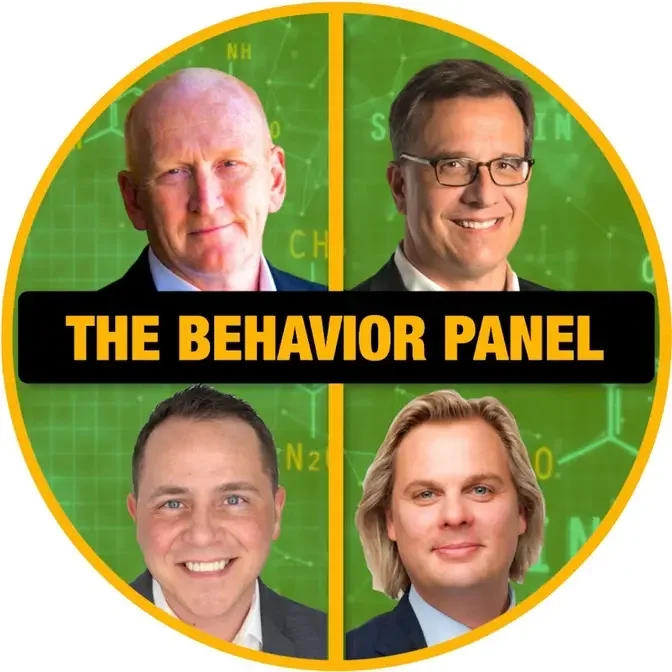
The Behavior Panel comprises the world's top body language and behavior experts: Scott Rouse, Mark Bowden, Chase Hughes, and Greg Hartley. They analyze behavior and body language in videos of public interest. This non-partisan group aims to educate and entertain, focusing on nonverbal communication, deception detection, behavioral analysis, statement analysis, interrogation, and resistance to interrogation. Through careful examination of gestures, expressions, linguistics, and cultural context, they reveal truths and deceptions.
Fair Use Disclaimer This video contains copyrighted material that is used for educational and commentary purposes. In accordance with Section 107 of the U.S. Copyright Act of 1976, allowance is made for "fair use" for purposes such as criticism, commentary, news reporting, teaching, scholarship, and research. The content used in this video is transformative in nature and does not seek to infringe on the original work’s market or value. All rights to the original content remain with the respective copyright holders. Viewers are encouraged to access the original material for full context and further information.
Chapters:
00:00 Alex Murdaugh Cross Examination Intro 02:30 Analyzing The Liars Loop Cycle 05:00 Mini Confessions And Fault Admission 07:30 Trading Guilt As Redirect Strategy 10:00 Detecting Unconscious Concave Posture Shifts 12:30 Baseline Deviations In Hand Movement 15:00 Analyzing Politeness Spikes Under Duress 17:30 Micro Expressions Hidden In Plain Sight 20:00 Qualifier Detection In Forensic Statements 22:30 Detecting Deceptive Time Bridging Language 25:00 Cognitive Load Elements In Testimony 27:30 Final Verdict Rehearsed Performance Breakdown
Experts analyze interrogation transcripts to identify deception through body language and linguistic patterns. By observing \"red flags\" such as nervous adapters, the \"chaff and redirect\" technique, and \"trading guilt\" (admitting minor lies to hide major crimes), analysts can distinguish between honest responses and calculated fabrications designed to mislead investigators.
We had the best time doing the initial breakdown of the body language and behavior in this video,
and we decided we'd revisit some of our favorite moments from it.
What made you come out here tonight?
I went to, my mom's a late stage Alzheimer's patient. My dad's in the hospital.
My mom gets anxious when she does. I went to check on them and Maggie. Maggie's a dog lover
and she fools with the dogs, and I knew she'd gone to the kennel. I was at the house.
I left the house and went to my mom's
for just a little while. Tried to call her when I left. Texted her. No response.
When I got back to the house, the house was, obviously nobody was in there,
so I figured they're still up here fooling around. Paul was
gonna be getting set up to plant. Our sunflower seeds got sprayed and died, and he was
re-figuring to plant the sunflower seeds. So I came back up here and I drove up and saw and called.
Greg, what do you got?
Yeah, this is the first time we see him touch his face. Touches his nose. Look,
you'll hear people say if a person touches their nose they're lying. No, we're not those folks.
What we're saying is look for a deviation in baseline and ask yourself why. It's a pertinent
question and a hard question. What made you come out here tonight? He uses his left hand,
touches his face. Suddenly, he does one of the most powerful male adapters that exist. I call
butterfly thighs. If you ever want to see, men will flip their legs, their thighs in and out
that way. Younger men do it a lot, and it has a lot of impact. That's a big comforting move for
a guy to do. All an adapter is is a way for you to release nervous energy. If we do them enough,
they become habitual. If you don't know what yours are, the way you release nervous energy,
ask someone next to you. Ask someone who knows you well, because they know what you do when
you're releasing nervous energy. Maybe you pick your nails, flip your hair, do something like
that. Then he starts to tell a long story that has no pertinence to anything we're talking about.
I went to see my mama. My mama's sick. She's got dementia. My mom's a late-stage Alzheimer's
patient. My dad's in the hospital. My mom gets anxious. He goes on and on and on and on and on
and on and on and on. He gives you the cookbook. We call that chaff and redirect because an aircraft
drops chaff to hope a missile will follow it rather than the story. That's what he's doing.
He's dropping lots of details, hoping you'll follow that. That's odd usually, but again,
my wife and son are lying a hundred yards away dead. Somebody murdered them. I'm going to tell
you about my mom's jello she had for lunch. Come on. He's adapting like all hell with that issue
with his hands and with the other. He goes to that dog lover. She fools with the dog.
One shoulder rises. We hadn't seen that yet. We see a single shoulder. We often associate that
with discomfort in the information they're sharing. He does a pause. He does a down left,
looks down left, which we associate with internal voice, and he does a head scratch.
We associate all of those things with thinking, with giving yourself time to think. He doesn't
say what he saw. I drove up and saw. Either with words or with body language or with tone.
None of that. And called. I think the female law enforcement officer in the back senses it
because watch her cross her abdomen in discomfort as he's telling that story. I bet if he went and
said this guy day one, we thought he killed his wife. That's exactly what I think you'd see.
Mark, what do you got? Yeah. There's a cascade of negative statements,
victim statements. Really? The parents are ill and anxious. Maggie's a dog lover. Doesn't love
him. Loves the dogs. She fools with the dogs. That's negative. Rather than going, she looks
after those dogs so well. She's fooling with the dogs. And he's texted her and there's no response.
So she's not attentive to him. And then Paul is associated with sunflowers dying.
So again, not being able to, I mean, that will, more of this story will come out and maybe he's
laying down this story early, but essentially everybody is inept. Ultimately, parents are
non-functioning. Mom's a late stage Alzheimer's patient. My dad's in the hospital. Wife loves
animals. Maggie's a dog lover and she fools with the dogs. Messes around and doesn't answer the
phone. Had to call her when I left. Texted her, no response. And Paul can't look after sunflowers.
Our sunflower seeds got sprayed and died and he was refiguring to do, to plant the sunflower seeds.
So really casting a bad light on the victims there and him being around people who can't
look after themselves or the things that are important or him. That alone is a loud flag.
You can't have a loud flag, but I'm going to say it anyway. It's a loud flag. It's a loud, loud
flag. Chase, what do you got on this one?
This is detail overload. There's a few things I want you to notice as you go through the video
again in just a second. Number one, the detail and there's the chronology of everything is loaded
and piled high, but none of the details are about finding out who did this. There is no request to
investigate the scene or talk about the word murder. It's the last word in the world that he
wants to come out of his mouth at a moment like this. And the confirmation glances back and forth
where he's checking that detective with every detail in this clip, especially just to make
sure he's buying it or just a classic hallmark of deception. It's one of the things we look for when
we see a lot of other behaviors and they're outside of baseline like we're seeing here. And
when he says, obviously nobody was in there, I think he's telling us it was obvious to him that
nobody was going to be in that house. And finally, we have something called severity softening and
lack of detail. There's tons of minute, perfect little details about the intricate process he's
going through with these sunflower seeds. Our sunflower seeds got sprayed and died. Then what's
the detail on the crime scene? Drove up and saw and called. That's the difference between sunflower
seeds versus dead family members here. Scott. After the question, you're right, Greg, he touches the
middle part of his head there, the middle of his brow there. Haven't seen that yet, other than
rubbing his whole face. Then he does this really quick request for approval. That's another one of
Greg's things where your eyebrows go up as you're looking to get something okayed or you're asking
the question, you need some information. His eyebrows go up and he starts adapting, I guess
what you call that butterfly thing, Greg. Then he starts using his Kleenex as an adapter,
which we talked about what happened earlier. We talked about that was going to happen.
A whole lot of movement in comparison to the baseline we've seen up to this point because
he's been fairly still up till now. This is where it makes me think something would be up with this.
Have you ever had a moment late at night, it's like 1130, you're lying in bed and you notice
like a weird symptom. You do what probably none of us should really do and we start Googling it.
Suddenly you're 10 tabs deep, fully convinced that something is seriously wrong. The idea of
calling a doctor in the morning, sitting on hold, waiting weeks for an appointment just
obviously makes us put it off again. What I wish I'd done instead is just book a real doctor,
someone in network that's available really soon and who actually felt like a really good fit for
me. That's the reason I use ZocDoc, today's sponsor. It is a free app and a website where
you can find and book in-network doctors from over 150,000 providers across all 50 states.
Everything from primary care and dermatology to dental and eye care. You can read verified
patient reviews, choose in-person or video visits and see real-time availability and book instantly.
No phone calls, no waiting, most appointments happen within 24 to 72 hours and sometimes
even the same day. If you're ready to stop spiraling and actually take care of it,
go to ZocDoc.com slash TBP. The link is also right down in the description and book a doctor
who listens, understands and supports you. Back to the show.
Then he starts going down this list of stuff and his voice is,
it's just a list. I went to check on them and Maggie and I knew she'd gone to the kennel,
tried to call her, texted her, no response. He's rehearsed this. He knew what he was going to say
when he came into this. When this question came up, he's got his list of things that happened
and things that he was going to talk about. You see a couple of those little shoulder shrugs,
a single shoulder shrug here and a single one there and then a full one there. But the thing
is with shoulder shrugs, and you'll hear a lot of things about them, but here's what we are under
the impression or understand that shoulder shrugs indicate. When one shoulder goes up,
that indicates the person isn't sure about their answer. Not that they're being deceptive,
but it just says they're not sure about what that answer is and I think he's afraid. He's
trying to make sure he's covering every basis he's thinking about that. In his brain maybe he's
thinking, okay, I've got that covered. Let me see what else. Yeah, I got that. I think as he goes
down this list, that's why we're seeing those things. But throughout this, he still hasn't
used that Kleenex for what you use them for. All right, we good? What made you come out here
at night? I went to, my mom's a late stage Alzheimer's patient. My dad's in the hospital.
My mom gets anxious when she does. I went to check on them and Maggie. Maggie's a dog lover
and she fools with the dogs and I knew she'd gone to the kennel. I was at the house. I left the
house and went to my mom's for just a little while. Tried to call her when I left. Texted her,
no response. When I got back to the house, the house was, obviously nobody was in there,
so I figured they're still up here fooling around. Paul was gonna be getting set up to plant. Our
sunflower seeds got sprayed and died and he was re-figuring to do, to plant the sunflower seeds.
So I came back up here and I drove up and saw and called.
But you never told them all this new story that you've constructed in light of this trial,
is that correct? I did not tell them that I went to the kennel. I lied about that. And at the same
time, you also looked at this jury and tried to tell them that you had been cooperative
in this investigation. Other than lying to them about going to the kennel,
I was cooperative in every aspect of this investigation. Very cooperative except for
maybe the most important fact of all, that you were at the murder scene with the victims just
minutes before they died, right? I did not tell them that I went to the kennel.
Chase, what do you got? So I'm gonna leave body language out of this for right now. So I want you
to consider something from a profiling only perspective. So if someone's family members
are killed and they want to find out what happened, what reasonable or sane person
would lie about their story? I did not tell them that I went to the kennel. I lied about that. So
in a lot of cases, guilty people are gonna admit to one lie so they can appear to be coming clean.
Other than lying to them about going to the kennel, I was cooperative in every aspect of
this investigation. We might call this a micro or a mini confession. And this sometimes serves
to alleviate this natural human desire to confess. And this admission about lying makes guilty people
feel like they're admitting fault. And unconsciously, they believe that they're shaping
how we see them. So if they're coming clean about this one thing, they must not be guilty. I did not
tell them that I went to the kennel. So that might be something that we're seeing here. And this is
just a tremendous red flag that the lie is there, existing in the first place. Mark? Yeah, so he is
very good at not answering with yes or no answers as the prosecutor is trying to rally him into
simple yes or no. He'll tend to repeat the question back in the opposite of how it's been put forward.
I did not tell them that I went to the kennel. Not contracted. So very clear and uncontracted
in telling you the opposite of what is being rallied into. Very cooperative except for maybe
the most important fact of all, that you were at the murder scene with the victims just minutes
before they died. Right? I did not tell them that I went to the kennel. And I think that's
purposeful. He knows what the prosecutor is trying to do, get him to say yes or no answers. It's going
to be simpler to put him in a corner if he'll do yes or no. Let me just pick up on one element
of body language, which I think is kind of interesting. You're right, Greg, that we didn't
in the first visit with the police see any forehead action. We had a lot of forehead action
here. So we've got to think to ourselves, well, is he putting it on to show concern or is he
actually concerned and under pressure? In order to work out which one it is, I would put alongside
that that his chest is very concave at the moment. Shoulders are in, chest is concave,
protecting vital organs on the body, as we often say. So I might bias towards the stress in the
forehead is potentially real stress at this point, not a concern that he's putting on for the
audience. Now, I could be wrong. It could be the opposite. But all I'm saying to you is, look,
I'm trying to put information together to come to a best guess conclusion and then always test my
guesses about what else do I see? What else do I know? What are my friends around me think it is?
What are other experts around me think it is? So at the moment, I would bias towards though he's
used to this situation from not the side that he's on at the moment, but the other side,
though he's used to that court, he's not used to being here. He could be under real stress and
pressure here. Greg, what do you think? What do you got on this one? Yeah, let's start off by
talking about the liar's loop, something Scott and I have in the true crime workshop. But the
liar's loop says you get a trigger and then you got to fabricate and then you get to you de-conflict
inside your head. Then you pitch, then you get challenged. Now, when you get challenged, you
have to defend. And then what happens to you is you get in a spiral if the questioner is doing
a good job. Let's assume he killed her. He had time or his family, he had time after he killed
to fabricate for information while he's waiting for the police and 911. Now, we're going to hear
a lot of really interesting details as we go. So he's de-conflicted that stuff in his head
and Chase, what you're talking about, I think is kind of a paving stone. If I flip this paving
stone over, you won't check the rest. We'll say there's where the problem is. And what he's doing,
I always call that trading guilt. He'll throw out some guilt that it's an ultimate redirect.
Look, I lied. I lied. I'm sorry I lied. And you redirect to there. We'll find out later when he
said he lied. And interestingly for the four of us, we all saw it. When he was in the car,
we knew something changed. All this red flag, his baseline deviation. And he admits that's when he
decided to lie. But interestingly, he's got all that grief muscle, the concern, all this stuff
showing up in his head. And we say grief muscle is the arch, but these muscles actually are part
of that. And that grief muscle is a combination of five muscles. I want you to listen to the
difference in the way he responds to the first two questions. One is telling. I did not tell them
that I went to the kennel. I lied about that. And the other is halting and shifting as he goes
through it. Other than lying to them about going to the kennel, I was cooperative in every aspect of
this investigation. So something has changed in the way he is responding to the two questions.
He's got something there that he did before. That's good enough. I'll just leave it at that.
And Scott, what do you got? I think right here, his story didn't work. So he's coming with something
else and it's messed up his timeline. So he's having to go back and try to correct that.
I think that's part of what's giving the stress here as well. But at the same time, he's so focused
on that prosecutor because his blink rate is low. His eyes are a little bit wise compared to what
they've been in the, in what we've seen up to this point. And when he has that direct eye contact,
when they lock, it lasts even longer. I mean, between blinks. So I think that was really
interesting. He doesn't use any illustrators at all. He's really still. And that's, that lets us
know something's up here because he's really careful about what he's saying. He has to
catch everything perfectly because this could be the question that sends him to the pokey for
the rest of his life. That's what I got. But you never told them all this new story that
you've constructed in light of this trial. Is that correct? I did not tell them that I went
to the kennel. I lied about that. And at the same time, you also looked at this jury and
tried to tell them that you had been cooperative in this investigation.
Other than lying to them about going to the kennel,
I was cooperative in every aspect of this investigation. Very cooperative, except for
maybe the most important fact of all, that you were at the murder scene with the victims just
minutes before they died. Right? I did not tell them that I went to the kennel.
And Maggie was heard in the background, and you were heard in the background prior to none.
Rogan Gibson asked me if I was up there. He said he thought it was me.
Was it you? At nine o'clock? Yes, sir. No, sir. Not if my times are right.
Who do you think it could have been? I have no idea.
And Rogan's been around your family for pretty much all of his life?
Absolutely. And he recognizes your voice, and you have a distinct voice. Do you think of anybody
else that has a voice similar to yours that he may have misinterpreted? No, sir. I mean, he
You know, when we were talking, he had asked me that. Maybe he had told me
that he thought I was up there. Didn't that surprise him? Yes, sir.
So when you return back to the kilns, when you return home from your mom's...
All right, Greg, what do you got? This is why we tell you not to come in with a wonky baseline,
because you see he's been locked down. Now watch that thumb. He's got, I think he has a tissue in
that hand, if you watch, and he's just wearing the hell out of that tissue. Scott, to your point,
never uses it for tears, but he sure is adapting on it. It's a tissue or something else. Kind of
like a kid has a whoopee or something, and they play with it all the time, and they feel stressed.
All of us do something. When he's asked the question about nine o'clock,
he distances, gives himself a split second to answer by saying, at nine o'clock.
At nine o'clock? Then you see the rocking and his foot pressing on the floor. That's a lot
when you came in locked down as tight as he was. That's why you don't do that,
and why you can't hide something. Chase, you always talk about politeness spikes.
There's definitely a deferential sir. It's not just no sir, it's no sir,
and I cannot think of anyone else. Do you think of anybody else
that has a voice somewhere in yours that he may have misinterpreted?
No sir. There's no protest in this guy at all at being accused of being, and this is accusation by
question. We all do it in the interrogation room. Is there any reason? You call it bait questions,
and in regular intelligence interrogation, we'll call it put on notice by question.
There's all kinds of things you may call it, but he is being accused by question,
and he's not defiant. He's not indignant. His chin is not out, and there's no eye locked.
That makes me go, why is this guy doing this? Scott, what do you got?
All right. We see he's changed his leg positions, and he's loosened up just a little bit. That's
because he's eased up. That first part, I think, is obviously at the beginning, so he's really,
really tense at this point, or up to that point. Now he's sort of relaxed. Not relaxed,
but he's letting go just a little bit, so he's gone from guarding his stomach and keeping that
tight down to guarding his genitals, which we saw in the car as well. I think he's realized
from a body language perspective, since the fight is on now, and he knows it is,
he's got to look and sound like he's being honest. In a small way, I think he's taken
into consideration what he looks like, just a little bit, not much, but just a little bit more,
so he's not as squinched up as he was. Like you said, Greg, a lot going on with that thumb and
forefinger, man. It looks like he's almost playing an air banjo, and his voice is quiet,
and there are no big pops of voice volume, and his tone doesn't jack up or anything.
He's focused, so he's going in fairly steady at this point. Then after the question comes about
the time of his whereabouts, his head goes into that bobble thing where he's saying where his
head is yes and no and spinning around. I think if we didn't understand what that was, we'd see
that more as confusion, because I think he's sorting out what he's going to say and being
very careful how he says it, which is important to him, because now he's got to remember everything
he's saying, because as far as we know, something may have changed in the story he prepared to this
story now. That's what it looks like, because there's a whole lot of thinking going on in there,
taking the stress he's experiencing from the interrogator in consideration. Yeah,
but it looks like a little bit more than that to me. I'll leave it there. Mark, what do you got?
Yeah, so we're all in agreement that he was choosing to do this behavior. I think we're
probably right to say he's choosing to do that because he wants to lock it down. He wants to
be in control. And this is now 10 minutes later and he's changed. And I think that is a result of
the interview that's going on in the interview of the interviewer has managed to get some element
of change out of him. I reckon I could do this all day if I really, really wanted to, unless
there's something else occupying my mind that I then forget to do this and start to do behaviors
which are more unconscious to me. And so to your point, Scott, I think this protection of the
primary sexual characteristics which we're now seeing is more unconscious behavior of him. So
if the interviewer has done anything here, yes, it's caused him to have to think about other
elements that are going on, most likely the story that he's telling. And so we're getting more
unconscious rather than conscious behavior out of him. So another unconscious behavior we're seeing
is that thumb move, which, yes, is partly adaption on the tissue or handkerchief that's there.
But also we're seeing it as a baton gesture as well, a gesture that moves along to the rhythm
of his speech, although it doesn't. It doesn't quite move along exactly to the rhythm of his
speech. The baton gesture, the baton, the conducting is incongruent with the rhythm.
So I'm going to suggest, you know, take a look at how incongruent the rhythm of that thumb is.
Have a listen to what he's talking about and then think to yourself, is it incongruent because
there's extra stress and pressure around this particular element that he's talking about?
Rogan Gibson asked me if I was up there. He said he thought it was me.
Was it you?
At nine o'clock?
Yes, sir.
No, sir.
What he's talking about right now, is this going to end up being absolutely consequential
to the case? Is it important data? Is he unconsciously signaling how important this
element of the story that he's most likely creating is? But look at that. Really subtle
changes, ultimately, that we can start to think about and think, what is the consequence of this
further down the line? Chase, what do you got on this one?
Yeah, you guys covered a lot. I'll just cover one more thing here. When he says,
no, sir, not if my times are right.
At nine o'clock?
Yes, sir.
No, sir.
Not if my times are right.
I want you to just pay attention to that. The qualifier here is one of the biggest red flags
you can possibly get as an interrogator. And I'll tell you why here. There is a known piece
of information that any reasonable human being could answer from memory. Were you down there?
Were you present during this video? So when he makes the denial, it's about time instead of
memory. And this is where an interrogator would be asking something like, are you
certain that your times are even correct or right? The temptation for most people to jump
onto this deception is almost irresistible. And instead, I think it's best to accumulate
these mistakes and red flags over a period of time, especially with people like this.
If you read the average interrogation training, it's going to tell you that undetected lying
is rewarding. But in cases like this, where there's lots of rehearsal and stuff,
you want to get a mountain of this kind of stuff. So in interrogations like this,
especially when you're interrogating an attorney, confessions are extremely unlikely.
So your job here as the interrogator instead is to develop these red flags. The moment you
call someone out on one of those, a wall starts building. So you don't do that. You keep pouring
water on these little red flag seeds so they become bigger red flags that the jury can watch
during the replay. That's all I got. Same thing's true in intelligence.
Exactly. And Maggie was heard in the background,
and you were heard in the background prior to none.
Rogan Gibson asked me if I was up there. He said he thought it was me.
What was he doing? At 9 o'clock? Yes, sir. No, sir. Not if my times are right.
Who do you think it could have been? I have no idea.
And Rogan's been around your family for pretty much all his life?
Absolutely. And he recognizes your voice, and you have a distinct voice.
Do you think of anybody else that has a voice similar to yours that he may have misinterpreted?
No, sir. I mean, when we were talking, he had asked me that. Maybe he had told me
that he thought I was up there. Didn't that surprise you?
Yes, sir. So when you return back to the kilns, when you return home from your mothers...
All right, fellas. I think there's another good one, and we'll see you next time.
So what do you got?