
How are Planets Formed in Our Universe? - The Universe & Space
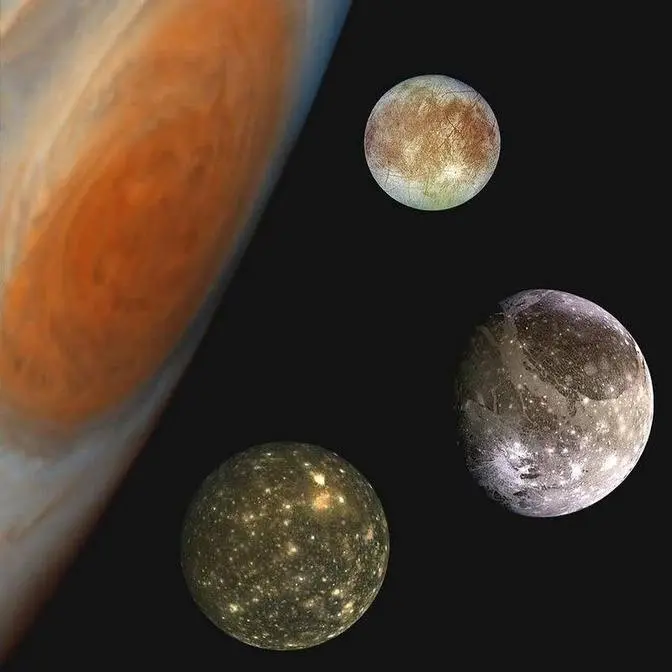
Every world we’ve ever discovered—from the iron-baked surface of Mercury to the gaseous behemoths of the deep galaxy—started as nothing more than microscopic dust. In this documentary-style exploration, we ask: How are Planets Formed in Our Universe? As of 2026, thanks to the high-resolution infrared eyes of the James Webb Space Telescope and the ALMA observatory, we are no longer guessing. We are watching it happen in real-time.
The process begins in the leftovers of star formation. When a nebula collapses to form a sun, it leaves behind a rotating "pancake" of gas and dust called a protoplanetary disk. Within this disk, a frantic game of bumper cars begins. Tiny grains of dust collide and stick together via static electricity, eventually growing into pebbles, boulders, and "planetesimals." We analyze the Frost Line—the invisible boundary that determines if a world will be a rocky pearl or a gas giant—and explore the "Core Accretion" model that built our own Solar System. Join us as we journey into the heart of a spinning disk to witness the transition from stardust to civilization.
#Astronomy #SpaceScience #Universe #NASA #Physics