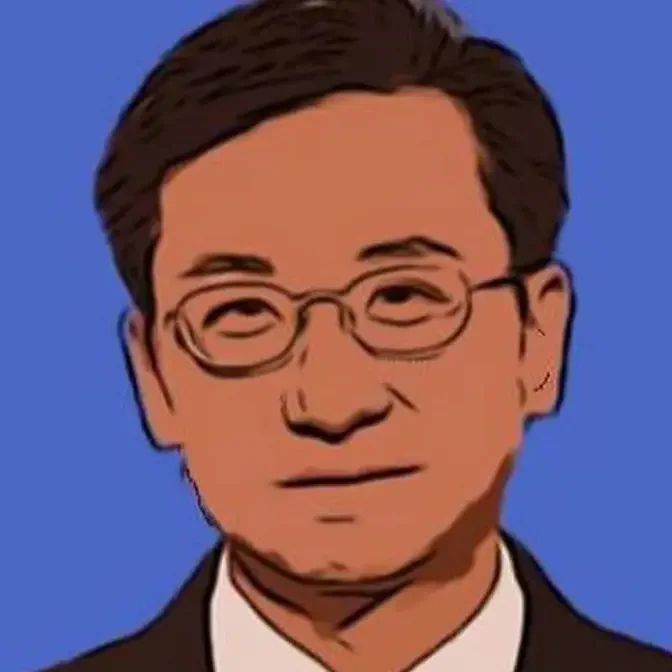
In this hard-hitting video, we take an unflinching look at China's five generations of top leaders — from Mao Zedong to Xi Jinping.
We examine how Mao sacrificed millions in ideological frenzy, how Deng Xiaoping used tanks and pragmatism to save the regime, how Jiang Zemin's "get rich quietly" era planted deep corruption, how Hu Jintao's weak "nine dragons" rule missed the last chance for reform, and how Xi Jinping is building a high-tech digital dictatorship in the name of national revival.
No slogans, just cold facts and brutal logic. Who were the real heroes of history, and who left unforgivable scars? From bloody disasters to economic booms and today's tightening grip, this is the unfiltered story of power, sacrifice, and the heavy price paid by 1.4 billion people over 70 years. Who truly shaped China — and at what cost? Watch until the end for the final verdict.
Help me grow the channel by donating any amount through the link below—your support makes a difference! https://paypal.me/DonXiang
Hi, I'm Dong Xiong. Welcome to Digging into China, where we take a deep dive into what's
really happened in China and share some unique insights. Today we are going to talk about a big
topic that cuts right through the fog of history, taking an honest look at and comparing the five
generations of leadership corps in China since the founding of the People's Republic.
From Mao Zedong, Deng Xiaoping, Jiang Zemin, Hu Jintao to Xi Jinping, these five men didn't just
shape the fate of 1.4 billion people, they also reshaped the political map of East Asia and even
the whole world. In this video, we'll dig deep into how Mao Zedong, with his idealistic frenzy,
sacrificed millions of lives, how Deng Xiaoping used pragmatism against a bloody backdrop to
save the regime, what kind of corruption genes were hiding behind the get-rich-quietly era of
Jiang Zemin, how the nine dragons managing the water deadlock under Hu Jintao caused China to
miss the last train for reform, and how Xi Jinping is using high-tech tools to try to restart an old
dream called revival. Judging Mao Zedong is an extremely complicated topic that easily falls
into extreme polarization. But if we strip away the god-like filter and go back to the basic
nature of a political leader, you will see he was an outstanding revolutionary, yet a disastrous
ruler. First, we have to admit his so-called achievements in geopolitics. He did end the
chaotic warlord divisions that had lasted since the late Qing dynasty and built a highly unified
central power structure. This kind of unity has been seen in history as the first step toward
modernizing the nation-state. However, the prize behind this unity was setting up a tight social
control system. Through household registration and personal files, he pinned every single person into
little boxes called work units, taking away the most basic human rights to move and choose how to
survive. You could say the standing up he brought to China actually made all the citizens kneel down
in front of the system. Now look at the so-called industrial foundation. Mao Zedong really spared
no effort in developing big national projects. The two bombs, one satellite did raise China's
international standing during the cold war. But at its core, this was a kind of a sacrificial
industrialization. To get machinery and equipment from the Soviet Union, he forced the government to
take grain from the farmers, even when large areas of the countryside were already hit by famine.
They still exported huge amounts of grain to buy industrial materials. This kind of national
defense and security built on overdrawing the people's right to live didn't protect the people,
or did only protect the regime's seat. This is a logical paradox worth thinking about deeply.
When we talk about Mao Zedong, the most undeniable crimes are the two man-made disasters,
the Great Leap Forward and the Cultural Revolution. During the Great Leap Forward,
he blindly pushed steel as the key link, forcing farmers to smash their pots and pans to make a
scrap iron. That brought agricultural production to a complete stop. The three-year Great Famine
that followed caused 30 to 40 million unnatural deaths. This is a rare and extremely absurd
tragedy of governance in human civilization. The scariest part is that this disaster didn't
come from nature. It came from the core of power completely ignoring economic laws.
Then came the Cultural Revolution, which Mao Zedong launched to take back power and
purge his political enemies. It was a devastating blow to Chinese civilization.
He used the frenzy of the Red Guards to destroy the moral baseline that China had kept for 5,000
years. Fathers and sons turned on each other, teachers and students fought. Books were burned,
scholars were buried alive. This disaster completely collapsed the faith of the Chinese
people. It ripped the word trust out of Chinese DNA and replaced it with the worst kind of scheming
and struggle philosophy. The damage the Cultural Revolution did to culture is still bubbling up
today. It didn't just destroy the artifacts of the time, it destroyed the spiritual backbone
of future generations. Looking at his personal character, Mao Zedong was an eternal revolutionary.
His whole life was about chasing a kind of sick pleasure from struggle. He believed that fighting
with people is the greatest joy. This personality was a sharp weapon when seizing power. But when
it came to running the country, it was deadly poison. He couldn't stand any kind of institutional
restraint. He could even smash to pieces the party organization he himself had built.
The heaviest legacy he left to later generations is an absolute dictatorship template and a logic
that sacrifices individual rights in the name of collectivism at any time. He took China from a
traditional imperial society into a harsher Leninist totalitarian society. In that era,
every Chinese person became a chess piece in his giant experiment. If we judge Mao Zedong only by
seeing the unified territory and ignore the mountains of bones from those tens of millions,
then that kind of judgment has clearly lost the scale of humanity. His life was a violent collision
between the desire for power and human civilization. Now that we've talked about the mess Mao Zedong
left behind full of scars and ruins, next we are going to talk about a political strongman who
called himself the son of the Chinese people, but at a critical moment turned the tanks towards the
people, Deng Xiaoping. If Mao Zedong was the crazy scientist who brought China into the lab,
then Deng Xiaoping was the pragmatic architect who saw the experiment about to explode and quickly
opened the door a crack to let in some oxygen. He did save lives, but first he saved the life
of a communist party, and only then the stomachs of ordinary people. You can't talk about Deng
Xiaoping without the four words, reform and opening up. You have to admit that in an era
when even wearing a colorful shirt could get you criticized, Deng Xiaoping's idea that it doesn't
matter if the cat is black or white as long as it catches mice hit like a hammer and smashed the
chains of dogmatism. It allowed some people to get rich first, set up Shenzhen special zone,
and pushed China forcefully onto the track of the global market. At the time, that was truly
a brilliant move. It lifted hundreds of millions out of extreme poverty where they couldn't even
eat enough. But we have to dig under that shiny gold layer and see the shadows. The policy
of letting some people get rich first was essentially turning power into cash. The first
group to get rich weren't the most talented intellectuals or the hardest-working farmers,
they were the ones with the power to approve documents and the background of the regime,
the princelings and officials' kids. While Deng Xiaoping revived the economy, he also planted the
seeds of crony capitalism and bureaucratic capitalism. That directly led to the nationwide
social discontent at the end of the 1980s. Now let's talk about the heaviest debt on Deng
Xiaoping. That's the Tiananmen Square event of 1989. For many in the Chinese-speaking world,
especially intellectuals who lived through that time, it's a scar in the heart that will never
heal. What did the students and citizens want back then? They wanted anti-corruption, freedom
of the press, and transparency in the political system. At that historic crossroads, Deng Xiaoping
showed an extremely cold side. His famous line about killing 200,000 to gain 20 years of stability
laid bare the logic of a dictator. In his eyes, the lives and demands of the people were as light
as a feather compared to the stability of the regime. He used tanks and bullets to tell the
whole world that China could give you chances to make money, but it would never give you the
dignity of being a human being. This crackdown completely closed the door on China moving
towards constitutional rule of law. It also put China on a twisted road, economically to the right,
politically to the left. This deformity directly turned into the monster system we see today.
Besides the bloodshed in politics, Deng Xiaoping also carried out a decision that
still affects us today, the one-child policy. To solve the so-called survival crisis,
he used state violence to interfere with natural reproduction. In that era, countless rural women
were dragged away by force for abortions. The scale and brutality of this trampling on basic
human rights was no less than a war. And the extreme aging, gender imbalance, and population
collapse that China faces today are essentially paying the bill for Deng Xiaoping's reckless
decision back then. He solved a short-term problem, but planted a destructive landmine for future
generations. Of course, to show some balance, we should mention his improvements to the party
system. Deng Xiaoping had suffered during the cultural revolution and knew the dangers of
personality cults, so he set up collective leadership and term limits. At the time,
this was seen as progress, and even gave people the illusion that a communist party could reform
itself. He tried to use institutionalized power transitions to prevent another Mao Zedong from
appearing. But ironically, this system design was extremely fragile in the face of absolute power.
He set the rules, but he himself was above the rules, acting as a behind-the-scenes ruler. He
could pick up the phone and remove two general secretaries, Hu Jintao and Zhao Ziyang. This
precedent of old men still running things didn't really build the rule of law. Instead, it made
power struggles more hidden and darker. My view on Deng Xiaoping is this. He was an extremely
shrewd pragmatist, but he lacked the moral bottom line that a great statesman should have.
He gave the Chinese people the illusion of economic freedom, but politically, he locked
everyone up even tighter. He built a society where money was the only standard, making Chinese people
give up the pursuit of truth and justice just to survive and get rich. He used economic growth
like a drug to numb the souls of the people, making everyone think that as long as you had
money to spend, democracy and freedom were just toilet paper. This kind of governance logic,
feeding the stomach but poisoning the soul, is the root of all the chaos in Chinese society today.
Deng Xiaoping was indeed the architect of reform, but in the building he put up,
the foundation is filled with the blood of students and the hopes of future generations.
He saved the party, but he made the whole nation take a huge detour on the road to modern
civilization, and in the end turned back onto the old path of dictatorship.
Now that we've finished talking about Deng Xiaoping who forced a sharp turn in the pool
of blood, next we are going to talk about the unexpected successor who, after the 1989 turmoil,
was somehow pulled from Shanghai to the peak of power, Jiang Zemin. If Mao Zedong was the
madman and Deng Xiaoping was the ruthless man, then in many people's eyes, Jiang Zemin was more
like a shrewd businessman. The dozen or so years he was in power were the period when China's
economy ran the fastest and also when Chinese society's soul rotted the most thoroughly.
When people evaluate Jiang Zemin, the first thing that comes to mind is China joining the WTO.
That was indeed one of his big achievements. He successfully took advantage of the greed
and naivety of the western countries to connect China's huge labor market with western capital.
In no time, foreign investment poured into China. Manufactured goods went all over the world,
and foreign exchange reserves grew like a snowball. But we have to see clearly the cost
behind this prosperity. This boom was built on the near-cruel exploitation of hundreds of millions
of migrant workers. In that era, there was no labor protection, and environmental protection
laws were basically useless. Jiang Zemin traded away the living environment of future generations
to get those nice GDP numbers. Today, the heavy metal-polluted land and stinking black rivers
across China that can never be fixed mostly came from that era. It didn't just sell off
China's cheap labor, it sold off China's mountains and rivers. Jiang Zemin also had a so-called
innovation in ideology called the three represents. It sounds grand, but when you break it down,
it was simply allowing rich people and big capitalists to join the communist party. This
decision completely changed the nature of the party. From then on, power and capital officially
came together. The party that once claimed to represent the proletariat became a private club
for the privileged class. Jiang Zemin opened the era when the princelings widely divided up state
assets. You can see how the profitable sectors like telecom, energy, and finance fell into the
pockets of a few core families. This kind of power-market-governance logic turned corruption
from an individual thing into a systemic lubricant. When we mention Jiang Zemin, there is another phase
we have to say, get rich quietly. That was his life philosophy and also the way he managed
officials. He knew his foundation was shaking, so he traded tolerance for their corruption in
exchange for their loyalty. Under him, buying and selling official positions became a semi-open
secret. This kind of governing through corruption directly led to the complete collapse of moral
standards in Chinese society. When officials were all madly grabbing money, social justice became
something that could be bought and sold with a price tag. This rot that spread from the core
outward is still a nightmare the system can't escape even today. In the area of human rights,
Jiang Zemin left an extremely bloody stain that can't be erased. The brutal suppression
of Falun Gong in 1999. Out of personal fear and jealousy, he privately set up an extra-legal
agency called the 610 Office and launched a horrific persecution against tens of millions
of believers. This persecution wasn't just physical torture and brainwashing. Even more terrifying,
the accusations of live organ harvesting started to surface on a large scale from that time.
This massacre against a defenseless faith group is one of the most serious cases of group
extermination in human civilization after entering the 21st century. Jiang Zemin didn't
hesitate to use the state machine to create terror in order to protect his own authority.
This crime can be washed away no matter how much GDP growth there was. Jiang Zemin was very
showy in diplomacy. He could play the piano, speak English, and recite the Gettysburg Address
in front of Clinton. That image did fool a lot of western elites at the time and made them think
China was moving toward openness. But in reality it was just clever camouflage. While he showed a
smiling face to the world, at home he tightened the network controls. The firewall we all know
as the Great Firewall, the large-scale construction of that started exactly in his era.
He successfully locked China into a digital cage, so that while Chinese people enjoyed
material growth, they completely lost the chance to get real information.
My take on Jiang Zemin is this. He was an extremely successful opportunist, but a complete
failure as a national leader. He turned China into a giant construction site full of bubbles
and an ATM for the privileged class. He numbed the people with money and desire,
making look forward the only truth. He destroyed the last bit of spiritual pursuit among Chinese
people and turned the nation into a giant monster that only knows how to consume and doesn't know
how to reflect. The prosperity of the Jiang Zemin era was essentially the accumulation of poison.
He handed the mask to Hu Jintao, but behind the scenes he still controlled everything through the
old man's politics. He harmed China while in power, and after stepping down, he still acted
like a lingering ghost emperor, blocking any possibility of reform in China. This logic of
getting rich quietly in the end not only emptied the national treasury, but also completely
overdrew the conscience of the Chinese people. After talking about that noisy corruption of the
Jiang Zemin era, let's now talk about the fourth generation leader who always looked expressionless
and was even called a robot by western media, Hu Jintao. If Jiang Zemin was a smooth operator who
was good at dancing with long sleeves, then Hu Jintao was more like a cautious housekeeper.
He was in power for 10 years, many people call it the golden 10 years, but to us objective
observers, it was more like 10 years that were missed, a dangerous period where the disease
was raging under the skin while the surface was painted over with peace. To judge Hu Jintao,
first look at the situation he took over. At that time, China had just joined the WTO,
the economy was charging forward like it had cheat codes, and Hu Jintao did keep that momentum
going. During his term, China overtook Britain, France, and Germany, and finally in 2010 surpassed
Japan to become the world's second largest economy. He also abolished the agricultural tax
that has lasted for more than 2,000 years. That deserves a note in history. It gave Chinese
farmers who had suffered for thousands of years a chance to breathe. He put forward the scientific
development concept and harmonious society which sounded full of human care and tried to fix the
black hole of wealth gap left by the Deng and Jiang eras. But here is the first illusion we need to
burst. That growth was essentially rough, unsustainable, investment-driven. It was
piled up with massive forced demolitions, land grabs, and crazy infrastructure projects.
During his time, China's housing prices started that crazy surge that left a whole generation
of young people in despair. Real estate officially became the meat grinder that kidnapped the nation's
wealth. When we talk about Hu Jintao's weakness, it touches on one of the most absurd phenomena
in Chinese politics, nine dragons managing the water. Although he was the general secretary,
Jiang Zemin planted his own people in the political bureau's standing committee,
especially Zhou Yongkang who controlled the political and legal affairs, and Xu Caihou
and Guo Boxiong who controlled the military. In reality, they turned Hu Jintao into a puppet
whose orders couldn't even leave Zhongnanhai. This caused extreme fragmentation in China's
power system. Each faction and each local big shots became little emperors in their own territory.
Corruption in this stage evolved from Jiang's get-rich-quietly into open robbery. Because no
one could control anyone else, the collusion between officials and businessmen reached its
peak. The so-called harmonious society became a huge irony. In human rights and thought control,
Hu Jintao was actually a soft-on-the-outside, hard-on-the-inside authoritarian. Don't be fooled
by his mild, lukewarm appearance. The airtight internet censorship system in China today,
the Golden Shield project and the firewall, was completed and grew strong during Hu Jintao's time.
He put forward the mutated version of stability above everything else and poured huge amounts
of national money into stability maintenance. In that era, it was an open secret that stability
maintenance spending exceeded military spending. The 2008 Lhasa incident and the 2009 Urumqi
incident, Hu Jintao's methods were extremely tough. The pattern of high-pressure rule of ethnic
minority areas was actually set back then. What makes intellectuals around the world even colder
is how he ruthlessly put out the sparks of democracy. In 2008, Liu Xiaobo and others
drafted the Zero-Eight Charter, calling for gradual political reform in China. This was a
real opportunity for China to move toward a rule-of-law society. But Hu Jintao's response
was to sentence Liu Xiaobo to 11 years in prison. His famous saying, don't rock the boat,
was essentially refusing any kind of political system reform. He would rather let the system
slowly rot in corruption than perform surgery. His so-called harmony was really just another
word for shut your mouth. Back then, there was a famous online pun called the river crap,
which meant your comments had been blocked, they had been harmonized by Hu Jintao. Those 10 years
under Hu Jintao were the fastest 10 years for China's national power to expand, and also the
10 years when social anger built up the heaviest. He didn't kill on a large scale like Mao Zedong,
and he didn't send tanks into the square like Deng Xiaoping. But the harm from his banality of evil
to the country was just as deep. He was like a god sitting on a powder keg. His only job was to
make sure the powder keg didn't blow up while he was on duty. As for how far the fuse had burned,
he didn't care, and he couldn't control it anyway. What he left to later generations was a China with
extreme wealth gaps, corruption deep in the bones, environment rapidly collapsing, and civil
society completely suffocated. To sum up Hu Jintao's rule, my personal evaluation is that he
was a qualified technocrat, but a cowardly supreme leader. He enjoyed the last dividends of reform and
opening up, but he left all the deep systemic contradictions to the next guy. His mindset of
guarding the stall made China miss the last window for a possible peaceful political transition.
When he stepped down, that clean, naked retirement with high moral standards deserved some praise on
the surface, but it looked more like a helpless self-protection because he couldn't control power.
He handed over a giant that looked bloated and fat on the outside but was full of internal injuries
to Xi Jinping. Those 10 years weren't a golden decade at all. They were a long delay maintained
by overdrawing the future and suppressing demands. He let the Chinese people slowly get used to
having their power taken away in warm water, laying the psychological groundwork for the big
turn that was coming. Now that we've finished talking about the cautious smothering through
mediocre 10 years of the Hu Jintao era, we finally come to the heaviest and most impactful
chapters in this series, the era of the current leader Xi Jinping. If the previous leaders were
still trying to patch up the broken ship called the Chinese Communist Party, then Xi Jinping is
directly tearing out the foundation and trying to use modern high-tech surveillance tools together
with old bricks from the Mao Zedong era to rebuild on the spot a digital empire called
National Revival. When he first came to power through precise power disguise, he fooled almost
all observers. Even the old party elders thought he was a mild, courteous, thrifty, and modest
successor. But 12 years have passed, and what we see is a 2.0 version of Mao Zedong paired with
1984 style all-round shackles. First, let's talk about the so-called complete poverty alleviation
myth that he is most proud of. In official propaganda, it's painted as a miracle in human
history. But we have to ask, can this poverty alleviation really stand up to scrutiny? In
reality, it was more like a hugely expensive political performance art. To reach that so-called
2020 target, local governments used extremely ridiculous administrative methods. In some places,
they forced poor families living in the mountains to move into newly built apartment buildings.
On the surface, they moved into concrete houses. But in reality, those farmers lost the land they
depended on for survival and couldn't afford expensive property fees and electricity bills.
The so-called poverty alleviation was only on paper. Their income crossed that very low poverty
line. But that line, in the face of skyrocketing prices, couldn't support the basic human dignity
at all. Even more ironic, Li Keqiang admitted himself before he passed away that there were
still 600 million Chinese with monthly income less than 1,000 yuan. That was clearly a loud slap
in the face to Xi Jinping's poverty alleviation myth. This poverty alleviation wasn't driven by
real economic growth from industrial upgrading. It was short-term blood transfusion from state
finances and cosmetic surgery on the statistics. It wasn't sustainable at all, and instead pushed
local finances into a debt crisis on the edge of collapse. Now let's look at the political
scale pole called anti-corruption. Since Xi Jinping came to power, he has caught more than
1 million officials, from the big tiger Zhou Yongkang down to countless flies at the grassroots
level. On the surface, he was clearing the air and responding to public anger. But behind it
hid extremely dark factional struggles. The so-called anti-corruption was essentially the
sharpest weapon in his process of centralizing power. Using the moral high ground of anti-
corruption, he legitimately removed the Jiang Zemin faction, the Youth League faction, and any
potential rivals that could threaten his dictatorship. Under that political terror,
where everyone felt in danger, the Chinese bureaucratic system completely lost its vitality.
Chinese officials today don't seek achievements, they only seek to avoid mistakes. Because doing
more means more chance to be wrong, and doing nothing means no mistakes. The result of this
power concentration is that the whole country has fallen into an extremely dangerous situation
where one person thinks and 1.4 billion people just follow blindly. When corruption changed
from being shared evenly to being the privilege of close allies, this clean government is just an
illusion after power has been highly monopolized. When we talk about Xi Jinping's damage to the
system, the core stroke is the constitutional amendment in 2018 that was passed with raised
hands. Through strong purges and intimidation, he abolished the only political legacy left from the
Deng Xiaoping era, term limits. This means he officially started emperor mode. He locked the
future of 1.4 billion people tightly onto his own knowledge and preferences. This political regression
not only took China back to the turbulent era of lifelong rule, it also turned Chinese law into a
complete joke. In his eyes, the constitution was just a pass for his continued rule. As his power
expanded without a limit, his decisions became more and more absurd. Think back to the three-year
dynamic zero COVID policy. For the sake of his own faith, he didn't hesitate to shut down the
whole society and let people fall into despair in fires and illness. This kind of governance
that ignores common sense and science is exactly what happens when a dictator's power is not
restrained. In the area of human rights, Xi Jinping has created the most serious racial and
cultural tragedy of the 21st century. In Xinjiang, he set up so-called education camps and locked up
large numbers of Uyghurs, trying to completely erase their identity through brainwashing and
violence. This high-tech concentration camp, combined with facial recognition, DNA collection,
and other digital surveillance, turned the whole of Xinjiang into an open-air prison.
In Hong Kong, he personally tore up the Sino-British Joint Declaration and used
national security law to completely kill the Pearl of the Orient that once represented freedom
and the rule of law. The fall of Hong Kong marks Xi Jinping's complete break with universal values.
He doesn't just want to control people's bodies, he also uses apps like Study Xi to monitor
everyone's phones and the social credit system to monitor everyone's behavior. What he is building
is a digital concentration camp that is more refined and watertight than the Mao Zedong era.
In diplomacy and geopolitics, Xi Jinping completely abandoned the hide-your-strength
and buy-your-time strategy and pushed a very aggressive wolf-warrior diplomacy.
Through the so-called Belt and Road, he exported debt traps outward. In the South China Sea,
he illegally built military bases and kept challenging international maritime law.
His fight-heaven-and-earth attitude didn't win China any respect. Instead, it pushed China into
the worst international isolation since reform and opening up. He pushed the Western world,
which could have been mutually beneficial, to the opposite side, leading to technology blockades,
trade sanctions, and geopolitical encirclement. This diplomatic gamble used as stakes the hard
work accumulated by several generations of Chinese people over the past 40 plus years.
He showed the world a China that doesn't follow rules and is full of imperial ambition.
This fear is speeding up the decoupling of global supply chains from China.
These 12 years of Xi Jinping have been the turning point where China slid from a normal country
toward an extreme system. He used a grand narrative called National Revival to cover
up the harsh reality of economic regression, people's livelihood decline, and loss of freedom.
Although he poured heavy money into military modernization and some hard power areas,
this strength is built on extreme squeezing of the people and overdrawing future credibility.
China today is like a race car with no brakes, driven at full speed toward a cliff by a blindly
confident driver. He is not only a leader of an era, but also the terminator of a system.
He tries to save the party through totalitarianism, but these extreme methods
may actually be ringing the final death knell for that system. Every move he makes is refreshing
humanity's understanding of the arrogance of power and making everyone inside it feel an
unprecedented tremor of the time. Although these five generations had different ruling styles,
some wild, some smooth, some dull, their underlying color is amazingly the same.
The survival of the power entity comes above everything. In their eyes, the 1.4 billion
people are not independent subjects with rights, but resources that can be consumed at any time to
achieve some grand narrative. These 70 years of history are essentially a self-adjustment of an
authoritarian system when facing survival crisis. China has indeed become stronger in the macro
data, but does this strength belong to the well-being of the people, or to the armed force
of that power entity? When we talk about the merits and faults of these five generations,
the truly objective perspective should fall on what they brought to the Chinese people,
long-term institutional guarantees or short-term benefits that can be taken back at any time.
History seems to be forming a closed loop. When power is once again unrestrained, when the leader
once again steps onto the altar, we seem to have returned to that power trap that repeats every 20
years. The evolution of these five generations of leaders tells us a cold truth. As long as the
genes of the system do not change fundamentally, no matter whose face is put on, it is just the
same old dream continuing under different technological backgrounds. The scale for
judging them should not be held in the pants of those hired writers, but in the hearts of every
ordinary person who feels the tremor of the era and longs for dignity and freedom.
Thank you so much for watching. If you find this video helpful, please like it, drop a comment
below, and hit the subscribe button right here. It really helps YouTube suggest my video to others.
I'll be back with more content soon. Until then, be well.