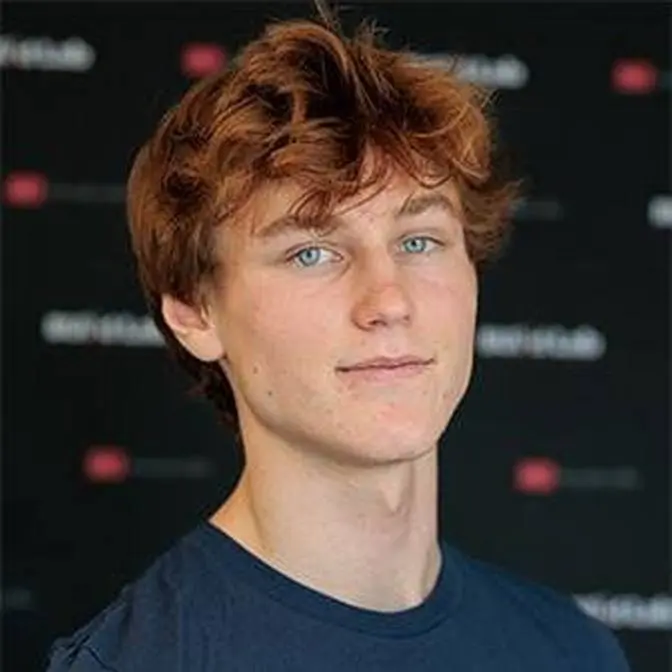
IN THIS VIDEO: I started posting on social media when I was 12. In this video, I'm sharing the 7 biggest lessons that actually helped me grow — from why watch time is the only metric that really matters, to how to merge art and science in your content, squeeze every piece of content for max exposure across platforms, use paid ads instead of buying followers, pick a niche that actually monetizes, and decide whether to go full-time on social media in 2026.
CHAPTERS: 0:00 Why You Should Listen to Me on Social Media Growth 0:08 In This Video 0:21 Watch Time Is the #1 Driver of Social Media Growth 2:13 Merging Art and Science to Win on Social Media 3:16 Agent Opus: AI Tool for Short-Form Video Creation 4:44 Squeeze the Lemon: How to Repurpose Content Across Platforms 6:13 Don't Buy Followers — Run YouTube Ads Instead 7:26 How to Monetize Social Media (Why Your Niche Matters) 9:15 Should You Commit to Social Media Full-Time?
------------------- Clips channel @jonlawclips
I do NOT sell any products of my own. Watch out for scams.
So I started posting on social media when I was 12 years old. I grew up on social media in a lot
of ways. And in this video, I want to break down the core tips, approaches, and models that I think
are most helpful and which most helped me. That is the plan. I have exactly seven points to make
and let's go. So the biggest thing by far is just watch time. If you have a 30 second video
and you can get people to watch on average for 40 seconds, you will be famous. Or if you make
10 minute videos and people watch them on average for 9 or 10 minutes. I don't care if it's the
dumbest video in the world, if everyone hates it. In terms of growth, all that really matters is
whether people watch it. If they watch it, you will grow. If they don't watch it, you won't.
Now I'm generally a pessimist when it comes to YouTube because organic growth is really,
really hard. And a lot of years of social media and a lot of failed side attempts or new channels,
theme pages, and so on taught me that. But there is one single person who I know very well, and I
won't name them, who radically changed my perspective on this matter. And they did that because over the
past four or five years, they have borderline at will been able to create a new YouTube channel,
edit some videos, and get tens, thousands, or hundreds of thousands of organic views on that
channel in days or weeks. The fact that it's so algorithmic to them, so predictable to me,
really reinforces that notion that YouTube and social media is not dead. It's just a function
of watch time. If you can connect with people, if you make what they want, and if they watch what
you make in any category, in any niche, you will grow and you will be successful. It's really hard
to grow and no guerrilla marketing tactics. No, whatever the strategy is to grow really isn't
going to work at scale if fundamentally people don't watch your content. And by that, I mean
engage at a level which comparatively beats out most of your competitors and competitors on the
given as a whole. So that's one. And point number two is that I think social media is about merging
art and science. Nearly everyone that succeeds on social media formalizes at some point, meaning
they figure out a concept and mathematically improve it or maintain it over time. I think Mr.
Beast is the best example of that and the way he talks about YouTube. But that doesn't take away
from it in my eyes and that doesn't take away from the creative side of creating content. Just
like if you break down, say, a Picasso painting or a great book into a set of rules and instructions,
that doesn't take away from the impact of the art. So my point there is that you have to merge those
two sides of it. It is a creative art and skill to create content that people engage with. But you
really have to approach it, and I see most people who are successful with it approach it in this way,
as a numbers game. How many videos you can make? How well do people engage with them? And what are
the business decisions you can make that determine how much time you can put into
making those videos? Now, guys, we make a lot of shorts for this YouTube channel and a few others.
And one thing in terms of automation that we've always struggled with there are the visuals for
them. I'll be talking about a concept and I just need something simple on the screen to illustrate
what I'm saying. And options are either stock footage that doesn't quite fit the scene or an
editor spending an hour in After Effects making something custom. And that is why we've been using
Ancient Opus. It's a new AI video tool from the team behind OpusClip, and it turns audio or script
into a full-on short-form video with matching visuals, captions, and background music. So,
for example, here's one I made for this video. Stop doing the latte math. You know what I'm
talking about. If you stop buying a $5 coffee every day, you'll save almost $2,000 a year.
Cool. And making that took about two minutes. You go to ancient.opus.pro, upload an audio
file or paste a script, pick a visual style or upload a reference image for the look you want,
and then just hit Create. You can even upload your product images or logos and it'll work
them into the video. So, the visuals actually match what's being said. And so, for B-roll,
cutaway clips, and full-on end-to-end soup-to-nuts shorts, this is the best AI tool to do it and it
is completely free to get started. So, if you do anything with short-form, whether faceless
channels, your own socials, or you have your own business that uses social media to get customers,
then again, that is completely free to get started. You can give it a test drive,
and I think you'll enjoy it. The link is in the description for that or on the screen.
And now, let's get back to the video. So, what squeeze the lemon means is that you should try
and get the most you can out of each piece of quality content that you produce. If you make
one really high-quality 20-minute YouTube video that you put a lot of time into, then take that
video and split it up into 10 different engaging 30-second clips, and then post those on 5 different
social media platforms, right? If you can get 50 pieces of quality content, and the keyword there
is quality, again, people have to watch it. And that all came from a 20-minute video and a few
hours, say 5, 10, 15 hours of your time. That is just more reps and shots and exposure as opposed
to having to spend 15 hours just to get that one piece of content. Like, quality matters,
but also just putting the reps in matters. And if you can get more out of what you're already
putting effort into, then I think you should do it. And I've seen a lot of growth from people
doing that. And if you can get more exposure from work you've already done, you may as well do it.
For example, when I was on TikTok and posting a lot of TikToks that got good exposure on that
platform, I could also take those same videos and I posted them on Instagram and got however
many views over there. And the same thing on YouTube. I think I started a brand new channel,
posted some of those clips and got like 100,000 views in a month. And a lot of the way people go
viral nowadays is just through clips. I think, you know, Andrew Tate and Tristan Tate are the
best example of that. Okay, just three more just as important points. And the first is absolutely
do not buy engagement or followers, but you can, if you have some money to invest, run ads to your
channel or promoting your videos. This feature is built into YouTube, but it's actually much
cheaper to do it through Google ads directly. Now you want exposure and you want to build an
audience that comes back and watches more of your videos. So if you take this approach, just make
sure you're reaching actually quality viewers that are potentially interested in your videos
and sticking around. To do that, you can target keywords and locations. Now, if you want to make
sure this doesn't impact organic performance, then you want to post those ads on another channel
and then just make the final destination of the video. So when people click the ad,
the homepage of your YouTube channel. That actually is a strategy that a lot of popular creators have
used and people don't really talk about it. Like E-Man, for example, said on a podcast that a
good chunk, if not all of his first few hundred thousand subscribers, and this is
after those first few years where he was creating content as a teenager, did in fact come from ads.
My next point is about monetization or just making money from your social accounts. It's a big subject
and point among creators because a lot of people want to do it full-time and don't make enough
money to do it full-time. And my general take is that it really does depend upon the niche that you
choose to make content in. If you're in a niche like finance, business, or makeup, etc, if you just
get traffic, you will make lots of money from sponsors and ads. Then really in my mind, that's
just a proxy for a traffic problem because there is so much sponsor money and ad money out there
that if you're not making money, for example, your CPM just is non-existent because you don't
actually get views or you don't have sponsors for videos. That is purely a traffic problem. If you
get the traffic, if you get more exposure, all of that will come and the money will come. So just
focus on the traffic and the watch time and those things will come down the line. For lower paying
niches, it is a lot more difficult. If you're in, for example, celebrity content, it's just really
hard to monetize in the same way that a finance channel would. My general take there is that it
is still in some ways a traffic problem and the benefit of lower paying niches is that often it's
easier to get traffic. And so while you can try a lot of things to optimize the amount of money you
make or launch products, I would really just recommend focus on the traffic. And if you get
to a point where you have an enormous amount of traffic coming in, the money 1,000% will follow.
But still purely in terms of monetization, if you are playing the game in a low paying niche, you're
just playing on hard mode purely from a monetary perspective. So my last point is about the question
of should you commit to social media and trying to really make it work or just start posting if
you haven't before? And it's a tough question. I started out on social media when I was a child
for very different reasons. I did that for a few years. I stopped for a while and then I came back
and I think with a much more kind of ad and algorithmic approach. And I see a lot of people
struggling with content or social profiles that just get no exposure, like you get 5, 10, 20 views
a video. And my personal take on the question of whether you should fully commit or go into it or
just leave it as a passion project or just not do it at all is that something should tell you it's
working before you fully commit. There are exceptions to that rule. There are the Mr. Beasts
of the world and a lot of other people out there. And if you love it, do it purely for that reason.
But if you are making a decision, if you have to ask yourself the question of, hey, should I commit
to this or not? My response is, well, look for a sign before you do. That doesn't mean stop doing
it. If you don't see that, it just means don't drop out of school. Don't quit your job. Just
wait until you have traction. You've been doing it for a while. You worked on your skills and you
have a video that blows up or you get your first sponsor. If you do it part time for a long enough
time and you focus on just getting better, getting viewership and really, again, just creating pieces
of content that people watch, then eventually that sign will come. And that's the hardest part.
The first viral video, the first sponsor check, once that comes in, then in my mind, it's a scale
problem. And that is so much easier. When it's a scale problem, then you just do the scale,
the inputs up. If it's a scale problem, then you drop out of school, then you quit your job,
then you go all in. I know a lot of people disagree with that point. That's just my take.
So you do you. And I'm beating a dead horse here, but in my mind, it's all about the basics,
just the reps of do people watch it? And well, how many do you make? All of those points or at
least one of them did, in fact, help you. And if you are thinking about committing or just starting
a channel or social account, then well, I wish you luck and I look forward to seeing your content.