
A Tour of the Life of a Noblewoman in the 1700s (AI
15 Video Views·Apr 22, 2026
102 lượt xem 16 thg 4, 2026
Step inside the daily life of an 18th-century noblewoman—where status, tradition, and expectation shaped every moment.
Through AI reconstruction, explore her routines, responsibilities, and the social world she navigated behind palace walls.
An immersive glimpse into a refined yet demanding way of life that defined an era.
Most people imagine the life of a noblewoman in the 1700s as one long, comfortable afternoon.
Silks and salons. Candlelit dinners. Leisure without end.
But the truth began long before any of that. And it began in the dark.
Before six o'clock in the morning, in a grand house somewhere in England or France
or the courts of Central Europe, a woman of rank was already awake. Not by choice, exactly.
By design. By the invisible schedule that governed everything she was allowed to be.
Picture the room first. The bedchamber of a noblewoman in the early 18th century
was not just a room. It was a stage. Heavy damask curtains, likely in deep crimson
or forest green, hung from a carved four-poster bed. The ceiling was high. The air was cold,
even in spring, because stone walls held the night in them long after dawn arrived.
On the table beside the bed, a small silver candelabra, a prayer book, perhaps a letter
half-written the night before, and left for morning. Her lady's maids entered quietly,
carrying warm water in a ceramic basin, moving softly so as not to disturb the household.
They had been up even earlier. They always were. This was the first ritual of the day.
The toilette. And it was far more than washing. It was a ceremony. It would take, on most mornings,
between one and two hours. And everything that followed in her day
depended on how well it was performed. The toilette was not private. That is perhaps
the most striking thing about it. For a woman of high rank in the early 1700s,
the morning ritual of dressing was, in many households, semi-public. Guests could be
received. Conversations could be had. A countess might discuss politics or arrange a marriage while
her hair was being powdered. Her hair took the longest. In the first decades of the 18th century,
hair was dressed close to the head, curled, pinned, and often powdered white or gray with starch.
By mid-century, styles had grown dramatically taller. Some fashionable women wore constructions
of wire, padding, false hair, and ribbon that extended more than a foot above the head.
These required the help of a professional hairdresser, a coiffeur, who might come to the
house two or three times a week and whose work could not be undone without destroying hours of
effort. Some women slept sitting upright to preserve it. Then came the stays. Boning made
of whalebone or reed was sewn into a tight-fitting bodice worn directly over the chemise. It shaped
the torso into the fashionable silhouette of the era. A narrow waist, a lifted chest,
a rigid posture that would have made slouching physically impossible. Women wore these from
girlhood. Their bodies were trained to the shape before their bodies were fully formed.
Over the stays came the petticoats. Often two or three, the outermost sometimes stiffened with
horsehair to hold the shape of the skirt. Then the gown itself. Silk was the material of status.
The sound of it, that dry whisper as it moved, announced a woman before she entered a room.
The smell of it was rosewater, ambergris, and something floral and sweet applied to the wrists
and throat. She was dressed. She was also, in a very real sense, armored. And the day that waited
for her would require every piece of it. By late morning the house was fully awake and the noble
woman's time was no longer her own, though it rarely had been. If she was married, and most
women of her class were by their early twenties, her primary duties were understood without being
spoken. She managed the household staff. She kept the accounts of domestic spending. She received
visitors. She corresponded with relatives and social connections, composing letters in the
careful, measured prose expected of a woman of good breeding. Nothing too direct. Nothing that
could be misread as forward or improper. The children, if she had them, were largely in the
That is not to say she was indifferent. She was not. But physical closeness with her children
was limited by convention, and the raising of a child to the proper standard of their class
required professional supervision. She oversaw. She directed. She did not, in most cases, do.
Religion structured the day too. Morning prayers. Sunday church attendance in the family pew.
A pew that displayed the family's rank as surely as the coat of arms above the door.
Faith was not merely personal. It was social architecture. It told everyone exactly where
you stood. And then there were the afternoons, visiting hours, the receiving of calls,
and the paying of calls. A complex web of social obligation governed by rules as strict as any law.
Who you visited first. How long you stayed. Whether you left your card or waited to be admitted.
A mistake in this choreography could cost a woman her social standing. It could end a friendship.
It could, in extreme cases, end a marriage prospect for a daughter not yet born.
She moved through all of it precisely. Because precision, in this world, was survival.
The evenings were where the performance intensified. And it was a performance,
one that required intelligence, composure, and a precise kind of self-erasure.
Dinner was the centerpiece of noble social life. In a grand house, it was served in the late
afternoon or early evening, around four or five o'clock in the early 1700s,
shifting toward later hours as the century progressed. The table was set with silver and
porcelain. Multiple courses arrived in sequence. Soups, fish, roasted meats, pastries, fruits,
sweetmeats. The food itself was rich and complex. Eating well was a statement about wealth and
refinement. She sat where her rank dictated. She spoke when the conversation required her voice,
and fell silent when it required her absence. A noblewoman at dinner was expected to be charming
without being sharp, educated without being aggressive, witty without threatening the
men around her. She had often read widely. Many women of the aristocracy were quietly
well-read in French and English literature, in history and philosophy. But she deployed that
knowledge carefully. Too much was dangerous. It made men uncomfortable, and discomfort in her world
had consequences. After dinner came cards, or music, or dancing, or conversation in the drawing room.
The drawing room was, literally, the room to which the company withdrew, and it was frequently
understood as the woman's domain. She poured tea. She guided conversation. She smoothed tensions.
She knew, without being told, exactly when the evening had run its course. Late at night, the
candles were snuffed one by one. The house grew cold again. She was helped out of her gown, out of
her stays, and back into the silence of her own body, the body the century spent all day trying
to reshape. And somewhere in the quiet before sleep, behind everything the day had required
of her, she had been here, present, watching, thinking, waiting for the hour before anyone else woke,
step back from the room now, step back from the silk, and the candlelight, and the cold stone floors.
Look at the whole picture. Across 18th century Europe, women of the nobility were among the most
educated, most visible, and most constrained women on the continent, all at the same time.
That paradox is important. Wealth and rank gave them access to languages, to books, to travel,
to correspondence with the great minds of the age. Some of them, like Émilie du Châtelet,
who translated Newton's Principia Mathematica and wrote her own work on physics, made contributions
to science and literature that their male contemporaries could not ignore. Others,
like the women who shaped French salon culture through the 18th century, wielded remarkable
intellectual and political influence from rooms they were never supposed to command. And yet,
they could not own property independently in most of Europe. They could not enter universities.
They could not hold office. They could not, in most cases, choose their own husbands.
Their bodies were corseted into shapes of others' choosing. Their voices were measured
against a standard of grace and restraint that was never applied to the men beside them.
What is remarkable, genuinely remarkable, is not that some of these women bent these limits.
It is how many of them lived inside those limits with a full, rich, interior life
that the century barely acknowledged and history has often forgotten.
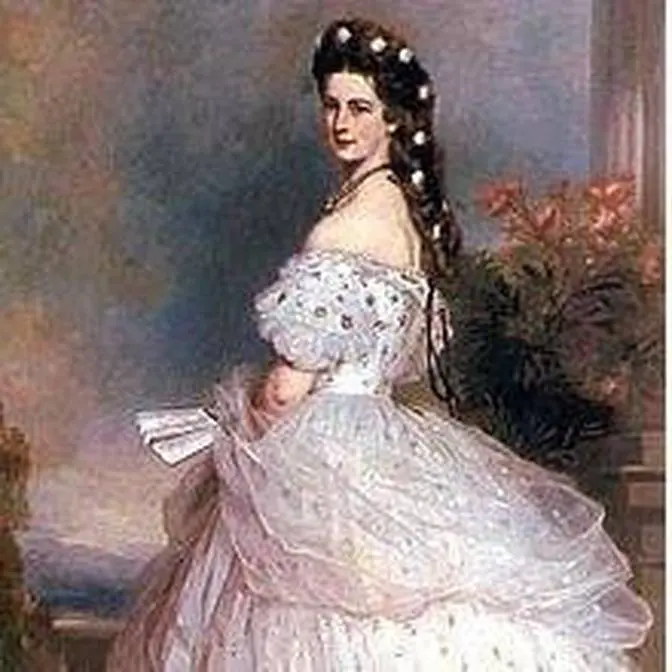
When we look at the portraits from this period, and there are thousands of them in gilded frames
in museums across the world, we see the silk and the jewels and the practice composure.
We rarely see the early morning cold, the two hours of dressing,
the careful calculation of every sentence spoken at dinner, the knowledge held quietly behind
composed eyes. Much has changed. Stays no longer shape the body by force. Women enter universities,
hold office, own property, and write their own names on their own work without translation
or apology. But the weight of performance, the expectation that women move through the world
with particular grace, particular caution, particular awareness of how they are being seen,
that is a conversation that did not end when the 18th century did.
The candles are different now. The room is different. But the woman watching the light
from behind composed eyes, she has never entirely left.
Is there another time and place you'd like to step inside? Leave a comment telling us
whose life you want to reconstruct next. A medieval abbess? A renaissance merchant's wife?
An Edo period lady-in-waiting? History is full of rooms we haven't opened yet.