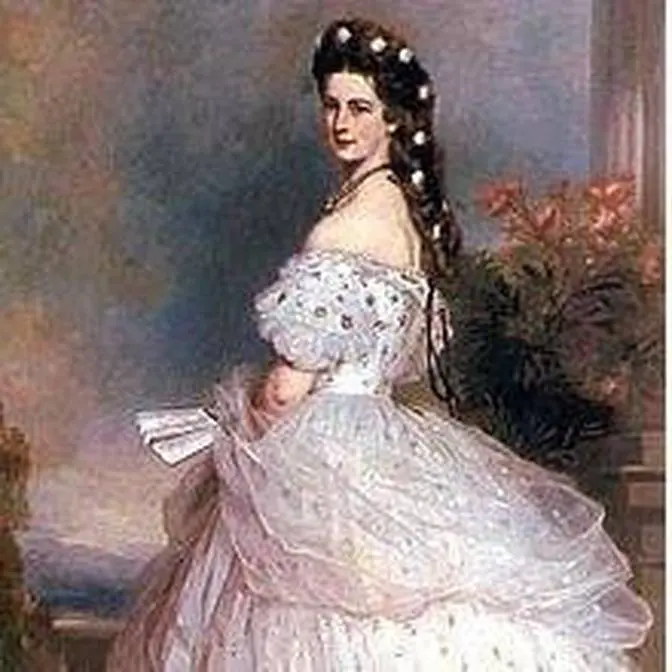
Like, seriously. It's such a goofy, fun, adorable era for fashion, but it's kind of shoved right in there between two very beloved eras, the Regency period and the Victorian era. The 1830s, also known as the Romantic era, was a very transitional era for fashion, and it's fun to look at how things change and evolve throughout the period. So let's take a little deep dive into the styles of the 1830's!
Check out my current 1830's project at this playlist: • Plaid 1830's Dress My 1830's Pinterest Board: / 1830s The Dames a la Mode Tumblr is a great resource for dated plates. Just change the year in the url, and it will turn up a few plates per year: https://damesalamode.tumblr.com/tagge... Want to learn about Regency fashion? Check out this video: • Regency Corsets, and How to Make Regency S...
Hello everyone! I'm Rebecca and welcome back to my channel.
Let's talk about 1830s fashion. Now, I know I'm biased, but in my opinion, the 1830s is one of
the most underrated eras in fashion. It's kind of just shoved in there right after the Regency
period and right before the Victorian era, both of which people tend to love. But the 1830s,
also known as the Romantic era, with its kind of wacky silhouettes, the big sleeves,
the complicated hairstyles, and the shortened skirts, doesn't seem to get a lot of widespread
love. It seems there are a handful of us who have made 1830s and are totally in love with it,
but that doesn't seem to be a big percentage of the costuming community. If you haven't seen my
most recent video, I am currently making an 1830s dress dating to approximately 1836. But what makes
it 1836? What are the identifying features that can be pinpointed throughout the 14 or so years
of this transitional period? Let's take a look! I'm going to be sharing a lot of fashion plates
throughout this video. I have linked my 1830s Pinterest board down in the description below,
and I have tried to include all of them there, so if you do want to study them further,
be sure to check out that link. So to start out, as I mentioned, we're not just talking about 10
years here. What we think of as 1830s fashion didn't actually start in the 1830s. It evolved
very much out of 1820s fashion. In the 1820s, the Regency silhouette starts to shift, and if you want
to learn more about the Regency period, please check out my Regency costuming video, which I
have linked up above and down below. The shift in silhouette has a few key elements. Firstly, we start
to see the skirts become shorter and fuller, particularly at the hem, and they were often even
padded at the hem to help them hold their shape. Sleeves start to become larger and more intricate
than they were before. Waistlines start to slide down a little bit from that high, right under the
bust, ampere waist of the Regency. Now, they don't slide all the way down to the natural waist yet,
but they are inching closer. And hairstyles also start to become larger and more elaborate.
Just taking a look at these fashion plates, which I have put in order of their date,
can really help to show this style evolution. I would argue that what we think of as 1830s fashion
starts to come into form in 1826, and is pretty solidly there by 1827. And in fact, many of the
things that seem the most 1830s to our eyes are actually from 1829 to 1833. And by this, I mean
the shortest skirts and the largest sleeves with the biggest hairstyles. By these years, padded
hems have gone out of favor to be replaced with wide, full skirts. Frequently, these skirts were
just rectangular panels, pleated or gathered to the waist, instead of the shaped panels that were
popular. These skirts were worn over multiple petticoats, and as the decade progressed,
more petticoats were added. At minimum, I would suggest a corded petticoat and
either two other planar petticoats or a fully ruffled petticoat, though I believe that the
planar petticoats with either a ruffle or tucks or both on the bottom are far more historically
accurate than a tiered ruffled petticoat. These petticoats should all be highly starched.
Keep in mind that for this earlier part of the 1830s, these petticoats also need to be shorter
so they don't peek out below the hemlines of the ankle-length skirts. As the 1830s progressed,
we start to see the hemlines get a little longer, and by the end of the decade, they're back to
completely covering the foot. In fact, pretty much every style element just kind of gets longer and
droopier as the decade continues. For example, sleeves in the mid-1820s often begin as two
pieces for day wear, a puffy top part, and a fitted lower sleeve. Evening wear omits the lower
sleeve. As this era progresses, though, those upper poufs get larger and larger, reaching their apex
around 1830 to 1833. They could either be a one-piece leg-of-mutton sleeve, which has a very
large pouf at the top but narrows itself out below the elbow, or they could be a two-piece sleeve
with a more fitted portion on the lower arm. The upper sleeve poufs were so large that special
sleeve supports were required to help them hold any sort of shape. These were frequently made like
modern-day swimmies, except they were made of cotton and stuffed with a whole myriad of things,
scraps of fabric, wool or cotton batting, or even down. They could also be structures made with wire
or cane, though these appear to have been less common. These sleeve supports were frequently
tied or sewn into the dresses at the arm's eye, though they could also be attached to the corset
instead. After the sleeves reach their apex in the early 1830s, they start to droop a little bit.
The shoulders of the bodice get wider and fall more off the shoulder, and the upper part of
the sleeve is often narrower. A fairly common option here was just to pleat the upper portion
of the sleeve pouf and stitch those pleats down for a few inches so that it would look fitted as
it approached the shoulder. As the decade continued, the sleeve puffs themselves became narrower and
shorter, and ruffles, pleats, piping, and other decorative elements were added to the sleeve for
visual interest in place of a large puff. By about 1838 or 1839, the puff had almost entirely
disappeared, with both the upper and lower portions of the sleeve fitted to the arm, and the only
remnant of the earlier huge sleeves appearing as either a small puff or a cluster of ruffles
right around or above the elbow. I have already mentioned the petticoats a little, but as the
skirts got longer, the petticoats naturally did too, and more petticoats were worn to make the
skirts look fuller. The dress skirts were also frequently flat lined with stiff fabrics such as
organdy or tarlatan to give them additional body. Interestingly enough, the garment that did not
seem to evolve much during this time was the corset, and likewise bodice shapes stay pretty
similar throughout the era. Corsets of this era were very much like corsets of the later Regency
period. Long line corsets that went to the hips, and bust cups that lifted and separated the bust.
Also, the hip gussets could be larger to provide for more hip spring and a tiny bit of waist
reduction, but that's really it. Corsets stayed this way into the early 1840s. Likewise, bodices
did not evolve very much either. The waist drops as the era progresses, and by the end of the 30s
it sits fully at the natural waist, and often forms a point at the center front below the waist,
though waistlines that went straight across seem to also have remained common.
The necklines raise slightly for day wear, whereas earlier necklines were very boat neck-like.
Much of this shape has disappeared by the end of the 30s, and a slightly more v-neck is more common.
The shoulder seams drop lower and lower off the shoulder, creating that very slope-shouldered look
that the 40s are so well known for. That's about it for our dress shapes, so now let's take a look
at accessories. Shoes are another item that really didn't change much throughout the era.
By the 1820s, flat shoes were already the norm, both for boots and for regular ballet flat style
shoes. In the 1820s, these frequently had pointed toes, but around 1828 to 29, a square toe became
more common, and remained common throughout the rest of the period. Flats were usually tied to
the foot with ribbons that wrapped around the ankle like a ballet shoe, and the most popular
look for boots was to have the contrasting heel and toe from the rest of the boot. Remember,
during much of this era, shoes were totally on display because the skirts were ankle length,
so their appearance usually matched the dress fabrics, though basic black flats with ribbon
ties was also very popular. The chemisets of the Regency period begin to give way to a garment
called a pelerine, about 1829 or 1830. Pelerines were often fine white garments,
kind of like a large collar or small capelet, which were worn over the shoulders of the bodice.
They could also be made out of the same fabric as the dress, in which case it really gave a very
sloped shouldered look, where a straight sloping line is basically drawn from neck to the bottom
of the puff of the sleeve. These pelerines could be as plain or as decorated as the wearer liked,
and you frequently see extremely ruffled and trimmed versions, particularly in the early
part of the 30s. By the later 1830s, these start to morph into smaller, plainer collar shapes,
still large compared to the collars of later years, but no longer the huge sloping things
of the earlier years. And sometimes in the late 1830s, they were left off entirely. Now that
necklines were smaller and tighter, there was probably not much need to cover those bare
shoulders. Headwear is the other very identifying feature of the 1830s. First, let's talk hats and
bonnets, and then we'll move on to hairstyles. In the 1820s, hats and bonnets had already started
to become larger than their Regency predecessors, and they only continued to grow along with the
sleeves and skirt sizes, until by the early 1830s, these were huge confections that sat atop those
curly hairstyles, festooned with ribbons, bows, feathers, flowers, laces, ruffles, and all sorts
of other decorations. Bonnet brims were particularly huge and round, and even the hats had these
humongous brims, making it difficult to distinguish them from the bonnets when looking at fashion
plates. I would say that the only true hats, at least what we think of as hats, were worn with
riding habits or other sportswear. The other hats were almost sisters to bonnets, but with a slightly
different shape to the crown and brim, generally with the brim much flatter and sitting on the back
of the head like a large halo. Even the underside of hats were decorated with folds of ribbon,
making it almost hard to tell what was hat and what might have been part of the hairstyle.
Naturally, as with everything else, as the decade progressed past the 1833-ish mark,
those hats and bonnets did get smaller, just like everything else. Speaking of hairstyles, though,
the most common look throughout this period was to have curls on the sides of the head with a bun
of some sort in the back. Earlier in the period, these curls were very small, tight, and perky,
sitting fairly high on the head and close to the head, and as the era progressed, they start to
fall a little lower and longer. These will later turn into the droopy puppy dog curls of the early
1840s. By 1826, the back of the hairstyle had already become a very elaborate bun of sorts,
with pieces of hair, or often hair pieces, pulled up into complicated loops like the Apollo knot.
These were often adorned with small flowers or bits of ribbon. As the years went on, these
hairstyles became even larger and kookier, and were decorated with large folded ribbons, huge plumes,
lots of lace, and large flowers. By 1834, these had started to shrink in size, and while the Apollo
knot was still popular, it was usually smaller even than its 1820s predecessor, and the large
decorations were no longer as popular. Plain buns began to be popular as well, with braids and
smaller decorations wrapped around them. By the end of the decade, most of the elaborate hairstyles
had disappeared, and instead plain buns were the norm, with curls lower on the face, framing the
cheekbones instead of the temples. I hope this gives you a good idea of the ways that fashion
changed during this relatively short transitional period between the Regency and the Victorian era,
and I hope that I've maybe convinced some of you to give the Romantic era a try, because it really
is so much fun to wear, and quite easy to make. In fact, in my next video, I will be back at it
continuing to work on my new springtime plaid 1836 dress. Maybe you want to join me with an 1830s
project of your own? Anyway, if you liked this video, please make sure to click the thumbs up
icon, and if you'd like to see more videos like this from me, please go ahead and click subscribe
and the little bell icon to be notified every time I post a new video. I do post videos here on
YouTube twice a week, with my sewing vlogs on Tuesdays, and other costuming content like this
out on Saturdays, but I post every day over on my Instagram, so please go follow me on Instagram,
that's at LadyRebeccaFashions. And if you'd like to support all of the work that I do on this
channel, there is a link to my Patreon and my Ko-fi accounts down below in the description.
Speaking of which, I would like to give a big shout out to my patrons for making this possible,
especially my Edwardian level patrons, Miyakyu and Heidi. Thank you all so much for joining me
today, have a wonderful week, and I will see you very soon in my next video. Happy sewing!