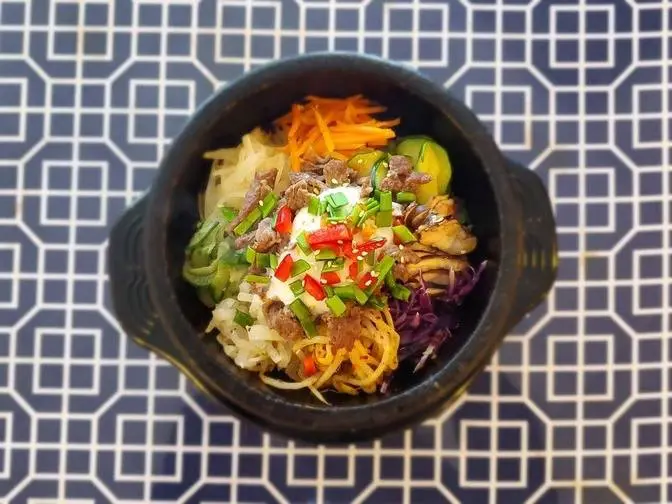
Come explore 8 delicious food highlights in Wando with me! 🍜🌊 Wando is a charming little island in South Korea, known for its beautiful beaches and incredibly tasty food. The best part? Hardly any tourists know about it yet! If you visit in the off-season, it’s amazingly peaceful—think almost empty beaches and fantastic local restaurants.
Getting here is super easy too: there are direct buses from Incheon to Wando, so it’s a perfect hidden-gem destination that’s totally worth the trip.
While you’re here, make sure to try the local abalone (a true specialty of the island!) and check out Wando Tower for an awesome view.
Fun fact: Wando is actually very close to Jeju, South Korea’s largest and most famous island—but it’s way quieter and still feels like a secret spot.
Let’s discover this underrated island together! ✨🌴
Mokbang tour Korea 2
This place is famous for the best abalone and much more.
I'm showing you 8 culinary highlights on the small island of Korea.
My second Mokbang tour takes place in Wando.
I linked my first Mokbang tour in Chinatown in Incheon in the video,
in case you haven't seen it yet.
Sundae Gukbap
Literally translated, Sundae Gukbap means Korean blood sausage soup with rice.
It might not sound very appetizing at first, but trust me, it's incredibly delicious.
The soup base is a rich bone broth.
Many side dishes, banchan, are served with it.
Sundae isn't filled only with blood, but also with glass noodles and vegetables,
depending on the type.
The flavor is hard to describe.
It's mild and earthy.
Since the sausage is unseasoned, it's often dipped in salt.
The soup is also unseasoned, so I season it with chili paste and saeu-jeot.
Saeu-jeot are small salted, fermented shrimp
used to season many Korean dishes such as soups and kimchi.
This fishy salt pairs perfectly with meat
and is also popular as a dip for steamed pork or sam.
Sundae is a popular street food in Korea,
comparable to bratwurst in Switzerland or görevurst in Germany.
The sausage is sliced and served with salt or saeu-jeot.
Often, other organs like steamed pork liver are added and also dipped in salt.
I also love eating sundae with kimchi.
Spicy, sweet, and sour kimchi goes perfectly with the earthy sausage.
Sundae soup is usually found in specialized restaurants rather than as street food.
Abalone, 6-course menu
Abalone, also called sea snail, are seafood and a local specialty in Wando.
About 80% of the abalone eaten in South Korea come from Wando.
They are known for their high quality.
This restaurant offers various abalone dishes, including set menus.
I posted a detailed video about this 6-course menu.
See the link.
First course, jeonbokhoe.
Raw sliced abalone eaten with dipping sauce such as chojang,
chili paste mixed with vinegar, or without sauce.
Raw abalone has a special texture similar to cooked cartilage, slightly firm and crunchy.
The taste is very fresh, like a mix of oysters and squid, with a strong ocean flavor.
Second course, jeonbokmulhoe.
Cold soup with finely sliced raw abalone, vegetables, salad, and ice cubes,
seasoned with a sweet spicy gochujang sauce.
Very refreshing and perfect for hot weather.
Third course, jeonbokbokkeum.
Stir-fried abalone slices with vegetables in a Chinese style.
When cooked, abalone becomes tender and very delicious.
Fourth course, jeonbokjjim.
Steamed abalone.
This was my favorite.
Buttery soft and tender, with an intense natural flavor.
Dipped lightly in sauce.
Heavenly.
Fifth course, jeonbokbotteokgui.
Abalone fried in butter with diced carrots.
Still tender, but too heavy oily for me.
The strong butter flavor overpowers the abalone, which I find a shame.
Sixth course, jeonbokjuk.
Rice porridge with abalone.
The perfect ending.
It's unseasoned, so everyone can add salt themselves.
Perfect with kimchi.
Abalone hot dog with loquat juice.
We visit Wando Tower, which is 76 meters high and offers a 360-degree view.
On clear days, you can even see Jeju Island.
There's also a cafe inside.
At the cable car station, we stop at a snack stand
and get an abalone and cheese hot dog and loquat juice.
Hot dog is a Korean street food, usually filled with cinnamon and sugar,
but there are savory versions too.
This was my first time trying the abalone and cheese version.
The dough is slightly sweet, crispy outside and sticky and fluffy inside.
I love the combination.
The mild cheese lets the abalone shine.
The loquat juice is refreshing and sour, almost like a slushy, which I really like.
After the snack, we take the monorail back down to the city.
Haemultang, seafood stew.
The owner takes fresh seafood from the aquarium.
First, we get side dishes.
Mung bean sprouts, fried anchovies, acorn jelly,
mustard leaf kimchi and grilled fish, which I dip in gochujang.
Haemultang is served in a pot on a gas stove.
The seafood and vegetables are cooked right in front of us.
It includes various clams, abalone and squid, unfortunately no shrimp.
The soup is rich and spicy.
At the end, we order ramen noodles and cook them in the broth.
So good!
Gejang and tteokgalbi.
After a beach walk, we go to a restaurant famous for its side dishes.
We order a set with tteokgalbi and two types of gejang.
Ganjang, soy sauce and yangnyeom, sweet spicy marinated raw crab.
The tteokgalbi with abalone is placed on a grill.
There are many side dishes like seaweed soup and grilled fish.
Tteokgalbi is already cooked, the grill just reheats it.
Tteokgalbi is a Korean beef patty made from short ribs.
It used to be royal cuisine.
It's sweetly seasoned, a bit too sweet for my taste.
The name comes from its soft texture, which resembles rice cake tteok.
As a child, I thought tteokgalbi was a burger with rice cake buns.
Yangnyeom gejang is sweet and mildly spicy,
but the marinade is so strong that it overpowers the crab.
I prefer ganjang gejang, which has a milder flavor.
Eating gejang is tricky.
You bite into the shell to squeeze the raw meat into your mouth.
The meat is creamy and tender, unlike cooked crab, which is firmer.
Sometimes shell pieces end up in your mouth and it gets messy.
I love squeezing the meat into rice cake and mixing it.
It becomes creamy and delicious.
Overall, despite its reputation, the restaurant wasn't very special.
Duck barbecue and dessert from Baribaget.
We chose this restaurant spontaneously.
After so much seafood, I wanted meat.
We grill thinly sliced duck marinated in soy sauce.
There's a sweet peppery dipping sauce that goes perfectly with it.
Sam is a musk. It means wrapped.
You use lettuce leaves instead of tortillas
and fill them with meat, sauce, garlic and scallions.
So good.
You can also make sam with tofu or fish.
Everyone can customize it.
At the end, the meat is mixed with rice, dried seaweed and mung bean sprouts.
The rice gets crispy and delicious.
On the way back, we stop at Baribaget and buy some sweet breads.
Peanut cream bread.
Nutty and creamy.
White cream bread.
Less sweet than expected, airy and creamy.
Chapssal doughnuts.
Made with sticky rice similar to Swiss porcini.
Usually filled with red bean paste but not this time.
Very oily but still tasty.
Injeolmi Patbingsu.
Patbingsu, a traditional Korean dessert made with shaved ice,
red beans, rice cakes, condensed milk and nuts.
Modern versions include mango, strawberry or coffee.
I prefer the traditional version with red beans.
This one also has injeolmi, soybean powder,
which tastes nutty and slightly bitter.
Perfect balance to the sweetness.
The ice melts in your mouth.
Sundubu jjigae.
It's our last evening in Wando.
We visit a restaurant specializing in sundubu, silken tofu.
We all order modum sundubu, which includes a bit of everything.
Meat, clumps, etc.
We get raw eggs to add to the boiling soup,
which stays hot thanks to the clay pot, ttukbaegi.
Rice is served in a hot stone bowl.
We remove the rice from the bowl.
The stock rice is intentional.
Hot water is poured into the bowl and covered.
The sundubu soup is rich and even contains crab legs.
I loved everything about this dish, including the side dishes.
After eating, we stir the rice in the stone bowl and drink the water.
It has a wonderful roasted flavor.
A perfect last dinner in Wando.
Wando is definitely a place I would visit again.
Just for the abalone alone, it's worth it.
The beach is beautiful and almost empty in the off-season.
Next video, Jeju.
So stay tuned.
Thank you for watching and see you next time.
Bye.