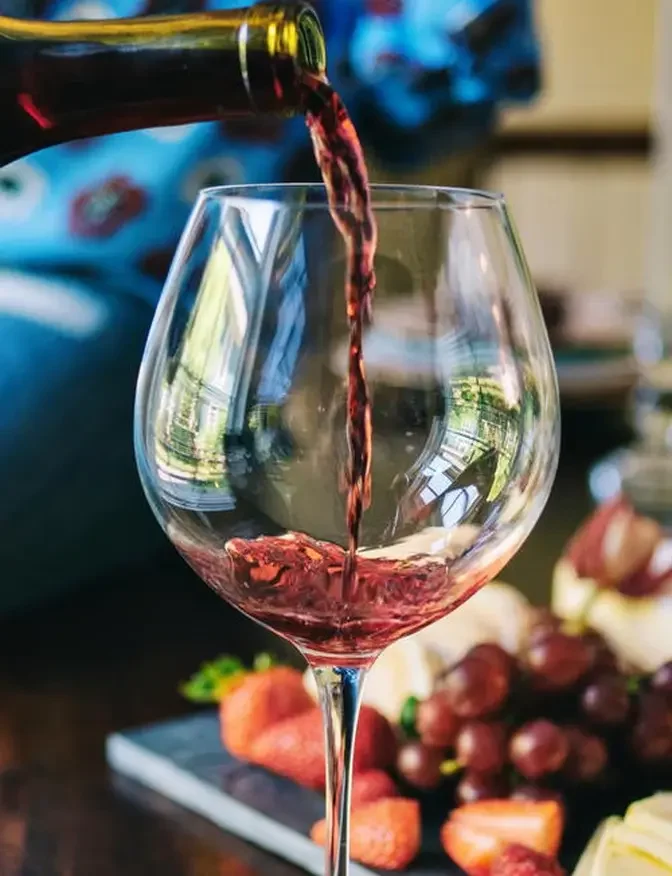
Pinot Noir, one of the world’s most beloved red wines, is the star of this video! 🍷 Whether you're a wine enthusiast or a beginner exploring the world of wine, this guide will provide everything you need to know about Pinot Noir. From its origins in Burgundy, France, to its unique flavor profile and food pairing possibilities, we break down all the essentials to help you appreciate this elegant varietal. ✰ BUSINESS ✰ [email protected]
✰ DISCLAIMER ✰ THIS CHANEL, ITS CONTENT, AND SOCIAL MEDIA ACCOUNTS ARE INTENDED SOLELY FOR AUDIENCES OF LEGAL DRINKING AGE. PLEASE DRINK RESPONSIBLY.
🍷 Learn about the key regions where Pinot Noir thrives, including France, California, Oregon, and New Zealand. Discover its signature tasting notes—think red cherries, raspberries, and earthy undertones—and how climate and terroir influence its character. We'll also share tips on selecting the best Pinot Noir and how to serve it for maximum enjoyment.
🍷 This video is perfect for wine lovers looking to deepen their knowledge and elevate their tasting experience. Don’t miss out on learning about this iconic red wine! Cheers to your next glass of Pinot Noir! 🥂
Hi everyone! Welcome back to my wine diary. If you are new to this channel, please consider
subscribing. Of course, if you like this video today, at the end of it, go ahead and subscribe
and then check out my other ones out there. And if you are my returning subscriber, thank you so
much for being here again. I really appreciate your support. You guys, Pinot Noir is truly one
of my favorite grapes and the wine is just so perfect for any occasion. I love, I love, love,
love, love, love Pinot Noir. And way back when my wine journey just started many, many moons ago,
Pinot Noir used to be my absolute go-to and the wine that I would always get in restaurants,
in stores, drink it at home. I mean, it was just my go-to all over the place,
partially because I didn't know any better. I wasn't really that much into wine, so I just,
at that point, had not discovered any other wine types that were perhaps a little bit better in
some aspects than Pinot Noir, but I used to drink it religiously. And still to this day,
I go back to Pinot Noir an awful lot, really an awful lot. So let us talk about this wonderful
grape, where it comes from, what it just looks like and tastes like, and we'll compare
a couple of bottles that I brought for you here today. One is a French Pinot Noir, extremely
popular country to grow Pinot Noir grapes. And then another one is a Californian Pinot Noir as
well. I'm sure there's a lot to talk about, so let's go ahead and jump right in. As per usual,
let's cover the basics first. Pinot Noir is a red grape varietal that has French origin to it,
but it's popular all over the world for its light to medium body and a very fruit-forward taste.
Pinot Noir is arguably the most well-known red wine in the whole world, and honestly,
I believe that. As I said, it used to be my go-to for a very long period of time. So as I said,
it originated in France, specifically so in the Burgundy area of France. Still is very,
very highly produced there as well, but it has now grown all over the globe. You name it.
New world, old world. It has grown in New Zealand, in Australia, in Chile,
quite literally pretty much everywhere. United States, I mean, California, Oregon, we'll talk
about the Americas specifically in just a second here. It is, however, notoriously hard to grow,
and we will talk about this in a second as well. Not too many people know just exactly how hard it
is to grow a Pinot Noir grape. So it is a light to medium body wine, and it pairs extremely well
with food. It also has some aging capabilities to it as well. More on that in just a second.
As most of you guys already know, in France, the wines are labeled by the region in which they
were grown at. And just like you see Bordeaux on bottles of wines, for the wines that were
grown in the region of Bordeaux, here we have Burgundy. So Pinot Noir is labeled as Burgundy
or Bourgogne in French, and that just means that that's Pinot Noir from the Burgundy region of
France exactly. So Pinot Noir is an amazing grape, like I said, in France specifically.
Another peculiar thing, very important thing to know, is that alongside Pinot Meunier and Chardonnay,
our Pinot Noir is a key ingredient in the champagne making. So it's one of the three
grape varietals that is used in the making of champagne. You guys, Pinot Noir is old. It's an
old grape varietal. It goes back to 14th century is when it was first mentioned in some history
books, but truly it wasn't until the 18th century when it started to actually gain that recognition
and popularity. Let's talk about its name. It's clearly a French name, Pinot Noir. So Pinot means
pine in French, and the reason why it's called pine or Pinot Noir, Noir means black for the color
of the grape itself. So white pine, a little strange, right? But if you think about a pine cone,
you flip it upside down and that's how the cluster of Pinot Noir actually looks like. And Pinot Noir,
so it's darker in color, for that reason it just resembles a dark pine cone, hence the name. So
speaking about those clusters, that is exactly why Pinot Noir is such a pain to grow and winemakers
know it. It is very susceptible to viticulture hazards like rot, for instance. The clusters
themselves, if you look at those clusters, you can see how grapes are attached very closely to
each other on the vine and on the cane itself. And for that reason, the airflow is not really very
free-flowing through the grapes, so that allows some rot happening every once in a while. But then
what it also does is because the grapes are so tightly attached to each other, it allows some
uneven ripening, which is definitely not ideal. So a very tedious and careful viticulture
and vines management is what's needed here. And for that reason, this specific grape varietal is
just known for being hard to grow. Another thing is like climate-wise, you have to think about
Pinot Noir's skin. It's a thinner skin on the grape. So because of that, sometimes it can get
burned. It's more suitable really for cooler climates. So when it comes to France, for instance,
it's a little bit cooler. And in the United States, say like Oregon versus California,
so our California winemakers have a way harder time to manage their vines not to get burned at
times because it gets pretty warm in California versus Oregon has cooler climates. So that problem
is largely diminished in that area. Before we dive into the two bottles that I have here,
in general, when it comes to flavors and aromas, Pinot Noir is really described with red fruit. So
we're talking about red cherries here, plums, sometimes red plums. We talk about apples every
once in a while, but then Pinot Noir also has a pretty common tendency of having the earthiness
to it as well. So very often you would hear people describe the smell and sometimes even
the taste of Pinot Noir as mushroom tasting or mushroom smelling. And sometimes like earth and
dirt soil, like you would hear those terms as well. Those are not bad terms necessarily,
depending on the context, of course, but those are just general characteristics. So
here we have wines with low tannins. So for the most part, Pinot Noirs are not meant to be aged.
There's some exceptions to that rule, again, depending on where the grape comes from exactly.
But for the most part, the low tannins mean no aging or very minimal aging and then medium to
high level of acidity, which makes it absolutely perfect to pair with food. Pinot Noir goes with
so many foods. It would take me forever to start naming all the foods that it would go good with,
but honestly, the spectrum is just so large. Anything starting from the cheeses and charcuterie
boards, appetizers going into lighter meats like poultry and then fish and even some of the darker
meats as well. So it's just about a matter of liking here. Try it with different foods,
see what really fits your palate a little bit better, but it's a very versatile, beautiful
wine. So let's talk about the two bottles that I have here specifically. The first bottle that I
have here is a Burgundy Pinot Noir. So like I said, French wines are labeled by the region in
which they're grown. In this case, we don't really call it Pinot Noir, we call it Burgundy. So
Burgundy wine. And this one specifically is a 2021 Pinot Noir. So let's just go ahead and smell this
one and see what this one does to us. Here is the color. The color is a beautiful ruby red.
And when we talk about Pinot Noir, so the flavors that come through on the nose and on the palate
are flavors of ripe red berries, cherries, apples, and mushrooms. So some earthiness to them. Like I
said, a lot of times sommeliers use the terms of damp forest floor or leaves or earth, soil. Those
are not bad terms at all to have for Pinot Noir. It all has to do with the terroir in which it's
grown. And for that specific area of the world, that is actually a good quality. So let's go ahead
and smell this one. Yeah, it definitely has some oomph to it. There's more than just berries here.
So this wine, Pinot Noir in general, is very complex. And the Burgundy Pinot Noir specifically
have that gorgeous complexity behind them that are not only fruit forward. So here's where you do
smell that umami of mushrooms. Here's where you do smell that forest floor a little bit. And
100% some red cherries and plums on this one, too. Let's go ahead and taste it. This one has
a pretty smooth finish. It's a medium body red wine, and it's got low to medium acidity, I would
say. I immediately have some food pairing suggestions. It's crazy how it hits me sometimes,
but I, for some reason, immediately thought of soft cheeses here. So think about your brie cheese.
Maybe softer blue cheese would go really good with this one, but specifically brie,
some nice rich brie that's super creamy. And then anything chicken, but a richer chicken. So not
just crisp chicken, but say maybe like a teriyaki chicken, for instance. I'd love to have some
teriyaki chicken with my Pinot Noir right now. So that would pair really, really well. But overall,
a very good well-balanced complex wine like this one. It's not that old, only two years old. Like
you see, Pinot Noir does not really need aging. It's meant to be consumed at earlier stages,
but that doesn't mean that at times there isn't some aging capabilities behind them. Let's go
ahead and try the California one now. Okay. The second Pinot Noir that I have is from Santa
Maria Valley. It's central coast of California. This is how the bottle looks like. Both of the
wines that I am drinking today are from Trader Joe's. I actually highlighted them in my Trader
Joe's alcohol, the other video that you can go and watch after this one. So this one here, let's
talk about the United States and Pinot Noir in general in the United States. Here, I'm a little
bit on the fence about American Pinot Noir. It's just because my personal preference lies with the
Oregon Pinot Noir. It's just because they resemble our Burgundy Pinots a little bit better.
And I like that delicacy. I like that elegant, delicate flavor of a Pinot Noir,
similar to the Burgundy ones. And that's what you get in Oregon. California, on the other hand,
is different. So here, we definitely have a completely different profile. So they're way
more complex. Climate is warmer. Think about where Oregon is and where California is. So of course,
with this location being down south compared to Oregon, the wines will be
a little bit more rich. They'll be a little more complex, higher in alcohol as well. But then,
in general, so the one similarity between the Oregon wines and then just the location, I guess,
of growing between Oregon and California is that the Pacific Ocean, the breezes that come from the
ocean, all of that provides a perfect, absolute perfect growing condition for our grapes and
Pinot Noir specifically. But let's go ahead and smell this one from California. Oh lord, yeah,
this is very different. This is very different from our Burgundy Pinot Noir. So this one immediately,
first of all, I don't even have to read the bottle, but I bet you anything if I read it right now,
I would find out that this was aged in oak. I can smell that tobacco vanilla
notes here. Yes, this was definitely briefly aged in oak barrels. But on top of that,
even if we put the oak aside, this is a very different smelling wine. So here we move on to
darker red berries. So we're talking like black cherries and rich plums, perhaps. This one has
some leather smell again because of the oak aging, I'm assuming. But then you also smell some spices
in this one. So like nutmeg, cinnamon, something like that. So it's definitely a very different
profile, even on the nose already. But let's go ahead and taste it. You know, I would say it's
actually not as smooth of a finish as the Burgundy one was. So this one is low tannins. It's probably
closer to medium acidity for me, my mouth water, just a little bit more tasting it. And I definitely
get what I just named on the palate here as well. I do taste the oak. I definitely do taste the
vanilla flavors here. So it was most likely aged in oak for a while. And then the nutmeg comes
through. So spices, you know, it's definitely more aromatic in sense that it's just, it's got a little
more depth in it than the Burgundy one does. But me personally, my preference lies with the more
delicate, beautiful, elegant Burgundy and Oregon Pinot Noir. But to each their own. So I strongly
encourage for you to try both. Both of these wines are great. When it comes to food pairings here,
I would go in a bit of a different direction. I would probably go for a very meaty, heavier fish
here. So I would try like a good tuna steak with this one or a mahi steak. I perhaps would go for
a good salmon dish or darker poultry, maybe something like a duck confit or I don't know,
like Turkey of some sort perhaps. So this is what this wine calls for in my opinion. It's just not
as elegant and light as the Burgundy one was. Guys, this is everything for today's video. This
is just the absolute scratch of the surface on Pinot Noir. Please let me know if you like Pinot
Noir as much as I do down below in the comments and give me any other video ideas. If you have
any questions, I'd be happy to shoot those videos for you. Thank you for being here and until next
time, cheers everyone!