
Charles Stanford - Cello Sonata No. 1, Op. 9 (1878)
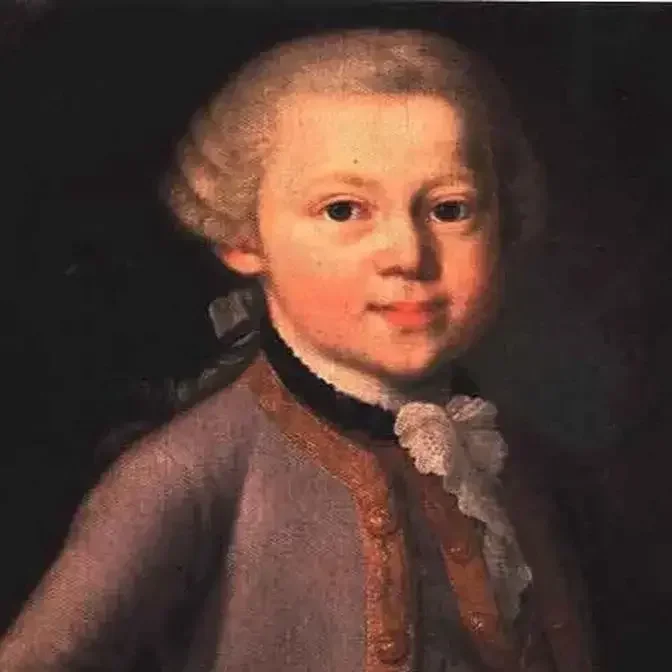
Sir Charles Villiers Stanford (30 September 1852 – 29 March 1924) was an Irish composer, music teacher, and conductor. Born to a well-off and highly musical family in Dublin, Stanford was educated at the University of Cambridge before studying music in Leipzig and Berlin. He was instrumental in raising the status of the Cambridge University Musical Society, attracting international stars to perform with it.
Please support my channel:
https://ko-fi.com/bartjebartmans
Cello Sonata No. 1 in A major, Op. 9 (1878)
Dedication: Robert Hausmann (1852-1909)
I. Andante con moto — Allegro moderato (0:00)
II. Allegretto vivace (10:10)
III. Molto adagio — Allegro (15:31)
Alison Moncrieff Kelly, cello and Christopher Howell, piano
This is the first significant British Cello Sonata.
It was given its British premiere 26 March 1879 by Hausmann with the composer at the piano. There was possibly a private performed earlier - organized by Ferdinand Hiller in October 1878.
In 1879-80, Charles Villiers Stanford wrote a Cello Concerto in D minor for Robert Hausmann. This followed Hausmann's premiering in England Stanford's Cello Sonata, Op. 9, in 1879. In 1881 Hausmann premiered Max Bruch's Kol Nidrei, Op. 47, which was dedicated to him. Bruch wrote this in response to a longstanding request from Hausmann to write a piece for cello and orchestra to match those he had written for violin and orchestra. Bruch also consulted Hausmann about bowings and other technical aspects. Bruch's Canzone in B-flat, Op. 55, and Vier Stücke, Op. 70, are also dedicated to Hausmann.
Hausmann's most significant association was with Johannes Brahms. After they first played together in 1883, he was a frequent guest among Brahms's circle of friends who had private performances in their homes. The Cello Sonata No. 2 in F major, Op. 99, was both dedicated to and premiered by him in Vienna, with the composer at the piano (14 November 1886). He also popularized the Cello Sonata No. 1 in E minor, Op. 38. In November 1891 he participated in the first private performance, in Meiningen, of the Clarinet Trio in A minor, Op. 114, with Richard Mühlfeld on clarinet and Brahms on piano. The following month they had a triumph with the public premiere in Berlin. Further, Hausmann was part of the Berlin premieres of Brahms's Piano Trio in C minor, Op. 101, the Quintet in G major, Op. 111, and the Clarinet Quintet, Op. 115.
Most importantly, Hausmann and Joseph Joachim were the two soloists for whom Brahms wrote the Double Concerto in A minor, Op. 102, his last orchestral work. Brahms worked with both of them on the piece before its premiere in Wiesbaden on 18 October 1887. The critic Eduard Hanslick wrote that Hausmann was "in no way inferior to Joachim." As part of the Joachim Quartet, Hausmann championed all of Brahms's chamber music for strings, which were regularly featured on the Quartet's Berlin concert series for over thirty years. Besides the Quartet, Hausmann was a founding member of a piano trio group, made up of his colleagues at the Hochschule, Heinrich de Ahna (with Emanuel Wirth replacing de Ahna after he died in 1892) and the pianist Heinrich Barth. They started a subscription concert series in Berlin that lasted from 1878 until 1907. Their concert season was similar to the Quartet's, starting in October and ending in March. Their first years of playing were in the Singakademie. However, in 1889 they started playing "popular chamber music evenings" in the much larger Philharmonie, where they usually filled the 2000-plus seats.