
The Real Reason Behind the Size of Victorian Dresses
87 Video Views·Mar 27, 2026
AI GeneratedMay contain errors
Imagine carrying 20 kilograms of poison every single day, not in a bottle, not in a vial,
wrapped in silk, pressed against your skin, brushed across your throat, floating in the air
you breathe, you wake up, you dress, you walk into society and slowly it begins to kill you.
Victorian women did this every day without realising it. Their dresses were not just
uncomfortable, they were not simply impractical, they were deadly. But the real scandal wasn't
the poison, the real scandal was that everyone knew something was wrong and almost no one stopped
it. For nearly two decades an entire industry made fortunes while workers collapsed inside
dye factories. Families became mysteriously ill, women fainted in drawing rooms, doctors wrote
strange diagnoses and while the evidence piled higher and higher, the response from those making
the money was not apology, not reform, just silence. This is the story of the colour that
killed thousands and the business that quietly allowed it to happen. London, 1860. Every morning
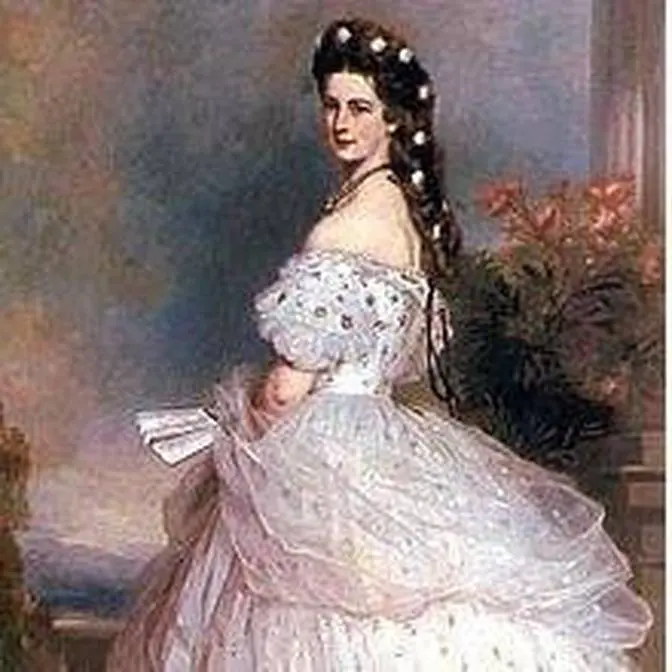
the streets filled with impossible silhouettes, women drifting through the fog like walking
architecture, giant bell-shaped figures floating above the pavement, dresses so wide they occupied
the space of three people. Some women could not pass through a doorway without turning sideways,
others could barely sit. From a distance the effect was majestic, elegant, almost theatrical.
Up close it was something else. A Victorian gown could weigh 20 kilograms, layers of cloth,
wire, steel, starch, decoration. Getting dressed took nearly half an hour and no woman could do
it alone. The ritual began with the chemise, soft cotton worn against the skin. It was the only
barrier between flesh and the machinery that came next. Then came the drawers, tied at the waist.
In the 1860s women's undergarments were still separate pieces rather than a single garment.
The reason was simple practicality. With so many layers of clothing, visiting the bathroom was
already a complicated operation. But the real transformation began with the corset. A maid
would pull the laces from behind, at first gently, then harder. Whalebone ribs inside the corset
pressed inward. The goal was to shrink the waist dramatically, 5 centimetres, 10 centimetres,
sometimes 15. The ideal waist measurement for fashionable society, around 45 centimetres.
Some women pushed it further, 40 centimetres, 38. Doctors warned of compressed organs, breathing
problems, fainting spells, even permanent deformation of the ribcage. But fashion was
stronger than medicine, and the corset was only the beginning. Next came the invention that
transformed Victorian fashion forever, the crinoline. Introduced widely around 1856, the crinoline
replaced the enormous stacks of petticoats women had previously worn to create volume.
Before the crinoline, achieving the fashionable silhouette required six or seven heavily starched
underskirts. The weight was unbearable. Steel solved that problem. The crinoline was essentially
a cage made of flexible steel hoops, widening from the waist down to the floor like a bell.
Suddenly dresses could become massive without crushing the wearer under fabric.
But the new structure created its own dangers. The widest hoop could stretch nearly two metres across.
When a woman walked, the entire structure moved with a strange independent life.
A sudden gust of wind could lift the rear hoops and reveal the wearer's legs.
The satirical cartoons from the time loved mocking these moments. Women had to relearn basic
movement. Small steps. Never run. When sitting, push the back of the dress downward with both hands.
When entering a doorway, turn sideways. When climbing into a carriage, step backward first.
Even a simple walk across the room required choreography. And then there was the greatest
danger of all. Fire. Victorian homes were filled with open flames. Candles, fireplaces, oil lamps,
wood-burning stoves. The crinoline acted like an inverted chimney. If the bottom of a dress brushed
against a flame, the fire could shoot upward through layers of fabric in seconds. Victorian
newspapers recorded tragedy after tragedy. Lady Margaret Wilson, only 18 years old, died after
her dress caught fire near a drawing room fireplace. Servants tried to extinguish the flames.
They were too late. Another report described young Emma Carter, whose crinoline became tangled in the
wheel of a passing omnibus. She was dragged nearly three meters before the driver managed to stop the horses.
Between 1858 and 1865, more than 3,000 women in England died in accidents involving their dresses.
3,000. And yet the fashion continued. Because behind the beauty, there was money. A great deal of money.
An evening gown for high society required 15 to 20 meters of fabric. A daytime dress might need
8 to 12 meters. Wealthy women changed outfits three or four times a day. For textile factories,
it was paradise. More fabric meant more sales. More sales meant more profit. And then, in 1856,
something happened that would supercharge the entire system. An 18-year-old chemistry student
named William Henry Perkin made a discovery by accident. While attempting to synthesize quinine
in a laboratory experiment, he created the world's first synthetic dye, a vibrant purple called mauveine.
Before Perkin's discovery, dyes came from nature. Plants, insects, minerals. The process was slow
and expensive. Colours faded quickly. Synthetic dyes changed everything. They were brighter,
stronger, cheaper to produce. And some of them were extremely poisonous.
Among the most fashionable shades of the Victorian age were three closely related colours.
Schiele's green. Paris green. Emerald green. Different names. Same deadly secret. Arsenic.
Lots of it. The story began decades earlier. In 1775, Swedish chemist Carl Wilhelm Schiele
created a brilliant green pigment by mixing copper arsenite. It was stunning. Brighter than
any natural green known at the time. It resisted fading in sunlight. Artists loved it. Manufacturers
adored it. And almost no one worried about the arsenic. Or perhaps they knew and simply ignored it.
By the early 19th century, the pigment was everywhere. Wallpaper. Paint. Candles. Artificial
flowers. Children's toys. Even sweets. And, of course, fabric. In 1814, chemists introduced an improved
version called emerald green, also known as Paris green. A compound containing more than 60% arsenic.
It was dazzling. The perfect shade of spring leaves and fresh grass. Queen Victoria wore it.
Empress Eugenie of France wore it. Soon, every fashionable woman wanted an emerald green dress.
And this is where fashion quietly turned into something darker. The larger the dress, the more
fabric required. The more fabric required, the more dye needed. The more dye produced, the more
money factories earned. A single emerald green evening gown could contain up to 60 grams of arsenic
embedded in its dyed fabric. 60 grams. Enough poison to kill several people under the right
conditions. But no one told the women wearing them. Soon, mysterious illnesses began appearing.
Women complained of constant headaches. Nausea. Skin sores wherever the fabric rubbed against
their bodies. Hair loss. Digestive problems. Numbness in the hands and feet. Doctors had
explanations. They called it neuralgia or female hysteria. Sometimes simply nervous weakness.
Rarely did anyone suspect the dresses. But inside dye factories, the danger was impossible to ignore.
Workers who produced emerald green pigment often survived only months on the job,
sometimes weeks. Arsenic dust filled the air. It coated their skin. They inhaled it with every
breath and carried it home in their clothing. One factory inspector visiting London in 1862
described what he saw inside a dye plant operated by Nicholson and Sons. Four workers had died
within three months. Here, the survivors had skin tinted slightly green. Their hands trembled
constantly. Some had lost their fingernails. Another testimony came from a young woman working
in an artificial flower factory in 1861. She spent her days crafting green decorative roses
for fashionable hats. The powder was everywhere. After each shift, she said, she vomited for hours.
Painful sores covered her hands, but she kept working. She needed the wages. The poison was
not hidden. It was floating in the air. Then science finally caught up. In 1862, German
chemist August Wilhelm von Hoffmann demonstrated that fabrics dyed with arsenic pigments could
release toxic vapors, especially in warm or humid environments. In other words, when a woman wore an
emerald green dress in a crowded ballroom, she might literally be breathing arsenic.
Hoffmann presented his findings to the Royal Society. Newspapers reported the research.
The evidence was alarming, and the textile industry responded with a strategy as old
as profit itself. Silence. Not denial. Not scientific rebuttal. Just silence.
Because the green dye trade had become an empire. Factories across England, France,
Germany and Switzerland produced massive quantities of the pigment. Thousands of workers
depended on it. Millions of pounds flowed through the industry. E-fashion magazines,
funded by advertising from textile houses, rarely printed medical warnings. Dressmakers earned
commissions based on how much fabric they sold. Department stores prominently displayed green
gowns because they were among the most profitable garments available, and the customers kept buying
because no one told them the truth. An emerald green dress in 1863 could cost between £15 and £50
depending on quality. For comparison, the governess might earn £20 per year.
Victorian fashion wasn't just vanity. It was economic theatre. A huge dress demonstrated
wealth. It showed your family could afford wasted fabric, wasted space, wasted practicality.
And manufacturers knew it. Every season the dresses grew larger. By 1860 the crinoline
reached its maximum scale. Some measured three metres in diameter. The woman effectively carried
her own personal room wherever she walked. Textile factories recorded record profits,
but the deaths continued rising. Not just from fire. Not just from accidents. From slow poisoning.
Still, the connection remained blurry. Until one physician began to notice something impossible to
ignore. In 1862 London doctor Thomas Orton documented several strange cases. Entire
families were becoming ill at the same time. Vomiting, convulsions, extreme weakness. Some
patients died. Orton investigated food, water, infectious disease. He found nothing. Then he
looked at the walls. Bright green wallpaper. Emerald green. In every room of the affected
houses. Orton collected samples and analysed them. The results were horrifying. The wallpaper
was shedding arsenic-laced dust into the air. Families were slowly poisoning themselves inside
their own homes. He published the discovery in the British Medical Journal. Other doctors began
investigating similar cases. Again and again they found the same culprit. Green wallpaper,
public outrage followed. But when journalists pointed out that dresses used the same pigment,
often in even greater amounts, the tone shifted. The London Times urged caution.
Wallpaper was different, they argued. It remained constantly exposed to air. Dresses were only worn
temporarily. Temporarily. As if women didn't wear them for 12 hours a day, every day. Still,
the seed of doubt had been planted. Then came a death that the public could not ignore.
In 1863, a 19-year-old artificial flower worker named Mathilde Schurer died from severe arsenic
poisoning. Her job involved dipping decorative leaves into emerald green pigment. Her illness
was documented in painful detail. Green vomiting. Violent convulsions. Days of agony before death.
Newspapers reported every horrifying symptom. Suddenly society began asking questions.
Is my dress safe? Is green truly necessary? Shopkeepers responded with vague reassurances.
Our products are of the highest quality. There is no conclusive evidence of danger.
But reform movements were growing stronger. Groups such as the Rational Dress Society
began challenging the entire structure of Victorian fashion. Why must women carry 20
kilograms of cloth? Why should a waist be smaller than a human head? Why risk death
simply to appear elegant? Doctors joined the chorus, publishing studies describing the damage
caused by corsets, compressed ribs, displaced organs, complications during pregnancy. The
evidence was overwhelming. Yet manufacturers resisted. In 1864, several dye producers
issued an open letter claiming that moderate amounts of arsenic posed no danger. They
dismissed the warnings as exaggeration. As hysteria. That word was not accidental. In the
Victorian world, complaints by women could easily be dismissed as emotional instability.
But this time something was different. The warnings were coming not only from women,
but from chemists, physicians, scientists, respected men. And they all agreed.
Arsenic green was dangerous. Governments finally began to react.
In 1865, France banned arsenic pigments in wallpaper. Germany followed in 1866. Britain
resisted longer, but the reputation of the colour was already damaged. By 1875,
serious restrictions arrived, and fashion quietly changed. Women began requesting other shades.
At the same time, the enormous crinoline slowly shrank. In 1867, the average diameter dropped to
about two metres. In 1868, around one and a half. By 1869, a new structure appeared,
the bustle, which concentrated fabric at the back rather than forming a full bell shape.
Suddenly, women could pass through doors again. In 1870, the age of the giant crinoline effectively
ended. Was it because society suddenly cared about women's health? Because people recognised
the injustice? Not exactly. The explanation was simpler. The industry had found a new way to make
money. The new fashion styles required more separate pieces, more trimming, more decorative
elements. Less fabric overall, but far more sewing. More labour, more profit per garment.
And new synthetic dyes without arsenic were now available. Magenta, aniline, fuchsine.
Bright colours without the scandal. The shift was not moral. It was economic.
Victorian fashion was never truly about elegance, or beauty, or femininity. It was about industrial
profit. About turning chemistry into commodities. About selling as much fabric as possible
regardless of the human cost. The enormous dresses were the perfect product of the industrial age.
Impractical. Dangerous. Completely unnecessary. And incredibly profitable.
Victorian women didn't freely choose those clothes. They were sold to them.
Through advertising. Through social pressure. Through the promise of beauty and status.
And when the poison became impossible to ignore, the industry did not stop out of conscience.
It stopped because the scandal threatened sales.
The real story of Victorian dresses isn't found in romantic paintings or costume dramas.
It lives inside the dye factories where workers dyed with green-stained skin.
Inside accounting ledgers showing profits multiplying year after year.
Inside the silence of fashion magazines dependent on advertising from the very
companies producing the poison. Victorian fashion was a quiet pact. Women accepted discomfort,
restriction and danger. In return they received the illusion of belonging to a higher class.
But the true cost was paid elsewhere. By factory workers mixing toxic pigments.
By families living inside arsenic-covered wallpaper. By women unknowingly wearing
poisoned dresses. And when the era finally ended, it wasn't because society woke up.
It ended because industry discovered a more efficient way to sell.
That is the real history behind Victorian fashion. Not a fairy tale of lost elegance,
but a warning. Because fashion, like every industry, ultimately answers one simple question.
How much can we sell, no matter the cost? If this story shocked you,
leave a like and subscribe for more dark history documentaries like this.
Now type the single word horrified in the comments.
I want to see how many of you made it to the very end and discovered the terrifying truth.