
The Hidden and Horrifying Way Victorian Women Used the Toilet in Towering Dresses
32 Video Views·Mar 16, 2026
Picture yourself trapped inside what can only be described as architectural engineering disguised
as fashion. Layers upon layers of fabric surround you, enough cloth to shelter a small family.
Your waist is pulled inward by a corset so tight that even calm, measured breathing feels like a
skill you must consciously practice. Steel hoops expand your silhouette outward,
transforming your body into a moving structure that dominates every room you enter.
This is not exaggeration. This was daily life for many Victorian women,
and it made even the most basic human needs feel like a carefully planned operation.
The Victorian world prized elegance, restraint, and appearance above almost all else.
To look composed was to be moral. To look effortless was to be virtuous.
And yet, behind that serene exterior, women were navigating one of the most physically
demanding clothing systems in human history. Fashion was not merely decorative. It was
structural. It shaped bodies, controlled movement, and dictated how women interacted
with the world around them. Every day began not with freedom, but with preparation.
The process started with a thin linen shift, the most intimate layer, designed to protect
costly outer garments from direct contact with skin. It absorbed sweat and oils, quietly doing
the invisible work that preserved respectability. Over this came the corset, tightly laced,
often reshaping the ribcage itself over time. Despite modern myths, corsets were not always
instruments of torture, but they were instruments of control. They enforced posture, restricted
breathing, and reminded the wearer, constantly, to remain contained. Next came the petticoats,
not one or two, but sometimes six or seven, each adding weight, warmth, and volume.
These layers created the iconic bell shape that defined mid-Victorian fashion.
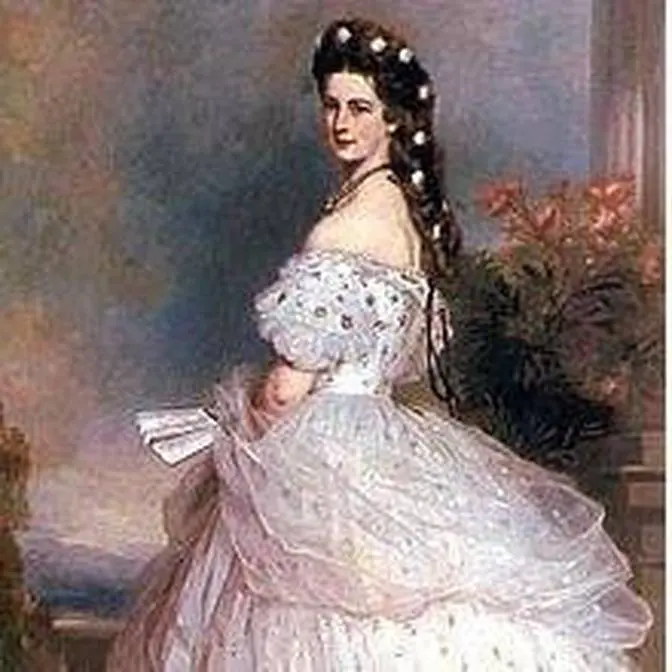
But the true marvel, and the true challenge, was the crinoline, a cage-like framework of steel
hoops connected by fabric tapes. It could stretch up to six feet in diameter. Women quite literally
carried a small room around their bodies. Walking through doorways required calculation.
Sitting down demanded strategy. Some furniture had to be redesigned entirely to accommodate
these expanding silhouettes. Living inside this mobile architecture transformed everyday tasks
into logistical puzzles. A simple walk became an exercise in spatial awareness.
Stairs were navigated cautiously. Public transport posed real dangers.
Crinolines caught fire, became entangled in machinery, or were crushed in crowds.
Yet women persisted, because fashion was not optional. Clothing was a language,
and to speak it fluently was to signal status, morality, and belonging.
Within this rigid system, one question loomed quietly but persistently. How did Victorian
women manage their most basic bodily needs? This was a topic never discussed openly,
never acknowledged in polite conversation. Yet, it shaped daily routines as much as meals or sleep.
The human body, after all, does not pause for propriety. It demands attention whether
society approves or not. The challenge was not simply modesty, but mechanics.
Lifting skirts was not an option. The combined weight of fabric and steel could exceed twenty
pounds. The structure itself resisted movement. Instead, women developed methods that were equal
parts choreography and engineering. Every action was practiced, refined, and passed down through
experience, rather than instruction manuals. This knowledge lived quietly in households,
shared between mothers and daughters, mistresses and maids. The existence of such elaborate fashion
systems forced women to reimagine privacy itself. In an era before modern plumbing
became widespread, chamber pots were the primary solution for indoor sanitation.
But for women encased in crinolines, these were not simple household objects.
They became essential tools in a daily ritual that required precision
and discretion. The social environment made this even more complex.
Victorian society was deeply invested in the illusion of effortless femininity.
Any acknowledgment of bodily functions threatened that illusion. A woman was expected to glide
through social spaces untouched by physical inconvenience, her body present but never
demanding. This expectation created immense pressure to manage discomfort silently and
Despite this, Victorian women did not simply endure. They adapted. They engineered solutions
within constraints that would seem almost absurd to us today. Their ingenuity was born not from
comfort, but from necessity. When faced with a world that demanded elegance at any cost,
they learned to operate with near-military precision. Time, movement, and even hydration
were carefully managed to avoid emergencies. This constant awareness shaped daily life in
subtle ways. Outings were planned around access to private spaces. Long journeys were avoided or
meticulously prepared for. Social visits included unspoken understandings about retiring rooms and
assistants. Beneath the surface of polite conversation existed a parallel system of
silent coordination. What makes this story remarkable is not just the inconvenience,
but the normalization of it. These elaborate routines were not viewed as extraordinary.
They were simply part of being a woman in Victorian society. Young girls grew up observing
these practices, absorbing them as unquestioned truths. By adulthood, navigating layers of fabric
and social expectation was second nature. Fashion historians often focus on the beauty of
Victorian dress, the craftsmanship, the silhouettes captured in portraits. But to understand these
garments fully, we must also understand the lives lived inside them. These were not static
works of art. They moved, breathed, and complicated existence in profound ways. As we begin to peel
back the layers of this world, we uncover not just shocking or amusing details, but a deeper story
about control, resilience, and adaptation. Victorian women inhabited bodies that society
tried to discipline, yet they found ways to meet their needs regardless. Their solutions were hidden,
ingenious, and rarely acknowledged. And this is only the beginning. Beneath those sweeping skirts
lay an entire system of quiet rebellion against impractical design. To truly understand how
Victorian women mastered this impossible balance between dignity and necessity, we must look closer
beneath the fabric, beneath the silence, and into the private strategies that kept daily life moving
forward. At the heart of this hidden system was an object so ordinary that history almost forgets
how revolutionary it became—the chamber pot. In the Victorian home, it was not merely a convenience.
For women encased in layers of fabric and steel, it was survival. These were not crude containers
shoved under beds, as popular imagination suggests. Women's chamber pots were carefully
designed oval rather than round, shallow yet wide, with curved interiors that allowed them to slide
precisely beneath the architecture of a crinoline without tipping or spilling. In wealthier households,
these pots were concealed with remarkable artistry. Elegant cabinets, upholstered stools,
and beautifully carved commodes hid their true function behind polished wood and decorative
fabric. A visitor could sit comfortably atop a piece of furniture, never realizing its secret
purpose. Lids were essential not only to contain odor but to signal discreetly to servants whether
attention was required. The entire system depended on silent understanding and flawless timing.
Servants became the unseen engineers of Victorian hygiene. Ladies' maids moved through homes with
near-invisibility, checking, emptying, cleaning, and returning chamber pots with efficiency that
bordered on ritual. Their work was constant and meticulous, yet rarely acknowledged. For a
household to function smoothly, this labor had to be perfectly synchronized with the rhythms of daily
life. The act itself required remarkable skill. A Victorian woman could not simply lift her skirts
or step aside casually. Instead, she relied on positioning. The chamber pot was placed beneath
the voluminous layers, and through careful shifts of weight and subtle movements of fabric,
the task could be completed without removing a single garment. This was learned behavior,
refined over time, passed down through demonstration rather than instruction.
There was no room for error. Spills or noise would have been humiliating beyond words.
At formal gatherings, the process became even more elaborate. Grand homes and ballrooms included,
retiring rooms, quiet spaces designed specifically for women to manage personal needs without
disturbing the illusion of social perfection. These rooms functioned almost like backstage areas.
Maids assisted with lifting and arranging fabric, positioning pots, and ensuring everything was
restored flawlessly afterward. The goal was invisibility. A lady could disappear briefly
from a crowded ballroom and return moments later, her absence unnoticed, her composure intact.
Yet, even with these systems, Victorian fashion continued to collide with reality.
For much of the era, many women wore no underwear, as we understand it today. The sheer volume of
petticoats was believed to provide sufficient modesty. This assumption held until nature and
physics intervened. Gusts of wind became infamous enemies of decorum. Skirts lifted,
crinolines flipped, and suddenly society was forced to confront the consequences of its own
design choices. The response was a compromise rather than a revolution. Split-crotch drawers
emerged as a solution that preserved both modesty and practicality. These garments consisted of two
separate legs joined only at the waistband, leaving an opening beneath. It was an ingenious
design. Women gained protection against public embarrassment while still retaining the ability
to use the chamber pot without removing layers of clothing. Once again, necessity drove innovation,
quietly and efficiently. Beyond mechanics, hygiene presented another
challenge. Toilet paper, as we know it, did not become widely available until the late Victorian
period. Instead, people used whatever materials were at hand—old newspapers, catalog pages,
leaves, or reusable cloths. Wealthier women preferred soft linen pieces laundered regularly
by servants. These cloths were folded, stored, used, washed, and reused in cycles that required
constant attention. All of this unfolded under strict rules of silence. Bodily functions were
not discussed, acknowledged, or referenced in polite conversation. Even among women,
these matters remained cloaked in euphemism. Yet behind the scenes, an entire network of
shared understanding existed. Women exchanged glances, invented coded phrases, and relied
on subtle gestures to communicate needs without violating social norms. What emerges from this
world is not simply a story of inconvenience but one of discipline and cooperation.
Victorian women operated within systems that demanded absolute discretion. Their success
depended on practice, trust, and an unspoken alliance between women and the servants who
supported them. These routines became so ingrained that they felt natural, even inevitable. A young
girl raised in this environment learned early how to manage her body within restrictive clothing.
By adulthood, the choreography was automatic. What would seem extraordinary to us was simply
another skill to master, like posture or conversation. And yet, beneath the polished
surface, these systems were fragile. They depended on constant labor, careful planning,
and physical endurance. One misstep, a poorly placed pot, a rushed movement,
an inattentive servant could shatter the illusion of effortless grace.
Still, Victorian women persevered. They refined their methods, adjusted their habits, and built
a private infrastructure that allowed them to function within a world that refused to accommodate
their bodies. But this was only part of the story. Beyond daily bathroom routines lay even
greater challenges, ones tied to biology, labor, and the unseen costs of maintaining elegance at
all. Beyond daily routines, there was another reality Victorian women faced in silence,
one that tested their endurance far more than awkward furniture or heavy skirts ever could.
Menstruation added a layer of complexity to an already unforgiving system. In an age obsessed
with purity and restraint, monthly bleeding was treated as something unspeakable, a condition to
be managed discreetly and never acknowledged aloud. Yet the body, indifferent to social rules,
demanded constant attention. Victorian women relied on homemade solutions. Cloth pads,
folded rags, cotton, moss, even sheep's wool, were secured using a system known as the tea bandage,
a belt worn around the waist to hold absorbent material in place. During heavy days,
these pads had to be changed frequently, sometimes as many as a dozen or more times in a single day.
Each change required privacy, planning, and speed, all beneath layers of fabric designed
to conceal movement entirely. There were no painkillers, no modern sanitation products,
and no social permission to rest. Life continued as usual. The burden of cleanliness did not end
there. Laundry was a monumental task in Victorian households. Large-scale washing happened only a
few times a year during events known as Great Wash Days. Dresses themselves were rarely washed.
Instead, they were brushed, aired, and treated with powders to absorb oils and odors.
The responsibility of hygiene fell on undergarments, the linen shifts,
chemisees, and drawers that could be laundered frequently. These pieces quietly protected
expensive gowns from the realities of the human body. This labor fell largely to servants,
especially laundresses and ladies' maids, whose work was relentless. Maintaining the illusion of
freshness required constant effort, stains had to be managed, fabrics preserved, and odors suppressed,
all without revealing the truth beneath the surface. The cleanliness of a woman's appearance
was not simply personal, it reflected the competence and discipline of the entire household.
Outside the home, privacy was even more elusive. Public sanitation systems were inconsistent,
and many cities still relied on medieval practices. Waste was often emptied from
upper floors directly into the streets below. The warning cry, Gardez-leu, derived from the
French Gardez-l'eau, meaning, watch the water, offered pedestrians a brief chance to dodge what
was coming. Chamber pot contents were sometimes collected for practical purposes as well.
Urine, rich in ammonia, was valuable in industries like leather tanning,
and even in the production of saltpeter for gunpowder. Personal waste, quite literally,
fuelled empires. Despite this lack of privacy, Victorian society maintained rigid expectations
of decorum. Families often shared chamber pots openly within households, yet women were expected
to uphold an image of refinement at all times. The mental discipline required to balance physical
discomfort with social performance was immense. Imagine attending a formal dinner, engaging in
witty conversation, dancing gracefully, all while tightly corseted and acutely aware of the logistics
required should nature call. To cope, women developed informal networks of support. Mothers
taught daughters. Servants became trusted allies. Female friends exchanged subtle signals and coded
language at social gatherings. These unspoken systems allowed women to survive within constraints
designed without their comfort in mind. The economic cost of this lifestyle was staggering.
Wealthy households employed teams of specialists, ladies' maids, seamstresses, laundresses,
each responsible for maintaining a different aspect of a woman's appearance.
Fashion was not just restrictive, it was labour intensive. Entire industries existed to support
silhouettes that served no practical purpose beyond visual impact. Ironically, the impracticality of
As bicycles became popular and women entered factories during World War I,
restrictive clothing became untenable, crinolines shrank into bustles, bustles gave way to simpler
skirts, and eventually practicality began to outweigh spectacle. Freedom of movement became
linked to freedom of life. Looking back, it is tempting to view Victorian bathroom practices
as absurd or amusing. But doing so misses the deeper truth. These women were not passive
victims of fashion. They were engineers of survival. They built systems within systems,
transforming necessity into quiet mastery. Their resilience laid the groundwork for modern hygiene,
clothing reform, and ultimately bodily autonomy. Every modern convenience, the flush toilet,
elastic waistbands, disposable hygiene products, stands on the shoulders of those who endured far
worse. Victorian women navigated a world that demanded perfection while denying comfort,
and they did so with ingenuity, discipline, and strength. So the next time you step into a
bathroom without a second thought, remember the women who once turned basic survival into an art
form. Beneath towering skirts and polished manners lived a legacy of adaptation that quietly
reshaped history itself.