
Johann Christian Friedrich Haeffner (1759-1833) - Ouverture in Es-Dur (1822)
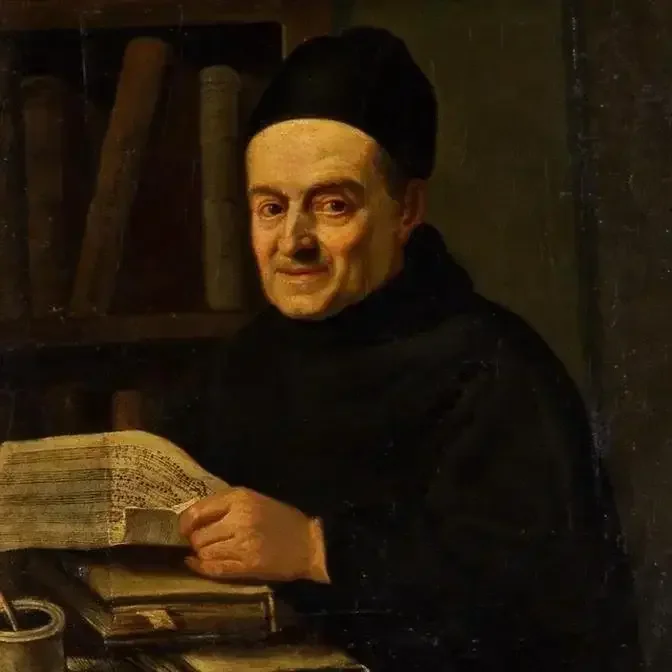
Alles Gute zum Geburtstag Johann Christian Friedrich Haeffner! 📯🎉
Composer: Johann Christian Friedrich Haeffner (1759-1833)
Work: Ouverture in Es-Dur (1822)
Performers: Orchestra of the Royal Swеdish Opera; Philip Brunеllе (conductor)
Painting: Johan Way (1792-1873) - King Carl XIV Johan Visiting the Mounds at Old Uppsala in 1834
HD image: https://flic.kr/p/2rZ4DmB
Further info: https://www.amazon.co.uk/dp/B000002SQQ
Listen free: No available
---
Johann Christian Friedrich Haeffner [Hæffner, Häffner]
(Oberschönau, 2 March 1759 - Uppsala, 28 May 1833)
German organist and composer, active in Sweden. The son of a schoolmaster and church organist in Klein-Schmalkalden, he received his first musical education with the Schmalkalden organist Johann Gottfried Vierling. He studied in Leipzig from 1776, and then worked as a music conductor in theatres in Frankfurt am Main and Hamburg (1778-80). In 1781, he moved to Stockholm at the invitation of the German congregation there (Tyska kyrkan) to assume the position of organist, which he held until 1793. The same year, he was employed at the Royal Theatre in Stockholm as well as conductor of the orchestra for the Stenborg theatres. In 1786 he was appointed assistant conductor of the Royal Orchestra (hovkapellet) and from 1795 to 1807 he held the post of hovkapellmästare. He was also an instructor at Dramatens elevskola. He was married twice, first to the Swedish actress and singer Elisabeth Forsselius. Since king Gustaf IV Adolf closed the Royal Opera and its orchestra in 1807, he moved to Uppsala, where he 1808 was appointed Director musices of the university and simultaneously was employed as organist of the cathedral. In Uppsala he organized the studentsång (four-voice male choir singing). This practice rapidly spread to the other Nordic universities and is still today a coveted tradition, not only among university students, but for the last century also in many male choirs all over Sweden. Hæffner's passion and work for this has rendered him the name Studentsångens fader. As a composer, he wrote three operas, among them the well-known 'Electra', theatre music, a mass, one symphony (1795), three Overtures (c.1798-1823), keyboard and chamber works, songs with piano accompaniment, and was responsible for the new Swedish chorale book in 1819. Noteworthy is his oratorio 'Försonaren på Golgatha'. His music is heavily influenced by the German 'Sturm und Drang'.