
First Time in CHENGDU CHINA Jinli Ancient Street Leshan Giant Buddha Sichuan Cuisine
10 Video Views·Feb 28, 2026
At the heart of China lies Sichuan province, home of giant pandas, breathtaking cultural
wonders and famous mala cuisine. Yep, this is the birthplace of the iconic mala flavor.
Hi everyone, I'm Nick and I'm Kat. Come along with us as we visit Chengdu, the capital city of Sichuan.
We also took a trip to the historic city of Leshan to see one of its most stunning sights,
the 1,300-year-old Leshan Giant Buddha. This was our first time traveling together in mainland China
and I think we made plenty of mistakes. In this video, we'll share what it was like navigating
China for the first time, from getting around, ordering food, making payments and much more.
Giant pandas are native to China and the majority of giant pandas call Sichuan home.
Naturally, our first stop today was the Chengdu research base of giant panda breeding.
This sprawling wildlife research institute is home to giant pandas, red pandas and other endangered
species. Unfortunately, the gloomy weather meant most of the pandas, except this one, had already
returned to their enclosures. If you're planning a visit, do try to get there as early as possible,
ideally when the research base first opens, which is around 7.30 or 8am depending on the season.
That's when the pandas are most active and the crowds are still a little more manageable.
This is Chunxi Road, a lively pedestrian street in the heart of Chengdu.
It's home to several large malls, with the most prominent being the Chengdu IFS.
While you're here, be sure to catch this giant panda hanging off the side of the building.
This massively cute 13-ton art installation has become a symbol of both Chunxi Road and Chengdu
itself and after missing the real pandas earlier, spotting this one was a pretty nice consolation.
Located right inside the IFS mall is Kao Jiang,
a popular restaurant known for its signature Sichuan specialty, spicy grilled fish or kaoyu.
We ordered the douhua tanghuo kaoyu, a grilled fish served with soft tofu in a rich spicy broth.
We also tried a few other dishes, including xiaosu rou, which are crispy fried pork bites
and a brown sugar glutinous rice cake. At the end of the meal, we were each given a bizarre
ice cream dessert with a Sichuan pepper flavour. Strangely though, it was actually
pretty delicious and tasted like a regular vanilla ice cream with a slight numbing edge.
Cash is rarely used in China, so nearly everything goes through apps like WeChat Pay or Alipay.
From ordering food to your table, booking a taxi or making purchases,
these super apps are essential for everyday life in China.
In our experience, using Alipay alone was more than sufficient for the entire trip.
Oh, and don't forget to use Gaode to find your way around.
You can also use Dazhong Dianping for local food and restaurant recommendations.
People's Park is a window into the everyday lives of Chengdu's residents.
Here, you'll find locals drinking tea, chatting with friends,
watching live performances or gathering around for a game of mahjong or Chinese chess.
Perhaps one of our most surprising discoveries here was the local marriage market.
Here, parents gather to advertise their sons and daughters in hopes of finding a match.
For our final stop, we took a stroll through Jingli Gujie,
a 1,800-year-old ancient street dating back to the pre-Qing dynasty.
This is easily one of the most beautiful old streets we've ever seen.
The area is lined with traditional-style buildings,
many of which have been restored to their former beauty.
This street has become quite commercialised over the years.
Here, you'll find everything from local artwork, souvenirs and an endless array of street snacks.
Most importantly though, do be prepared for large crowds, even on weekdays.
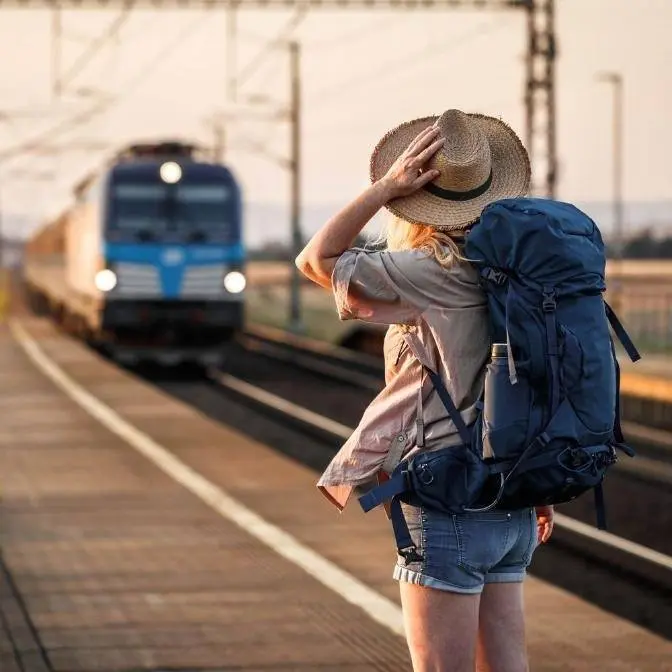
We bought our train tickets via the trip.com app,
as we had some issues entering our names on their local booking website.
A standard class seat costs around 10 Singapore dollars,
but we recommend upgrading to first class if your budget allows.
It's much more spacious and comfortable,
and still pretty reasonably priced at around 15 Singapore dollars.
Tonight, we are staying right within the Leshan Giant Buddha Scenic Area,
at a cultural homestay called Leshan Jingye Chanyi Dujia Jiu Dian.
When we checked in, we were warmly welcomed by the homestay's beloved staff member,
a cheerful Sanpere kid called Xiaoxiao.
With multiple serene Zen gardens, cozy traditional style rooms,
and a nightly rate of just around 70 Singapore dollars, including breakfast,
this was hands down our favourite stay of the entire trip.
We decided to stop for a quick lunch before exploring the scenic area.
This is Bobo Chicken, a cold chicken dish originating from Leshan,
soaked in a spicy broth, along with wontons in chilli oil and classic Sichuan Dan Dan Mian.
Everything was so good, by the end of the meal, we were deep in a full-on food coma.
Next came the highlight of our visit to Leshan,
the Leshan Giant Buddha, the largest Buddha sculpture in the world.
Carved directly into Lingyun Mountain,
this ancient engineering marvel sits at the confluence of three rivers.
It's said that the statue was built to calm the turbulent waters below,
and to bless passing ships with smooth sailing.
Now, there are two main ways to view the Giant Buddha.
One option is to take a boat tour along the river,
which allows for a fantastic view from the water.
The second, and in our opinion, the much more immersive option,
is to explore the site on foot.
You'll enter the scenic area at the top of Lingyun Mountain,
where you'll first come face to face with the Buddha's head.
From there, you can walk down the famous nine bends plank rope,
a steep and winding path that takes you all the way down to the feet of the statue.
Along the way, you'll be treated to breathtaking views
and a close-up look at the Giant Buddha.
Can you believe it took an entire crew of stone carvers
over 90 years to complete the sculpture?
If you look carefully, you'll even spot drainage holes
and channels built into the statue that help prevent erosion.
The route can be quite challenging with steep stairs,
so it helps to be in good physical condition.
And do remember to wear comfortable shoes and bring along plenty of water.
For the final day of our trip, we took the high-speed train back to Chengdu.
This time, we decided to explore one of the city's
major high-tech and urban development zones.
Here, you'll find the New Century Global Centre,
one of the largest buildings in the world by far.
This colossal megastructure houses everything from a hotel,
an indoor water park to an IMAX cinema and many other attractions.
So if you're a fan of architecture or simply fascinated by massive feats of engineering,
this place is definitely for you.
That being said, the shops inside were fairly standard
and we were done browsing in about an hour.
We still feel it's well worth a visit just to admire the sheer scale of the building.
We initially planned to end the trip with a classic Sichuan hotpot dinner,
but then we stumbled upon this place.
This restaurant is called Qiu Jin Chuan Wei Xiao Chao.
We ordered Mapo Tofu, one of Sichuan's signature dishes,
along with a few side dishes.
The tofu was silky smooth while the sauce had just the perfect mala flavour.
Honestly, this was one of the best Mapo Tofu dishes I've ever had.
After this, even our go-to Mapo Tofu at Chen's back in Singapore just won't cut it anymore.
Unfortunately, we were so full that we didn't end up trying hotpot this time,
but that just gives us one more reason to return to Chengdu once more.
Overall, we really enjoyed our short trip to Chengdu
and one thing's for sure, we'll definitely be back in China again to explore even more.
What are some of the other places that you'd like to see us visit next?
Let us know in the comments.
And until then, thank you so much for watching and we'll see you in our next video.