
Brendan Fraser & Dwayne Johnson | Actors on Actors
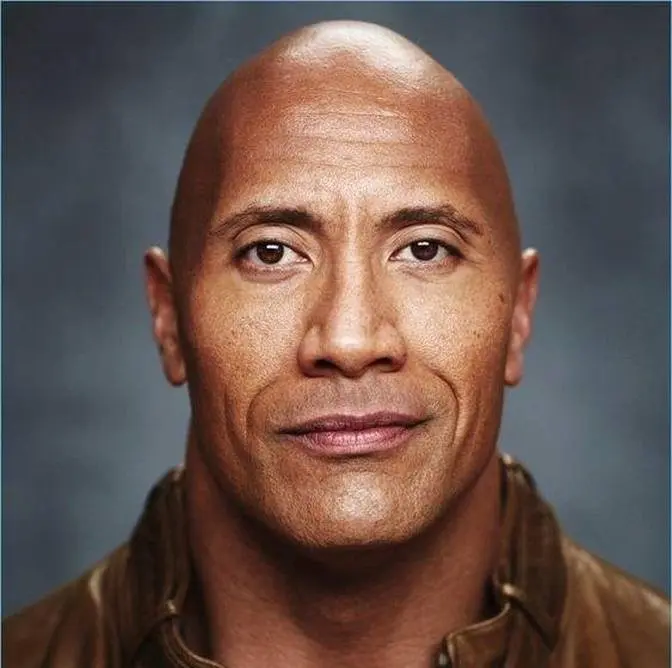
Dwayne Johnson credits Brendan Fraser with helping to launch his acting career in 'The Mummy Returns.' As the two sit down to catch up, he heaps gratitude on Fraser, who insists that there was no other choice for the role. They go on to discuss Johnson's transformative performance in 'The Smashing Machine', Fraser's heartwarming turn in 'Rental Family' and how the CGI in the 'Mummy' movies holds up today.
#film #entertainment #Dwaynejohnson #actor
The secret is, we would be doing this whether they paid us or not.
If you think he's not going to be hungry anymore, not him.
When I was at the premiere, I met the guys that were doing the CGI,
and they were like, we needed more time.
Black earth, we smile, we breathe in.
Hi, Dwayne.
Hi, good to see you.
Good to see you, brother.
I'd love to start off our conversation by giving you flowers, OK?
I'm going to deliver a lot of flowers to your doorstep right now.
So I feel like every time I see you and every time we talk, we hug, we catch up.
But ultimately, I always feel like it's a full circle moment,
because you and I first connected on The Mummy Returns.
And that was one of the biggest franchises in the world
at that time in our industry, beloved around the world.
You were the face of that franchise.
And the flowers I want to give is I was ready to make my transition into Hollywood.
And I was excited and had this opportunity
to be casted in your movie as the Scorpion Kid.
And I remember meeting with Stephen Sommers, our director,
and met with all the folks at Universal.
And I was so excited.
But I knew, because they told me, we're just going to talk to Brandon.
Because I said, hey, is it OK?
And he said, well, we're going to talk to him.
So there was a moment, I feel like, where you could have said, hey, listen,
I love this idea of a character called the Scorpion King.
But this guy, Dwayne Johnson, he's never acted before.
I know he's in pro wrestling.
I'm not quite too sure.
This is a beloved franchise.
Felt like Raiders of the Lost Ark.
And the word that I got back was, Brandon loves the idea.
He welcomes you with open arms.
And it really meant something to me, because not only was it your franchise,
and you took a shot and a risk with me, who had never acted back then,
but also that kicked off my career.
And it went from The Mummy Returns, to then the Scorpion King,
to years later, you and I are sitting here.
And I just, as always, but now here, I want to say thank you, man.
And thank you for, in a way, in a big way, really changing my life.
Because the trajectory that you allowed to happen led me to be here.
You're too kind, Dwayne.
You were always the right guy for the job.
When I was told that you were a possibility for it, forgive me,
but I didn't know you from the wrestling world.
And when I was shown, I said, that is perfect.
That is inspired casting.
That's fantastic.
We'd be lucky to get the guy.
Seriously, I mean, come on.
Because it felt like you need a stadium persona performance
to give to play a villain you love to hate.
And to introduce yourself into that franchise,
it's going to take a lot of confidence and belief that, yeah,
you could take on all the big, scary bad guys,
and fight them back, and do all of the action, and everything.
And also, you presented a formidable foe to the characters in the movie.
I mean, Imhotep was the heavy.
Right.
But we needed someone bigger and badder than Imhotep.
And who are you going to get?
They got you, dude.
Oh, man.
It worked out the best for everyone.
You are a gentleman.
Because I promise you, what you did in the wrestling world,
you were painting with like a 10-inch brush.
Right.
You know, large.
Yes.
You need to.
Big energy.
And then to step into roles in front of a camera,
you need a different format camera.
Sure.
You need to pare it down.
Get out the sableens and do that kind of work.
Yes.
But you still have to have both abilities.
And you did.
And you do.
And it gets better.
Your paintings are getting better all the time.
Oh, thank you.
I mean it.
Thank you so much.
I've seen Smashing Machine.
I know, by the way.
Thank you for all the support on Smashing Machine.
And you know, Smashing Machine, as you know, we've talked about.
This was my first foray into this level of drama.
Right.
And that I had wanted.
And I was running towards and waiting for this opportunity.
Yeah.
And I get to the Toronto Film Festival.
And the film ends.
And the audience is clapping.
So they were on the film.
And we're getting whisked onto stage.
And who was right there?
Not only who was right there, but who actually stepped in the line of traffic to stop me.
And it was you.
With the biggest smile and the biggest hug.
You nailed it, dude.
You nailed it.
I was like, jeez, you got me in the feels.
Yeah.
I felt the pain of that, man.
I'll be here.
I'm feeling really good.
I appreciate it.
Well, you know, like a day without pain is like a day without sunshine.
Not only just the physical pain, which was formidable.
And I know Dwayne's a big, strong guy, but hard knocks hurt.
And that's not the real pain that you had on board to play that role.
Right.
That guy was accustomed to getting hurt.
It's kind of what he did for a living, right?
Yes.
The real pain was the, you know, emotional stuff.
Inside.
Yeah.
You ever feel like, it's okay, man.
You can throw me off the back of a moving vehicle or light me on fire or, you know,
knock the crap out of me all afternoon.
Just don't say anything mean to me because that'll really hurt, you know?
By the way, that's the vulnerability.
Yes.
That's who he was.
Yes.
I got sick.
I got sick and it was pretty unbelievable.
It was pretty bad.
That's the right word.
It was bad.
Yeah.
And I understand to a little bit, to a degree, what it's like to be relied on,
to be the guy who's not allowed to show that pain.
You do know that.
Yeah.
To a lesser degree than I'm sure than your good self, but hey, look, we're human.
And at the end of the day, you're going to need an ice bag, maybe a couple of chamomile tea.
Yes, man.
Someone to kiss you on the forehead and say, it's going to be okay.
Let me ask you, when did you start to understand?
Oh, wait a second.
Two parts of my question then is I'm not allowed to...
Show it?
Show it.
Reveal.
To reveal that stuff.
And it's not what people expect of me.
I always tell people, don't get it twisted.
Brendan, you're a big guy.
You're a very big man.
And there's a big presence to you where for years, you're right.
Audiences, you weren't allowed in a way to show it, to reveal it.
So not only when did you understand that?
When did you get it?
But then also, when was the turning point where you went, well, you know what?
I want to perform now for an audience of one.
And that's for me.
And I want to be able to reveal it.
That's a good question.
And the death of a thousand cuts and all, it adds up, right?
And then there comes a point where you fall apart.
And I guess around 2007 or 8 or 9, around there,
I was doing a movie in Sault Ste. Marie in Canada, Ontario.
And it was a low budget thing.
And we were rolling around in streams and off of mountains
and kind of making stuff up as we go along.
And I was playing hurt, you know, but pretending that I wasn't.
And the movie ended.
And I just thought, you know, I have a child.
I'm really, I'm getting too old for this ----.
Like, it's starting to catch up with me.
I felt like if I'm going to continue, then I have to have a real reckoning with myself
about why I'm, you know, getting banged around and bruised.
And yeah, of course we have stuntmen who are there and coordinators.
They're really there for your safety.
I never met a stuntman that's glad to get injured, you know.
So I had to actually ask myself a real serious question that I'd been avoiding,
which is, why am I doing this?
Like, why am I?
I shouldn't necessarily be.
I'm not that accident-prone.
I mean, I am a large klutz, but I had to take ownership of the reason.
And that was, I was trying too hard.
I was trying too hard.
Yes.
I was, I was feeling like unless it hurts, then I'm not doing my job.
I'm not earning my keep.
Yes.
And that kind of idea is what I saw in your work in Smashing Machine.
Because we feel for the invulnerable, supposedly invulnerable titan,
but how do you bring them down with, you know, an Achilles heel?
A minor injury takes them apart.
Yes.
And what is the fallout afterwards?
And who's relying on you?
And when you went through that one stadium shot, was it like when Benny Safdie directed,
did he always want it to be like a one-er?
Did he always?
You came from the...
He did.
Yeah.
So it's kind of like a Scorsese-esque sort of...
Scorsese, Raging Bull was some of his, Benny Safdie was some of his inspirations.
That shot in particular, yes.
It was, he wanted it to be a one-er, one long shot because Mark Kerr,
the man who I played, just experienced his first loss.
And in that, he wanted to not cut away.
And where is this going to lead to?
It led right to the locker room.
Right to the locker room and then you fell apart.
That release of not allowing yourself to be vulnerable publicly on display,
to do that, for instance, in any way, leaving the ring,
coming all the way through the audience, through the stadium,
everyone back there, everyone knows what just happened.
And everyone's looking towards Mark to see how he's going to take it.
And no one wants to talk about birdcage, you know?
Yes.
And the stoicism behind that seems like the way you played that,
that was harder than the actually the loss, the pain that you felt,
or what you've been up to for the previous hour.
When you have to keep it together and not let anyone know
until the whole house of cards falls apart.
That was when I went, oh man, Dwayne, you've done it.
You're here.
No, I did.
I did.
I just like, look at me.
I was like-
Thank you so much.
Yeah.
You know, it means so much coming from you.
And the acknowledgement of it, but also that for me,
that particular scene, it's what I feel like my life had come to in a way.
Meaning like, oh wait, no, no, no.
There's, you realize that in life, there's, no one wants to lose.
So, you know, we want to win.
Everyone wants to pick up the W.
But you realize, and we all realize that it's not wins and losses, man.
It's just pressure.
It's the pressure to uphold, the pressure to deliver,
the pressure to take care of ourselves, family, kids, this relationship.
I mean, everything is just the pressure.
There's this great quote from Floyd Patterson.
It was heavyweight and he just, I'm paraphrasing here, but he says,
man, when you win and you win in the ring, what a walk going back to the locker room.
What a walk.
Take your time.
You take it all in.
You're bleeding.
He said, but if you lose, he goes, man, I wish there was a trap door in the ring.
Wow.
Where I could just.
Just fall into the earth and disappear.
Disappear.
And I never have to do that again.
Just never.
And so what I felt in that particular scene was there was a connection to my life in terms of just
things could be so loud and noisy and all.
But yet at the same time, we can feel lonely.
Yeah.
And in that moment, especially if you deal with a loss or pressure, things are so pressurized,
you can feel lonely.
Loneliness is something that actually is a public health concern, I believe.
And I will say in Rental Family.
I was just going to bring that up too.
Yes.
Because you deal with that, right?
With the loneliness.
The character Philip does deal with that because he's got such solitude that he doesn't necessarily
want in such a busy, populous place.
I mean, you've been in Tokyo.
Yes.
And you know it's a beehive.
Yes.
Of activity.
But the instances of suicides and people bereft of connection are too high.
And that's why a Rental Family agency actually exists and did since the 1980s.
Seriously.
They're in Japan.
Oh yeah.
There's like 300 agencies that still operate.
You sell people.
No.
We sell emotion.
Oh.
How?
But people do feel a need for connection.
Yes.
In a meaningful way.
Even if it's make-believe.
Even if it's pretend.
Even if it's only for a little while and you're paying for it.
Yes.
It's a service.
It serves a purpose that allows for people to have the connection that so often I think
we've lost from the way we live our modern lives in front of screens doing this.
And to also show that loneliness can be really, it seems a simple enough thing to ameliorate.
But until you really feel it, you're not going to know exactly what it is or what it
can do to you.
You just have to feel it and experience it, right?
There's that loneliness and then there's solitude that you could seek.
And I love the movie.
And I told you that.
I love your performance in it.
And there's parts of that movie that really rock me.
What I also feel, what Philip, your character, what he was able to do and what now I realize
because now I'm educated on these rental agencies, is it also, and you also provided
peace.
And that peace, man, is something that we all look for.
And what one of the moments that rocked me was Kiko, the character in the film, older
gentleman.
Akira Emoto-san is his name.
Ah, okay.
He's like a legend.
Oh, totally.
He's a living legend.
Wow.
He's like the Japanese Ian McKellen.
How is he to work with?
Incredible.
You know, he has his own theater, a black box theater in Tokyo and he lives on the floor
above it.
And every morning, 8 a.m., he has a free performance that he gives of anything.
He'll read something from a play or some piece of obscure text.
One morning I went, he was reading like this 15th century Shogun's basically shopping list.
Wow.
A certain amount of bushels of wheat and the peasants are acting up again.
Wow, man.
He's performing it in this classical form of Japanese that even Japanese people are
going, what did he say?
Was there like a different tone and intonation in his voice?
Oh, it's so heightened.
I don't know enough about the language, but it's the difference between you and I speaking
right now and Henry V.
Wow, man.
Well, you feel his power.
You guys together on screen, I love the relationship between you two.
I loved it.
And also, you know, I'm dealing with dementia in our family, so this idea that you just
want to create this moment for him, even if he's going to forget it, but just give him
this piece, take him home.
Did you think that he was in on the ruse that Philip wasn't really going to write his book?
Because when I watch the movie, I think, man, the old man was onto him all the time.
I feel like he was.
Yeah.
That's what I want to believe.
I feel like he was, man.
And that's a great question.
I feel like he was.
He's just too clever.
He's too clever.
And he knows.
And again, you just giving him that piece.
And then, of course, I won't ruin it.
As it goes, he completes his journey.
He completes his journey.
He does.
And then, but what you say to him.
Again, rock me, because it's what I said to my dad, which was, you know, your version
of, I'll see you again, my friend.
You know, it just moved me, man.
I watched the movie in the morning, too.
I'm like, I was getting emotional.
It was beautiful.
And I loved the movie and the relationship he had with the little girl.
Talk about her a little bit.
She was amazing.
Shani Gorman is her name.
Her mother is Japanese.
Her father is Irish.
Okay.
And that's the dynamic of who that actor is written to be, because she is the daughter
of a single mother.
And whoever her father is, it's just not in the picture.
It's not important.
But he was a white guy.
He was Caucasian.
And so she thereby is, and I'm talking about Shannon.
She feels trapped between worlds.
And she showed up.
Cultures.
Yeah.
But she showed up to the rehearsal with this explanation of what it felt like to be made
to feel other and to be, she said, she was, she said, I have been bullied by my kids.
And that can be biting because you're not Japanese enough.
That's right.
Or you're not white enough.
Yes.
And even adults would speak around her who didn't know her, but assumed that she didn't
speak Japanese, incorrectly assumed.
And we speak Japanese in front of her about her.
And she had to make a decision about whether or not I say some answer.
Yes.
So, and sometimes she did, maybe she didn't, but she was still really, really conflicted.
So to talk about this kid, she showed up at this movie with all of this emotional bandwidth.
It was so available that we had to, we had to stop rehearsing because we didn't want
to play our game in the locker room.
Yes.
You know, go out on the field, just point the camera at the kid and we're good.
Somebody give Brennan a Red Bull.
That's a beautiful relationship that you guys had.
She's got great parents.
Yeah.
She's got great parents.
Yeah.
She did amazing.
Both you guys together again, that dynamic.
And, and also the, just the conceit I was telling everybody when they were like, Hey,
how's the movie?
I said, the movie is amazing.
Rental family.
I said, but also the conceit of it is just so unique and different.
When you, how did the script come to you?
I was looking for a job, man.
It could have been one of those ones on the blacklist.
Yes.
And you know, it's been never known.
And it wasn't on that list, but you know, it was in sort of territory and it's on the
title rental family.
Yeah.
You know, insert pejorative cheeky joke here or whatever, you know, and then.
Yeah.
But then again, it peaks your interest and that's what this director Hikari embraces.
She goes towards the, you know, the prickly side of what that could mean with the, um,
the softer side of it and the movie lives in between with, without sentimentality or
that's right.
You know, being just enough.
It's not cynical.
Why do you do this?
What?
This job?
You're so passionate.
Why?
Can I just ask you, do you think there was a villain in rental family?
You had to think about it.
You got to think about it.
I think there is a perfect apathy, apathy.
And I was going to say, uh, just you hold up the mirror.
Yes.
You know, you hold up the mirror, look within, go on that journey and you'll complete it.
If you stop seeking it out from other people, ways of behaving, just take stock of yourself.
That's right.
And I needed to find something like that at that time to answer.
That really showed that this is a guy who, why did you need something like that?
I'm curious.
It was before all the Oscars.
It was before, and there was, yeah, I found, I found it.
I saw the script first before the Oscars.
And I mean, not that that, believe me, it doesn't change much of it.
You still would have done it, right?
I was absolutely, but it doesn't really, I'm still the same guy, you know, I don't.
Yes.
Um, I, I, I was looking, I basically, I was still looking for a job.
Yeah.
And I wanted something that was out of the ordinary.
I wanted to not ascribe to the, the, the trope of jumping into something, you know, splashy
and huge.
And I felt like I wanted to be challenged by, um, you know, working with what I've got.
Yes.
And, and, um.
Challenge yourself.
Exactly.
Yes.
Can I ask you something about after your Oscar win, did you feel anything shift?
Winning the Oscars allowed me now to look at things maybe like this, maybe a little
wider, maybe a little deeper, or look at material differently.
Did it give you any different kind of desire to challenge yourself in a different way?
Or, or, or was it we worked to put the best work out there?
We leave it there and then we move on.
I think of it two ways.
On the one hand, I, I feel like you better earn this.
I mean, you, you did cause you got the brass ring, but you're worthy of it going forward.
Uphold the standard, you know, if you can.
And like you said, nobody sets out to lose, you know, to make a turkey or whatever.
I mean, we're always putting our best effort into it.
But also I felt like, I felt like I don't have anything to prove in a way now.
Yes.
But that doesn't mean I'm gonna just coast.
Not like you're not hungry.
No. Yeah.
No.
If anything, I feel like I have to work.
You're hungrier.
Yeah.
That's how I feel.
That's, that's the, that's how I feel.
That's the thing.
I wonder if that's a thing that, um, that maybe people forget or it's easy to look
past because I felt when I saw you win and I've known you for a long time, I went in my head.
Oh, if you think he's not going to be hungry anymore, it's not him.
So you made you hungrier.
And then also this idea of, Hey, you gotta be worthy of this.
Like you, I, you know, I, I'm in it for the long haul.
Yeah.
Long game.
Like most actors, many of them, the secret is we would be doing this, whether they paid us or not.
And that, that sort of stands to reason you have to, uh, take ownership of who you are,
what you're capable of and have the courage to continue.
And let me ask you this, cause you brought this up and you said it is this idea.
I felt like I didn't need to prove anything.
Had you felt, I had everything to prove.
Yeah, I did.
I did everything.
I mean, I knew I was a capable actor.
Right.
And I had plenty of bumps in the road along the way, but that's just the way it goes.
Maybe it was a perfect storm of when the whale was shot.
It was during COVID.
It was one room.
It was being encumbered by a health condition that caused his body to be so
overweight that he was confined to a single place.
And, and, you know, that's the world of that story that Sam, Samuel D Hunter wrote.
It was a stage play before, but what Darren Aronofsky directed was a movie that made us all
feel not only at that time, because it was when we were all, you know, locked down and COVID,
you know, we were all under existential threat.
This might be the last time we ever get to do this anyway.
Like, you know.
Yeah.
So it had that energy.
Yeah.
Like, you know, if I'm going to do this, I'm going to go down swinging, or I'm going to
give it everything I've got.
And when I finished, I felt like, well, I am all out of moves.
Yeah.
If it doesn't land, then, then I don't know.
I guess I'll crack open the yellow pages and go look for a marketing job or something.
Cause I, then I really don't know what the hell I'm doing.
Wow.
Yeah.
And that was the first time in my life that, or my career, rather, that I felt like
I left it all out there.
Right on the field.
Yeah.
Yes.
I also owe you a debt of gratitude because when I took the whale with Darren and the crew to Venice
and they applauded for a very long time and stayed on their feet.
And I'd never been there before.
Yeah.
I didn't know the whole, you know, ritual of it.
The ceremony.
Ceremony.
Yes.
And, uh.
I was in tears when I watched you.
I know you put your shoulder into that by showing your support through Twitter and Dwayne,
you're a godfather of sorts of the success of that project.
I hope you know that you are.
And thank you for that, for doing that for me, but for everyone else too.
I was so happy.
I look, I'm happy to do it and support you.
But also I, that moment rocked me and it moved me.
I had not experienced Venice until Smashing Machine that you and I talked about.
And I have watched it from afar.
I had not had the honor of having a film.
Right.
Go there.
And then you, my friend, I see this long applause for you.
You're emotional.
I'm emotional watching you get emotional.
But also just in that moment, man, like I felt such joy for you because I felt,
even though you and I hadn't talked about it, like there it is.
After all these years, that's what you worked for.
The other stuff that comes our way that we're so lucky and blessed.
If it's boxed off, it's great.
If it does well, great.
If it flops, okay, we move on.
But that moment, that ceremonial long standing applause for something that you
ripped yourself open and you went elsewhere.
And at that time, when that happened to you, I was in that place of I'm so happy for my friend.
And I'm even more inspired because I want to do that.
I want to go elsewhere.
I want to find that.
Yes.
I want to find that role.
What's my, it's not apples to apples here, but like your whale, like what's my, what's my thing?
You're Moby Dick.
Yes.
What is that?
What's my Moby Dick?
What is it?
And I was so happy and I was so full of joy for you in that moment.
That might not be what we do it for because you do it for the work of it.
But to get that kind of acknowledgement, I just felt it.
Man, so I was just so happy.
What happened when the shoe was on the other foot?
Oh.
Your reception for Smashing Machine did, I felt like I was in, you're going to say out
of body experience, but I also felt like this is not for me.
This is, I felt that's not just my, you know, insecurity and confidence issues talking,
but it was like, I thought this, this is all facade.
This is pretend like this.
I really couldn't, I was having a hard time processing it at the same time.
I was so intensely moved.
It felt like it was a completion of a journey.
The fulfillment of a dream I maybe would never have uttered to admit to having all of that.
Where did it take you?
Surreal, out of body, a complete out of body experience for me.
And you mentioned the word dream.
Let me say it now and then I'll go back to the experiences.
I felt like what Smashing Machine represented to me is I'm living my dream.
This is my dream and not others.
You know, to take these other projects, which I love doing.
There's a lot of other entities and things connected to it.
But Smashing Machine, it's just me, mine, and Asafty, and we want them.
So I felt the ovation.
I do want to give it up.
This is the heroes.
This is the director and it's them.
It's theirs.
You deflect it.
You're trying to deflect it.
It takes a village, you know, like.
But that house won't let you.
That's right.
They won't let you.
And I was going to ask you.
They won't let you be humble.
They won't, no.
They put you on the spot and I didn't know.
I went, holy ----, this ceremony is real and it means something.
And they won't let you, no, just be humble about it.
And not in a life-changing way.
And it was, and I know you experienced this.
It's so important as everyone is looking up to get eye contact with you just for a moment.
So they can look at you and say, here this is.
And for me, just like you, that was my exhale.
I felt like I never exhaled like that in my career.
I'm like, wow, you did it.
Did you compare all of that to everything you've done prior up to that point?
I found myself thinking, um, all right, for, you know, all these movies I made that might
have been crap, some of them were good.
Some of them, all that brought you to this point.
That's right.
Yeah, that's right.
I felt every single thing I had done led to this moment.
Whether twists and turns in the road, fails, you know, wins, whatever led to this moment.
And so, by the way, the makeup, how long were you in the chair?
We started off the first test that Adrien Moreau did, it took 10 hours, but that was
the first test.
So then, you know, they had to change what works, what doesn't.
That's right.
There was costuming, elaborate costuming, and there was a harness that I wore underneath
it that wasn't built yet.
So in the end, yeah, so your time in the chair, we got down like two and a half hours, which
meant, you know, you get there at four in the morning and fall asleep in the chair a
little bit and let them do their thing.
But I'll never cry tears over, you know, who's self-sacrificing the most.
I give it up to the makeup artists.
Yes.
They're the first boots on the ground and the last to leave.
That's right.
And then they got to go and prep and get ready for the next day.
That's right.
Have it all.
Oh, like if the appliances, maybe one of them came off the mold a little wrong, if it goes
on wrong in the morning, that's a big deal because then it's another half an hour in
the chair to fix it or tweak it.
And that means another hour you're not getting the first shot of the day on set.
Does it sound familiar to you?
Of course, yeah.
I mean, we were lucky.
We had, I had Kazu Hiro, who, of course, is one of the best too.
Yeah.
I was, we were in the chair for three and a half hours every day.
And it was 23 prosthetics, eyes, eyes, nose, cauliflower ears, scars everywhere.
And you know what that's like.
You, the difference though, we're, I mean, I hope you weren't taking too many hard knocks
or blows to the makeup, but were there constant repairs and sweat?
Well, think about it, right?
So that's, it's something that you have to go through.
And this is why we give it up for our makeup artists is that we were constantly, he constantly
had to keep the appliances on.
I mean, I'm getting whacked around and sweating.
And so I didn't know, you know, it's like with what comes out of our pores sometimes,
you know, depending on what the appliance is made out of.
Sometimes it sticks.
Sometimes it just falls off.
Right.
It was unbelievable.
But he did an, Kazu did an unbelievable job because he created these prosthetics that
had not been created before, but specifically for Smash Machine.
So they stayed on.
Did he do hand molding or was it a 3D process?
He did.
He did both.
Both.
Combination of both.
Adrian did both too.
He did a lot of like a scan of the body and then he created Charlie virtually.
Yes.
And then some 3D printing, like he was really at the tip of the spear of using that technology
at that time.
Now it's kind of getting standardized, which is interesting.
But when you first read that script, how did that come to you?
He said he wanted to meet me.
I thought Darren Aronofsky, like hi Darren Aronofsky wants to meet me?
Yes, he does.
He's got a project about a man who has an eating disorder and he can't leave his apartment
and he's bereft because he's going to die in a week.
It foregone.
And he wants to reconnect with his daughter in a meaningful way before it gets worse.
And that's all I knew.
So I met Darren who was a gentleman and he's got like Peregrine Falcon's gaze behind very
kind glasses.
And he told me that, later told me that he would have been a baseball umpire if he wasn't
a director.
And that's true because he sees everything.
He knows what I call balls and strikes.
He does get the last word.
But the thing about Darren is he's a real true collaborator in the sense that he gives
credit to everybody automatically wherever the idea comes from.
And I think that's the mark of good leadership on a set.
I learned that.
Wow, you know, I've been meaning to and you and I can connect to that.
I'm going to work with Darren.
When?
Probably next year.
Yeah, we got a great project, man.
I'm super, yeah.
We'll talk about it later.
Yeah, yeah, yeah.
I'm super excited about it.
And also about a man who is broken and sees the world in a different way.
I can't wait to tell you about it.
But Darren, he's been just awesome to work with and get to know and to come close with.
And it's just amazing.
I don't want to know with you guys, you and Darren.
I feel like sometimes people are, and I've known him for some time as a matter of fact.
Here's a crazy little wild fact is on the wrestler.
My uncle was a pro wrestler.
He helped train Mickey Rourke for that.
So that's kind of how I got to know Darren just as buddies.
I get it.
But since then, and since this project, we started working on this project together called Breakthrough
with A24, there's all these kismet-y things that are happening with me and Darren.
I say, hey, I'll send him like a song.
And he'll go, yeah, well, I saw Reverend Al Green down in Memphis when I lived down there.
I said, you lived in Memphis?
I'm really excited for you, Dwayne.
That's great news.
Yeah, I can't wait.
The funny thing is when people say, you worked with Dwayne Johnson, you worked with Dwayne
Johnson.
And I went, well, on paper.
Yeah, on paper, on the poster.
Exactly.
It was the first time that we met was on the red carpet at the premiere, I think.
Crazy as that.
Yes, it was.
It's because you were a piece of tape on a stick for the big boss battle at the end.
That's right.
And so we're always, you know, where's Dwayne?
Where's Dwayne?
Reacting, ah, the Scorpion King's very angry with us.
So we didn't, our timelines in the world of the movie didn't really coincide.
No, they didn't.
And then you came back as this supernatural effect.
That's right.
CGI effect, which in hindsight, it's charming.
Because doesn't it remind you of early video games?
Dude, where you're like, that?
No, when I was at the premiere, I met the guys that were doing the CGI of After, they
were like, hey, congratulations, great movie.
And they were like, we needed more time.
Yes, they knew that, by the way.
They needed more time.
But what an experience that was, at least, you know, for, I think what the franchise
just beloved.
People love that movie.
And also, you were just phenomenal in it.
Rachel and everyone.
And of course, you allowed me to be in it.
I'll tell you this quick story.
I'm not going to hear it, man.
Dude, I'm telling you, no.
You did.
That was your franchise.
You could have said no.
I wouldn't have had a second best option.
I wouldn't have known who to ask for when your name came across the radar.
And I forgot who, and I was shown.
Exactly.
I know, but I was like, but he's perfect for it.
Look at this guy.
He commands the attention of stadiums full of people.
You had them eating out of that.
With your eyebrow.
I know the whole thing.
You had that.
That magnetic, telegenic energy.
And also, I could see in your performance that you also had the desire to act.
You weren't just there to be a monster creature or whichever effect.
That's right.
And you did carry on in a series of those movies.
After that, everything was a succession that brought you up to Smashing Machine,
which is a crowning achievement for you.
Thank you very much, brother.
I'm so proud of that.
I appreciate that.
Thank you.
And I'm so proud of you too, man.
And Rental Family, I loved it.
Congratulations on that.
Thank you.
And there's just so many moments in that, man, that are just beautiful.
And the relationship that you had.
And I loved it.
I will always support you.
I got your back.
I love you, man.
Don't call you.
I gotta call somebody.
He's the umpire.
I'll be your bad boy.