Most people with diabetes feel stuck because they’re forced to guess—while glucose and A1C alone don’t explain what’s really happening. In this Dr. Ergin Answers Friday, we cover how to build mitochondria, whether insulin resistance can be reversed, why after-dinner spikes happen, and how supplements fit into a real strategy. We also address berberine with HRT, long-term supplement use, and why GLP-1s like Wegovy are powerful tools—but not miracles. For deeper guidance and support, visit sugarmds.com.
🔔 Subscribe to the SugarMD newsletter and receive FREE access to ""The Ultimate Diabetes Book"" (eBook & audiobook) and ""Doctor’s Guide To Diabetic Diet"" (eBook).
For those looking to safeguard their health, Dr. Ergin also recommends high-quality B12 supplements available at SugarMDs.com. Stay informed and take control of your health with SugarMD! ____________
Don't forget to subscribe and hit the notification bell to stay updated with our latest videos! ▶️ More Videos You Might Like: 🔷 12 Diabetic Skin Problems 👉 • • 12 Diabetic Skin Problems & Top Signs of D... 🔷 90 Percent Of Diabetes Would Be Solved 👉 • • If You Quit Eating These 90 Percent Of Dia... 🔷 What Happens When A Diabetic Takes MORINGA For 2 weeks? 👉 • • What Happens When A Diabetic Takes MORINGA... 🔷 6 Vitamins To Stop Diabetic Complication 👉 • • Take These 6 Vitamins To STOP Diabetic Com... 🔷 16 Diabetes Foods That Helps Reverse Diabetes 👉 • • 16 Diabetes Foods To Eat Often To Help Rev... 🔷 12 Foods To Reverse Kidney Damage 👉 • • 12 Foods To REVERSE Kidney Damage (Most Of... 🔷 Best Morning Drink For Diabetic 👉 • • A Morning Drink Every Diabetic Should Try! 🔷 Eat These Type Of Peanuts If You Have Diabetes 👉 • • Eat Plenty Of These Type Of Peanuts If You... 🔷 1 Glass Of This Juice Will Lower Blood Sugar 👉 • • 1 Glass Of This Juice Will Lower Blood Sug... 🔷 10 Worst Food For Diabetics 👉 • • Top 10 Worst Foods For Diabetics. Stop Eat...
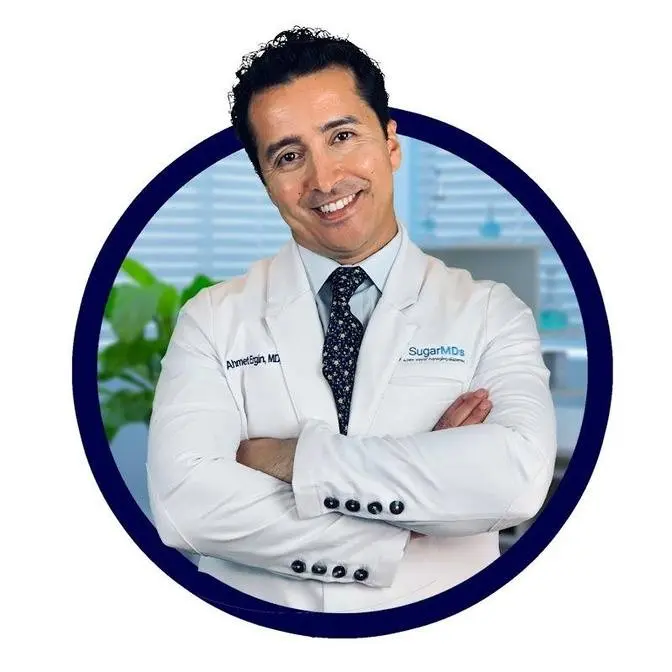
🩺 Who is Dr. Ergin? Dr. Ahmet Ergin is an endocrinologist with a particular interest and passion for diabetes care. Dr. Ergin earned his medical degree with honors at Marmara University School of Medicine in Istanbul, Turkey. Then, he completed his internal medicine residency and endocrinology fellowship at Cleveland Clinic in Cleveland, Ohio. He is a board-certified physician in Internal Medicine and Endocrinology, diabetes, and metabolism. He is also a certified diabetes education specialist.
⚠️︎ Disclaimer: Any information on diseases and treatments available at this channel is intended for general guidance only and must never be considered a substitute for the advice provided by your doctor or other qualified healthcare professionals. Always seek the advice of your physician or other qualified healthcare professionals with questions you may have regarding your medical condition.
All right everyone, welcome back. If you are new here, I'm Dr. Ahmet Ergin. I'm an endocrinologist.
I specialize in diabetes, weight loss, and hormonal conditions, and I practice in Port St. Lucie
at Diabetes, Thyroid, and Hormones Center of the Treasure Coast. Now, earlier in the week,
I usually cover one focused topic, but it could be labs, the medications, nutrition, or hormones,
but Fridays are different. Fridays are for your questions. These are real questions from real
people dealing with real blood sugar struggles, and I want you to know something. If you leave
a thoughtful question during the week, I actually read it, and many of them end up right here.
Today, I am answering questions from, for example, Essential 5737, Alopez 966, J Lois 7615,
Happy Cat Bella, Verena Blake 9920, Billy Denham 313, and so forth. Now, these questions touch
insulin resistance, the supplements, the medications, and long-term strategy. So, let us go one by one,
and let us clear things up. The question number one, Essential 5737 asks, how do we build
mitochondria? That is a follow-up question for a video, right? So, great question, and this is
foundational. Mitochondria are your cells' power plants. If they are weak, glucose control is
harder, and fat loss is harder, and insulin resistance worsens. So, you do not build mitochondria
with one supplement, okay? You build them through signals. Now, the strongest signals are your
movement, right, exercise, the calorie control, like you are fasting or reducing your portions,
and metabolic stress in small doses, like exercise, for example, especially walking, running,
resistance training. Even if you have joint problems, you can do sitting exercises, and so
forth. That tells your cells to make more mitochondria. Avoiding constant high glucose also
matters, because glucose overload directly damages mitochondria. That is why the kidney
sugar, and the kidney support, and neuropathy support, this is how they help by preventing the
glucose damage in your mitochondria in different cells. Now, adequate protein matters. A lot of
people do not eat enough protein, especially on these new drugs, the GLP-1 drugs, and then they
macronutrient deficiency, which is not good, right? That's going to affect your mitochondria.
So, supplements can support mitochondria, but lifestyle actually creates them. So, think
stimulation, but not stimulation overload. Now, question number two, alopez966 asks,
can a person with type 2 diabetes have insulin resistance reversed? And short answer to that is
yes, but let me be precise. Insulin resistance is not a switch, it is a spectrum. So, the liver
often improves first, and then muscle improves next, and visceral fat is the hardest. That's
why a lot of people have a hard time getting rid of their belly fat. What reverses insulin
resistance is weight loss, I would say more like a fat loss, and keeping your muscles important,
so you have to use them, and reduced post-meal glucose spikes will be very helpful, like I said,
improved muscle mass. So, resistance training is extremely important. Improved sleep, sleep hygiene,
right? Medications can help reduce glucose, but lifestyle actually reverses the resistance,
not just lowering glucose. So, the earlier you intervene, the more reversible it is. Now,
long-standing diabetes does not mean hopeless, but it does mean that the progress is a lot slower
for many people. Question number three, jlois7615 asks, which of your products helps with after
dinner spikes? Well, after dinner spikes are common. You see this all the time. They are driven by
carbohydrate load. Most people eat more carbs in the dinner. Late eating is a common problem.
Insulin resistance and circadian rhythm issues. For example, if you're not sleeping well, you're
eating and going to bed after a night shift. All these are problems, but from a supplement standpoint,
products that support post-meal glucose handling is typically the ones that support your insulin
sensitivity, and sometimes insulin release a little bit as well after a meal. So, that will be
your gluxion and super burberry, okay? And digestion can help blunt the spikes too. So, slow digestion
is important. So, eating your protein first, you know, your salad first helps, but supplements
overall do not override your late heavy meals. So, like, if you have a bad habit, you have to fix
that for sure. The biggest wins come from smaller meals, right, in the evening. Like I said, protein
first, carbs earlier in the day if you have to have carbs, and light movement after dinner, especially
if you're spiking after dinner. Now, supplements like gluxion and super burberry helps with the
strategy, but they do not replace your lifestyle. Question number four, happycatbella asks, can
women take berberine while on HRT? Well, great question, and I love this question. HRT means
hormone replacement therapy. You have to be careful about how you're getting your hormone
replacement therapy though, because hormone replacement therapy is not one thing, you know.
I only use compounded bioidentical hormone replacement therapy because it is a lot safer,
and there are a lot of hormone clinics or self-claimed doctors who have never been into,
sit into a board exam for endocrinology or never been into a fellowship, and they just try to do
it themselves, and they call themselves a hormone clinic, and they sometimes mess people up. So,
you have to be careful about those self-claimed wellness clinics, but in general, yes, you can
do that, but also there is some context here. Now, berberine affects your liver metabolism, right, and
HRT hormones are also processed by your liver. So, you use it, and then your liver, you know, try to
detox you from the estrogen byproducts, etc. So, that's why it's so important what type of estrogen
you are getting. Most women tolerate this combination pretty well with the berberine and HRT,
but timing and dosing matters. If someone has, for example, liver disease, that the liver is
already struggling to detox things, there are multiple medications that are overloading the liver
or is very sensitive to supplements, right, I advise caution and monitoring.
Sometimes, I tell people to use calcium deglucorate, which is a supplement. Sometimes,
I tell people to use dim detox if they are having side effects from the estrogen therapy,
but glutathione is another great master antioxidant that helps support detoxification
if you are on multiple medications or, you know, if you're worried about the side effects. So,
this is about respecting physiology. That's it. This is not about fear. Now, question five asks,
this is my fifth year. Can I still take berberine? I know I take magnesium citrate.
Magnesium citrate is good if you're constipated, but otherwise, there's really no benefit for
magnesium citrate. I recommend magnesium glycinate typically, but the duration alone is not the issue,
right, always. Yes, we don't want more than three months of berberine because it affects your gut
microbiome, but the issue is why you are still needing it, right, whether it is still effective
or not. So, it's better to use berberine in cycles. So, you can give some breaks, see how it
goes. If you don't want to give breaks, use dehydroberberine, which is what is in the super
berberine because dehydroberberine does not affect your gut microbiome and it can be used long term.
But, I'll tell you this, if glucose control depends entirely on just one supplement after
five years, maybe there is something wrong upstream, right. So, magnesium is super helpful
if it is the true type of magnesium, the correct type of magnesium, but especially for insulin
sensitivity, you know, that magnesium matters. But again, supplements should support the progress,
not stall it. Question number six, BillyDenham313 shares a long story and asks about Wigovi and
Miracle Drugs. Well, this is an important one because GLP-1 medications like Wigovi
are powerful tools. Yes, they reduce the appetite, they improve insulin sensitivity,
they support weight loss, but again, they are not miracles. They are leverage. Now, when used
correctly, they can lower glucose, right. They reduce the fatty liver. The studies show that
they improve cardiometabolic risk, but long-term success still depends on your nutrition, the muscle
preservation, because a lot of people lose their muscle on these drugs, and behavior change.
Medications will open the door for you, but they do not walk you through it. Now, these are
excellent questions. Thanks for asking, and this is why I do what I do on Fridays. If you want your
questions answered, why not leave it in the comments below. Give a thumbs up to this video,
and I track all those questions, by the way, throughout the week. If you want deeper education
on diabetes, insulin resistance, and weight loss, visit our website as well. I'm also practicing,
as I said, at Diabetes, Thyroid, and Hormone Center of the Treasure Coast,
in Port St. Lucie, Florida. We focus on long-term solutions, not shortcuts,
but thanks for watching, and I will see you in the next video. Until then, be well.