
101 EUROPE TRAVEL TIPS & MUST-KNOWS FOR FIRST TIMERS | Scams, Tourist Traps, What Not to Do & More!
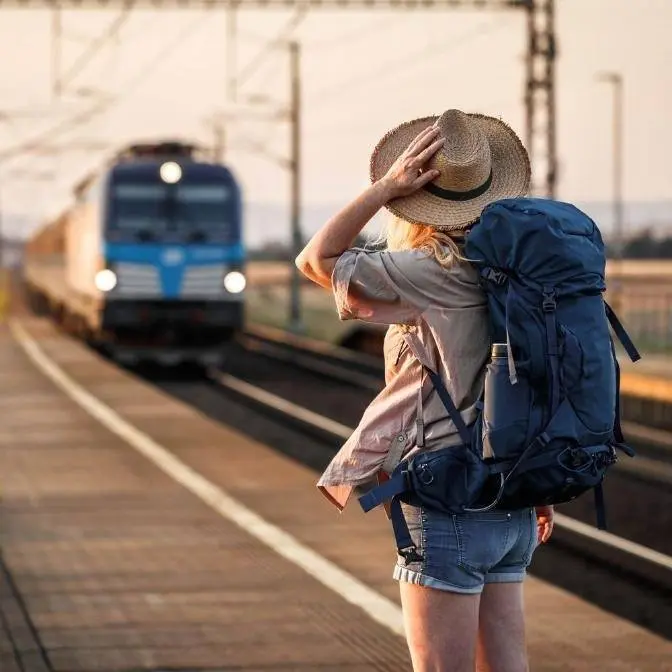
6 Video Views·Jan 12, 2026
If you are visiting Europe this year,
you need to watch this video.
Hi, I'm Christina from HappyToWonder.com.
And after a decade of traveling extensively
around the continent, I am here today
with 101 must-knows before your big Europe trip.
And before the haters come in with their tomatoes,
yes, I know that Europe is a very diverse continent
with dozens of countries,
but these tips are meant to be more general
and meant for visitors who are probably visiting
several countries during their trip.
And of course, they are written
from a North American perspective,
so please don't get mad at me.
Okay, we are going to start with Europe travel planning tips.
So tips that you should know
when you're in the planning process.
First, use Google Flights to find cheap flights.
This is by far one of my favorite tools
to find flights going to Europe.
You can use this amazing date grid.
You can use this map view,
which allows you to look at flights
for a lot of different airports across Europe.
And it also gives you a lot of flexibility as well.
If you don't say no exact dates that you wanna go,
it can help you find the best deals
for a certain time period within a certain timeframe.
If you're interested in more on that topic,
I do have a full video dedicated
to finding cheap flights in Europe,
so be sure to check that out.
Tip number two is to take advantage of free stopovers.
There's actually a lot of airlines that go to Europe
that have a free stopover program,
which effectively means you can pay for one flight
and actually visit two different destinations.
So a few of the different ones that offer this
include Iceland Air, which offers free stopovers
in Reykjavik for one to seven days.
There's also Iberia,
which has free stopovers in Madrid for a few days.
There's TEP Portugal,
which offers free stopovers in Lisbon and Porto
for one to five nights.
And that's just a few of the options
that you can look into.
Tip number three, wherever possible,
please try to avoid peak travel periods,
especially mid-June to August,
because honestly, this is when everyone
and their mom's cousin tries to go to Europe
and it can get really, really busy,
really crowded, really expensive, and also really hot.
Now, I know sometimes it can be helped,
like if summer is the only time that you get off,
but if you have the flexibility,
I can highly recommend going during shoulder season.
So like April to June or September to October,
those are both still great options.
Tip number four is to also try to time your visit
to avoid European school holidays.
So in addition to the peak periods
that I just talked about,
a lot of European schools will also have special holidays
where lots of families around Europe
will be going, doing smaller trips across the continent.
So prices can also be really high.
The school holidays do vary depending on the country,
but for the most part, you'll generally find
that they do have a special holiday
for a few weeks around Easter time
and also around Christmas.
Tip number five is to not spread yourself too thin.
So I think a lot of travelers coming from abroad
think that, okay, Europe looks really small on a map.
I'm probably gonna be able to see a lot of countries.
And yes, things are quite close together,
but they're not that close together,
if you know what I mean.
So honestly, I think the best way to go about it,
unless you have a lot of time at your disposal,
is to just pick one or two countries
and really travel them thoroughly,
rather than trying to check off a bunch of countries
and hop around just for the sake of counting countries,
because the trip will be a lot more enjoyable
if you kind of take it slower.
Tip number six is to understand the Schengen zone.
So contrary to popular belief,
not the entire continent of Europe has border-free travel.
It's actually just this one zone of countries
known as the Schengen zone.
So if you familiarize yourself with the Schengen zone,
then you'll better be able to plan.
If you are planning a longer trip,
then you can use your knowledge of the Schengen zone
to potentially stay in Europe longer.
So for instance, as a Canadian,
I get 90 days in a 180 day period
to stay in the Schengen zone.
But if I wanted to stay in Europe
longer than three months total,
then what I could do is actually mix up my itinerary
with some non-Schengen countries,
and then that way I can stay longer.
If you're curious about this,
I do have a full post explaining the Schengen zone
on my website.
Number eight is to get a WISEcard.
So if you're worried about using your credit card abroad
because of things like fees and currency conversions,
then WISE gives you lower fees and lower exchange rates
than normal banks would.
And it's really, really handy to have
because then you can just use this one card.
It also allows you to withdraw money when you're abroad.
And overall, it's just a really handy tool to have.
Honestly, I love using WISE,
and if you use my referral link,
you'll actually get your first transfer for free,
I think up to 500 pounds.
So feel free to use that if you want.
Number nine is to consider
more off the beaten path destinations.
So obviously when different visitors
from abroad come to Europe,
oftentimes they have their sights set
on the really famous destinations
that they've probably heard of
and seen in movies and TV shows.
And while it can be really great to visit these places,
I highly recommend mixing your itinerary up
with a few places that are a bit more off the beaten path.
So whether you're visiting a new country
that isn't as thoroughly explored by tourists,
or you can pick a really famous destination, popular place,
and then explore some smaller areas around that.
So let's say if you're going to Paris or going to London,
look into different day trips that are kind of in that area.
And I promise you some of these smaller places
are gonna end up being your favorites from the whole trip.
And if you have any hidden gems to recommend,
be sure to drop them in the comments
to help out your fellow travelers.
Tip number 10 is to book your hotels
as far in advance as possible.
This is the best way to ensure that you get a good deal.
There are a lot of really great websites
where you can look for hotels that have free cancellation.
I personally use booking.com.
And through that, you can just book a hotel just in case,
and then look into other options.
Tip number 11 is to understand
that the hotel star system in Europe
is different to North America.
I feel like I say this in every video,
but I have to emphasize it again.
Whereas in North America,
one to five stars roughly corresponds
to the quality of the hotel.
In Europe, that's not so much the case,
just because the one to five star system
is more about a checklist of amenities.
So there's actually a lot of really great
one or two star hotels that are just smaller
and don't have the big amenities like a pool
and a lot of four or five star properties
that aren't the best.
And they just get that rating
because they have a lot of big amenities
that you might be used to.
I did release a video two weeks ago
about how to find the best accommodation in Europe.
So be sure to give that a watch if you haven't already.
Tip number 12 is to download helpful apps before you go.
So again, I do have a full video
all about different apps that you can download,
but a few of my favorites include Omeo,
which is one that allows you to compare
and book transport options from point A to point B.
So it allows you to compare buses, flights,
and trains at the same time,
which I think is really handy.
There's also Google Translate,
which I think is really crucial for translating signs
and translating menus on the go
if you're going somewhere that English isn't widely spoken.
I also love Splitwise,
which is really handy for saving friendships.
Honestly, if you're traveling in a group,
it allows you to input your expenses
and it does all the math for you
so that you don't have to awkwardly be like,
hey, you kind of owe me 20 cents
from those baguettes earlier.
Lastly, there's Too Good To Go,
which is a really great app
that lets you buy discounted food at the end of the day
from different restaurants and bakeries and supermarkets.
It's basically a way that they can eliminate food waste
and also you can score a cheap meal out of it as well.
Lastly, tip 13, don't forget to buy travel insurance.
I know it seems like an unnecessary expense,
but trust me, better safe than sorry.
I actually get free travel insurance through my credit card,
but if you want a really good option for longer trips,
what I tend to use is World Nomads.
It's super easy to buy a policy online
and they just make things really simple.
All right, now let's move onto Europe transport tips
for getting around.
The first thing is you don't need to rent a car.
Honestly, unless you're gonna be doing lots of nature trips
or traveling to remote villages, you don't need a car.
Renting a car in Europe can be really stressful.
Driving in Europe is stressful.
And honestly, I think public transport
is really part of the experience
because it's so abundant and so amazing here.
That said, tip number 15 is if you are renting a car,
be sure to look into whether or not
you need something called a vignette.
So there's different countries that require a vignette,
which is a sticker that you stick on your car.
And this is basically like a prepaid toll
so that you can use their highways and motorways.
Yes, they are incredibly strict on this
because they have automatic scanners
when you go across the border.
So make sure you go and you get this vignette
before you enter a country.
Ask me how I know that, okay?
Tip number 16 is to do a lot of research
before committing to a URL pass.
I do love a good URL pass,
but it doesn't necessarily make sense for everyone.
And if you're on a budget,
actually the cheapest way to do it
is probably just by pre-booking all your trains in advance.
But again, I do have a full video covering that
with all the considerations that you need to keep in mind
before you take the plunge.
Tip number 17 is to familiarize yourself
with all the budget airlines in Europe.
So if it's your first time in Europe,
there's a lot of airlines
that you probably have never heard of,
but are actually really cheap,
no-frills ways to get around.
So for instance, there's Ryanair, EasyJet, and Wizz Air,
all of which I have written separate reviews for.
And honestly, with these airlines,
sometimes you can fly somewhere
for the price of like a lunch,
which I think is absolutely incredible.
But if you're new to it,
there's a lot you need to get used to
because there's a lot of little tricks that they use
to kind of get you to pay more money.
So be sure to keep that in mind.
If you're backpacking or if you're on a budget,
they are a really great option.
Another tip is to research how trains work
in each country that you go to.
If you come from a country like mine
that doesn't really do passenger rail
and it's not a common way to get around,
European train stations can be incredibly overwhelming.
So be sure to look into how train stations work
and like how the train system works,
and you're gonna save yourself a lot of stress
because trust me,
you're not gonna just figure it out when you show up.
If you want them,
I am thinking about doing separate train travel guides
to different countries.
So if that interests you,
let me know in the comments if you have any requests.
Okay, tip 19 is to know
that most train stations actually have lockers.
So with these lockers, you can drop off your bags
if you're just doing a stopover in a city,
or if you have to check out early
and your train's not until later in the day,
it's a really great way to just leave your bag
at the train station so you can go out and explore.
Tip number 20 is to always validate
and hold onto your ticket.
So in a lot of European countries,
just buying a ticket isn't enough.
You have to physically validate it
and validate it properly,
or else that ticket isn't considered valid.
And if there are ticket controllers that come on board,
which is actually quite common,
they do have the right to fine you
if you haven't bought the right ticket
or validated it properly.
Tip number 21 is to try to order all your taxis
and rides on apps when possible.
This is because taxi scams are super common,
especially when you're just arriving at an airport.
So if you order through an Uber
or through an app called FreeNow,
which is like Uber, but with licensed taxis,
you actually, you can see the fare,
you can prepay on the app.
That way there's a lot more security
and it's highly unlikely you'll get scammed.
Tip number 22 is to just book an airport transfer in advance
if you want to save yourself the stress.
One website I really love is called Welcome Pickups,
and basically you can pre-order a ride
with an English-speaking driver.
And what they'll do is they'll track your arrival time
and they'll show up and they'll have your name
on a little card when you arrive.
It can be a little bit pricier than taxis,
but honestly, if you're in a big group
or you have a lot of bags, it just makes more sense.
And that ease of mind is worth every penny.
Tip number 23 is to avoid public transport during rush hour.
And I know this sounds like common sense,
but I think when people are on vacation mode,
they kind of forget that there are other people
who live in that city and are going to work or going home.
So if you can, do not get on public transport
at the same time as everyone's trying to get home
or trying to get to work, just because it is so crowded
and it is not a fun time.
Tip 24 is to look into rentable e-bikes or scooters.
Most major European cities now have
these really cool programs where you can order a scooter
or an e-bike on an app, and it's a really fun
and easy way to get around.
Cool, with those tips out of the way,
let's now tackle tips for European attractions.
So first I have to say, please prepare yourself
for scaffolding and restorations.
Okay, I know you've probably seen so many photos
of all these different landmarks
that you're planning on visiting,
but trust me when I say at some point during your trip,
you are going to see a landmark
that you've been wanting to see forever,
and it's going to be covered partially in scaffolding
because, guys, I don't know if you know this,
Europe is really old.
And so, you know, one side of that
is that it's really historical and beautiful.
The other side is that something is always under repair.
So just be prepared for the fact
that it might not look exactly as it does in the photos.
For me, for instance, the first time I went to Rome,
the Trevi Fountain was completely covered in scaffolding
and completely drained of water
for like a three-year restoration project,
and it was just like the saddest day of my life.
And I know most travelers have similar stories,
so if you have a moment like that,
please drop them in the comments.
We can commiserate.
Tip number 26 is when you're looking
for information about attractions,
always make sure you're looking on their official website.
And I say this as someone who runs
a third-party website about travel.
Information gets outdated really quickly.
So if you're looking for things like opening hours
or ticket prices or anything like that,
go to the source, go to the official website,
because most third-party sites will not be 100% accurate
depending on how long those posts have been live.
I would also advise whenever possible
looking at the local language version of official websites,
just because they tend to keep those more up-to-date
and give more thorough information than the English one.
Tip number 27 is for big attractions,
make sure you're always buying your tickets in advance.
It's usually cheaper and it just saves you the stress
of having to wait in line once you're there.
Also, if there is an option to buy a ticket
that helps you skip the line, just pay the extra.
Time is money when you're on vacation.
So make sure you buy the skip the line ticket
whenever it's available.
Another tip is to wake up really early,
like at sunrise, if possible,
so you can enjoy a busy place without crowds.
I know we're not all morning people.
I definitely am not, but trust me,
there's nothing more magical than waking up early
and feeling like the city is yours
before all the crowds descend.
Alternatively, if you are a late riser,
one of the things that you can do,
one of my personal favorite tricks,
is to try to visit attractions right before they close
rather than as soon as they open.
This is because everyone assumes that going in the morning,
it's gonna be the least busy.
So there's usually a lot of organized tours,
a lot of bus tours that go at that time.
But if you go just before they close,
let's say like an hour, an hour and a half before,
usually the crowds will be a lot thinner.
And I used this to go to the Vatican Museum a few years ago
and I literally had the place to myself.
So I highly recommend using that trick.
Tip number 31 is to look into special tours as well
that allow you to gain after hours access
or maybe like pre-hours access to certain attractions.
I know a lot of really big touristy places
have started to do this now,
where if you pay a little bit extra,
then you can go tour a place
before it opens to the public or after.
A few years ago, I did a 6 a.m. walking tour of Venice,
which for some people might sound
like their personal idea of hell,
but it was so stunning and being able to see
these massive squares without anybody in them
was just worth every penny.
I'd also advise looking into different tours
that might be special or unique.
You know, generic walking tours are great,
but these days, especially in major cities,
they have tours for pretty much everything,
whether you're interested in street art, food,
you wanna do a bar crawl, you wanna do a photography tour,
if you wanna look at filming locations,
there are different tours for all kinds of interests.
I personally like to search on Get Your Guide and tickets.
They usually have a lot of really great options.
That said, if you are on a budget,
Europe has so many amazing free attractions.
Honestly, some of the best things to do in each city
happen to be free.
So don't feel pressured into paying for an attraction
if you're not super interested in it.
There's almost always a free alternative.
And for museums as well,
look into whether or not they have a free day.
Oftentimes with bigger museums,
they'll have like one day a month or one day a week
where the admission is either free or by donation.
So that could be a really great way
to save a little bit of money.
Tip number 35 is to look into age-based discounts.
So European attractions and transport systems
love to reward you for being either young or old.
So not only do they have child-based discounts,
they also have youth discounts.
And sometimes youth discounts
are like up until you're 26 or 27.
So it's really worth looking into whether or not
you can get a discount.
Honestly, it never hurts to ask.
Similarly, if you are a student,
ask if they have a student discount.
Most of the time they will.
But a really important thing to note
is that sometimes they don't actually take the student ID
that you get from your own college or university
just because those all look different.
So they never know which ones are legitimate or not.
So get an ISAC card.
These things are like 20 bucks
and then you can use it for the year.
And these are basically standardized
international student cards
that will be accepted pretty much everywhere.
Tip number 37, for touristy cities,
be sure to look on local blogs
as well as touristy blogs.
And I say this because, you know,
if you're going to a place like Paris or London,
sure, there's tons of tourists,
but there's even more people who live there and call it home.
And so if you look at local blogs,
you can find things that you might've never heard of,
like art pop-ups, new restaurants, or fun installations
that you can use to really spice up your itinerary.
Lastly, it's a silly one, but tip number 38
is to just look at alternative viewpoints
for the big attractions.
So a lot of the time you'll notice
when you go to somewhere touristy,
there's a cluster of people around the same landmark
from the same angle, trying to get the exact same photo.
But, you know, landmarks by definition
can be seen in lots of different locations.
So why not move a few streets over
or travel a little bit further
and try to get some of those unique spots?
Sometimes even if you just go behind the main attraction,
you avoid all the crowds.
So feel like you have the view to yourself,
which I think is really nice.
All right, now let's move on to safety tips
on how to not get scammed in Europe.
The first thing is to just be aware of your surroundings.
A lot of scams in Europe really thrive on distraction.
So so long as, you know, whenever you're in a crowded place,
you have your wits about you,
you're making sure you're taking note
of nobody coming too close to you
or keeping a hand on your belongings,
that in itself is probably enough
to thwart the majority of scams.
But of course, it's also helpful to learn
a few of the common scams before you go.
I do have a video all about
how to avoid pickpockets next week,
so I'm not gonna go too much into detail with that.
But generally speaking,
just make sure that nobody's getting too close to you
and that you have your personal space.
You should also never take anything that's supposedly free.
So a really common one is roses.
You'll have people come up to you, give you a rose,
like, welcome, it's free, take it.
But what they'll do is they'll end up asking
either your travel buddy for money
or they'll ask you for a donation or something.
So don't take anything that's free.
And most certainly,
if someone's trying to put a friendship bracelet
on your wrist, don't do that.
It's a trap, run.
On that note, also don't sign any petitions.
And if you're wondering the best way
to kind of get these scammers off your back,
it's honestly just to ignore them.
Don't engage with them at all.
Ignore and walk away.
And another important tip is to research
the pickpocket hot zones of your destination.
Of course, this more applies to really touristy places,
but honestly, there are certain areas in each city
that are notorious for being pickpocket central.
Yeah, keep that in mind and do your research.
Tip number 45 is to not get distracted by street games,
like that whole all under cup game.
I honestly don't understand how this is still a thing
because it's so obviously a scam.
Not only are you not going to win the game,
there's probably also pickpockets who are looming around
waiting for you to be distracted
so that they can take your wallet.
And it's overall just not a good time.
Number 46 is to keep your valuables out of sight.
A really common rookie mistake is to leave your phone
on the table at a terrace
or having your purse just dangling off your chair.
Don't do that because that makes you a huge target.
It's very easy for someone to just kind of walk past
and like grab your phone.
And of course, do try to not carry around too much cash.
My rule of thumb is to not carry any cash
that I wouldn't be able to stand to lose.
So honestly, these days cards are accepted
more or less everywhere.
So don't bring huge amounts of cash out with you.
I'd also say, please try to keep your phone out of sight.
So when you're walking around
and you're navigating with maps,
don't have your phone just in your hand
because phone snatchings are becoming
a really common crime,
especially in big cities like London.
So if you're ever standing kind of close to the road
next to a bike lane,
or if you're ever in a situation
where you're kind of like on public transport
and there's doors there,
keep your phone away because what's really common
is people will just snatch the phone
as they're biking past you
or as the doors are about to close on a train,
they'll just like grab the phone out of your hand
and then you won't be able to catch them.
And speaking of bike lanes,
just a physical safety tip,
beware of bike lanes
and make sure that you're not walking in them.
Inevitably, you will accidentally walk into a bike lane
and trust me, it's not fun.
European cyclists are very scary.
So please beware, bike lanes are everywhere.
Tip number 51 is to buy some small locks.
So I really like having small cable locks
that I can use to lock together my zippers
in situations when I'm in a crowded place
or I'm traveling from the airport to the hotel
and you just wanna have that extra layer of security.
They're really cheap, they're really lightweight
and it's just good to have a lock just in case.
Another thing to do is to separate your cards.
So don't just have all your cash
and all your cards in one wallet.
Remember to always have a backup plan just in case,
let's say, your wallet gets stolen,
then at least you have one more credit card hidden
in another bag of yours or back at the hotel.
Tip number 53, avoid these sketchy Euronet ATMs.
They are bad news.
They always have insane fees.
The currency conversion rates aren't good
and they'll always like give you crazy denominations
that don't make sense to trick you to withdrawing more money.
So avoid using these ATMs.
And just as one last safety tip,
just have a backup plan just in case, okay?
I know it's not fun to imagine the worst case scenario,
but it can be really helpful to think,
okay, if my wallet gets stolen and I lose all my cards
or if my bag gets stolen and I lose all my cash
and my passports, what do I do?
Who do I need to call?
If you have a plan in place, then that can really help
if things do go wrong.
Okay, now let's do some food and drink tips for Europe,
my personal favorite.
So the first is to dine as far away as possible
from tourist attractions.
The reason being tourist attractions
usually cater to tourists
who aren't probably gonna come back
so they can get away with the food quality not being great.
They can get away with inflated prices, et cetera.
So what I would recommend is walking a few blocks over
and 99% of the time, you're gonna find a place
that has better quality food for cheaper prices.
Tip number 56 is to learn
how to spot a tourist trap restaurant.
So the first is that if they have big pictures,
that's probably a sign that they're catering more to tourists.
Another sign is if they have their menu
in a million different languages,
that probably means it's quite a touristy place as well.
And the most obvious one I would say
is if they have like tourist menu,
just like written in giant letters
at the front of the restaurant,
that of course means they're catering more to tourists.
Another important thing to do is double check
that the menus have prices before you sit down
because this is a really common scam
that they use to get tourists all around the world.
Odds are if there's no prices,
they are gonna try to scam you.
On that note, a quick check of reviews is a must.
These days, we all have internet on our phones.
So take a look at the restaurant,
just give it a quick Google
and immediately you'll be able to see
if it's like a scam or not.
So a little bit, a really great way to do that
is by going out for lunch,
having a multi-course lunch rather going out for dinner
because lunch tends to be cheaper.
Another thing to keep in mind
is that the bill usually won't come until you ask for it.
So just know that service is a little bit different
depending on the country, but across the board,
it tends to be slower than we're used to in North America.
So know that you have to ask the bill,
they're not gonna just bring it to you.
Another thing to keep in mind
is that water is probably gonna cost you money
because normally when you ask for water,
the assumption is you're asking for bottled water.
So sometimes they'll bring you a still or sparkling water,
often they'll clarify with you beforehand.
And you can ask for tap water in some cases,
but it's not exactly as common as it is in North America.
So either they won't do it or they'll do it reluctantly.
So just keep that in mind.
Another thing to remember is if they put bread on the table,
99% of the time that is not included.
So in some countries like Italy,
they will automatically charge you a cover charge
that includes bread.
In other countries,
the bread is kind of like an optional extra
and they'll put it on the table automatically
kind of as like a trap for tourists
because they know you're gonna start eating it
and then they'll charge you for it after.
So just know that it's not very common
for bread to be included in the price of your meal.
It usually comes at an additional cost.
Tip number 63 is to avoid making too many substitutions.
I mean, unless you're allergic to something,
it's not really that common to be like,
oh, can I sub this for this?
Or like to change the menu around too much.
Plus when you're working with a language barrier,
sometimes that can make things really confusing as well.
Tip number 64 is if you can, take a cooking class.
Honestly, this is one of my favorite activities
to do when I travel.
And if you take a cooking class,
think of it as like one of the few things
you can do when you're abroad
that yields you tangible benefits in the future.
It's so great.
Learning how to make pasta in Italy, you can't beat it.
Tip number 65 is to forget everything you thought you knew
about your destination's cuisine.
Because the thing is,
all the stuff that makes it over to North America,
what we think is French food, Italian food, Spanish food,
is either gonna be like a bastardized version
of what they have over there,
or it's just gonna be completely off.
So for instance, French fries are not French
and chicken Alfredo is just not a thing in Italy.
All the assumptions that you had
about that place's cuisine, throw it out the window
and do some research before you go
about what the local specialties actually are
so that you don't embarrass yourself.
Tip number 66 is if the hotel breakfast is not included,
do not pay extra to have breakfast at your hotel.
I think one of the best things about Europe
is that there's bakeries pretty much everywhere.
And I think one of the best experiences you could have
is just like going to a bakery in the morning
and grabbing a cheap breakfast.
On a similar note, one of the best ways you can save money
is by shopping at supermarkets.
Now, I'm not saying you shouldn't eat at restaurants,
but sometimes it's just way more cost effective
to grab a snack from a supermarket or grab some drinks.
And it's also just a really fun way
to kind of get to know a culture.
That said, be aware that when you do go to a supermarket,
there might be certain rules
that are different to what you're used to.
So for instance, you might have to weigh your own fruits
and vegetables before you get to the till,
but just observe what other people around you are doing
to save yourself the embarrassment.
Another tip is to make sure to add a picnic or two
to your itinerary.
You go to a supermarket, you grab a few things,
have a picnic outside.
This is honestly one
of the most quintessentially European experiences.
No matter where you go, there are people picnicking
and it's so lovely.
And on that note, actually consuming alcohol in public
is much more common here.
It's definitely not uncommon to see people drinking beers
or wine with their outdoor picnic.
So be sure to take advantage of that as well.
Another great budget-friendly food tip
is to eat at markets as much as possible.
I just think that this is such a fun way
to explore the local food culture,
sample a little bit of everything,
and also save quite a bit of money as well.
Of course, it has to be said,
when you're visiting markets, don't touch the produce.
Again, this is like a norm that kind of varies
based on the country.
But for the most part, vendors do not like it
when you start picking up your own fruits and vegetables.
Often they'll be the ones to bring it to you.
Another thing to keep in mind
is generally European mealtimes are a little bit later.
Of course, this can be used to your advantage.
Like if you wanted to book a table earlier in the evening
before other people start eating dinner,
that can be helpful.
But just something to keep in mind
because some restaurants actually go on break
between lunch and dinner.
So make sure to check hours.
Of course, it's worth noting that meals tend
to be a bit slower across Europe as well.
In North America, I feel like it's very common,
especially when it's busy,
for a service to kind of rush you out
by giving you the bill and getting you to leave.
But here, the pace of life tends to be a little bit slower.
They don't rush you during your meals.
It's meant to be something to be savored.
So be sure to enjoy that.
Tip number 75 is to take into account
regional specialties as well.
I think we have a tendency in North America
to paint food and cuisines in broad strokes.
So Italian food consists of this,
or French food consists of this.
But actually there's a lot of regional specialties
and differences that we don't take into account.
So if you're going to Spain, paella is great,
but it's not necessarily a specialty
everywhere in the country.
So be sure to try regional specialties as well.
Lastly, I have to say,
just be open-minded about trying new foods.
Just generally speaking,
I feel like there's a lot of foods in Europe
that taste really different
to how they taste in North America.
For instance, I hated beer until I tried it in Belgium.
And I hated cheese until I tried smoked cheese
in the Netherlands.
And now I love both of those things.
So I don't know, don't write it off
just because you feel like you don't like it.
Food can really taste different over there.
All right, now let's move on to the next big section,
which is culture and etiquette tips for Europe.
Firstly, you have to know,
culturally Europe is a million different entities.
One of my biggest pet peeves,
and I know this is ironic
because this is literally called Europe travel tips,
but just go with it.
One of my biggest pet peeves
is when people paint really broad strokes
and generalizations about the continent of Europe,
because every country is different
and every region in that country is different as well.
There's a lot of cultural nuance.
So be sure to research specific cultural norms
for your country.
On that note,
I am thinking about doing country specific videos
for different travel tips.
So let me know if you have any requests.
Tip number 78 is to learn at least hello and thank you.
I know it can be daunting to pick up a new language,
but those two words are honestly the most basic
that you should make sure you know
for every country that you go to.
Another phrase you should add to your vocabulary list
is do you speak English in the local language?
Because then it's just a lot more polite
instead of just accosting someone
and asking them something in English right away.
Tip 80 is to definitely never tip by North American standards
and while tipping varies from country to country in Europe,
one common thread is that it will never be minimum 20%
for standard service.
That is purely a North American thing.
There's nowhere that you would have to pay that much.
So be sure to research the tipping culture
in each country that you go to,
but know that it's never gonna be as intense
as it is in North America.
Tip number 81 is just know that service
is gonna be different to what you're used to
in all customer service settings,
whether you're at a restaurant or at a hotel.
A whole overly done friendliness thing
is very North American.
You will encounter friendly people,
but for the most part,
it's not gonna have the same sort of overly friendly vibe
that you might be used to.
Service will be different.
Don't take it personally.
Tip number 82 is to not speak too loud.
There is a very common stereotype
that is very true about North Americans
that we are really loud and we are,
and it's just the natural volume of our speaking
and it's hard to control, I know,
but when in doubt, mimic the locals.
If you're on a train and nobody's talking to each other,
it's probably a good bet
that you probably shouldn't be talking on the train either.
Just kind of take cues from the people around you.
Lastly, be sure to look into different folk festivals
and cultural events because one of the coolest things
about Europe as a continent
is just how steeped in heritage and tradition they are.
So they have lots of really amazing events
that they do to uphold these traditions
and lots of festivals that you can take advantage of.
So I definitely recommend,
depending on when you're going,
research some different folk festivals or events
that might be happening at the same time
because it is so much fun to participate
in some of these festivals
and kind of see culture firsthand.
All right, now it's time for some packing tips for Europe.
So the first one is to make sure
you don't bring any suitcases
that you cannot physically carry yourself.
And the reason I say this
is because elevators and escalators
are not as common as they are here in North America.
And even when there are elevators and escalators,
sometimes they can be broken.
And there's also cobblestone streets
that can totally wreck your suitcase as well.
So make sure you bring suitcases
that you're able to physically lift.
Tip 85 is pretty basic,
but make sure you have good walking shoes,
prioritize comfort above anything else.
European cities are incredibly walkable, generally speaking,
and so you're gonna be doing a ton of walking.
Tip 86 is to buy some air tags to put in your suitcase.
Not only is this good for tracking your luggage
in case it goes missing at the airport,
it's also handy if, for some reason, it gets stolen.
Another good idea is to pack an emergency outfit
in your carry-on.
If you're checking a bag,
make sure to not make the fatal mistake
of putting every single item of clothing
in your checked bag,
because in case the bag goes missing,
in case it gets stolen,
you're gonna want to have at least one emergency outfit
just in case.
Tip 88 is to pack clothes with hidden pockets
rather than use a money belt.
A lot of people love money belts,
and I just can't get behind them, honestly,
because I find them really uncomfortable and inconvenient.
So what I prefer to do is have items of clothing
that have hidden pockets.
So I love jackets that have a pocket on the inside,
because then you can keep all your valuables
really close to you,
and they're also within reach,
and you don't have to lift up your shirt
and awkwardly unzip this fanny pack that you have.
Tip 89 is to bring a universal adapter.
So for the most part across Europe,
this two-prong thing is the most common one
that you're gonna see,
but in some countries, they do have different ones.
So having a universal adapter, honestly, is your best bet.
And once you buy one,
you can use it literally for your travels
for the rest of your life,
and then you can just bring one and be done with it.
Another tip is to DIY your own personal size toiletries.
So if you have specific shampoo that you like
or specific products that you use,
what's really handy is buying these reusable bottles,
and then you can just refill it with whatever you need
and reuse them over time,
and it's just, yeah, the best tool ever.
Speaking of the best tools ever,
I highly recommend you also buy packing cubes.
If you've been on this channel before,
you know I'm obsessed with packing cubes.
They keep everything so organized and compressed.
I have a full video about them, shocking,
and you can check that out
if you aren't sure which ones you should buy.
And of course, it's worth mentioning
that I do have these pre-made packing lists
that you can download on my website for free.
So if you're not sure what to pack,
you can just steal these and take the stress
and guesswork out of it.
All right, we've gotten to the last section.
So here's some final tips for traveling Europe.
If you're still with me, congratulations.
I promise these last few ones will be worth it.
The first one is to claim your VAT
or VAT refunds at the airport.
So what's really cool is when it comes to goods
that you are buying and taking home,
so things like clothing, gifts, et cetera,
non-residents of Europe are actually eligible
for a refund when they leave.
And this is because the prices in Europe
actually have this value-added tax built into the price.
And so you can claim that back if you're a non-resident.
Another random tip, and you'll know this
if you've watched Emily in Paris,
is that floors are different
in Europe compared to North America.
For the most part, in North America,
when we're talking about the ground floor,
that's the first floor, right?
But in Europe, the ground floor is something different.
And then the first floor starts after the ground floor.
So this can be a little bit confusing.
It's just something to keep in mind.
Another one is to prepare for the beds to be different.
Beds in Europe tend to be smaller.
And one thing that really catches people off guard
is when you're booking a double bed,
often the double will literally
just be two singles pushed together.
And then there's this little sad gap of death in the middle.
There's not much you can do about it.
It's just a little bit different,
something to be mindful of.
And depending on the country,
sometimes the pillows and sheets are different as well.
Like in Germany, they love these square pillows.
And to this day, to this day,
I do not understand how you're supposed to sleep
with these square pillows,
but just know that the pillows and the sheets
can be different, it's not a big deal.
Another thing to be mindful of is to be aware of the fact
that some words that you know in English
might have different meanings in different languages.
So for example, for us, a menu, when we ask for a menu,
that means the paper with the prices
and the different dishes on them.
But in France, a menu actually refers
to kind of like a combo, like a combo deal.
And also here for us, an entree is the main course,
whereas entree, depending on where you are,
that is going to refer to an appetizer.
And honestly, that does make more sense their way.
But just know that that's also different.
Another tip is to use Google Maps as much as possible
to save spots that you want to see.
The reason I love doing this,
like whenever I find a cafe or an attraction
that I want to see, I'll go start on Google Maps.
And the reason I do that is because it's really nice
to be able to see at a glance all the different activities
that you want to do,
because then it's automatically sorted by neighborhood.
So that way you can kind of more strategically
plan your itinerary,
rather than just have a list on your phone.
Tip number 99, this is a very random one,
but if you ever need customer support,
seriously, hop on Twitter.
This works for airlines, this works for train companies,
all sorts of different companies.
If you go on their company account
and you see that they are actively replying
to tweets from other people,
that means that is your best way
to get a hold of customer service right away,
because it's way quicker to speak to a person
through Twitter than trying to get on the phone
or trying to get through email customer support.
Tip number 100 is a very random photography hack,
but I think it's super helpful
if you're going to be going to a very crowded place.
So this is what you do.
If you're looking for a photo
and you don't want to have like a million people
in the background,
what you should do is on iPhone, turn on live photo.
And then when you turn on live photo,
what you can do is pose, stay still,
and get the person taking your photo
to hold their camera steady.
And then afterwards, you can look at the live photo,
you can tap on the live bit and then do long exposure.
And hopefully if you've stood still long enough
and you didn't move,
the people in the background will have some motion blur
because they were walking
and you will look crystal clear and amazing.
All right, the final tip, tip 101,
make sure you binge watch movies
that are set in the destination that you're going to.
Trust me when I say this makes your trip
a million times more magical
when you can recognize sites
from a movie or a TV show that you've seen.
All right, I hope this video has helped you
feel a little bit more prepared for your big Europe trip.
If not, my Instagram DMs are open
if you have any more questions.
And if you like this video
and you want more practical travel tips
about Europe and beyond,
be sure to like and subscribe.
And I'll see you guys next week.
Thank you, bye.