
Ancient India’s Cosmic Map | Sapta Dvīpa Explained with Geometry | Real2Rea
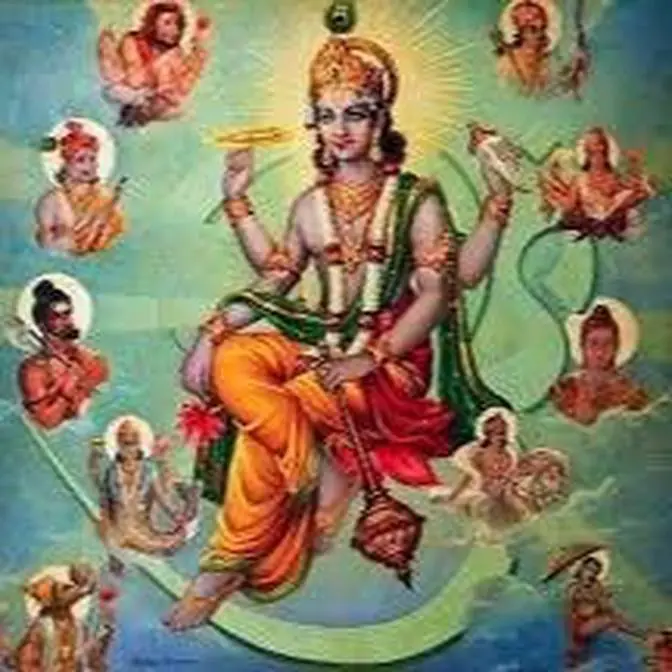
Jambu, Plaksha, Shalmali, Kusha, Krauncha, Shaka and Pushkara. Listen carefully. These seven names
were not placed randomly. They follow a pattern, a perfect geometric order. Ancient Puranas say,
the world is not one land but seven expanding rings, each exactly double the size of the previous,
all revolving around one unmoving center. And once you see the geometry behind this system,
you will realize this was never meant to be normal geography. Stay till the end,
because the final continent explains why humans were placed near the center, not the edge.
Before we go continent by continent, understand this clearly. The Puranas are not trying to draw
Google Maps. They are not talking about Asia, Europe, Africa. Instead, they are showing Bhuv
Mandala, a cosmic plane designed using layers and symmetry. Think of it like this. Draw a dot.
Draw a circle around it. Then another. Bigger. Then another. Bigger again. This is exactly how
Saptadvipas are arranged. This is geometry, not storytelling. Now let's enter the first ring.
For number one, Jambudvipa, the central circle. At the very center lies Jambudvipa. Not the biggest,
not the richest, but the most important. Why? Because karma operates fully only here.
At the center of Jambudvipa stands Mount Meru, the cosmic axis. Around it lie nine regions,
and one of them is Bharata Varsha, where humans live. Geometry in sight. Humans are not placed
at the edge of the universe. They are placed near the center of action. Jambudvipa is surrounded by
the saltwater ocean, the boundary of the familiar world. But beyond this, the pattern begins to
expand. For number two, Plaksadvipa, the first expansion. Now imagine crossing the vast saltwater
ocean. As you move beyond it, something important happens. The circle of the world doubles in size.
You enter Plaksadvipa, named after the sacred plaksa tree, the fig tree, a symbol of stability,
growth, and long life. The Puranas describe life here as very different from ours. People live
longer, their lives are more balanced, and suffering is much less than in Jambudvipa.
But here comes the strange and interesting part. Plaksadvipa is surrounded not by water,
but an ocean of sugarcane juice. Sugarcane represents natural sweetness, ease of living,
and abundance without struggle. As we move outward in this cosmic design, life becomes easier,
not harder. Remember this pattern. It will matter later.
For number three, Shalmali Dvipa, the energy zone. As we move further out, the cosmic ring expands
once again. The geometry continues. Welcome to Shalmali Dvipa. This is not a calm world.
The Puranas describe this realm as intense and powerful. The beings here are strong,
nature itself is forceful, and life vibrates with high energy. Now, notice how the ocean changes.
Shalmali Dvipa is surrounded by an ocean of wine, called Sura. Before you misunderstand,
this is not about drinking alcohol. In ancient symbolism, wine represents passion, excitement,
and a stimulated state of existence. Here is the geometric message. As we move further from the
center, intensity rises before it begins to settle. Still following the pattern? Good,
because from here, it only gets deeper. For number four, Kushabdvipa, the ritual ring.
Beyond the ocean of wine, the next geometric ring opens. You enter Kushabdvipa. This land
is named after Kusha grass, a sacred grass used in every Vedic ritual, from fire ceremonies to
spiritual initiations. Because of this, Kushadvipa is described as a world of discipline, order,
and sacred law. Life here is not about pleasure or excitement. It is about control, balance,
and purpose. The ocean surrounding this continent is not water, but an ocean of ghee. In Vedic
culture, ghee represents sacrifice, fire, and inner purity. Here is the hidden message.
Creation leads to enjoyment. Enjoyment leads to intensity. And intensity finally demands discipline.
This is not geography. This is a life cycle written in cosmic form. For number five,
Kraunchadvipa, the stability layer. As the cosmic design expands once more, we arrive at Kraunchadvipa.
This world feels different. The Puranas describe it as stable, sustained, and deeply balanced.
There is no extreme pleasure here, no uncontrolled intensity. Everything functions in harmony.
Now observe the ocean surrounding this land. It is an ocean of curd. In ancient symbolism,
curd stands for preservation, maintenance, and the power of holding things together over time.
Pause and notice the pattern forming. Salt, sweet, intense, pure, stable. This sequence is
not random storytelling. It is a carefully designed progression showing how existence
slowly moves towards balance. For number six, Shakadvipa, the purity zone. As we move into
the next expanding ring, we reach Shakadvipa. This continent is described as pure and refined.
The Puranas say the people here worship the sun, not just as a god, but as the source of order,
rhythm, and life. Life in Shakadvipa follows a high moral code with discipline coming naturally,
not through force. Surrounding this land is an ocean of milk. Milk symbolizes nourishment,
care, and deep calmness. Geometrically, notice the shift. As we move outward from the center,
existence becomes less chaotic and more sattvic, almost as if the system is preparing for a
final state. For number seven, Pushkaradvipa, the final ring. Now we reach the last and
outermost circle of this cosmic design, Pushkaradvipa. This is the edge of the known material
world. It is surrounded by an ocean of pure, calm water, not turbulent, not sweet, just still.
Beyond this ocean rises the Lokaloka mountain, a boundary between light and darkness, between
the known and the unknown. Past this point, the material universe ends. Very few beings exist
here. There is no struggle, no ambition, no desire to achieve, only balance. And here comes the final
realization. The journey from Jambu to Pushkara is not outward in space, it is inward in consciousness,
from karma to calm and finally to silence. Why Rishis Used Geometry
Ancient Rishis did not explain the universe using equations or numbers on paper. Instead,
they used geometry, circles, layers, and symmetry. Because geometry is a universal language,
it is understood beyond culture, time, and belief. Through the Saptadvipa system,
the Rishis were teaching a deep idea. Reality is not flat, it is layered, meaning changes depending
on where you stand. And humans exist in that unique zone where choice, karma, and awareness
still matter. This is why these descriptions were remembered for thousands of years,
not as maps, but as models of understanding existence.
Final thoughts
If ancient India described the universe using perfect geometric layers, not random stories,
not imagination, then what else did they encode that we still casually label as myth today?
Were these Rishis only poets? Or were they observers of reality using a different language?
Think about it. Which Dweepa made you pause and rethink what you know about the world?
Was it Jambu at the centre or Pushkara at the edge of silence?
Comment below and share your thoughts. Because sometimes,
the biggest truths are hidden inside the stories we stopped questioning.