00:38 - Your Goal: Learn How to Choose Wine 01:10 - Wine Grapes Are Different Than Table Grapes 02:02 - Why The Vintage Matters 03:43 - Wine Regions of The World 04:22 - Wine Grapes of The World 06:06 - 9 Styles of Wine To Know 07:07 - Full-Bodied Red Wines 08:00 - Medium-Bodied Red Wines 08:56 - Light-Bodied Red Wines 10:05 - Sparkling Wines 11:02 - Light-Bodied White Wines 11:45 - Full-Bodied White Wines 12:20 - Aromatic White Wines 12:55 - Rosé and Orange Wines 13:44 - Dessert and Fortified Wines 14:37 - Wine Etiquette 16:08 - Your New Wine Framework
Have you ever stared at a wall of wine and had no idea where to start?
In the next 20 minutes or so, we're gonna fix that.
Hi, my name is Madeline Paquette, and I've spent 15 years helping people learn about wine.
And if you need some proof, check out WineFolly's online resource I co-created,
or my books, which have been printed in 27 languages.
The main reason people find it difficult to learn wine is because it's hard to get started.
It seems really cool, but it's also overwhelming.
How do you choose what you like?
Unless you already know a lot,
you're essentially rolling the dice with each wine purchase.
My goal for you in this video is to give you enough of a foundation
so you know how to ask the right questions to drink better wine.
After this, choosing a wine shouldn't fill you with low-key dread.
Instead, it should feel more like a fun adventure.
In short, I want to show you all the things I wish I knew when I was getting started.
Being confident in wine helps unlock doors in social situations,
and it can also help you get a better-paying job.
So if you want to make your wine 101 official, check out WineFolly's certification courses.
Wine is just fermented grape juice, right?
This basic concept holds answers that most people overlook,
and knowing them can help you drink better wine.
To answer your question, yes, wine is fermented grapes.
Sure, there are wines made with other fruit too, like cranberry wine or pineapple wine.
But if it's labeled just wine, that means it's made with just grapes.
Of course, the grapes used for making wine look different from table grapes.
They're smaller, they're sweeter, they have thicker skins and seeds.
These differences give wine its unique taste.
Wine grapes also behave differently than other fruit.
They don't continue to ripen after they've been picked.
And this means winemaking happens once a year, right after harvest.
And that's what the vintage date means on a wine label.
It's the year the grapes were harvested.
The vintage is actually where I made my first wine mistake.
This was around 2007.
I know, it was a long time ago.
I bought a bottle of 2005 Cote d'Aronne,
back when you could get a pretty great red wine for just $13.
Cote d'Aronne, in case you don't know,
this isn't a single varietal wine like Cabernet Sauvignon.
This was a red wine made with three different grapes.
Grenache, Syrah, and Morved.
And the name Cote d'Aronne is the name of the region where the red wine is from.
At the time, this was my first Cote d'Aronne,
and I loved it so much that I ordered a bunch more.
The wine arrived from the same region and the same producer,
but it wasn't the same vintage.
It was the 2006 and not the 2005.
And it didn't taste the same at all.
I was devastated.
Turns out, the weather in each vintage affects how the grapes ripen,
which in turn changes the quality of the wine.
2005 was quite warm and dry and produced rich,
fruit-forward red wines, which I loved.
Yum, yum, yum.
2006, on the other hand, was a little cooler and had the critics would call it fresher,
meaning lighter bodied and more tart.
The 2006s ended up aging quite well,
but that didn't give me that yum, yum, yum taste I was looking for.
We call this vintage variation.
It's one of wine's great strengths and great weaknesses.
The lesson for me was if I was looking for French red wines like Cote d'Aronne,
I tended to prefer, at least back then,
wines from warmer, drier years.
So when you find a wine you like, pay attention to the weather from that vintage.
It's a clue.
But the thing that most affects how a wine tastes is where it comes from.
Over the years, I've mapped thousands of different wine regions around the world.
But if you're just getting started, don't try to memorize them.
Instead, let's categorize the regions by climate.
To do that, I want to go back to where it all started
at least 8,000 years ago in the mountainous region of Caucasus.
This is where we think winemaking first started.
I like to think that the first wine was a complete accident.
We had some extra grapes, we put them in a container,
forgot about them for a little while, and came back and yuck!
Then someone was bold enough to drink it.
And this is what started our multi-millennia obsession with wine.
Winemaking expanded with Western civilization into the Mediterranean basin.
Vines adapted over thousands of years to different climates.
Cooler climates in the north and hotter climates in the south.
And this is why there are thousands of different grape varieties in several different shades.
What's surprising is that everything from La Chardonnay to dry-as-a-bone Saint-Gervais
are all cultivars of the same species, Vitis vinifera, aka the wine grape.
And the climate where Vitis vinifera grows is where we get the concept of the wine belt,
which includes the latitudes of around 30 degrees north to 50 north and about 30 to 45 south.
There are exceptions to the rule, but for the most part, this is where wine grows.
And here's the kicker and the big aha.
Vines that grow in warmer climates, like Shiraz in Barossa, Australia,
or Cabernet Sauvignon in Paso Robles, California,
tend to produce riper, sweeter grapes, which in turn produces bolder, more fruit-forward wines.
In fact, warm climates produce some of the world's best bold red wines.
And contrasting that, when you go north, like to Champagne in France,
or to the Willamette Valley in Oregon, the grapes there produce less sugar content,
which results in lighter-bodied, more tart-tasting wines.
And guess what?
Cool climate regions produce some of the world's best elegant white and red wines.
So knowing about warm climate wines and cool climate wines is an absolute game-changer.
It explains why two wines made from the same grape can taste completely different,
and it's a key to consistently finding wine styles that you love.
Now you might be thinking, this is great, Madeline, but what about all the different grapes?
We've got Merlot, Pinot Noir, Chardonnay. It's a lot to remember.
And honestly, you're right.
With over a thousand different commercially viable wine varieties out there,
I wouldn't worry too much about memorizing all of them, save for the ones you love.
Instead, we can simplify things again, taking into consideration all the wines of the world
and group them into more or less nine different wine styles.
Sparkling wines, light-bodied white wines, aromatic white wines, full-bodied white wines,
rosé and orange wine, light-bodied reds, medium-bodied red wines,
full-bodied red wines, and dessert and fortified wines.
Now this categorization model covers most of the wine that's out there in the market,
so knowing about each of these styles will help you communicate what you want.
I'm going to give you an example of what to look for in each category,
a great value as well as a benchmark examples.
But remember, this is just the tip of the iceberg.
Let's start with full-bodied red wines.
These are your whole milk, heavy cream of the wine world.
However, unlike milk, they don't get their big body from fat content.
They get it from alcohol and tannin.
What is tannin?
It's a plant polyphenol.
Sidebar, tannins contains nearly all of wine's health benefits.
And texturally, it gives wines layers of complex velvety flavor.
Too much tannin and wines taste bitter and astringent.
But when it's just right, it's magical.
Cabernet Sauvignon is your benchmark bold red wine.
In fact, this is the most widely planted wine grape in the world.
But if you're looking for value in the US, try Petite Syrah.
And if you're elsewhere in the world, try Alicante Bouchette from Portugal.
These alts aren't as well known about and thus offer great value.
Medium-bodied red wines.
Have you ever heard someone say, oh, that's a food wine?
This is what medium-bodied red wines are all about.
Instead of being dominated by brooding blueberry and blackberry flavors like a bold red,
they tend to have more red fruit notes.
Raspberry, cherry, and plum.
They also have fresher acidity, which makes them better to pair with food.
There are many varieties that fit this category.
But the one you should absolutely know about is Cote de Rhone.
This is a regional wine from southern France that blends with Grenache, Syrah, and Morvède.
These three varieties actually grow in regions all around the world in warmer climates.
So if you see this blend, snatch it up and give it a try.
For value, try this wine from Italy called Montepulciano di Bruzzo.
I consistently cannot believe the quality I find in this wine for the price.
Light-bodied red wines.
For those of you who hate the bitterness of tannin but love red wine,
this is your go-to wine style, and Pinot Noir is your benchmark grape.
This wine is so light and delicate you can see your hand through it.
They serve it in a big globe-shaped wine glass
to capture the airy red fruits and rose aromas that Pinot Noir is all about.
Pinot Noir is great, but it's also one of the most expensive red wines out there.
So for value, maybe try a bottle of Frappato from Sicily.
It has everything we love about light-bodied red wines,
but because it's so lesser known about, it tends to be less expensive.
So that's red wines.
Basically, it's a spectrum from light to bold, and it correlates with the grape variety.
And since most red wines are dry, as in not sweet, the fruit factor you may taste on some
is more closely associated with the climate where the grape is grown.
Cooler climates tend to produce more tart, sour fruit flavors,
and warmer climates make wines with riper, more baked fruit notes.
Now for the rest of the wine styles.
Sparkling Wine
It comes in both dry and sweet styles from Brut to Demisec.
I like to think of sparkling wine as kind of the most technical winemaker's wine,
because to make it, it takes two fermentations.
One for the alcohol, and two for the bubbles.
The benchmark is definitely Champagne.
Champagne is what you would call a regional wine,
meaning it can only be made in the region of Champagne in France.
And the reason why I say Champagne is the benchmark is because they're the ones that
perfected a sparkling winemaking method that's been emulated all around the world.
But if you're looking for value, try Cava.
This is also a regional wine made in Spain, and it uses the same method as Champagne,
but with Spanish grapes.
And also because it's less known about and less popular, it tends to offer better value.
Light-Bodied White Wines
These zippy, dry white wines have citrus and apple notes.
And the thing that defines this category isn't the grape variety necessarily,
it's that these wines rarely age in oak barrels.
Turns out, stainless steel winemakings help preserve the crisp quality in white wines.
Quality for dollar, light-bodied white wines are some of the best wine values out there.
Pinot Grigio might just be your benchmark light-bodied white wine.
In France, they call it Pinot Gris, and it grows around the world.
Looking for a great value?
Try Pic Poultepiné, a regional wine from France.
It absolutely sings for the price.
Full-Bodied White Wines
These rich, toasty, dry white wines have lots of body and a creamy texture.
Chardonnay is our benchmark.
Surprisingly, it's not the Chardonnay grape that gives these wines a creamy, buttery texture.
It's the winemaking interaction that happens when Chardonnay ages in oak barrels.
In fact, every white wine you find aged in barrels tends to have richer, more full-bodied flavors.
If you're looking for value, try Grenache Blanc aged in oak
for an amazing alternative with a very unique taste.
Aromatic White Wines
There are some white wine varieties out there that are so aromatic
that they deserve their own category.
They range in taste from bone-dry to sweet,
but can easily be mistaken for a sweet wine because
of their candied nose of orange blossom and peach.
Riesling is your benchmark, and Germany is its home base,
making some of the most haunting Riesling in the world.
Of course, on the hunt for value, check out Tarantes from Argentina.
This wine is typically made dry, but it smells sweet, like potpourri.
Rosé and Orange Wine
Rosé isn't a grape, it's more of a winemaking process using red grapes.
Rosé happens when you stop the grape skins from dyeing the wine red
by taking them out of the fermentation, midway.
And this means rosé can be made with nearly any red wine grape,
so try your favorite red wine as a rosé and you'll be surprised
by the totally different expression you get from your favorite grape.
So what about orange wine?
Just like rosé is a winemaking method using red grapes,
orange wine is a method using white wine grapes.
Orange wine happens when you ferment a white wine the way you would a red,
by leaving the juice fermenting with the skins.
The technique is rare, but it makes some of the richest,
most red wine-like white wines I have ever tasted.
Dessert and Fortified Wine
Dessert wines range in style from actually pretty dry to very sweet,
and sometimes they're stabilized by adding brandy in a process called fortification.
Your benchmark is port wine from Portugal.
The longer that some port ages, the more tawny in color it becomes and nuttier the taste.
I once tasted a tawny that was 250 years old and I couldn't believe how good it tasted,
especially since most wines don't age past 10 years.
For great value, try sherry from southern Spain.
Many sherry wines are totally dry, salty, and a little bit nutty.
It's a totally unique flavor and a wine that you must try at least once in your life.
Now that you know the nine common wine styles,
you can better communicate and find what sounds good to you.
But how do you go about looking the part when you're enjoying a glass of wine?
Well, there's some things that sommeliers know
that will greatly improve your wine tasting experience.
This is a bottle of wine.
The world's best invention.
And this is maybe the world's second best invention, a waiter's friend.
Knowing how to use one of these will make you feel like a real sommelier.
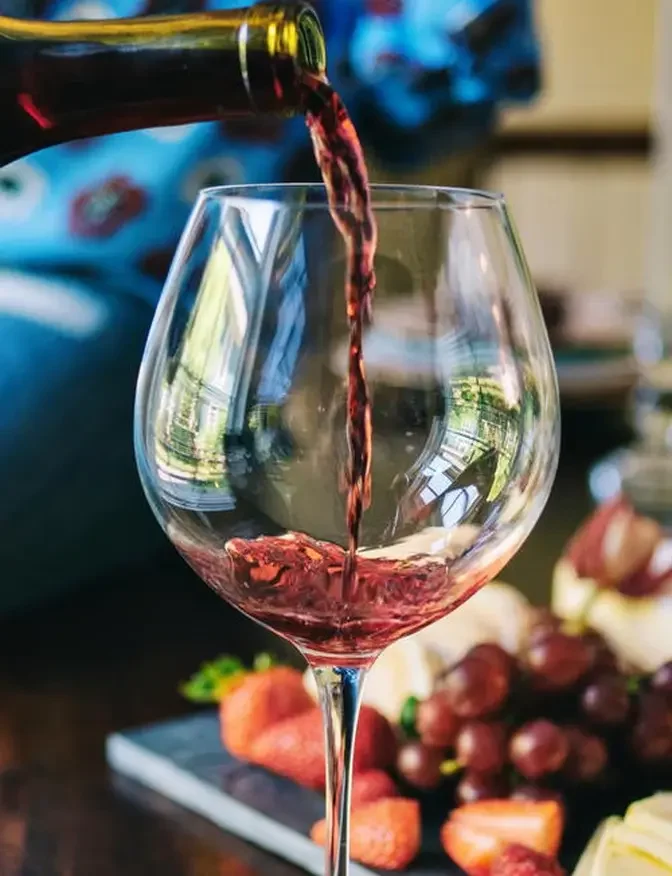
Now we have a wine glass.
There are many different styles of wine glasses,
but a great wine glass has enough space above the wine to collect aromas.
You only need five ounces or 150 milliliters for a full serving.
Now my glass might look mostly empty,
but that's actually the right amount of wine because when I swirl,
it releases the aromas into the bowl of the glass.
When it comes to tasting,
I have a whole 10 minute video on the secrets to tasting like a pro,
but conceptually wine tasting is much simpler than that.
Smell the wine before you taste it.
If you block your nose,
you won't pick up any of those aromas of blackcurrant, cedar, and peppercorn
on a fine Bordeaux.
And that's really the secret.
It's really that simple.
Smell before you taste.
If you do this with every new wine you try,
you're going to learn so, so much.
So let's bring it all together.
We started this journey at a massive wall of wine,
feeling a little lost,
but now you have a powerful new framework.
You know that vintage tells you about the weather of a single year
and why the same wine can taste different from one year to the next.
You've learned that climate is your secret weapon.
By knowing whether a wine comes from a warm or cool region,
you can predict if the wine will be bold and fruity or light and elegant.
And instead of getting bogged down by thousands of grape varieties,
you can now confidently navigate the world of wine using the nine core styles.
Finally, you've learned that tasting wine isn't actually about snobbery.
It's simply about paying attention.
The act of smelling your wine before you sip it
is the single biggest thing that will elevate your experience
and unblock all those amazing flavors that we've been talking about.
My promise to you at the beginning of this video was to help you see wine differently.
So the next time you walk into a wine shop,
that wall of wine won't be so intimidating.
Instead of seeing endless confusing options, you see possibilities.
You can now ask the right questions.
Hey, I'm in the mood for something from a cool climate.
Or hey, I really like full-bodied red wines.
What's a great value alternative to Cabernet Sauvignon?
That feeling, that's confidence.
And that's how you start to drink better wine.
Now, if you're excited about what you've learned
and want to make your wine smarts official,
I'd love for you to check out our wine folly certification courses at winefolly.com.
We have everything from fun, fast beginner courses
to deep dives that will get you ready for a sommelier's career.
And if you want to continue this journey and learn more about wine with me,
make sure you subscribe to this channel
because we've got more ground to cover.
Thanks for watching and I'll see you next time.
Cheers.