
LION KING | The Secrets of the Rulers | Animal documentary
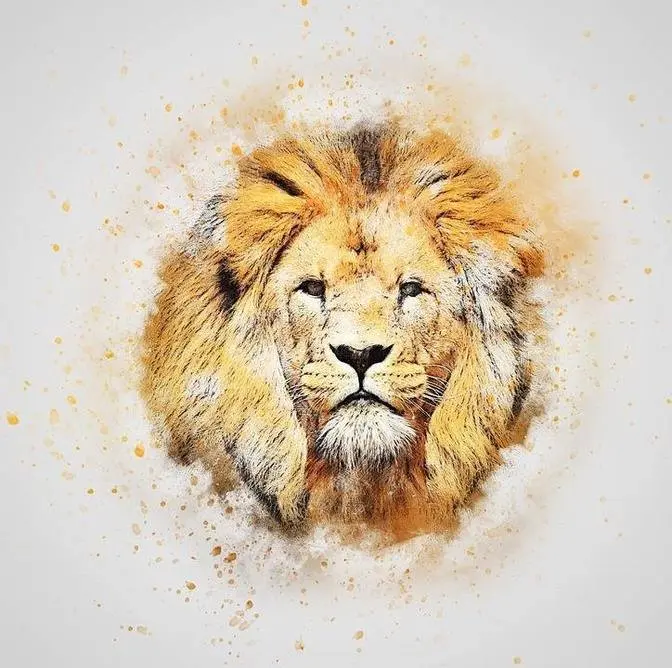
The first rays of morning sunlight gently blanket the endless grasslands.
Soft breezes sweep through the golden fields, where herds of wildebeest, zebras and buffalo graze peacefully.
But this land is far from serene. This is the kingdom of predators.
And reigning at the top is the lion, the most powerful ruler of the savannah.
More than just an apex predator, the lion is an eternal symbol of strength and authority.
Its journey of evolution and survival is intertwined with every breath of the harsh and unforgiving savannah.
But the world is ever-changing. Severe climate shifts and the gradual loss of natural habitats took their toll.
The rise of humans and relentless hunting further drove lions from lands they once ruled.
Once mighty prides vanished, leaving only scattered groups across the African grasslands.
Today, lions primarily exist in sub-Saharan Africa, with an estimated 30,000 individuals remaining in the wild.
The endless plains of Serengeti National Park and the wetlands of the Okavango Delta now serve as their final strongholds.
Outside Africa, only a small population of Asiatic lions survives in Gir Forest National Park in India.
Numbering around 674 individuals as of 2020.
These lions are the last remnants of a subspecies that once roamed from the Middle East to the Indian subcontinent.
In the African savannah, adult male lions stand out with their thick, majestic manes, a natural crown encircling their heads.
They measure 8 to 10 feet in body length and weigh between 330 and 550 pounds.
Females are smaller, measuring about 7 to 9 feet long and weighing between 270 to 400 pounds.
Their tawny coats blend seamlessly with the dry grasses of the savannah, providing perfect camouflage.
A male lion's mane isn't just for show, it symbolises power.
The thickness and colour of the mane directly reflect a lion's health and testosterone levels.
A thick, dark mane signals a strong and dominant warrior.
Lionesses are often drawn to males with dark, full manes, seeing them as powerful protectors of pride.
In the unforgiving savannah, lions have relatively short lifespans.
In the wild, they typically live between 10 to 14 years.
Harsh challenges like hunger, disease, clashes with rival males and even human threats limit their longevity.
However, in captivity, where dangers are absent, their lifespan can extend up to 20 years.
The savannah is a place where vitality and harshness intertwine.
It is an expansive land of endless grasslands, scattered shrubs and winding rivers cutting through dry plains.
But not every corner of this land is suitable for lions.
They need open spaces for easy hunting and movement, as well as low bushes and sparse woodlands for hiding and ambushing prey.
Dense forests and arid deserts are not environments where lions can thrive.
They require a steady water supply and abundant prey herds to sustain the strength of their pride.
This explains why regions like Kruger National Park in South Africa and the Ngorongoro Crater in Tanzania have become impenetrable fortresses for lions.
In these places, food is plentiful with thriving herds of wildebeest, zebras and buffalo.
Rivers and wetlands offer precious water sources that help them endure the harsh dry seasons.
Vast reserves like the Serengeti, Okavango Delta and Kruger now stand as the final strongholds protecting the kings of the savannah.
Yet the savannah is far from an easy place to survive.
Every passing day brings new challenges.
Water is scarce, prey migrates with the seasons and lurking threats come from other predators like hyenas and leopards.
Sometimes danger even arises from their prey, massive and formidable buffalo herds.
To rule this untamed land, lions must rely on unique survival strategies.
Unlike most members of the cat family, who prefer a solitary life, lions choose to live in prides.
Their strength doesn't come solely from sharp claws or thunderous roars, but from the powerful bond shared among pride members.
A typical lion pride usually consists of 10 to 15 members, but under favorable conditions it can grow to as many as 30.
At the core of the pride are the lionesses, tightly bonded through strong bloodlines.
They are mothers, sisters and aunts, working together to nurture and protect the next generation of cubs.
The adult male lions in the pride are often brothers or close relatives, joining forces to defend the pride against intruders and rival males.
Life within a lion pride is more than just hunting or territorial defense.
It's a blend of power and deep emotional connection.
Gentle licks on golden fur and soft head rubs are more than acts of grooming.
They are ways lions strengthen social bonds, ease tension and reaffirm their place within the pride.
Every lick and every nuzzle serves as a reminder of unity and the strength of togetherness.
The African savannah, with its endless grasslands stretching to the horizon, is the grand stage for a timeless story of strength, resilience and unity.
Amid this dry yet vibrant landscape, lion prides stand as powerful, living symbols of dominance and connection.
Every member of the pride holds a unique role, working together to write the story of survival and growth in the heart of the wild.
In that world, the lioness is the soul of the pride.
She is a masterful hunter, silent yet powerful.
Her hunting strategies, refined over generations, are a perfect blend of instinct and intelligence.
About 85% to 90% of the pride's successful hunts are thanks to the coordinated efforts of the lionesses.
But their role goes far beyond hunting.
They are devoted mothers, not only nurturing but also fiercely protecting their cubs from lurking dangers.
In the pride, the responsibility of raising lion cubs doesn't fall solely on their birth mothers.
All lionesses share this duty, forming a natural nursery.
In the wild, where survival is constantly tested, these tender moments are profoundly important.
When their territory is threatened, lionesses are ready to fight relentlessly to protect their cubs and their food sources.
Their courage rivals that of male lions.
Though they lack the majestic thick mane within them, beats the heart of a warrior.
They are not only protectors, but also the stabilizing force of the pride.
Their presence is a testament to the balance between strength and gentleness, between combat and care.
The life of a lioness is an unending journey.
They hunt to feed the pride, nurture to sustain new generations and fight to defend their territory.
Every day is a battle for survival. Yet through it all, they remain resilient and devoted.
Across the vast savannah, where the sun blazes and the wind carries dust, the lioness stands as the soul of pride, an eternal symbol of strength and sacrifice.
Under the vast blue sky of the African savannah, amid endless grasslands and dry breezes rustling through the acacia trees, faint, fragile cries rise from the bushes.
They belong to lion cubs, tiny sparks of life brimming with hope, symbolizing the future of the entire pride.
From the moment they are born, the delicate lives of these cubs depend entirely on the protection of their mother and the pride's lionesses.
For the first six to seven months, their mother's milk is their sole source of nourishment, sustaining their small, growing bodies.
This is a critical phase when the cubs slowly open their eyes, feel the blazing savannah sun for the first time and take their first unsteady steps on the dry earth.
But time does not allow them to linger long in this shield of safety. As they grow stronger, these young lions must quickly adapt to a world filled with danger.
They learn to stalk, moving gracefully in sync with the lionesses during each hunting rhythm.
Sudden, stealthy ambushes, clumsy tumbles while chasing the fleeting shadow of prey, all are harsh lessons gifted by nature.
Beyond hunting, they must learn to recognize threats. Their small eyes closely follow the cautious steps of hyenas and sense lurking danger from leopards hidden in the brush.
Skills in hunting and self-defense are sharpened through mock battles.
Lion cubs spend 10% to 20% of their daily activity engaging in these playful, yet vital, practice fights.
These mock battles also help establish the social hierarchy within the pride.
However, the journey from a vulnerable cub to a full-grown lion is riddled with hardships.
According to the IUCN, International Union for Conservation of Nature, report in 2023, the survival rate of lion cubs under two years old is only about 20% to 30%.
It is this unforgiving reality that forges them into true warriors, ready to follow in their parents' footsteps to defend the pride's territory.
Lion cubs gradually understand that to survive on the savanna, they must be stronger and more agile than any other creature.
And so, from timid roars and unsteady steps, these cubs will grow into skilled hunters and powerful leaders.
In the harsh embrace of nature, only the strongest and wisest endure.
Day by day, these lion cubs are continuing the proud legacy of Lopper of the Pride's future.
Their strength goes beyond sheer size and physical power.
Their thick, majestic mane is a symbol of authority and dominance.
More than enhancing their regal appearance, the mane serves as armor, protecting their neck and head from rival attacks.
A 2023 study by Schaller revealed that a thicker mane significantly increases a male lion's chances of winning territorial battles.
In brutal clashes where claws and fangs are the weapons, a male lion's mane acts as natural armor, shielding vital areas like the neck from deadly bites.
But their role extends beyond territorial defense.
Male lions also maintain order within the pride, ensuring stability for the lionesses and cubs.
A strong pride relies not only on hunting skills, but also on internal balance.
Male lions embody discipline and strength.
Their presence alone deters rival males, preventing violent invasions aimed at overthrowing their rule.
As the first rays of sunlight touch the withered golden grasses of the African savannah, a deep roar shatters the stillness.
It is the call of the male lion, a powerful sound that can travel up to 5 miles, 8 kilometers, an unmistakable declaration of ownership.
In the wild, power is not only measured by muscle, but by presence.
That roar is a stark reminder to every predator and wandering male lion that this territory is claimed.
Under the vast sky of the African savannah, where scorching winds sweep across the parched grasslands, power is not something that comes naturally.
It is seized through claws and fangs. Every patch of land, every drop of water holds vital importance for survival.
In this unforgiving world, battles for dominance and territory among male lions are inevitable.
In the vast heart of Africa's savannah, where the blazing sun stretches endlessly over the boundless grasslands, power is measured by territory.
For a lion pride, the land they control is more than just a home. It is the ultimate symbol of strength and dominance.
Every blade of grass, every patch of shade, every drop of water belongs to the strongest.
A lion pride's territory can span anywhere from 8 to 150 square miles, depending on the abundance of food and water sources.
This is an invisible boundary where any intruder must face brutal consequences.
Amid the sprawling grasslands, fertile regions like Serengeti National Park in Tanzania and the Okavango Delta in Botswana are relentless battlegrounds.
These lands are coveted by every pride and every coalition, alliances of male lions, vying for control.
To protect their territory, lions rely not only on brute strength, but also on sophisticated defensive strategies.
One of their most formidable weapons is their roar. It's more than a sound of presence, it's a declaration of power echoing 3 to 5 miles across the savannah.
This deep, intimidating roar warns intruders and reinforces unity within the pride.
Remarkably, roaring can reduce the risk of direct confrontations by up to 30% due to its natural intimidation.
But lions don't rely solely on sound. They mark every inch of their land with scent, a signature of dominance.
Deep claw marks on tree trunks signal ownership, sending an unmistakable message to outsiders.
This territory is claimed. These actions are more than instinct.
They are strategies honed over thousands of generations to safeguard pride and its essential resources.
In this world, where the line between paradise and peril is as thin as mist, defending territory is not just a duty, it's a matter of survival.
Every roar, every mark left in the earth is a declaration of supreme authority.
Lions never rest. They are relentless warriors, the ultimate guardians of the kingdom they've shed blood to claim.
Power within the pride. Now, outsiders are compelled to search for their territory to establish dominance.
Their nomadic life begins with lonely steps across the sun-scorched savannah.
The blistering sun scorches their fur, and swirling dust clouds erase every trace of their presence.
Food becomes scarce, and water even more elusive.
Hyenas lurk in the shadows, always waiting for a moment of weakness.
Other mature male lions show no mercy.
Experienced kings will not tolerate young challengers trespassing on their territory, and even other male lions waiting for their chance.
This is how male lions survive and reign supreme in the unforgiving wilderness of the African savannah.
In the wild world of the African savannah, leadership within a lion pride is never granted easily.
It is earned through fierce battles, where only the strongest and most resilient individuals can rise to the top.
Dominance within a lion pride is far more than controlling territory or leading a group of lionesses.
It is the ultimate power, the right to pass on the strongest genes to the next generation.
Dominant male lions are the only ones allowed to mate with the pride's lionesses.
This exclusive breeding right is one of the primary reasons behind the brutal and bloody clashes between male lions.
For this reason, young males are forced to leave the pride where they were born, preventing inbreeding and ensuring genetic diversity.
This marks the beginning of a harsh journey, not only to claim new territory, but also to fight for the chance to pass on their bloodline.
Lone males rarely possess enough strength to challenge the dominant lions.
This is why they often form coalitions, typically made up of brothers or close relatives.
This alliance grants them superior strength, both physically and strategically.
Such coalitions have over a 60% higher chance of overthrowing dominant males compared to solitary lions.
The battle for mating rights is fierce and merciless.
These life-or-death fights often end in either the death or the humiliating retreat of the defeated.
Male lions charge at each other, unleashing razor-sharp claws and powerful jaws.
Their bites are often aimed directly at the neck.
Leadership change within a lion pride in the African savannah is a significant upheaval, shaking the foundations of power and triggering a series of brutal consequences.
When a new male lion rises to dominance, his victory doesn't stop at gaining control of territory.
It marks the beginning of a harsh sequence of actions to assert his authority.
He engages in infanticide, eliminating all lion cubs under two years old that belong to the defeated male.
Approximately 25% of lion cubs under one year old are killed during a leadership change in the pride.
The sole purpose of this act is to end the bloodline of the vanquished male and force the lionesses back into their reproductive cycle.
Studies show that lionesses enter estrus just two to three weeks after losing their cubs, instead of waiting 18 to 24 months to raise the previous generation.
Infanticide is how the new ruler rapidly spreads his lineage into the next generation, ensuring genetic continuity and maintaining the pride's strength.
This act may seem brutal to outsiders, but in the natural world it is a survival strategy hardwired through millions of years of evolution.
Leadership change also disrupts the pride's social structure.
The lionesses, once devoted mothers, now face a cruel choice.
Resist the new leader or accept the loss of their cubs.
Resistance is not a safe option.
The victor shows no mercy.
Submission becomes the only path to survival and continuity in this unforgiving environment.
It's not just the lionesses and cubs who suffer during this shift in power.
The aftermath brings long-term consequences.
Prides experiencing leadership changes often take 6 to 12 months to regain stability and hunting strength.
During this period, hunting success drops by about 30% compared to more stable times.
This vulnerability leaves the pride weakened, making them easy targets for hyena clans, leopards or even other male lions waiting for their chance to strike.
The prolonged dry season turns water into the most precious resource.
Lions become more cunning than ever.
They transform watering holes into natural traps.
Under the scorching sun of the African savannah, hot winds sweep through the withered golden grasses.
In this stillness, calculated movements lie in wait.
Hidden among the towering grass, lionesses crouch low to the ground, their piercing eyes locked onto prey slowly approaching the watering hole.
On average, only 20% to 30% of hunts end in success.
The rest are long, patient waits that yield nothing or exhausting chases under the blistering sun.
In this harsh world, there is no room for weakness.
Every hunt is a test of strength, patience and even luck.
A deadly silence blankets the savannah, waiting to be shattered by the final pounce.
And there, amidst the endless sea of grass, a lone lion relentlessly fights to assert its place.
In the dark, it is a ruthless predator.
In the daylight, it stands as a symbol of strength and resilience.
In a world where power is often secured by numbers, solitary lions must face survival challenges with nothing but their own strength and sharp instincts.
Without the support of a pride, without coordinated hunting, a lone lion must find its own way to survive.
It moves quietly, each step pressing down on dry grass, using every advantage of the terrain to conceal its muscular frame, territorial control and access to food.
More than 60% of lion pride's territories overlap with those of other predators, especially hyenas.
This territorial overlap makes confrontations inevitable.
Both species hunt similar prey such as wildebeest, zebras and buffalo, leading to brutal clashes over every meal.
Hyenas, known for their aggression and large numbers, are formidable opponents for lions.
Clashes between lions and hyenas are often intense, with neither side willing to surrender any part of their hard-earned kill.
According to National Geographic in 2023, about 15% to 20% of lions' kills are lost to hyena theft.
Under the harsh sun of the African savannah, the hyena, a resilient and tenacious creature, weaves through the dry grasses, leaving an indelible mark on the ecosystem.
But their journey of survival is more than just nocturnal hunts or eerie, ghostly laughter echoing across the plains.
Behind that image lies a story of evolution spanning millions of years, a testament to the extraordinary survival abilities of an animal that never yields.
Over millions of years, hyenas have perfected their survival skills.
They operate under a matriarchal social structure, where dominant females lead the clan and control reproduction.
Their powerful jaws allow them to crush even large bones, extracting every ounce of nutrition.
Coordinated pack hunting enables them to take down prey much larger than themselves.
In the relentless cycle of survival on the savannah, hyenas are not merely predators.
They are enduring warriors and the cleaners of the ecosystem, consuming carcasses and preventing the spread of disease.
Their haunting laughter is more than just a sound of life.
It is the soundtrack to a story of evolution millions of years in the making.
It has been a challenging journey, but the hyena remains steadfast, continuing to etch its name into the map of the wild.
In the stillness of the African savannah night, as the pale moonlight washes over the dry fields, lions are not the only deadly predators lurking.
Echoing through the darkness are the coarse, eerie laughs of the spotted hyenas, a chilling declaration of the presence of an intelligent and ruthless hunting force.
Swipe, the overwhelming numbers make hyenas a threat that cannot be underestimated.
Hyena clans can mobilize over 30 individuals to directly confront a lion pride for control over a carcass.
Their boldness and pack strategy make them fearless in attacking lionesses, guarding cubs or even eliminating unprotected cubs.
This is not mere brutality, it is a calculated survival strategy.
Hyenas understand that killing lion cubs weakens the future strength of the pride and reduces future competition for food.
The haunting sounds in the night and the stealth in every step paint a vivid picture of the endless war between two of the savannah's greatest forces.
Hyenas don't need to be the strongest, they only need to be the most persistent.
And it is this persistence that has made them one of the most formidable rulers in the wild.
In this relentless cycle, lions refuse to be threatened.
Their dominance is not only shown through their majestic presence, but also through sharp defensive strategies.
When hyenas dare to intrude on their territory, male lions retaliate without hesitation.
Hyenas may boldly challenge lionesses, but they are far more cautious around male lions.
A single swipe from a male lion's powerful paw can instantly take down a hyena.
This retaliation is not just about protecting food, it sends a clear warning.
This territory is not easily breached.
Though hyenas have the advantage in numbers and effective ambush tactics, they cannot easily overpower lions led by powerful males.
Scarce, conflicts between lions and hyenas increase by 40% compared to the rainy season.
In confrontations, lionesses are no less fierce.
Though smaller than male lions, their unity and intelligent tactics form a solid defense, protecting lion cubs from lurking hyenas.
They are ready to charge into large groups of attackers, leaving no opening for any threat to reach their young.
Prides that proactively attack hyena territories have a 30% higher success rate in protecting their cubs compared to those that focus solely on defense.
This conflict isn't just a contest of brute strength, it's a battle of strategy.
Lions take control of waterholes, critical lifelines during the dry season, denying hyenas any access.
Every step, every roar is a declaration of sovereignty.
A land is claimed not just with claws, but with intelligence and survival skills.
In the silent darkness of the savannah, as the wind sweeps through tall grasses, the thundering roars of lions blend with the bitter laughter of hyenas.
This is more than the sound of the wild, it is the fierce symphony of a fight for survival.
Lions stand as symbols of strength and dominance, while hyenas embody resilience and cunning.
Two relentless adversaries constantly push each other, driving their survival instincts to the limit.
Across the scorched plains of the African savannah, where the blazing sun scorches the withered golden grasses, two apex predators coexist but never harmonize, the lion and the leopard.
Both are symbols of strength and agility, yet their differences in size and hunting strategies create a constant tension between them.
As the sun begins to set behind the distant trees, the African savannah gradually sinks into darkness.
This is when the leopard steps onto its stage.
Without a pride, or the need for intimidating roars, its presence is marked by silent footsteps and a spotted coat blending seamlessly into the tall grass, becoming one with the shadows.
The leopard isn't as large as the lion, nor as loud as the hyena, but its body is the perfect blend of strength and agility.
An adult male can weigh between 110 to 200 pounds, yet it is so nimble that it can drag prey twice its own weight up to the highest tree branches.
This isn't just skill, it's wisdom.
On the ground, threats from lions and hyenas constantly lurk, ready to steal the rewards of hours of stalking and chasing.
Leopards typically prey on smaller animals like impalas, gazelles and warthogs.
However, their agility allows them to hunt a diverse range of prey, from small birds to large antelope species.
Prey. Yet even with such cunning and precision, the leopard's success is never guaranteed.
Its hunting success rate hovers around 20% to 30%.
To survive, it must try repeatedly, constantly adapt and refine its tactics.
It's an unforgiving game between predator and prey, between shadow and light.
Lions do not always ignore the presence of leopards.
During harsh, dry seasons, when food becomes scarce, encounters between these two predators occur more frequently.
Lions won't hesitate to steal a leopard's kill or trespass into their territory.
In such situations, leopards always prioritize safety.
Sensing the presence of a lion, they will quickly retreat.
But caution doesn't always guarantee safety.
Sometimes, a delay in dragging prey up a tree, or a moment of carelessness, can cost them everything.
With lean bodies, long, powerful legs and mottled coats that blend seamlessly with the landscape,
they become some of the most formidable hunters of this land.
In the harsh savanna where every day is a battle for survival, African wild dogs have carved their name among the master predators.
They don't need the crushing jaws of lions, nor the deadly stealth of leopards.
Their greatest weapons are their unity, relentless speed and flawless hunting strategies.
In this unforgiving land, where only the strongest can survive,
African wild dogs have proven that true strength comes not just from muscle, but from intelligence and teamwork.
Across the vast plains of the African savanna, the African wild dog moves silently like a ghost,
an embodiment of a predatory lineage shaped by millions of years of evolution.
The traces of their ancient ancestors date back approximately 40 million years
to the emergence of Prohesperocion, the common ancestor of the Canidae family.
Gradual diversification led to a distinct evolutionary branch,
where the African wild dog developed unique characteristics,
setting it apart from close relatives like the wolf and the domestic dog.
Their evolution goes beyond physical form.
The African wild dog bears a mottled coat with distinctive patches of black, brown, yellow and white,
creating a pattern as unique as a fingerprint.
Each individual is a living masterpiece, an irreplaceable mark of nature.
Their large, rounded ears not only amplify the faintest sounds of prey,
but also serve as an effective cooling system under the blazing savanna sun.
The success of African wild dogs doesn't stem from individual strength,
but from their extraordinary ability to cooperate.
They live and hunt in packs, typically consisting of 10 to 20 individuals,
forming an elite force united in every attack,
with an average weight of 40 to 70 pounds and a height of 24-30 inches,
their slender yet sturdy bodies are perfectly built for relentless chases.
Within these agile frames lies an enduring energy that propels them at speeds of up to 44 miles per hour,
turning them into nightmares for any prey in their path.
Unlike solitary predators, their hunting strategy is a display of flawless teamwork.
When prey is spotted, they emit short, sharp calls.
These aren't long howls like wolves, but quick, distinct sounds, precise and purposeful.
They serve as a rallying call, a command to attack.
The pack divides and encircles the prey.
One group pursues closely from behind, driving the prey into a trap.
Other groups silently flank both sides, cutting off all escape routes.
Every step, every burst of speed is meticulously calculated.
No need for violent pounces, just sustained high-speed chases that exhaust the prey.
These hunters are not only fast, but remarkably enduring.
Once they lock onto a target, they pursue it relentlessly,
sometimes for miles, until the prey collapses.
The hunting success rate of African wild dogs reaches an impressive 75%,
even up to 80%, far surpassing that of lions or leopards.
It is their seamless coordination, strategic use of terrain,
and adaptable hunting tactics that have placed them at the pinnacle of the food chain.
They are not simple predators.
They are strategists, a collective force that uses intelligence to master the survival game.
Their prey often includes medium-sized animals like impalas, gazelles, and even young wildebeests.
They don't go after the easiest prey, but the ones best suited for their ambush and swift attack tactics.
Their flexibility allows them to adapt, using tall grasses as cover,
or driving prey into dry watering holes to corner them.
The differences in hunting strategies and social structures
inevitably lead to clashes between African wild dogs and lions.
Lions often exploit their superior strength to steal kills from wild dogs,
or even launch direct attacks to eliminate competition.
Adult male lions will not hesitate to charge into a pack of wild dogs,
using their sharp claws and powerful jaws to assert dominance.
A single powerful swipe from a lion can easily bring down a wild dog.
However, wild dogs are not easily subdued.
They rely on their agility and overwhelming numbers to fight back.
When pressured by lions, they quickly scatter, regroup to counter-encircle, or retreat to safer areas.
This strategy helps them avoid severe losses and protect their hard-earned food.
This fierce competition isn't limited to scavenged kills.
Despite their superior strength, lions don't always emerge victorious.
Wild dogs can use their speed and maneuverability to hunt during times when lions are inactive.
They skillfully avoid direct confrontation, striking only when they hold the advantage in numbers and terrain.
These battles are not merely fights for survival.
They are battles of wits between two top predators.
Lions embody strength and dominance, while wild dogs symbolize agility and teamwork.
Across the vast savannah, where the morning sun filters through the tall grasses,
this brutal rivalry continues relentlessly.
Beneath the still waters of rivers and lakes in the African savannah, the Nile crocodile lurks in silence.
Cold, piercing eyes emerge from the calm surface, like lifeless stones.
Its massive body lies hidden beneath the mud,
blending seamlessly with the flowing currents, patient and motionless.
This is its domain, ruled not by speed or agility, but by sheer power and unwavering patience.
No species can rival the Nile crocodile in sheer power.
They are the ultimate predatory machines.
With an average length of 11 to 16.5 feet and a weight reaching up to 1,650 pounds,
they are among the largest reptiles on Earth.
A single bite from their razor-sharp teeth, with a crushing force of up to 3,700 pounds per square inch,
is enough to shatter the bones of any animal.
In the wild, only the saltwater crocodile surpasses their bite force.
But raw strength isn't everything.
The Nile crocodile is a master of patience.
They can lie completely still for hours, even an entire day, beneath murky waters,
waiting for the slightest moment of vulnerability.
During the dry season, as water sources dwindle, the struggle for survival intensifies.
Herds of antelopes, zebras and even lions are forced to gather at the last remaining waterholes.
And there, the Nile crocodile waits.
Silent, still and deadly.
They don't need to chase, they only need to strike at the perfect moment.
Every breath is steady, every subtle movement calculated.
Then, in a flash, they launch from the water at speeds of up to 22 miles per hour,
their massive jaws locking onto the prey's neck, dragging it into the dark depths.
There is no escape.
The prey thrashes in vain before its life is crushed by the infamous death roll,
a violent spin that rips flesh and disorients its victim.
The Nile crocodile's hunting strategy isn't solely about brute force.
They skillfully exploit the terrain, especially waterholes,
shallow pools during the dry season where all creatures must gather for survival.
At these critical points, the Nile crocodile doesn't need to pursue prey.
The prey comes to them.
More than 60% of their attacks occur near water sources,
a testament to their hunting strategy rooted in patience and mastery of their environment.
The African savannah bakes under the scorching sun of the dry season,
where mercy and punishment from nature are separated by a single breath.
Here, two apex predators, the lion and the Nile crocodile,
constantly challenge each other for control over the most precious resources, water and food.
Every riverbank and waterhole becomes a brutal battlefield,
where merciless confrontations unfold.
The Nile crocodile is a perfect underwater predator.
It silently ambushes beneath still waters,
its cold eyes tracking every movement along the shore.
For the Nile crocodile, any creature that steps within its reach,
whether a wildebeest, zebra or even a lion,
is an opportunity for a bloody feast.
In contrast, the lion reigns supreme over the grasslands.
With incredible strength and speed,
male lions fiercely protect their territory and pride from all threats.
Meanwhile, lionesses are masterful hunters,
coordinating seamlessly to bring down large prey.
But as the dry season lingers and water sources dwindle,
lion prides are forced to approach rivers and waterholes,
where Nile crocodiles patiently wait.
Clashes between these two predators are often sudden and brutal.
According to the Savannah Predator Interaction Project 2024,
Nile crocodiles account for 15% to 20% of large animal fatalities near rivers.
During the dry season, as lion prides come to drink,
Nile crocodiles won't hesitate to strike at lone lionesses or unprotected lion cubs.
A sudden lunge from beneath the water can swiftly end any life.
However, lions are not easily subdued.
Proactive attacks by lions on smaller Nile crocodiles are not uncommon,
especially when lions feel their territory is threatened.
Male lions, with their thick manes, are ready to retaliate to defend their pride,
especially on land.
The combined force of lionesses and male lions
can sometimes drive a Nile crocodile into retreat.
Powerful pounces and fatal bites to the soft underbelly of smaller crocodiles
can injure or even kill them.
Yet, at the treacherous waterholes, the Nile crocodile holds the ultimate advantage.
They are patient, never rushing, waiting for their thirsty enemies to make a fatal mistake.
A careless lion cub or an exhausted lioness can pay the ultimate price for a moment of negligence.
In this ruthless cycle of survival, there is no room for the weak.
Every encounter between a lion and a Nile crocodile is a clash of two apex forces,
one ruling the land, the other ruling the water.
Neither truly dominates, for in the wild, power belongs only to the strongest in the moment.
The thunderous roar of lions blending with the silent currents where Nile crocodiles stalk
is a chilling reminder that the savannah is never peaceful.
With every breath, every attack, the relentless battle between life and death continues without end.
The African savannah was once the undeniable kingdom of the lions,
where their thunderous roars echoed across the vast grasslands, asserting their supreme dominance.
But nature no longer maintains its delicate balance.
Climate change, shrinking habitats and the growing presence of humans
have made the survival journey of this apex predator more fragile than ever before.
Under the scorching sun of the savannah, water sources gradually dry up.
Once thriving rivers have dwindled into shallow, barren streams.
Herds of antelopes, zebras and buffaloes, the primary food sources for lions,
begin migrating farther in search of water and fresh grazing grounds.
This migration forces lions to expand their hunting territories,
leading to fierce battles not only with rival prides, but also with other predators.
According to statistics from the International Union for Conservation of Nature, IUCN,
in 2023, lion populations have declined by nearly 43% over the past two decades.
This sharp decline directly reflects the impact of climate change and increasing conflict with humans.
Unpredictable rainy seasons and prolonged droughts
have disrupted the delicate balance of the savannah ecosystem.
Even regions like Serengeti National Park and the Okavango Delta,
once safe havens for predators, have become increasingly harsh.
As food grows scarcer, territorial disputes
and the fight for access to resources among lion prides have intensified.
Coalitions no longer face off solely against rival prides,
but must also compete with other predators like hyenas, leopards and even Nile crocodiles.
Roars, once symbols of dominance, now echo as cries of survival.
Adding to this struggle, massive wildfires,
fueled by rising temperatures and arid climates,
sweep rapidly across the savannah, destroying vital lion hunting grounds.
These fires not only scorch the grasslands,
but also kill or force prey animals to migrate even farther away.
This loss of food sources compels lion prides to venture deeper into human settlements
in desperate attempts to survive.
Lions are not only facing the harshness of nature,
but are also under immense pressure from human expansion.
Farmlands, new residential areas and resource extraction activities
have encroached upon their territories.
The rise in human-wildlife conflict forces lions to prey on livestock for survival.
According to the Wildlife Conservation Society,
cases of retaliation killings have become one of the leading causes
of the severe decline in lion populations.
Additionally, poaching targeting lions for the black market,
specifically for their bones and body parts,
has pushed the species closer to the brink of extinction.
From 2020 to 2023, incidents of lion poaching increased by nearly 30%,
especially in areas with weak protection.
The African savannah remains vast and majestic,
but the presence of its true kings is slowly fading.
With every step and every roar echoing across the plains,
there is a story of strength, brutality and an endless struggle for survival.
The kingdom of lions still exists,
but to maintain their throne, they must fight relentlessly.
And just the same, humanity must act to protect the last kings of the savannah.
Recognising this looming threat,
international conservation organisations have implemented various strategies to protect lions.
Panthera, an organisation dedicated to the study and conservation of big cats,
has partnered with African governments to establish protected reserves and ecological corridors.
Areas like Serengeti National Park and the Okavango Delta
are now strictly managed to safeguard lion territories from illegal hunting activities.
At the same time, community education projects have been strengthened
to raise awareness about conservation and reduce human-wildlife conflicts.
Additionally, technological solutions like GPS tracking devices and surveillance cameras
have made it easier to monitor and protect individual lion prides effectively.
Thanks to these relentless efforts,
lion populations in certain regions have shown signs of recovery.
However, the journey of conservation is far from over.
This responsibility doesn't rest solely on the shoulders of organisations.
It requires the collective effort of the entire global community.
Every small action can make a significant impact,
supporting conservation funds, spreading awareness about wildlife protection,
rejecting products made from wild animals, and engaging in responsible ecotourism.
Let us come together to preserve the roar of lions,
safeguarding nature's balance so future generations can still witness the majestic beauty of the wild.
And if you've ever had the chance to visit the African savannah,
don't hesitate to share your knowledge and experiences in the comments below.
Your stories could inspire and motivate more conservation efforts to protect rare wildlife
and maintain ecosystems for future generations.
Don't forget to like, subscribe, and hit the notification bell to join us on more incredible adventures.
You can also continue exploring the survival journey of wild animals in Wild Savannah,
the lion's journey to becoming the ruler or wild Serengeti,
battle for survival in predator territory.