
Mysterious Ancient Sites Archaeologists Are Banned From Entering
#History #Secrets
Explore mysterious ancient sites that remain off-limits to archaeologists. Discover the reasons behind these restrictions, from fragile structures to political sensitivities. Journey across the globe to uncover these hidden historical locations.
By https://www.youtube.com/@MostAmazingTop10
There are ancient places on earth so mysterious that even the world's top archaeologists are not
allowed to step inside them. Some are sealed off because they are too fragile, others because
governments consider them too valuable or too dangerous, and a few are locked away behind
military fences or religious laws that no scientific team has ever been able to break.
It starts with a discovery so controversial that Egypt sealed the entire area before any
archaeologist could fully study it. Deep beneath the Great Pyramid are a series of unfinished
shafts and lower chambers that were first detected in the 19th century. The most mysterious is the
so-called subterranean chamber. It is carved deep into the bedrock and connected to a narrow
descending passage that is barely wide enough to crawl through. But here is the part experts are
banned from studying. In 1992, a team using ground penetrating radar found signs of an even deeper
void beneath the chamber. The Egyptian government immediately suspended further exploration. Multiple
scientific proposals to drill a micro shaft or send a small drone have been denied for decades.
Egypt's official explanation is that the pyramid is too unstable and drilling could damage it, but
many archaeologists argue that modern micro drills do not pose any risk at all. The restricted chamber
still has no confirmed purpose. Some think it was an abandoned burial chamber. Others believe it was
an early design for the pyramid that was later changed. Whatever the case may be, the area beneath
is still sealed and no one has been allowed to enter or study it since the early 1990s.
Imagine an entire ancient civilization locked behind a chain-link fence where only a handful
of people have ever stepped foot. That is the reality of Japan's Kofun tombs. Between the third
and seventh centuries, Japan constructed massive burial mounds known as Kofun. Many of them are
colossal. The most famous is the Daisen Kofun. It is over 1,500 feet long and shaped like a giant
keyhole. You would expect archaeologists to be studying these daily, but the opposite is true.
The Japanese Imperial Household Agency controls the tombs and forbids any excavation. Their
explanation is simple. These tombs belong to the ancestors of the imperial family and cannot be
disturbed. For decades, this was final. No exceptions. The agency rejected every scientific request
regardless of historical importance. Only recently have very small digs been allowed at a few minor
tombs, but the major ones still remain untouched. Archaeologists suspect they may contain evidence
of early foreign influence in Japan or even entirely new information about the origins
of the imperial line. Until the rules change, no one is allowed inside the most important tombs
and the secrets of Japan's early rulers remain locked in the ground. This discovery was so big
that scientists were literally stopped at the entrance of the tunnel and told they could go
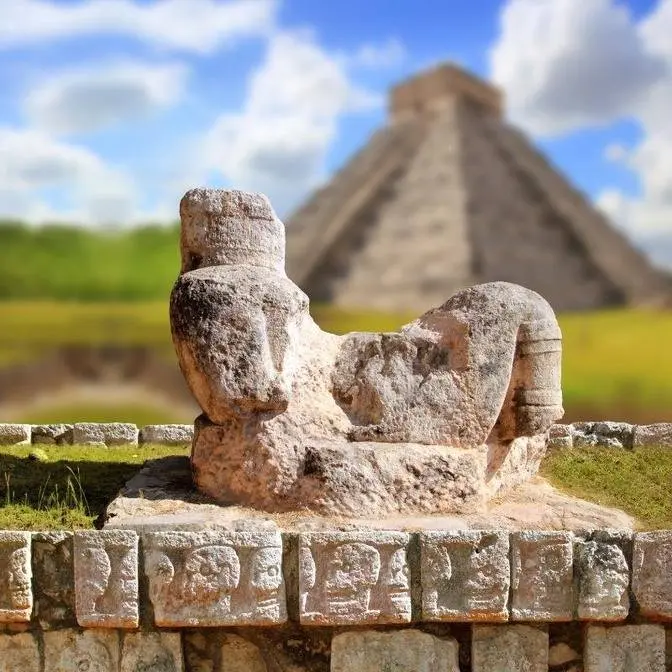
no further. In 2003, a heavy rainstorm caused part of the ground near the Pyramid of the Feathered
Serpent to collapse. To the shock of the excavation team, it revealed the entrance to a sealed tunnel
that had been hidden for nearly 2,000 years. When archaeologists descended into it, they discovered
it stretched almost 330 feet and was filled with thousands of artifacts. There were sculptures,
ritual items, and even pools of liquid mercury that might have symbolized an underworld river.
But here is the problem. Halfway through the tunnel, the passage splits into side chambers
that remain completely blocked. Laser scans show there may be additional rooms beyond them,
possibly even a royal tomb. Mexico's National Institute of Anthropology and History halted
all excavations beyond a certain point due to extreme structural instability. The walls are
fragile, and one collapse could destroy the entire system. For now, the deeper chambers are
off-limits. Only the first section has been documented, but everything past that remains
untouched and sealed by the government. This site contains stone coffins so huge and precise that
modern engineers still cannot agree on how they were carved, but the most mysterious chambers are
the ones no one is allowed to enter. The Serapium at Saqqara is a massive underground complex in
Egypt built to house sacred apis bulls. Inside are granite sarcophagi weighing over 70 tons each.
Archaeologists explored the main tunnels in the 19th century, but several side corridors remain
sealed. Some are bricked up, others were found but immediately closed due to concerns about collapse.
In 2012, laser mapping of the entire Serapium revealed the presence of additional chambers
behind the sealed passageways. They appear to contain more sarcophagi or possibly unfinished
burial vaults. Egypt's Ministry of Antiquities has maintained a ban on entering these chambers,
citing safety concerns and the risk of destabilizing the tunnels. This means the
largest underground stone boxes ever discovered still have unopened companion chambers that no
This is the one ancient site where archaeologists are not just banned, but the idea of entering it
is considered unacceptable. Mount Kailash in Tibet is sacred to four major religions. It is believed
to be the throne of the Hindu god Shiva and the spiritual center of the universe. According to
ancient texts, the mountain is home to hidden passages that lead to the mythical city of
Tibetan tradition strictly forbids climbing or disturbing the mountain in any way. Archaeologists
have found evidence of ancient structures around its base, including stone walls and cave temples
that may date back thousands of years, but the inner sanctums higher up in the mountain have
never been explored. The Chinese government, which controls Tibet, has enforced the prohibition. No
scientific team has been granted permission to climb or survey the upper slopes. Satellite images
show unusual geometric patterns in the rock that some researchers believe could be man-made or
modified, but no one is allowed to verify this. The spiritual ban has effectively turned Mount
Kailash into one of the least studied ancient sites on earth. This is one of the most politically
sensitive archaeological sites on the planet and certain areas are so restricted that even
world-class researchers cannot enter without risking a diplomatic crisis. The Temple Mount
in Jerusalem is home to 3,000 years of history. Beneath it lies a complex of ancient tunnels,
cisterns, passageways, and sealed chambers that have only been partially mapped. The Israeli
government tightly controls access because the site is sacred to Judaism, Christianity, and Islam.
Any excavation risks triggering conflict. Archaeologists are allowed to study certain
outer tunnels, but the areas directly beneath the central platform are off-limits. This includes
the so-called Well of Souls, ancient cisterns under the foundation stone, and several sealed
chambers detected by ground scans. Requests to study these spaces are denied by both religious
and political authorities. Even minor disturbances in the past have sparked riots. Because of this,
some of the oldest underground structures in the region remain unexplored and the full extent of
the tunnels under the Temple Mount is still unknown. When the greatest archaeological
discovery in Chinese history was made, experts believed they were on the edge of
uncovering something even bigger, and then the government locked it down. In 1974, farmers in
China uncovered terracotta fragments that led to the discovery of the Terracotta Army. Since then,
thousands of life-sized clay soldiers have been excavated, but deeper underground lies the actual
tomb of China's first emperor. Ancient texts describe it as a massive underground palace
with rivers of mercury and mechanical traps. The Chinese government has banned all excavation of
the tomb itself until preservation technology improves. Environmental scans show incredibly
high levels of mercury, which matches the ancient descriptions. One of the most mysterious parts of
the site is a sealed cave known as the Cave of Warriors. It was discovered during earlier digs,
but immediately closed due to fears of collapse and contamination. To this day,
no archaeologist has been allowed to enter the emperor's main burial chamber or the sealed cave
near it. What lies inside remains a complete mystery. This is one of the most important
prehistoric art sites ever discovered and almost no one is allowed inside it. In 1994,
a group of speleologists in France discovered a cave filled with ancient paintings that were
later dated to more than 30,000 years old. The artwork was so well preserved that it looked
freshly painted. To protect the cave from mold, carbon dioxide, and microbial damage,
the French government immediately restricted access. Only a handful of scientists are allowed
inside each year. Even they cannot enter certain chambers. Some corridors are just too fragile.
Others contain prehistoric footprints or floor markings that would be destroyed if stepped on.
Because of this, several parts of the cave remain completely closed. Researchers rely on 3D scans
and robotic imaging to study the deeper rooms. Jovet Cave contains the oldest and most detailed
Ice Age art ever found, but large sections have still never been entered by modern scientists.
This is one of the strangest underground temples ever discovered and its deepest
chamber is so fragile that access has been restricted for years. The Hypogeum in Malta
is an enormous subterranean complex carved around 4000 BC. It contains multiple levels of rooms,
altars, and burial chambers. The most mysterious is the Oracle Room, which has a unique acoustic
effect. A single spoken word echoes through the entire complex, but even stranger is the lowest
chamber, called the Bottom Level. When the site was first excavated in the early 20th century,
this lower chamber was found filled with human bones and artifacts, but soon after it was
discovered, parts of the chamber began to deteriorate. Moisture levels inside began
causing structural problems. To preserve the site, Malta restricted access to only a few visitors
per day. The Bottom Level was closed entirely. Archaeologists are allowed to study it remotely,
but entering it requires special permission that has not been granted in many years. To this day,
the Bottom Level remains sealed from the public. The world's oldest known temple site has a secret.
Some of its most important structures are still buried underground and archaeologists are not
allowed to dig them up. Göbekli Tepe in Turkey dates back to around 9600 BC, thousands of years
before Stonehenge or the pyramids. It contains huge stone circles with pillars decorated with
animals and abstract symbols. The site is so fragile that only a small portion of it has ever
been excavated. About 90% of it is still underground. Turkey's Ministry of Culture and
Tourism has placed strict restrictions on any new excavations and only maintenance digs and very
small scientific studies are allowed. Large-scale excavation is completely banned for now. This
means that dozens of stone circles, carved pillars, and possibly entire new structures remain
buried. Ground-penetrating radar has detected them, but no one is allowed to uncover them
yet. Scientists believe Göbekli Tepe could completely rewrite early human history, but until
the restrictions change, the majority of the site will remain untouched. Alright guys, that has been
our list for today. Thanks so much for checking it out. I've been your host today, Olivia Kozlowski,
and I will see you again soon. Goodbye!