
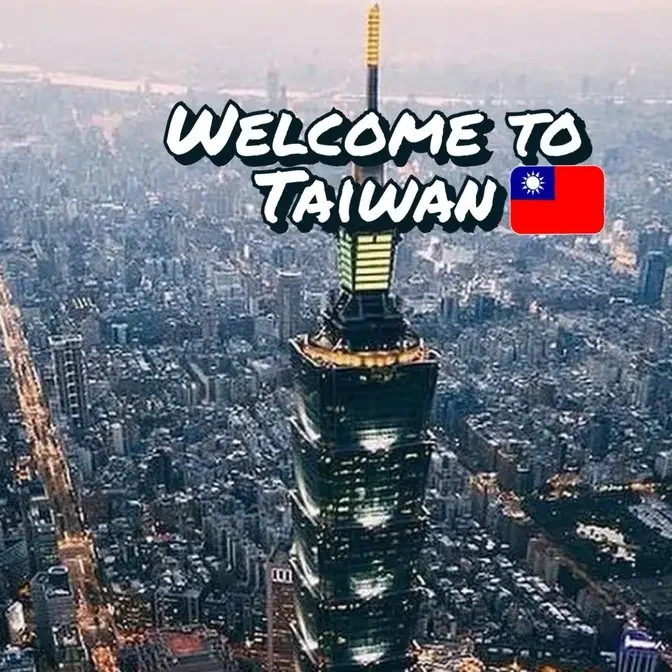
真的要好好珍惜台灣,這真的是世界上最適合居住的地方之一|外國在臺灣|Living in Taiwan as a foreigner
87 Video Views·Nov 5, 2025
您可以加入 Welcome To Taiwan 社團,即可享受我們販售任何產品9折優惠折,點擊下面的連結👇https://www.ganjingworld.com/channel/1gm6ueuvhgh2gIU5YZMGaNmfA1ms0c
歡迎來台灣(Welcome to Taiwan )的IG :
https://www.instagram.com/welcome_taiwan?igshid=NGVhN2U2NjQ0Yg%3D%3D&utm_source=qr
瘋狂台樂事:
https://youtube.com/playlist?list=PLxF5w6mLYVpKUM_NLQwgAjEPooLhCpaf3&si=ECrDUSoaA02o0idb
Hi, Deja How. Your computer deserves the best protection.
Don't wait until it's too late.
Protect your files, your privacy, and your future with Surfshark One.
Click the link below in the description
to get yours and stay one step ahead of hackers.
My name is MD or full name MDDM, that's like my rapper name.
So I do for work, I do like KOL and like rap.
I basically have my own recording studio,
as you can see, and I do rap and I come from Israel.
But I grew up here in Taiwan.
When is the first time you came?
So first time I came to Taiwan was in 1997 when I was four years old.
And then I left in 2000 after the really big earthquake in September.
My family was like, OK, we're going to leave now.
So we left after the earthquake and then I moved to Hong Kong for two years.
Then I went back to my home country for another two years.
And then I came back to Taiwan in 2004 at the age of 11.
And I've been here ever since.
What what make you start making this historical?
Because I love history.
Like my daily routine is very boring.
I wake up, I read history, I go to sleep.
Like that's what I do every day.
I just love to read.
So I was like, why don't I just combine history with rap?
And always reaching high, stroll through Joe Finlanders glowing bright.
A mountain town that comes alive at night from Taobao Gorge where the rivers flow.
So Taiwan's history was mainly like kind
of like independent indigenous communities and like pirates.
There's a lot of pirates that came to Taiwan because it was expensive to have
an outpost for the dynasties here in Taiwan because it was far.
And the seas are pretty rough.
So a lot of the time, yes, they claimed that Taiwan was part of China,
but they didn't really enforce it.
So a lot of the people independently kind of had their own thing going on here.
One reason Japan was able to to to kind of take over Taiwan was basically
there was a Japanese boat.
This is a very famous, famous incident that happened.
I think I think it's called the Mudan incident, if I'm not mistaken.
I think that's the name.
It's called the Mudan incident.
And it was when a boat of kind of Japanese subjects.
I say subjects because they weren't Japanese.
They were Ryuken, which is the Ryuken,
Ryuken is those islands right under the south of Japan.
Yeah. So they were 44 Ryuken fishmen.
And they they were shipwrecked on the on Taiwan at the very south,
like around the Taidong area or the Mudan Taidong area.
And they were attacked by the Paiwan people as and they were killed.
And Japan was like to the Qing dynasty is
like, hey, like you guys control this area.
Like they just killed some of our subjects.
Can you guys like figure out something about that?
And Qing was like, oh, we don't really control what's going on here.
We don't really have control over them.
And the Japan was like, oh, really?
You don't really have control over the island, huh?
And then like a couple of years after that, Japan just kind of came in.
Other than creating reels and singing, rapping, what else do you do?
So I collect coins. I'm a coin collector.
I collect coins from a bunch of different
countries, banknotes from a bunch of different countries.
And I have a pretty good Taiwanese collection.
I have almost every coin Taiwan has minted except for gold coins.
So many people don't know this,
but actually Taiwan did used to have its own gold coins.
And so how these how did these gold coins come about is basically
when Sheng and Sheikh escaped from China, he had to pay his soldiers and he didn't.
And he had gold.
He didn't know how else to pay his soldiers.
So he created actually two Taiwanese gold coins.
Now, I don't know what they go for now.
I don't know what they're worth, but that's Taiwan's old gold coins.
And since then, they haven't had.
And they've also had one silver coin.
I have the I have the Taiwan silver coin.
It's like a 50 cent.
It's a wu jiao. It's a wu jiao from 1949.
It's a silver coin.
It's the only silver coin Taiwan has ever made.
And at a certain and then that was the old Taiwan dollar.
And you also have the old banknotes.
I have some of the older banknotes and those massive inflation.
And then, yeah, so that whole currency collapsed.
And that's why they have the new Taiwan dollars, because they introduced a new one.
And the conversion rate was 40,000 of the old one is for the new Taiwan dollar.
Gold coins?
Yeah, but I don't have the gold coins.
I only have the silver and the rest.
I like to take pictures.
I have a camera and I have a macro lens.
I like to take pictures of the coins because I feel you can learn a lot about
history from the coins and the banknotes because usually a country puts what's
important for them on the money.
Therefore, you can learn a lot about
the country's culture through the banknotes and through the money.
And in ancient times, you could tell if a country was going
to go to war because of the coins, because you needed the metal,
because it was made out of metal.
So the coin suddenly started getting thinner and smaller.
You're like, oh, they're saving the metals up.
That means they're about to go to war.
So you could tell a lot about, you know,
the plans of a country just by looking at the coins.
Very interesting.
And I feel like, you know, there's history.
Like my oldest coin in my collection is a British coin from 1844.
I just feel, you know, just to look at it, to say, wow,
this coin is almost 200 years old, like imagine, like I like to imagine
what history might it have seen when it was created.
What was the world like when it was created?
It's just so interesting for me to actually
start deep diving into that and be like, wow, like so much has changed.
So I have coins.
I have about 90 countries and banknotes.
I have about 80 coins.
I have about a thousand something coins
and banknotes.
I have about 500 something banknotes.
1928, Zonghuo Minguo from Shanghai.
This is a...
So during that time, it was part of like, there was the foreign enclave in Shanghai.
So on the front, it looks like an old Chinese banknote.
But on the back, it looks like a dollar.
Oh, wow.
Yeah, this is very interesting.
Because this is from the American side.
This one is not a new Taiwan dollar.
This is an old Taiwan dollar.
So this one is from Sanshi Wunian, so 1946.
So this is still an old Taiwan dollar.
You can see the old Taiwan bank in the front.
This is Taiwan.
And on the back, this is the battle of...
This is from 1663, this battle when the Ming kicked the Dutch out.
So this is this battle.
This is the battle.
And this is the old Taiwan dollar.
The money tells the history.
Yeah.
I think 100 years or 90 years, so yeah, 90 years.
So this is 90 years of the Republic.
Anyone out there and you have these old coins with you,
his links will be in the description below.
Get in touch and probably you guys can have a good deal.
Let's go back memory lane.
What is the main reason why your family brought you here in Taiwan?
So Taiwan is known for semiconductors.
And my dad's job is basically involving anything,
something to do with semiconductors.
So the company was like, oh, we need somebody in Asia.
And they were like, we have Taiwan, which is Taiwan is the center for it.
So we relocated from Israel to Taiwan.
Growing up in an Asian culture, how you look different.
How is it like growing up here?
At the beginning, it bothered me because people are like, oh, why go where am I going?
I was like, oh, but like I've been here for so long.
Like, why, you know, why doesn't society accept me as like part of it?
But over time, I was kind of like, you know what?
It's OK. You know, I do look different.
And it's just it's just the reality of the situation.
So now when people say, you know,
a lot of people still say to me, oh, welcome to Taiwan.
I tell them, oh, thank you. I love it here.
Great place.
I just kind of, you know, try to find happy moments within it.
After I have conversations with people in Taiwan, actually a lot of people,
they're like, oh, so you're Taiwanese, like even Taiwanese people.
They're like, oh, you're Taiwanese.
I'm like, sure. OK, I can be Taiwanese.
I'm OK with that. There's nothing doesn't bother me.
What would you say Taiwan has taught you?
I guess Taiwan taught me to kind of be patient, like to kind of be like, OK,
like you just have to take your time.
Things will things will come when things will come.
But as recently I started reading more
about like, you know, like I Ching and Confucianism and stuff.
Actually, it's a very important part of the teaching is like you cannot rush
things that you have to let time come with things.
So I learned, OK, maybe that's kind of
because I grew up here for so long,
I didn't really understand it, but I felt it.
So I learned to be patient and things will come when they will come.
So I understand the Taiwanese culture better than understand my own culture
because I grew up in it and I've read more about it.
But I also understand that the reality is
that I am never going to be Taiwanese purely because of how I look.
And that's OK. I've accepted it.
And there's I think there's nothing wrong with that.
I've accepted that.
I will never people won't consider me to be Taiwanese.
And that's OK with me.
I'm at peace with it.
But I still appreciate this culture that I grew up in.
And, you know, I try to be able to kind
of fit into the society as much as possible, because in the teachings
of Sun Yat-sen, he has his three principles of the people.
One of his one of his principles is minzu, which is nationalism.
Basically, he said that if you're able
to assimilate into the culture, it doesn't matter how you look.
As you can assimilate in the culture, you're welcome into the culture.
Do you think Taiwanese are following this teaching?
From my conversations with Taiwanese people is I feel like there is a kind
of basically every time that the party changes, they educate the history
curriculum changes because I've read the history curriculum of both.
And they change certain identities.
So one of them promotes more of a Taiwanese independence.
The other one promotes more of a kind of like, oh, no, but actually we're Tsonghua,
right? We're part of the bigger, greater China, basically.
Right.
And I feel because of that, there's kind of a lack of identity.
Even me talking, even I've talked to a bunch of because I make history reels.
So I've talked to many Taiwanese have sent me messages and I've talked to them.
And even they said that, like,
there's kind of like missing of like the sense of identity of what does it mean
to be Taiwanese? There's no like majority that says, OK,
this is what it means to be Taiwanese.
There's a lot of many small groups.
And then some of them, yes, maybe they follow the teachings of Sun Yat-sen.
But others, they'll be like, oh, no, but like maybe this or maybe that.
So I feel like there's a lack of kind of identity.
But also we have to accept the fact that a lot of the history did come from what is
modern day in China today. But I mean, it's not China because modern China
and Taiwan are not the same because one is, you know, after 1949, there was a split.
But I would say that we have to accept
that the 5000 years of history are part of the culture and they have
a very heavy influence on the culture.
So I think there has to be some kind of balance.
But also we cannot forget also the indigenous people in Taiwan
and the influence that there is from their culture as well.
So I think it's just a mix of a lot of things.
And I think over time, because Taiwan is still a young democracy,
it's only about 25 years old since it was able to get like real democracy
after the fall of the basically the KMT.
What is one stand out cultural difference between Taiwanese and Israeli?
Taiwanese are very reserved.
They're not very loud or very quiet.
You know, it's all about the flow of the society, which goes back to Confucius
teaching, which is like, you know, the society is important.
Israel is very individualistic society,
very similar to like America or Western ideas where it's like the individual
person is more important than the society.
And so Taiwanese are very quiet.
They're very reserved.
If you know if they cannot do something, they won't say they cannot do it.
They'll just say me, Banfa.
But we all know Banfa just means I can't be bothered to do this.
Go find somebody else to do it.
Like we know that's what it means.
And in Israel, people are very loud.
But it's not because it comes from like a bad place.
It's just how we are culturally.
But and sometimes it's even for me
personally, I go back to my home country and people tell me they're like, oh,
you're not you didn't grow up here, did you?
I'm like, no, I didn't grow up here.
They're like, yeah, we can see by your mannerisms that you're not from here.
You have some Taiwanese in you.
I have a lot of actually like how I hold myself like around people is more
very much more Taiwanese than Israeli, a lot more.
If you are to change anything in Taiwan spices,
I feel like there's a lack of like general spices in Taiwan, like a lot of the spices
when I cook, I have to bring from my home country because we're in the Middle East
and, you know, we have different spices that you can't find here.
So I would like one thing I'll change is just more flavors and spices for the food.
You could move to maybe the U.S. or Europe or somewhere else.
Why do you continue to stay?
Taiwan's the best place to live.
It's not that it doesn't get better than this.
I can go outside safe.
Nothing's going to happen to me.
I couldn't do that in Europe or America.
You can't just go out at night.
It's safe. Taiwan is the best place to live.
It's peaceful. There's no wars.
I just love it here. Everything functions.
People are respectful.
You know, you lose something.
No one's going to rob you.
It's like, why would I want to go anywhere else?
If you had to introduce any Israeli culture to Taiwanese,
what culture would you like to introduce?
I'll say maybe
the pride in the nation, like Israelis are very patriotic people.
We're very proud of our country and we're very, we really support our country.
And I think that Taiwan,
I think that Taiwanese underappreciate what Taiwan is.
And I think there should be more patriotism or in Chinese,
not nationalism, patriotism.
Because that one is a slippery slope.
You know what I mean?
So there should be more patriotism, more pride in the country to be like, yes,
this is what we've achieved.
And I think Taiwanese really underappreciate what Taiwan is.
I think it needs more love from the locals.
What advice do you have for anyone who wishes to come to Taiwan?
So I have this thing called the two to ten.
It's the two year to ten years, right?
So in the first two years, you're in a bubble.
So the first two years, you're kind of like, wow, this place is amazing.
And it is. It has its magic.
And then when you've been here for longer
than two years, up until about ten years, that's when you start to see those tiny
little, little mehbanfa, where it's like you want to do something and it's like,
mehbanfa, it's like the frustrations, the small frustrations.
But I feel like once you reach about ten years,
you're kind of just like you kind of start
to appreciate these little mehbanfa and you're like, oh, mehbanfa.
It's like, of course, yes, of course, mehbanfa.
Then after you've passed the ten years, I feel like you can stay here forever
because you've kind of gotten used to the small little nuances.
Do you have anything else to tell Taiwanese people?
Love your country more.
It's a beautiful country. Appreciate it for what it is.
It is special and it really doesn't get much better than this.
So please appreciate your country more.
I know a lot of Taiwanese people, when they go to Europe and they come back,
they're like, wow, I learned how to appreciate the country more.
You don't have to go to Europe. You have freedom of speech.
You can say what you want to say.
It's safe.
Really appreciate your country more for what it is.
It's really a great one of the greatest places in the world to live in.