
Humbled by the Pacific: A Brutal Start to our 5,000 Mile Voyage
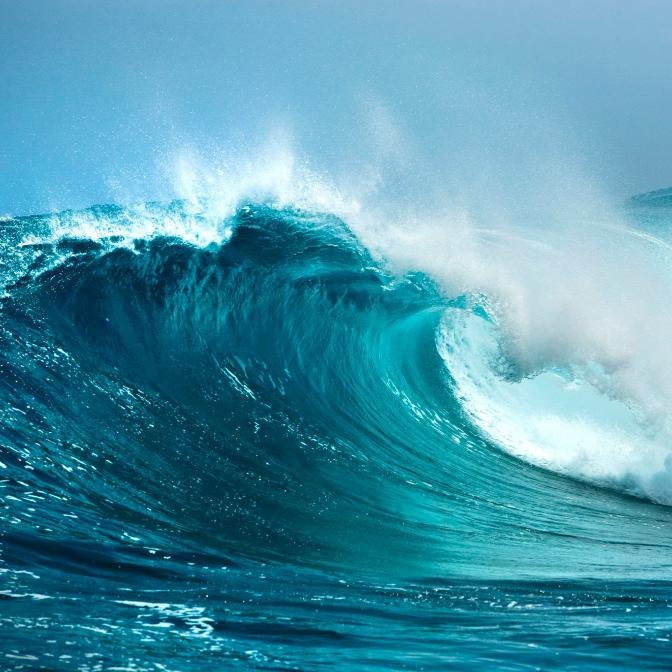
#Pacific #crossing #onboard
This is the start of our Pacific crossing onboard the beautiful 1936 Fife Latifa! We set off from Mo'orea, and battle our way through some stiff trade winds on our way to Hawai'i.
This all happened last summer (2024), and honestly it was of the most incredible and memorable voyage I've been on.
It was a blessing to have the opportunity to sail across The Pacific again, but this time in the other direction–from Tahiti to Hawaii and then on to Washington
There's nothing quite like the feeling of setting off to sail across an ocean,
that final moment where you watch the land dissolve into the horizon,
knowing it will be weeks before you see it again.
But this wasn't the typical downwind slide through the tropics,
we were attempting the path less travelled,
a 2,500 mile uphill battle from Tahiti to Hawaii,
sailing hard into the teeth of the unrelenting trade winds.
And our vessel for this challenge, Latifa, a magnificent 1930s racing yacht.
Her owner Kent and her crew, Jasper and Georgie,
had assembled this dream team of five,
and Latifa was about to show us what she was made of.
This is the part of the journey where the romantic idea of sailing
meets the raw humbling power of the open ocean,
and it didn't take long for the Pacific to remind us who was in charge.
We just left Morea a few hours ago.
We're sailing along on a close reach.
There's about 25 knots of wind just ahead of the beam.
It's pretty bouncy, but we're sailing at like nine knots,
which is way faster than I'm used to sailing on a Lipsa.
After leaving the protection of Morea,
we were thrown into the chaos of raw ocean swells.
This wasn't slowly finding our sea legs, it was more of a baptism by fire.
The trade winds whistled through the rigs,
with gusts of 30 knots kicking up the steep sea.
Latifa's bow pierced the waves,
sending sheets of green water exploding over the deck,
making life on board a constant losing battle to stay dry.
Down below was a symphony of chaos,
the roar of the wind, the rushing of waves against the hull,
and the groan of a 90-year-old wooden hull taking every blow in her stride.
Cooking was a dangerous dance, and sleep came only in short bursts,
occasionally broken by the g-force of the boat falling off another wave.
This was certainly the humbling experience we were promised.
When you start to progress, we've been averaging, like,
eight, eight and a half beats with the wind on the beams.
We have a lot of deck leaks.
Half of the beds have been kind of wet.
I guess that's a problem with wooden decks.
Now we have been able to completely sink out.
It wasn't great, but we made it.
This is day three of our Pacific crossing,
and as you can see, conditions have calmed down a little bit.
One thing about Latifa is the cockpit is very exposed.
Last night, it was rainy, and we were sat out here all night in the rain,
and then it's also quite exposed to the sun,
so, like, on this midday watch, I'm just trying to, like,
stay as protected as possible.
And, um, yeah, I got a question for you, actually.
Okay.
All right, would you rather eat a baby goat or a matter baby?
What's a matter baby?
Nothing, babes, what's the matter with you?
So, yeah, day three of the Pacific crossing.
Light trade winds.
We're sailing close hauled.
The wind's dropped off a lot, but the decks are still wet.
Got my mattress out, drying on deck.
Should be good.
Maybe I can sleep in my bed again.
That'd be nice.
Getting dry.
I'm feeling good again.
No longer seasick.
Otherwise, I'm just pretty stoked the sun's out.
But in the midst of the relentless motion and the constant dampness,
a routine began to form.
Life simplified, distilled down to the rhythm of our four-hour watches.
You watch, you try to eat, you try to rest, and then you watch again.
The world shrinks to the confines of the boat,
your crewmates, and the endless expanse of grey rolling ocean.
It's funny how your priorities shift out here.
Things that seem so important on land fade into a distant memory.
Your focus becomes the trim of the sails, the clouds on the windward horizon,
and the warmth of the cup of tea in your hands.
You connect to the natural world in a way that's simply impossible on land.
The constant distractions of modern life are stripped away,
allowing Aurora, a more resilient version of yourself, to come forward.
Hey, Rachel.
Morning.
How are you feeling?
I just woke up from a wonderful nap.
It's a pretty good day, actually.
I had a shower.
I feel like that's pretty luxurious having a shower.
I have a hair mask.
We get much more luxurious than that.
Yeah.
No more rain.
No more wet beheads.
Just slightly salty ones.
We're making the most of the calm weather to check out what's going on on deck.
We found some chafe on the staysail sheet,
so we're going to top the staysail sheet today before it gets windy again.
And we're not going to know often does stuff like this happen.
I don't know, to be honest.
I've never seen chafe like that before on here.
I don't know.
It's been windy the last five days.
We've not really had a chance to walk with X much.
So making the most of flat seas.
Yes.
Can you tell what it is yet?
No.
It's not a skipjack, is it?
It's like a little...
Yeah.
Oh, we're sitting back.
Oh, yeah.
It's a little bonito.
That should go back.
Yeah, it is.
You'll be all right, mate.
You're going to be all right.
You're going to live.
Hey.
Great work.
What's going on?
This is day...
I don't even know.
We left on Saturday.
Wednesday, day four.
Day five.
Four?
Four.
Four, I think.
Okay, day four.
Four or five.
Day four or five.
Coming up to the convergent zone now, I would say.
Yeah.
Coming up to the equator, which means the wind's dropped off.
And it's gone super light.
It's flat seas.
It's a little bit slower than the sailing before.
And it's super hot.
It's like very sunny.
It's hot.
Yeah.
And Jasper's rigged this sunshade.
Look at this.
We call this Jimmy Buffett.
Look at this craftsmanship.
Can you tell me what film you're watching, Georgie?
I'm wondering about time.
I'm just pretty happy and pretty sad at the same time.
Dad's just dying.
Just to say goodbye to his dad.
Yeah.
It's really sad, isn't it?
Oh my god.
Yeah.
31 degrees, 15 minutes.
That was a good one.
Yeah, cool.
After days of battling our way north, a change began to creep into the air.
The relentless wind, which had been our constant adversary, slowly started to dwindle.
We were leaving the trade winds behind and entering the next great challenge of this voyage,
the Intertropical Convergence Zone, or the doldrums.
One feature that's very typical of the Convergence Zone,
which is this band near the equator, is the presence of squalls
like this one that I'm looking at right now.
So this is a line squall.
And you can see there's like a line, a front of rain that stretches.
These dark clouds bring rain and an increase in wind.
So yeah, it looks like imminently we're going to have a bit of rain.
I'm just going to go and shut the hatches.
The Convergence Zone is a confusing patch of ocean,
a place of maddening stillness and unpredictable weather
squeezed between the trade wind belts of the northern and southern hemispheres.
You trade one enemy for another and the challenge is no longer too much wind,
but the complete lack of it,
punctuated by violent, fast-moving squalls
that bring half-hour bursts of torrential rain
and almost gale-force gusts from any direction.
Hello, sunrise squall.
Waken, waken squall.
OK, so we're about a week out now into our Pacific crossing
and we've had some really nice days of sailing.
We're currently coming through the Convergence Zone.
So as you can see, we have some really nice flat seas
and a light wind on the beam.
It's been some great sailing.
But more importantly, last night was a big milestone
because at some point in the middle of the night, we crossed the equator.
So we're back in the northern hemisphere, which is cool.
And because it was in the middle of the night,
we couldn't do an equator crossing ceremony,
which is usually the custom with sailors.
When you cross the equator,
it's important to honour Neptune in some way.
So we've had to postpone it to this morning, which is fine.
We're going to have an equator ceremony for Rachel here.
And unfortunately for her,
she's the only one of us on board who's not crossed the equator before.
So you've got to make a sacrifice to Neptune
to prove your worthiness for the high kingdom of the shellbacks.
So are you ready to prove it?
I'm ready.
Yeah, great.
How does it feel to be a shellback?
It's pretty exciting.
Yeah, we had a really nice sail last night.
It all feels really good.
Yeah.
Equator crossing ceremony.
It's time.
All right, Rachel.
Time has come.
Ken, would you do the honours?
Yes.
So I'm moving into the world.
Oh, yeah.
That is a strong smell.
Yeah, baby.
That's it.
My first Marmite experience.
Does some lucky person get to lick it all?
Oh, yeah.
Welcome.
She rises again.
First few days were a bit rowdy, but it's been really chill so far.
We had a really relaxing day today.
Today marks the halfway point.
We were like, how many did we have last night?
Eight knots of wind speed, and we were going like seven knots.
Yeah, that's pretty good.
It's pretty good.
Yeah.
Yeah, no, it's sweet.
Are you into classics?
Yeah, for sure.
Something about it.
We've just had a shower.
We've been running the watermaker.
We've got full water tanks.
We've had a bit of a wash down on deck.
Wind's died, so we're motoring.
Pretty chill.
We had a pretty rough start.
Then a few days of pretty heavy weather, and Georgie got super sick.
So it's kind of tough on everyone.
We're all pretty tired, but the last few days have just been glorious.
Great sailing, and now we're a couple hundred miles north of the equator.
We should hopefully pick up the northeasterly trades tomorrow
and be on course for Hawaii.
Captain Jasper's about to put the mizzen up, which is exciting because
Latifa is a yule, which means she has two masts.
The mizzen, which is the mast at the back, is behind the cockpit, which makes her a yule.
We've just had the main sail up the whole time,
so we're going to stick the mizzen up because the wind
has always been ahead of the beam up until now.
It's come just after the beam, which means we can use the mizzen.
The little sail at the back is super cute.
Super cute.
It's a cute little sail.
Today, we crossed the halfway point between Morea and Hawaii.
As you can see, we're fully in the convergence zone now.
The wind's dropped to just below a nice sailing speed,
so we've switched on the engine and we're just motoring.
The sea's already flattened off.
The sun has just set.
It's been an interesting experience sailing Latifa compared to halfway around the world
on a locuster.
They're similar in some ways, but totally different in other ways.
For example, Latifa, there's no furling gear.
It's just hang-on headsails.
Instead of furling in the headsail like we do on a locust,
you need to pull down either the jib or the staysail.
Hang-sail is obviously huge in comparison, so it's a lot of work to take reefs.
Yeah, just generally, it's a lot of rope pulling.
It's quite wet as well.
I was surprised at how much water there is coming over the deck.
It's been really enjoyable.
Great crew.
The wind's been great so far.
It's only really just died on us.
And looking forward to the second half.
I think tomorrow, we're going to enter into the northeast trade winds,
so it's going to ramp up again.
The wind should fill in from the east-northeast,
and then it'll be a reach, maybe a close reach,
the last 800 miles to Hawaii.
I think we'll arrive in about a week.
There's been quite a fast passage.
It'll be like 2,500, maybe 3,000 miles in about 16 or 17 days.
Yeah, it's been good.
But right now, the sail's flapping around
because we're just motoring with almost no wind,
so the sail's just like flap, flap, flap.
It's a little bit annoying.
Thanks for joining us on the start of this long journey across the Pacific.
In the next video, we push through the doldrums
and continue into the northeast trade winds,
finally making landfall in Hawaii,
making the sudden surreal transition from the remote wildness of the Pacific
to the urban metropolis of Honolulu.
And if you want to see more from this journey,
make sure you're subscribed with notifications on.
And if you're dreaming of your own sailing adventures,
my Patreon is the best way to support what we do.
You'll get access to the Elixir Express newsletter
and be the first to hear about any crewing opportunities on board my boat, Elixir.
The link for that is down below.
Thanks again for being here.
I'll see you in the next one.