
The Parrot Family: A Rainbow of Genius - Meet Every Type
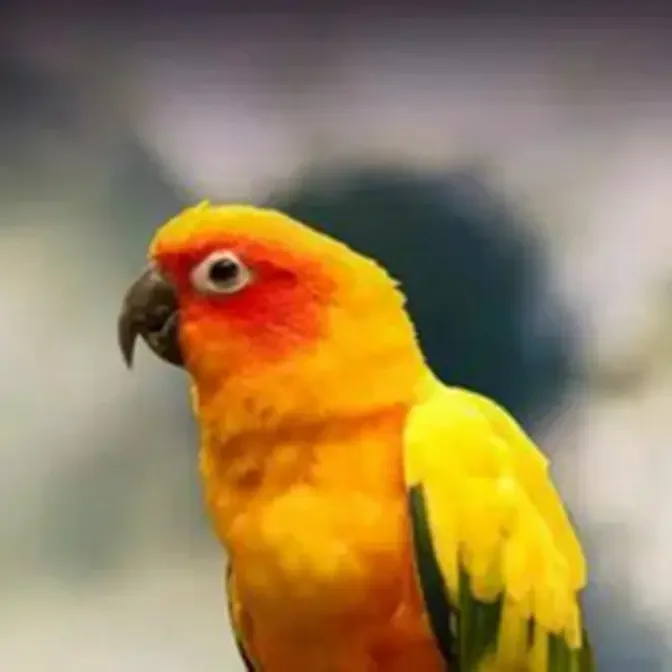
Comments are disabled for this video.
Imagine stepping into a rainforest alive with color and sound.
The air is filled with the rustling of leaves and the distant calls of exotic birds.
A flash of emerald and sapphire darts past, catching the light as it weaves through the
dense foliage, followed by a wild, joyful squawk that echoes through the trees.
This is the world of parrots, nature's living rainbows, bursting with personality and intelligence.
Each one is a vibrant splash of life.
Parrots aren't just beautiful, they're social, forming tight-knit flocks and lifelong bonds.
They communicate, play, and even show affection.
Their calls and whistles are a complex language, each sound carrying meaning and emotion.
With nearly 400 species, parrots range from palm-sized gems
to giants with wingspans as wide as a child's arms.
Each species is unique in its own way.
Their dazzling colors help them find mates, blend in, and tell each other apart.
These colors are not just for show, they are vital for survival.
From the cheeky cockatoos of Australia to the curious care of New Zealand,
each parrot species is a unique chapter in nature's story, each with its own tale to tell.
Exploring their world is an adventure,
one that reveals the wild, surprising wonders of our planet.
It's a journey into the heart of nature.
Let's dive into what makes these birds so extraordinary.
Their beauty, intelligence, and social nature make them truly remarkable.
Every parrot is equipped with remarkable tools for survival.
Their curved beaks act like a third hand, crushing tough nuts,
delicately preening and solving puzzles.
Zygodactyl feet, two toes forward, two back, give them a powerful grip,
letting them climb, hang, and handle food with ease.
But their greatest asset is their brain.
Parrots rival young children in intelligence, solving problems,
using tools, and remembering complex roots.
Their smarts help them find food, avoid danger, and adapt to changing environments.
Some species can mimic human speech, a byproduct of their advanced vocal learning.
In the wild, this mimicry helps them communicate and bond with their flock.
Their brains and bodies make them true marvels of evolution.
Meet the giants, macaws with their brilliant feathers and meter-long bodies.
Their powerful beaks crack the toughest nuts, a feat few animals can match.
Cockatoos with expressive crests use their head feathers to show excitement or alarm.
Their calls are thunderous, echoing across the treetops.
Then there's the African grey parrot,
famed for its intelligence and ability to learn hundreds of words.
Some, like the legendary Alex, could identify colors and even grasp abstract concepts.
Amazon parrots, too, are expert mimics, singing,
talking, and entertaining with their playful antics.
These birds aren't just talkers.
They're thinkers, forming deep bonds and solving complex problems.
Their charisma and brainpower make them unforgettable.
But not all parrots are giants.
Some of the most fascinating are small wonders.
Budgerigars, or budgies, are tiny, clever, and beloved worldwide.
These little parrots are not only popular pets, but also remarkable survivors in the wild,
thriving in some of Australia's harshest environments.
In the wild, they form swirling flocks across Australia, camouflaged in green and yellow.
Their ability to blend in with the landscape helps them avoid predators
and find food in the vast, open grasslands.
Lovebirds, named for their strong pair bonds, are affectionate and social,
always chattering and preening.
Their vibrant colors and playful antics make them favorites among bird lovers,
and their loyalty to their partners is legendary.
Beyond the familiar, there are rare treasures like New Zealand's kakapo,
the world's only flightless nocturnal parrot.
This unique bird spends its nights foraging on the forest floor,
moving quietly through the undergrowth.
With mossy green feathers and a gentle nature, the kakapo is critically endangered,
its survival a race against time.
Conservationists work tirelessly to protect every remaining individual,
hoping to secure a future for this gentle giant.
The elusive night parrot of Australia, once thought extinct,
is a mysterious, ground-dwelling bird rarely seen by humans.
Its secretive habits and remote habitat make it one of the world's most enigmatic birds.
These rare parrots remind us how much there is still to discover,
and how fragile their existence can be.
Each new sighting is a cause for celebration and a reminder of nature's wonders.
Each species, common or rare, is a vital part of our planet's story.
Their songs and colours enrich our world,
connecting us to wild places and ancient landscapes.
Protecting them means protecting the wild places they call home.
By preserving their habitats,
we safeguard the future of countless other species as well.
Let's see what challenges they face,
and how we can help ensure these small wonders and rare treasures
continue to thrive for generations to come.
Parrots face grave threats.
Habitat loss and the illegal pet trade are pushing many to the brink.
These intelligent social birds are losing their homes at an alarming rate,
and their populations are dwindling faster than ever before.
As forests disappear, so do the homes and food sources parrots rely on.
Without shelter and nourishment,
their chances of survival drop dramatically,
leaving entire flocks vulnerable to extinction.
The demand for wild-caught parrots fuels a cruel trade,
endangering entire species.
But hope remains,
as dedicated individuals and organisations fight to turn the tide.
Conservationists are restoring habitats,
rescuing birds,
and breeding endangered species like the kakapo.
Their tireless work is giving parrots a second chance at life in the wild.
You can help by supporting sustainable products,
choosing captive-bred pets,
and backing conservation efforts.
Every small action adds up to make a real difference for parrots everywhere.
Even sharing their stories raises awareness and inspires action.
By educating others,
you help build a future where parrots can thrive.
Parrots are more than pets or pretty faces.
They're vital to the world's biodiversity.
Their presence supports healthy forests and ecosystems.
Their colours and calls are treasures worth protecting,
symbols of the wild places we all depend on.
Together,
we can ensure these remarkable birds continue to brighten our world,
filling our skies with life and colour for generations to come.
The future of parrots is in our hands.
Let's make it a vibrant one,
full of hope,
action,
and compassion.