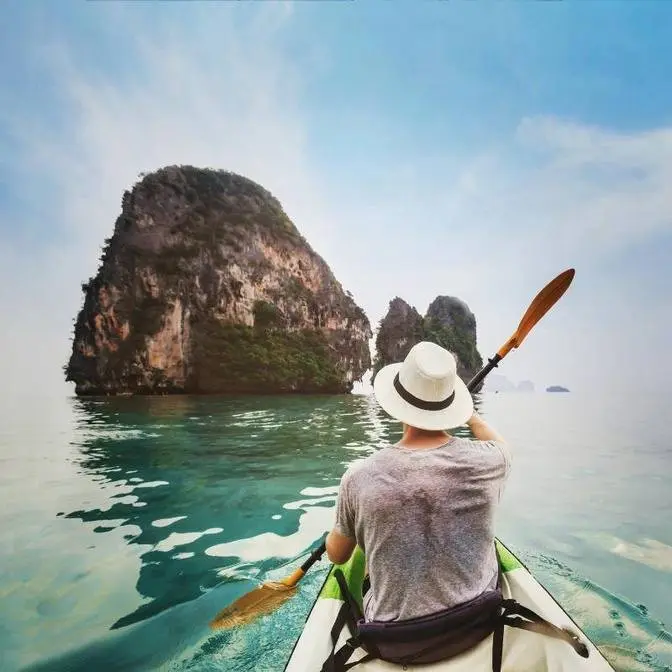
#Travel 15 Tourist Destinations When Visiting Vietnam! The Most WONDERFUL Country in Asia | Travel Document Vietnam – a land of contrasts, mysteries, and breathtaking beauty – has become one of Asia’s most magnetic travel destinations. In this cinematic travel documentary by James Baker – Discovery Global, we uncover 15 Tourist Destinations When Visiting Vietnam that will completely change the way you see this country. From the bustling chaos of Hanoi’s Old Quarter to the serene emerald waters of Ha Long Bay, Vietnam is a country that thrives in both tradition and modernity.
Behind every destination lies a story of resilience, faith, and transformation. Vietnam’s culture is layered with ancient beliefs, colonial history, and the modern ambitions of a nation racing toward the future. What makes Vietnam so fascinating is not only its postcard landscapes but also the real life of its people—their warmth, struggles, and the daily rhythm that defines one of Asia’s most dynamic societies.
James Baker – Discovery Global takes you through the “sins” and wonders of Vietnam. Yes, even paradise hides shadows. We’ll explore the remarkable facts behind the country’s rising cost of living, the challenges of urbanization, and the resilience of women who bear the weight of tradition while shaping Vietnam’s future. Hanoi, Ho Chi Minh City, Hoi An, Hue, Sapa, and Da Nang are not just tourist stops—they’re living stages of history, culture, and identity.
This video is not just a travel guide; it’s a deeper lens into the nation’s soul. You’ll walk through night markets where life never sleeps, witness monks chanting in ancient temples, and see fishermen casting nets along the Mekong. Vietnam’s duality is striking—where rapid development collides with centuries-old ways of life.
The documentary raises questions: Is Vietnam simply an exotic tourist escape, or is it a country redefining Asia’s future? By blending cinematic visuals with social commentary, James Baker – Discovery Global brings you closer to the truth. Every frame uncovers the beauty, contradictions, and real emotions that make Vietnam unforgettable.
If you’ve ever wondered what life is truly like in Vietnam—the food, the culture, the people, the women, and the cost of living—this video holds the answers. And if you’re planning your own journey, these 15 destinations are essential stops that will leave you inspired.
Stay tuned until the end because the last destination is one most tourists never see. You’ll be surprised by the depth of Vietnam beyond its beaches and cities.
In a world filled with destinations that claim to be unique, Vietnam does not have to try
it simply island.
This long, slender country in Southeast Asia stretches like a ribbon along the South China
Sea, and within its borders you find a kaleidoscope of contrasts.
Towering limestone cliffs and lush rice terraces sit side by side with neon-lit cities.
Ancient temples whisper stories of vanished empires, while buzzing markets reveal the
unbreakable rhythm of modern daily life.
Vietnam is not simply a place you visit, it is a place that soaks into your soul, reshaping
the way you see the world.
And today, we set off on a journey across 15 destinations that define the essence of
this extraordinary land.
Let's begin where modernity meets myth, the coastal city of Da Nang.
Few places embody the dual spirit of Vietnam quite like this energetic hub.
Stand on the banks of the Han River at night, and you'll see the Dragon Bridge breathing
fire and water in a spectacle that feels both playful and deeply symbolic.
The dragon, an ancient creature of Vietnamese mythology, is reborn here in steel and light,
uniting the past and present in one fiery exhale.
But step away from the city lights, and the marble mountains rise dramatically on the
horizon, five limestone outcrops representing the elements of earth, water, fire, wood,
and metal.
Within their caves and grottos, shrines flicker in the half-light, incense clings to the air,
and you feel a silence that is centuries deep.
Then, just minutes away, you're back at Mai Ky Beach, where golden sands roll endlessly
into the turquoise sea, inviting you to surrender to leisure, sun, and the soothing rhythm of
the waves.
Da Nang is also a feast for the senses, its cuisine ranging from humble street-side noodles
to sophisticated seafood banquets, reminding every traveler that food here is not just
From the bustling coast, let us drift into the veins of the Mekong Delta, where Can Tho
thrives.
Life here is inseparable from water.
The river is not a boundary.
It is the main street, the workplace, the lifeline.
At dawn, floating markets come alive, hundreds of boats heavy with mangoes, jackfruit, and
dragon fruit bob gently, as vendors call out to buyers.
Bargaining happens from boat to boat, and instead of shelves and price tags, each vessel
raises a bamboo pole with samples of its goods tied on top.
The Mekong itself is a stage, and commerce is the performance.
Yet Can Tho is more than trade.
It is also hospitality and warmth.
Locals greet visitors with smiles that feel genuine, unhurried, and rooted in a slower
rhythm of life.
The food here tells its own story, too.
Taste the delicate herb-rich dish known as Bun Rieu, and you realize it carries not just
flavor, but history generations of families cooking with what the river and land provided.
This city, framed by lush greenery and tranquil waterways, is Southern Vietnam's beating
heart, a reminder that progress and tradition can move together, like twin currents of the
same river.
And then there is Phu Quoc Island, a jewel scattered across emerald waters.
This island is where the imagination of a tropical paradise becomes reality.
Its beaches arc in soft crescents of white sand, fading into waters that shift from jade
to sapphire under the tropical Sunday.
But Phu Quoc is not just for those who come to laze under palm trees.
Adventure calls loudly here.
Strap on a snorkel, dive into crystalline reefs, and watch a living kaleidoscope of
corals and fish beneath the waves.
Or wander inland, where dense jungles hide waterfalls and hiking trails.
Agriculture has shaped this island too.
Phu Quoc's pepper farms are world-renowned, and walking among the fragrant vines gives
you a new appreciation for something so small, yet so globally treasured.
When evening arrives, the dinh cao night market awakens, and the day's catch transforms into
grilled feasts, shared communally under lantern light.
And as the sun dips below the horizon, painting the sea in shades of fire and gold, Phu Quoc
reminds you why the best moments of travel are often the simplest sand beneath your feet,
salt on your lips, and the stars overhead.
Far from the tourist-heavy coasts lies the ethereal beauty of the Kandao Islands.
Once, these islands were known as a penal colony, a place of sorrow and imprisonment.
The echoes of history remain in the old prison walls and the haunting exhibits of the Kandao
Museum.
Yet time has reshaped their identity.
Today the islands have become a sanctuary of peace, where nature flourishes in untouched
splendor.
Wander through forests that lead to secluded bays, dive among coral reefs teeming with
marine life, or simply let silence enfold you on deserted beaches.
The paradox of Kandao is striking.
A place once synonymous with captivity, now offers profound freedom.
And when night falls, fresh seafood caught that very day becomes dinner under the stars,
turning hardship into nourishment, grief into gratitude.
To journey northward is to step into Vietnam's royal past.
The city of Hue was once the seat of emperors, and its legacy endures in every stone.
At the heart of the city lies the Imperial City, its ancient gates opening into courtyards,
temples, and palaces where dynasties once walked.
Here, history feels alive, you can almost hear the rustle of silken robes and the echo
of mandarins' footsteps.
Flowing gently alongside is the Perfume River, its waters reflecting not just the sky, but
the city's spirit.
Hue is a place of both grandeur and intimacy.
Its cuisine is legendary, not because it is opulent, but because it was crafted for kings.
Dishes like Bun Bo Hue are bold, aromatic, and unforgettable each spoonful, carrying
the refinement of a royal kitchen.
Beyond the walls of the citadel, pagodas like Thien Mu stand as spiritual sentinels, while
the tombs of Nguyen emperors scatter the landscape, monumental in scale yet deeply personal in
design.
In Hue, time seems to slow, allowing reverence for both the past and the present.
From Hue, the land begins to rise, pulling us into the cool embrace of the northern mountains.
And nestled among these misty peaks lies Sapa, a tapestry woven from earth, cloud, and culture.
Terraced rice fields spill down mountainsides like green staircases crafted by giants.
Hill tribe communities such as the Hmong and Dao bring splashes of red and indigo to
the landscape with their traditional clothing, a living expression of identity and pride.
For travelers, Sapa is not just a viewpoint, it is a conversation with resilience.
Trekking paths wind through valleys and across ridges, leading to homestays where warmth
and tea greet strangers as family.
At 3,147 meters, the summit of Phansepan, the roof of Indochina, offers a view where
clouds part to reveal a horizon that seems infinite.
And when evening falls, the cool air is filled with the aroma of grilled meats, bamboo-wrapped
pork, and sticky rice, foods that comfort as much as they sustain.
Sapa is where Vietnam reveals another side of itself, rugged, diverse, and deeply human.
The lanterns glow softly as twilight falls over Hoi An, a town that feels less like a
destination and more like a living memory.
Walking its narrow streets, lined with ochre-colored houses and wooden shopfronts, you sense the
whispers of centuries of trade.
Merchants once arrived here from China, Japan, India, and even Europe, and their influence
lingers in the architecture.
A Japanese-covered bridge arches gracefully over the canal, Chinese assembly halls stand
richly decorated with dragons and lanterns, and French colonial touches echo in balconies
and shutters.
Yet despite this cultural blend, Hoi An has preserved its own soul, one that blooms each
evening when thousands of silk lanterns are lit, their reflections dancing across the
Thu Bon River.
The sight is not just picturesque, it is symbolic, a reminder that light endures, even after
centuries of change.
But Hoi An is not only about beauty for the eyes, it is also for the palate.
Here you taste dishes that can only be truly found in this town.
Tao Lo noodles chewy and earthy are said to be made with water drawn from an ancient well.
Each bite carries history, a story of migration and cultural mingling.
And then there are the tailors.
Step into any of the town's workshops, and within days, you can walk out with clothing
crafted to your exact measurements.
This combination of timeless streets, flavors, and artisanal skill makes Hoi An, a place
where heritage isn't locked in museums but lived every day.
Beyond the old town, rice fields stretch out like green seas, and nearby beaches whisper
with waves, a reminder that simplicity still thrives alongside grandeur.
Yet grandeur reaches an entirely different scale when you venture to Ha Long Bay, a natural
masterpiece etched by the patient hand of time.
Rising from emerald waters are thousands of limestone karsts, their rugged cliffs softened
by jungle vegetation, their bases sculpted by tides into caves and grottos.
Cruising through this seascape feels like drifting into a dream.
Each turn reveals another hidden cove, another towering pillar of stone, another surreal
formation that looks as though it belongs in a myth.
For centuries, legends have told of dragons descending from the heavens, their tails carving
valleys and peaks to create this bay.
Science explains it differently, erosion, tectonic shifts, and millennia of geological
processes, but even knowing the truth, the place feels enchanted.
Life thrives here too, in floating fishing villages, where homes rest gently on the water,
and families live in harmony with the tides.
For visitors, the experience can be as active or as serene as they choose.
Some kayak into hidden lagoons, others climb cliffs for panoramic views, while many simply
let the rhythm of the boat and the breeze guide them into tranquility.
At night, when stars spill across the sky and the karsts become silhouettes against
the moonlit sea, Ha Long Bay reveals why it is more than a destination, it is a wonder,
one that belongs not only to Vietnam but to the world.
Travel inland from the bay, and you find another marvel often described as, Ha Long Bay on
land.
This is Ninh Binh, where limestone cliffs rise not from water but from rice fields and
winding rivers.
The Trang An Landscape Complex, a UNESCO World Heritage Site, is a labyrinth of caves and
waterways.
Rowboats here glide silently through tunnels carved by rivers, emerging into valleys so
serene they feel untouched by time.
The boatmen, often women with weathered hands, row with their feet, as much as with their
arms, a rhythm passed down through generations.
Ancient capitals once stood here too.
Hoa Lu, Vietnam's political center in the 10th century, carries ruins that speak of
kings and wars, while the Bai Dinh Pagoda stretches grandly across the hillsides, its
statues and temples drawing pilgrims from across the nation.
Ninh Binh also charms with its cuisine, rooted deeply in its landscape.
Goat meat dishes, prepared with herbs and spices that cut through the richness, reflect
the area's agricultural traditions.
Even something as simple as mountain snails, creatures that hide in the karsts and emerge
only during the rains becomes a delicacy here.
To cycle through Ninh Binh's countryside, past farmers bent over rice paddies and hidden
shrines tucked between limestone outcrops, is to witness a Vietnam both ancient and enduring.
But Vietnam is not all heat and humidity.
Rising into the highlands, the air cools, the mist gathers, and suddenly you arrive
in a place that feels almost European.
This is Da Lat, known as the, City of Eternal Spring.
Its valleys are cradled by pine forests, its hillsides alive with flower gardens, and its
streets dotted with French colonial villas.
Unlike the tropical bustle of much of the country, Da Lat invites you to slow down,
to breathe deeply, to savor.
Here, strawberries grow sweet under the cool sun, artichokes flourish, and flowers paint
the markets in bursts of color.
The city itself is charming, with a railway station reminiscent of bygone eras and palaces
that once hosted emperors.
But its surroundings offer adventure.
Waterfalls thunder into hidden gorges, trails wind through mountains, and canyoning expeditions
send thrill-seekers, rappelling down sheer rock walls into rushing streams.
Da Lat is also a place of romance.
Couples wander its lakesides, artists find inspiration in its landscapes, and festivals
celebrate both flowers and love.
It is as though the city itself was built for beauty, natural, architectural, and emotional,
and perhaps that is why travelers leave Da Lat not just with photographs but with a lingering
sense of serenity.
Head east again and the climate shifts once more, this time to the arid coast of Mui Ne.
At first glance, this fishing town seems ordinary, boats rocking gently in the bay,
fishermen mending nets along the shore.
But then you look inland, and suddenly the world transforms.
Towering sand dunes, red and white, stretch like a desert by the sea.
At sunrise, the dunes glow with shifting colors.
Amber, crimson, gold, and visitors slide down their slopes or ride ATVs across their crests.
The ferry stream, meanwhile, is a ribbon of shallow water carving its way through formations
of sand and rock, creating a miniature canyon of surreal hues.
It is a place where geology paints landscapes that feel like art.
Yet Mui Ne is not only about scenery, it is also about wind.
With steady breezes sweeping in from the sea, this has become one of the world's top destinations
for kitesurfing and windsurfing.
The sky fills with colorful kites, the waves alive with athletes dancing across them.
And when the day is done, Mui Ne reveals another side of its identity.
Rows of seaside restaurants serving the freshest seafood imaginable.
Crab, squid, shrimp, all caught that morning become dinners, shared under the stars,
the taste of the sea lingering long after the meal ends.
It is a place where desert, ocean, and human life weave together in an unlikely,
yet unforgettable harmony.
For those drawn not to sand or surf but to the mysteries beneath the earth,
Vietnam offers something unparalleled, Phong Nha Ke Bang National Park.
Recognized by UNESCO, this park is a wonder of karst mountains and ancient caves formed
over 400 million years.
It is here that explorers discovered Sun Dung, the largest cave in the world,
so vast it could house an entire New York City block within its chambers.
Inside, rivers flow, jungles grow, and shafts of sunlight pierce through collapsed ceilings,
creating ecosystems hidden from the outside world.
To step into Sun Dung is to step into a planet within a planet.
A reminder of how much remains undiscovered on earth.
But even beyond Sun Dung, Phong Nha offers countless marvels.
The Paradise Cave stretches for kilometers, its stalactites and stalagmites forming sculptures
that no artist could rival.
Smaller caves hide underground rivers, where adventurers paddle by headlamp,
the silence broken only by dripping water, and the echo of their own voices.
Above ground, the park teems with biodiversity rare primates swinging through trees,
birds flashing through the canopy, plants found nowhere else on earth.
For those who venture here, it is not merely a trip but a pilgrimage to nature's cathedral.
And as the sun sets on these destinations, one cannot help but marvel at Vietnam's diversity.
From lantern-lit towns to karst kingdoms, from cool highlands to blazing sand dunes,
from the world's largest cave to the smallest village market, Vietnam
offers not just places, but experiences that change the traveler who dares to embrace them.
This country teaches you that beauty comes in many forms,
in the serenity of a river, in the fire of a sunrise, in the warmth of a shared meal,
and in the resilience of a people whose history is as layered as the landscapes they inhabit.
There is a certain hush when you arrive at My Son Sanctuary, a silence that feels reverent,
as though the ruins themselves are breathing quietly in the forest.
This complex of ancient Hindu temples,
built by the Champa civilization between the 4th and 14th centuries,
once rang with chants and rituals dedicated to Shiva and other deities.
Today, moss creeps across the red brick towers, the jungle reclaims what was once sacred ground,
and birdsong replaces the sound of drums.
Yet the artistry of the Cham people is still evident in every intricate carving,
every graceful arch.
Even in ruin, My Son tells a story of faith, devotion, and resilience.
Visit at sunrise, and watch as golden light washes across the towers,
igniting them briefly with a glow that feels otherworldly.
It is here you realize that history is not confined to books.
It is written in stone, in silence, in the very air you breathe.
Leaving the forest temples behind,
the road carries you into the roar and rhythm of Ho Chi Minh City,
Vietnam's pulsating southern metropolis.
Known to locals as Saigon, this is a city that never truly sleeps.
Its skyline is crowned by gleaming skyscrapers, but at street level, the energy is unrelenting.
Scooters weave in every direction, markets spill onto sidewalks,
and the aroma of street food grilled pork, steaming pho,
sweet iced coffee wraps around you like a living current.
It is chaos, yes, but it is also exhilarating, the kind of chaos that makes you feel more alive.
Saigon is not only about modernity, it also holds memory within its streets.
The War Remnants Museum tells painful stories through photographs and artifacts,
offering somber reflection on the resilience of the Vietnamese people.
The Notre Dame Cathedral and Central Post Office, both relics of French colonial rule,
stand as elegant reminders of another era.
And when night falls, the city transforms once again rooftop bars glow against the skyline,
night markets bustle with late-hour shoppers,
and the hum of karaoke drifts through the neighborhoods.
Every street corner offers a narrative, every alley, a piece of the city's complex identity.
To experience Saigon, is to witness Vietnam's capacity to carry both scars and dreams.
To honor the past while racing headlong into the future.
But as restless as Saigon may be, travel north along the coast,
and you find a place where the ocean dictates the rhythm of life.
Nha Trang
Known as Vietnam's premier beach city,
Nha Trang is where crystalline waters meet golden sands stretching farther than the eye can see.
Divers descend beneath the waves to coral gardens alive with fish,
while sunseekers sprawl on loungers with the salty breeze on their skin.
The energy here is playful, celebratory.
During the Sea Festival, the city erupts with music, dance, fireworks,
and a collective joy that radiates from locals and visitors alike.
Nha Trang is also a feast for those who travel with their taste buds.
Fresh seafood is abundant grilled lobsters, steaming bowls of Bun Cha Ca,
fish cake noodle soup, and delicate shellfish dishes served on the sand.
But the city also offers glimpses of the past.
The Po Nagar Cham Towers, built between the 7th and 12th centuries,
rise above the city as a reminder of its spiritual heritage,
their brick structures echoing the same culture that built My Son.
This blending of beachside leisure and cultural depth
makes Nha Trang more than just a seaside escape.
It is a place where relaxation and reverence coexist.
As we reflect on all these destinations
Da Nang
Can Tho
Phu Quoc
Con Dao
Hue
Sapa
Hoi An
Ha Long Bay
Ninh Binh
Da Lat
Mui Ne
Phong Nha
My Son
Ho Chi Minh City
And Nha Trang
It becomes clear that Vietnam is not just one country but many worlds woven together.
Each destination offers a different tempo, a different texture,
yet all are bound by a shared essence, resilience, beauty, and an endless ability to surprise.
But to truly understand Vietnam, you must see beyond the postcards.
Look at the fisherman who rose before dawn, the farmer bent over a rice paddy,
the grandmother ladling soup on a street corner,
the child flying a kite against a monsoon sky.
These are the true landscapes of Vietnam, its people.
Their warmth, their humor, their hospitality are what transform a trip from a checklist
into an experience that lingers long after you leave.
The land is breathtaking, yes,
but it is the human spirit that elevates Vietnam into something unforgettable.
As a traveler, you might come for the sights.
You might be drawn by the promise of beaches, mountains, food, or culture.
But inevitably, you leave with something more.
You carry the rhythm of the scooter horns, the scent of incense rising in temples,
the taste of herbs fresh from a morning market,
the echo of laughter shared with strangers who treated you like family.
You carry the understanding that Vietnam is not simply a place on a map, it is an emotion,
one that follows you wherever you go.
And in this way, travel through Vietnam is a dialogue.
The land speaks, the history whispers, and the people sing.
You, the traveler, listen and in listening, you change.
That is the gift of this country,
not only to show you its beauty but to awaken in you a deeper appreciation of life itself.
So whether it is standing on the misty terraces of Sapa,
gliding through the limestone valleys of Ninh Binh,
drifting among the karsts of Ha Long Bay,
or watching lanterns rise above Hoi An's riverside,
know this, Vietnam is not waiting to be discovered.
It is waiting to be felt.
Every journey has an ending,
yet Vietnam leaves you with the sense that the story is still unfolding.
The final step of our path is not one place,
but a weaving together of everything seen and felt along the way.
Think of Vietnam as a symphony.
Each destination an instrument, each moment a note,
all combining into a melody that stays with you long after the music has stopped.
Picture once more the fire-breathing dragon bridge of Da Nang,
not only a modern spectacle,
but a declaration that this land continues to reinvent itself without abandoning its myths.
Remember the floating markets of Can Tho,
where trade becomes theater and community becomes a river.
Recall the emerald embrace of Phu Quoc,
where every sunset feels like a blessing,
and the haunting echoes of Khanh Dao,
where history's shadows stand side by side with the light of renewal.
Consider the regal solemnity of Hue,
where palaces, pagodas and tombs teach that power fades but legacy endures.
Feel again the cool breath of Sapa's mountains,
where rice terraces stretch endlessly,
and cultures preserve their colors proudly against the mist.
Let your imagination wander back to the lantern-lit alleys of Hoi An,
where heritage glows not in glass cases but in the living heartbeat of the town.
And then set your gaze outward to Ha Long Bay,
a dreamscape that defies language,
where myth and geology join hands in a vision beyond belief.
Do not forget the quiet majesty of Ninh Binh,
rivers slipping through caves like veins of time,
or the alpine romance of Da Lat,
a city painted in flowers and pine.
Feel the dry winds of Mui Ne,
lifting kites and shaping dunes into oceans of sand.
Step back into the vastness of Phong Nha Ke Bang,
caves echoing with silence older than memory itself.
Then return to the sacred hush of Mai Son Sanctuary,
red brick towers glowing with dawn,
a temple complex that endures even in ruin.
Finally, breathe in the rush of Ho Chi Minh City,
a metropolis where every street is alive with contradiction,
memory and ambition, tradition and innovation.
And close your eyes to hear the surf at Nha Trang,
waves that carry laughter, fireworks and prayers all at once.
15 places? Yes, but countless experiences.
Vietnam is not a collection of attractions.
It is a living canvas.
It is laughter around a street stall table at midnight.
It is monks chanting softly behind temple doors.
It is children running across fields with kites stitched from their grandparents' hands.
It is resilience carved into every mountain,
hope reflected in every river,
and a quiet pride rising from every city street.
And for those who wonder what Vietnam teaches, the answer is this.
That beauty is not fragile, but enduring.
That history is not a chain, but a foundation.
That people, no matter how different their language or customs,
share the same yearning for connection, for joy, for peace.
As your mind wanders back across these landscapes,
you realize that travel is never about ticking boxes.
It is about allowing a place to change you.
Vietnam changes you.
It teaches you patience in the rhythm of the Mekong.
It teaches you humility in the shadow of imperial tombs.
It teaches you wonder in caves where sunlight has never fallen.
And above all, it teaches you gratitude for the chance to walk a path so rich,
to hear stories so layered,
to stand in the presence of a culture so alive.
So, if you find yourself dreaming of mountains,
seas, temples, and cities that speak with equal force,
let those dreams lead you here.
Vietnam will not disappoint.
It will embrace you, challenge you, delight you,
and remind you that the world is still full of places where magic is real.
And though our voiceover journey must draw to a close,
the adventure does not end here.
On your screen, you'll see more videos and playlists
that dive deeper into the world's most fascinating destinations.
If Vietnam has captured your heart today,
I invite you to keep exploring whether through the mountains of Central Asia,
the islands of the Pacific, or the cities that never sleep.
Each story adds another layer to your understanding of our shared world.
This journey is brought to you by James Baker.
Discovery Global.
A community of travelers, storytellers, and dreamers
who believe the world is too rich to ignore.
If you enjoyed traveling with us today,
please consider sharing this video with friends,
leaving a comment with your favorite destination,
and subscribing so you'll never miss our next adventure.
Your support helps us continue to uncover stories that matter,
places that inspire, and journeys that change perspective.
From the high peaks of Phan Tsepan to the quiet glow of lanterns in Hoi An,
from the mighty karsts of Ha Long to the intimate bowls of noodles shared on Saigon streets,
we thank you for walking this path with us.
May your own journeys be filled with wonder, kindness, and discovery.
Until next time, safe travels and may your days ahead be as colorful,
resilient, and inspiring as the landscapes of Vietnam.