
Belgrade 1456: The Forgotten Victory That Shook the Ottomans
17 Video Views·Sep 9, 2025
In 1456, the mighty Ottoman Empire came to crush a single fortress. Sixty thousand elite soldiers with cannons that once shattered Constantinople… met a ragged army of barefoot peasants, monks, and farmers. What followed wasn’t just a battle — it was defiance carved into history. And it changed Europe forever.
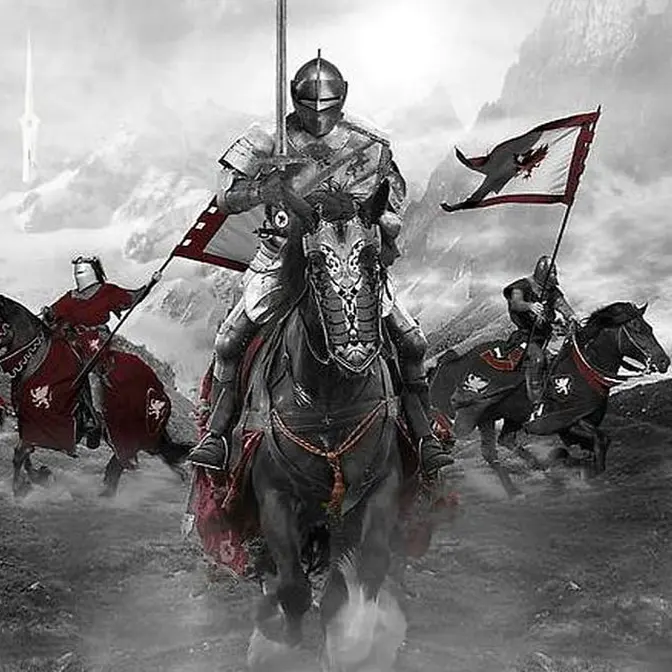
Disclosure: This video uses AI-generated visuals and voice for storytelling. All scripting, research, and editing are original and fact-checked.
They came with cannons that shattered empires, sixty thousand strong, the army that crushed
Constantinople. But in one forgotten corner of Europe, three thousand farmers, monks,
and warriors stood still. No armor, no escape, no chance, only faith and fury.
This isn't a myth. It happened, and the world was never the same again.
Welcome to Past Frame. In 1453, Constantinople, the crown jewel of the Byzantine Empire,
fell to the Ottomans. The Christian world trembled. Sultan Mehmed II, just 21 years old,
had achieved what no Muslim commander before him could, the fall of Eastern Rome.
But he wasn't finished. To the west lay Central Europe, fractured and weak.
And standing in his way was a single fortress, Belgrade. A city few in Europe believed could
hold. Yet what unfolded there became one of the most unbelievable victories in history.
Hungary was in crisis. King Ladislaus was barely a teenager,
controlled by nobles too busy with power struggles to see the storm approaching.
But one man did, John Hunyadi, a seasoned general feared by the Ottomans, respected by the people.
He had no formal army, just reputation, strategy, and will. Beside him rose a strange ally,
Giovanni da Capistrano, a barefoot monk over 70 years old, with fire in his voice.
He wandered from village to village, calling peasants, smiths, even children, to take up arms.
Not for glory, but for God, thousands responded. They were not soldiers. They had no armor.
They came barefoot, hungry, some with only farming tools. But they had faith.
And under the burning sun of July 1456, they marched to Belgrade.
Meanwhile, Mehmed moved with terrifying precision. 60,000 men, elite janissaries,
siege engineers, and 300 cannons, the same kind that had crushed Constantinople's ancient walls.
The fortress at Belgrade stood at the meeting point of two rivers,
the Danube and Sava. Hunyadi knew this was his only chance.
He reinforced the walls, built floating barricades, and prepared for a siege no one believed could be
won. On July 4th, the Ottomans arrived. Cannons roared day and night. Stones the size of oxen
smashed against the walls. Fires burned. The river was blockaded. Inside, there was no food,
no hope, only resistance. But Hunyadi struck back. In a daring raid on July 14th,
he sent small warships to smash the Ottoman river blockade.
Against all odds, they broke through. Supplies and reinforcements surged into the city.
Morale soared. A miracle, perhaps. On July 21st, Mehmed ordered the final assault.
Cannons fell silent. Then came the flood. Janissaries stormed the broken walls.
They fought through alleys soaked in blood. A small tower fell, and the Ottoman flag was raised.
But then, something unimaginable happened. The peasants, untrained, unarmored, uncommanded,
charged. They surged out of the gates in a wave of desperation, singing hymns,
carrying crosses, wielding axes and pitchforks. Behind them, Capistrano raised a wooden crucifix,
shouting to the heavens. Even Hunyadi was stunned.
The Ottomans faltered. Their camp was raided. Supply lines burned. Rumors spread that Christian
reinforcements had arrived. Panic set in. The Ottoman lines crumbled. By nightfall,
the mighty army was in full retreat. Mehmed himself was wounded, barely escaping the chaos.
The next morning, the plains were silent. Smoke rose from thousands of abandoned tents.
The siege was over. The Battle of Belgrade did more than save a city.
It bought Europe seventy years of breathing room. It proved that even the most ragged defenders,
if united by cause, courage and belief, could halt an empire. John Hunyadi died weeks later,
exhausted and ill. Capistrano, too, passed soon after. But their legacy lived on.
Even today, church bells ring at noon across Europe. A tradition ordered by the Pope himself,
to remember the day when the world expected darkness and found defiance.
This was Belgrade 1456. Want more real stories like this?
Subscribe to PastFrame and tell us which forgotten battle we should cover next.