
Nicola Antonio Porpora (1686-1768) - Letatus a più voci con Istrumenti (1744)
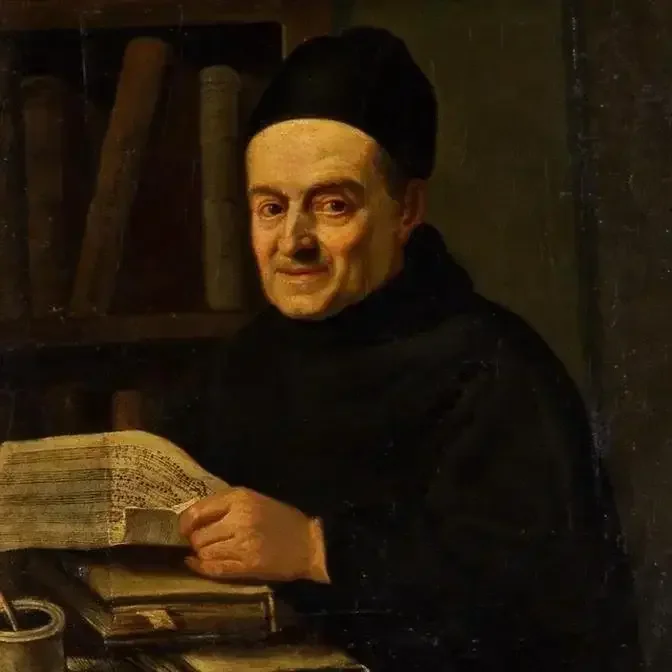
Buon compleanno Nicola Antonio Porpora! 🎉🎭
Composer: Nicola Antonio Porpora (1686-1768)
Work: Letatus a più voci con Istrumenti (1744)
Performers: Isabelle Poulеnаrd (soprano); Choeur Éclаts; Les Pаssions; Jean-Marc Andriеu (conductor)
Letatus a più voci con Istrumenti (1744)
1. Laetatus sum 0:00
2. Quia illic sederunt 4:21
3. Fiat pax 7:48
4. Gloria 9:35
5. Sicut erat 12:40
Painting: Nicola Maria Rossi (1690-1758) - Viceroy Harrach departs from the Royal Palace of Naples
HD image: https://flic.kr/p/2rnLTvQ
Painting: English school - Portrait of Nicola Antonio Porpora
HD image: https://flic.kr/p/2naG8Px
Further info: https://www.amazon.com.be/-/en/dp/B000VX1QQS
Listen free: https://open.spotify.com/album/04ivdgRaOSHPd88PfRVmyr
---
Nicola (Niccolo) Antonio (Giacinto) Porpora [Purpora]
(Naples, 17 August 1686 - Naples, 3 March 1768)
Italian teacher and composer. Son of a bookseller, Carlo Porpora, and his wife Caterina, he attended the Conservatorio dei Poveri di Gesù Cristo from 29 September 1696. At age 22, he composed his first opera, 'L’Agrippina' (1708), but after that, the presence in Naples of the great Alessandro Scarlatti prevented advancement in the theater. But in 1711, he was employed as maestro di cappella for Prince Philipp Hesse-Darmstadt, then residing as military commander in Naples, and then for the Portuguese ambassador in Rome from June 1713. From 1715 to 1722, he was a teacher at the Conservatorio di San Onofrio. Among his pupils were the poet and librettist Pietro Metastasio, the composer Johann Adolph Hasse, and the celebrated castrati Antonio Uberti (known as “Porporino”), Farinelli, and Caffarelli. His most important teaching post was in Venice at the Ospedale degli Incurabili, the famous music school for girls, from 1726 to 1733. In 1733 he went to London as chief composer to the Opera of the Nobility, a company formed in competition to Handel’s opera company. In London he wrote five operas, among them 'Polifemo', 'Davide e Betsabea', and 'Ifigenia in Aulide', with parts for his remarkable pupil Farinelli. When the Opera of the Nobility and Handel’s company closed, Porpora left England, in 1736. He subsequently taught in Venice and Naples, where he produced several comic operas. In 1747 he was in Dresden and from 1748 to 1751 was chapelmaster there. He went to Vienna in 1752, where he gave composition lessons to the young Haydn, and in 1758 returned to Naples. A revision of his opera 'Il Trionfo di Camilla' (first produced 1740) was given there in 1760 but failed, and Porpora’s last years were spent in poverty. In addition to about 50 operas, he composed a number of oratorios, masses, motets, and instrumental works.