
Johann Schobert (c.1720-1767) - Concerto II Pour le clavecin
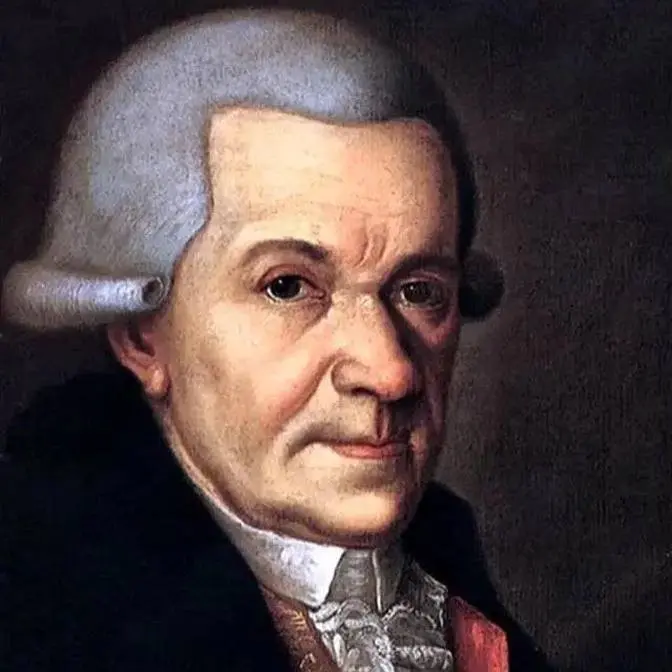
Consider to support this project on https://ko-fi.com/michaelhaydn
★ WORLD PREMIERE ★
♫ Recovery project of sheet music by Johann Michael Haydn (1737-1806) and by other neglected composers ♫
Composer: Johann Schobert (1720-1767)
Work: Concerto (II, Es-Dur) pour le clavecin Avec accompagnement de deux Violons, Deux Oboe, Deux cors de chasse ad libitum, Alto et la Basse... op. XII
1. Allegro moderato 0:00
2. Adagio (tacet)
3. Menuetto 9:31
Software: Sibelius + Instruments samples
World Premiere: Yes
Sheet music (pdf): https://s9.imslp.org/files/imglnks/usimg/7/7f/IMSLP256433-PMLP415574-Schobert_Harpsichord_concerto_Eflat_Op12.pdf
Sheet music (full concerto): https://www.mediafire.com/file/pgewgo69gukuf08/SCHOBERT-ConcertoII.rar/file
---
Johann (Jean) Schobert
(Silesia?, 1720 or c.1735 - Paris, 28 August 1767)
German composer and keyboardist. Nothing is known about his origins or youth; there is differing information on his birth date, which ranges from 1720 to 1740. Gerber’s Historisch-biographisches Lexicon der Tonkünstler, however, gives Strasbourg as his place of birth (though the name occurs in no contemporary Alsatian records), and Schubart in his autobiography claimed Schobert as a kinsman, supposedly from Nuremberg. Schobert first appeared in Paris in 1760, where he began a career as a keyboard virtuoso, eventually publishing 20 sets of works. In 1761 a few of his pieces appeared in the pasticcio Le tonnelier, and in 1765 he unsuccessfully attempted to become a composer of opéra comique with the comedy Le garde-chasse et le braconnier. He found employment with Louis François I de Bourbon, Prince of Conti, however. Throughout his career he achieved some fame for his expressive performances and works, in addition to being a rival of Johann Gottfried Eckard. He died along with his family, a servant, and four friends as a consequence of eating poisonous mushrooms. His musical style was influenced by that of Mannheim, although he was noted for his expressive melodies. His works include 21 violin sonatas, six symphonies, seven trio sonatas, five harpsichord concertos, three keyboard quartets, and several sonatas and miscellaneous works for harpsichord. Schobert greatly influenced Wolfgang Amadeus Mozart, who admired his music warmly. The work which most impressed the seven-year-old composer seems to have been the D major Sonata of op.3; imitation of this sonata and others can be traced in Mozart’s subsequent Parisian and English sonatas. Movements from Schobert’s sonatas also appear recast in Mozart’s earliest piano concertos. His fascination for Schobert’s music was not merely fleeting: when Mozart was in Paris in 1778 he taught his pupils Schobert’s sonatas, and the A minor Sonata k310, composed in Paris, contains in its Andante an almost literal quotation from a movement of Schobert’s op.17 no.1 that Mozart had already arranged years before in a concerto.