
Ancient India’s Genius: Zero, Surgery, Nalanda & More! PhiloSophic | Hindi
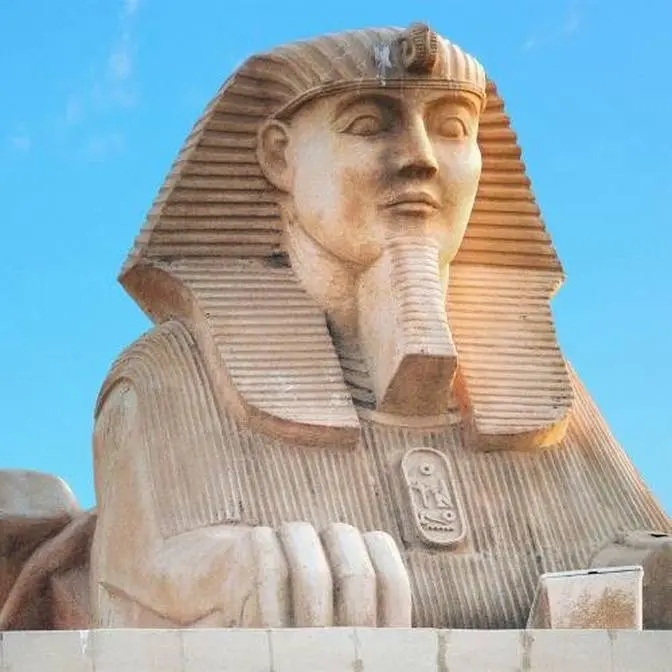
Greece was once upon a time.
It's gone.
Egypt was once upon a time.
It's gone.
Babylon was once upon a time.
It's gone.
So many civilizations came and went.
But India, whose tradition is so old,
still has its existence.
Mark Twain writes,
India is the sustenance of the human race.
It is the place where the human language was born.
India's land is the mother of human history.
It is the grandmother of great stories.
And it is the grandmother of traditions.
India has been the treasure of the most precious
and most creative things in human history.
In this video, we will learn 7 interesting facts
related to India's ancient history.
Number 1.
Archaeological evidences show that India's city Varanasi
is one of the oldest cities in the world,
which is still in existence.
It is also called Banaras.
And in Rig Veda, it is called Kashi.
By the way, Banaras is believed to be at least 3000 years old.
But according to Hindu mythology,
Lord Shiva had established this city 5000 years ago.
And you will be surprised to know that
when Lord Buddha came to Kashi 2500 years ago,
it was still called the ancient city.
Out of the 7 holy places of Hinduism,
Kashi is considered the holiest.
Even in Jainism and Buddhism,
Kashi is a very holy place.
Number 2.
Takshila University is the world's first university.
It was established 700 years before Jesus
in the ancient city of Takshila in India.
Today this place is present in Pakistan.
More than 10,500 students studied in Takshila.
Science, math, medicine, politics,
astrology, astronomy, music, religion and philosophy
more than 60 subjects were taught here.
Scholars of different subjects had their own ashrams here.
Our famous economist and philosopher
Vishnugupta Chanakya was a teacher in Takshila.
When Chinese traveler Fahian came to India in the early 5th century,
he also visited Takshila.
He has also mentioned Takshila in his writings.
From the 7th century BC to the 5th century,
this great university of India flourished well.
By the 6th century,
foreign invaders completely destroyed Takshila.
Number 3.
In the matter of education,
today India is behind many countries in the world.
But there was a time
when India's Nalanda University
was the most important center for higher education in the world.
Nalanda was a well-organized university than Takshila.
Students from countries like Korea, Japan, China, Tibet, Indonesia,
France and Turkey used to come here to study.
Entrance exam of Nalanda University was very difficult.
The most information we get about Nalanda today
is from the writings of the famous Chinese travelers,
Huayen Tsang and Itsing.
Who came here in the 7th century.
Huayen Tsang spent two years of his India trip in Nalanda.
Initially he lived here as a student.
Then later he also taught here.
Huayen Tsang writes that
when he came to Nalanda,
there were 10,000 students and 1,510 teachers.
It is assumed that
at one time our great mathematician Aryabhatta was the head of Nalanda.
Nalanda had a huge library for the study of thousands of students and scholars.
This library had more than 300,000 books.
At the end of the 12th century,
the Turkish invader Bakhtiyar Khilji
completely destroyed Nalanda by burning it.
At one time, Nalanda used to be a great university.
Today, only its ruins are left.
India's history began with the birth of the Indus Valley Civilization.
It was one of the three oldest civilizations in the world.
Mesopotamia, Ancient Egypt and Indus Valley Civilization.
And if we compare it with the civilizations of Ancient Egypt and Mesopotamia,
then the Indus Valley was the most widespread civilization.
If we talk about infrastructure and town planning,
then the Indus Valley Civilization was a very advanced civilization at that time.
It is believed about the Sindhu Valley Civilization
that this civilization existed from 3300 BC to 1300 BC.
But new discoveries show that this civilization can be at least 8000 years old.
Until 1920, we did not know anything about this civilization.
In the 1920s, when the Indian Archaeological Department excavated the Indus Valley,
we found the remains of two old cities of this civilization, Mohenjodaro and Hadappa.
Only after this did we learn about the Indus Valley Civilization.
Mohenjodaro and Hadappa, both these sites are in Pakistan.
Very little information has been found about the Sindhu Valley Civilization.
And many questions still remain to be answered.
Number 5. Zero was invented in India.
Two great Indian mathematicians, Braham Gupta and Aryabhatta, are credited for the invention of Zero.
And those who are called Arabic numerals today,
they were not invented in Arabia.
But in the 6th and 7th centuries, they were invented by Indian mathematicians.
The people of Arabia and India called them Hindu numerals.
Al-Kindi, who was an Arab mathematician,
and Al-Khwarizmi, who was a Persian mathematician.
It was through their writings that the Indian numeral system reached Europe.
And that's why later Europeans started calling them Arabic numerals.
Einstein writes,
We are indebted to the Indians who taught us to count.
Number 6. Surgeries are so difficult.
And if you are in a time when scalpel was not even invented,
then you can't even imagine it.
2600 years ago, an ancient Indian physician used to perform complex surgeries.
Like cataract, kidney stones, artificial limbs, rectifying fractures, and even plastic surgery.
Sushruta is considered to be the first person to perform medical surgery on humans.
That's why he is also called the father of surgery.
Sushruta had written a Sanskrit text on Shalya Chikitsa,
which is called Sushruta Sahinata.
Sushruta Sahinata is considered to be the most important surviving ancient treatise written on Shalya Chikitsa.
And it is also considered to be the foundational text of Ayurveda.
Sushruta Sahinata has 184 chapters,
which mention 1120 diseases,
700 medicinal plants,
64 preparations from mineral sources,
and 57 preparations based on animal sources.
Besides this, many surgical instruments have been depicted.
In the 8th century, this great text of Sushruta
was also translated into Arabic by the name of Kitab Shah Shun Al-Hindi.
There was another great ancient Indian physician,
Maharishi Charak,
who came after Sushruta and 200 years before Jesus.
Charak is considered to be the first physician
who presented the concept of digestion, metabolism and immunity.
Maharishi Charak's medical treatise, Charak Sahinata,
is considered to be the encyclopedia of Ayurveda.
Number 7
It is surprising that the desire to discover this country made one discover America.
Columbus, who had set out for India,
accidentally reached America.
And just a few years after Columbus,
Vasco da Gama became the first European to set foot on Indian soil.
So that's all for this video.
If you like the video, then like and share it.
And to watch such videos related to history,
subscribe to the channel and press the bell icon.
So see you in the next video.