
A Brief History of Japanese Art | Behind the Masterpiece
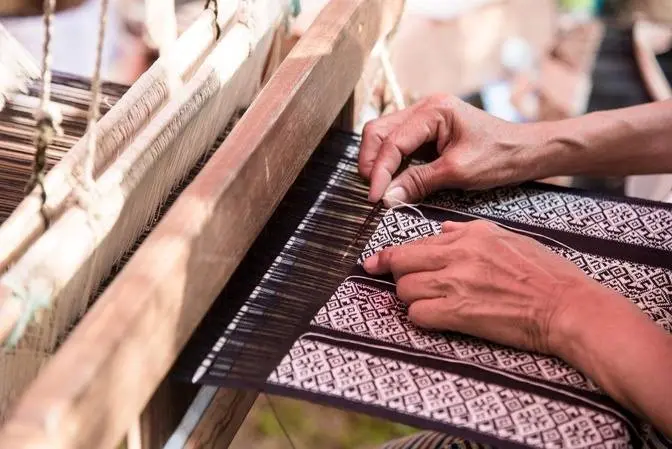
Japan's artistic legacy is marked by an extensive and multifaceted history,
tracing back many centuries. It often reflects a deep appreciation for nature,
including human nature, through subject matter and artistic approach.
Japanese artists have a talent for adapting and integrating elements of foreign culture
that align with their aesthetic preferences, allowing them to continually evolve and enrich
Their art contains a wide range of opposing elements, such as ornate and minimal designs,
old and new styles, and colorful and subtle hues. And the challenge of understanding it all
only makes it more intriguing. The Jomon period marks Japan's earliest known artworks.
As this was their Neolithic period, people were constantly on the move,
gathering and hunting for food as they migrated with the changing seasons.
The term Jomon comes from the cord pattern technique in this period's pieces.
The Jomon people were skilled potters that made beautiful figures by pressing twisted cords into
wet clay before baking it. This left intricate cord patterns on the clay.
The artists of this time also created small clay figurines called Dogu.
Commonly measuring at 3 to 11 inches in height, they often depicted women with exaggerated
features. Some even had tattoo-like markings on their faces, chests, and shoulders,
which were likely made through incisions with bamboo.
One of the most celebrated Dogu is the Jomon Venus,
a fertility goddess made of clay and measuring at 11 inches.
Another type of Dogu is the Shakuki, which are known for their large eyes resembling snow goggles
and small holes for a nose and mouth. Many of these figurines have exaggerated chests and thighs,
as well as incised details on their abdomen and intricate headpieces.
Like other prehistoric cultures, the Dogus are portrayed in frontal poses.
Discovered in burial sites, these artifacts seemingly played a role in ceremonial practices.
And although their exact purpose remains unknown, experts believe that some were fertility symbols
to help in childbirth, while others served as protective talisman for their bearers.
Looking at these two works, some of the earliest in Japan's history,
we catch a glimpse into the daily lives and cultural practices of the Jomon people,
and see that they likely held deep-seated beliefs in the power of these figurines.
During the Heian period, the capital of Japan was moved to Kyoto, and there was an emergence
of a new aristocratic class, largely owing to the influence of the Fujiwara family.
Acting as regents for the emperor, the Fujiwara family consolidated their control over the state
and exerted their influence over both political and cultural spheres.
This stability allowed for the formation of a leisure class of court members,
who were free from political obligations. And so they focused on artistic and cultural pursuits,
the fruits of which have had a lasting influence on the course of Japanese art history.
Following several centuries of exchange with China, Heian artists developed a new painting
style called Yamatoe. It was uniquely regarded as Japanese as opposed to foreign, and was primarily
done on folding screens and room partitions, which were difficult to preserve. The subjects
were often of Japanese landscapes, poetry, history, and mythology. Some Yamatoe paintings were created
as illustrated handscrolls called amaki, which were used to depict literary classics like the
Tale of Genji. Written by Lady Murasaki Shikibu, the Tale of Genji is considered to be one of the
greatest works of literature, and is often called the world's first novel. Unlike screens or sliding
door panels, these illustrations could be safely rolled up and stored away. Because of this,
several early examples still exist today. Created by various artists over the centuries,
the Tale of Genji is a long and complex tale that follows the life and relationships of Prince Genji
and the women in his life. The novel's most compelling illustrations were not necessarily
literal, but rather those that artfully selected imagery to engage the reader's imagination.
These illustrations exemplify how the interplay between text and image can be complementary,
not redundant. Rather than using facial expressions which would go against the refined
aesthetic of the court, the artists convey mood through carefully posed figures, fresh and bright
colors, and the masterfully depicted architectural elements as the viewers gaze from above into
roofless rooms. The Kamakura and Nanbokucho periods were a time of political and social
change in Japan. By the second half of the 12th century, the Fujiwara's dominance had declined,
and political power shifted from the noble class to military landowners in the provinces.
This new warrior ruling class controlled the country from their base in Kamakura,
near modern-day Tokyo. After almost 150 years of power, supporters of an opposing coalition who
wanted to return political power to the throne toppled the Kamakura regime, but their rule was
short-lived. And so the Nanbokucho period, which was a time of constant strife, began as a previous
ruling party was pushed out and seeked refuge in the south, and was replaced by a new military
government that took control in the north. As society became more divided and violent, people
became increasingly pessimistic and turned to Buddhism in search of hope, leading to a widespread
popularity of the religion. This period saw a change in the way people appreciated art. The
rise of Buddhism coincided with the warrior class embracing their newfound roles as patrons of the
People's appreciation of art evolved, and they were drawn to works that exuded sincerity and vigor,
leading to a more realistic style. Temples and other religious buildings were adorned with
Buddhist sculptures and paintings, and artworks depicting samurai often portrayed them embodying
the ideals of bushido, the code of conduct followed by the class, characterized by strength,
courage, and unwavering loyalty. The most famous statue of this period is the Great Buddha of
Kamakura. Situated at the Kotokuin Temple in Kamakura, this statue portrays Amitabha,
the Buddha of Eternal Life. He is a significant figure in Mahayana Buddhism, which spread from
India to East Asia. It teaches enlightenment by reincarnation, and is the most popular form
of Buddhism in Japan today. It stands tall at 43 feet and weighs over 200,000 pounds.
This monumental hollowed piece is not only one of the world's largest bronze statues,
but it is also a renowned iconic landmark that attracts visitors from all over the globe.
You can even go inside. As you enter, a sign reads, Stranger,
whosoever thou art, and whatsoever be thy creed, when thou enters this sanctuary,
remember thou treads upon ground, hallowed by the worship of ages. This is the temple of Buddha,
and the gate of the Eternal, and should therefore be entered with reverence.
Due to its size, it could not possibly be cast in one piece, and so casting experts
used very skillful techniques to create it in layers and connect all of the pieces together.
These graded castings resulted in parallel lines on the statue's surface,
which we can see here. The sheer level of craftsmanship that went into creating this statue,
which requires specialized techniques and intense labor,
makes it a testament to the dedication and the talents of the artists of this time.
He sits there in the open air, majestic and serene, towering over the landscape as his face
turns towards the peaceful waters of the ocean. We can almost feel the calm and the grace that he
emanates, knowing he represents something truly special and meaningful to those who worship at
its feet. Another important artwork of this period is the night attack on the Sanjo Palace,
a scene from a century earlier. This 23-foot illustration is done on a handscroll in the
This medium is traditionally suited for narrative paintings, and we can see why.
The illustration is depicted from a bird's eye view of the action,
as it unfolds from right to left, the story's beginning and its end.
A handscroll is similar to a book in that it is a small personal object
that is meant to be held and viewed upon close, by only a few people at a time.
Its intimate size and format invite viewers to hold the painting in their hands,
and get lost in the story as it unfurls before them.
It is rare to find a work of art that so vividly depicts the violence and emotions of war as this
piece. As you gaze upon the painting, your eyes cannot help but move from one vivid detail to
the next, and you are powerless to resist the sense of urgency and crisis. The opening section
shows a panicked crowd rushing towards the palace, mirroring the viewer's own anxiety and
curiosity. In the next section, the attackers are shown forcing the Emperor and his sister
into an ox-drawn carriage. This scene is that of a massacre, as the attackers kill and injure
anyone who tries to escape. The flames and the smoke are vividly depicted, adding to this sense
of chaos and destruction. The scroll ends with the attackers taking off with the abducted Emperor.
The text introducing the scroll in the far right describes the tragic fate of those who tried to
escape. The ones that took to the well drowned at the bottom, those in the middle of the scene
suffocated, and the ones at the top burned to death. This scroll is a prime example of the
otokoe style, or men's paintings, which were known for their action-packed and dynamic depictions of
events. They were typically created by male artists for male audiences, and captured the
energy and intensity of battle. This was done through detailed and realistic depictions of
weapons, armor, and the movements of combatants, intensified by bold and expressive brushwork.
This period also led to the creation of sumie. Directly translating to ink picture, it is a form
of brush painting that uses black ink and water to create monochromatic compositions.
This style is an important part of the Zen tradition, and is often associated with Zen Buddhism.
Inspired by this religion's focus on mindfulness and the present moment, ink paintings often
depict simple and minimal compositions that highlight the essential elements of the subject
matter, and omit all unnecessary details. With just a single brush stroke, sumie artists capture
the essence of their subjects in a dynamic and expressive art form that is full of spontaneity
and energy. Sesshu, a Japanese painter and a Zen monk, is known as the master of sumie.
His painting, View of Amanohashidate, captures the natural beauty of this sandbar,
whose name directly translates to bridge to heaven. Near the center, we can see the white
sandbar, pine trees, and the Chionji temple. At the top is the Sea of Aso, and on its shores
lie the town of Fuchu and its temples and shrines. Near the bottom in the foreground
is the Bay of Miyazu, which is slightly hidden by a mountain range. The soaring peak of this
entire scene is a massive mountain that houses the Nariaiji temple, a sacred ground. The use of
a high vantage point like this does not exist in reality, but is used to emphasize the magnificence
of this scene. The brush strokes look as if they were created in a single sitting.
Appearing somewhat rushed, they give the painting a sense of movement and aliveness.
This piece captures the essence of Japan's natural beauty in a way that is both aesthetically
pleasing and historically significant. At a glance, it transports the viewer to a time and
place far removed from their own, offering a window into the country's past. After the tumultuous
Kamakura and Nambokucho periods, Japan underwent a period of unification under the leadership of
Oda Nobunaga and his two successors. This period encompassed the transition of Japanese society
to a time of opulence and grandeur. Traditional temple architecture was replaced by lavish
castles and mansions. In fact, this period takes its name from the castles of Uzuchi and Momoyama,
the homes of Oda Nobunaga and Toyotomi Hideyoshi. They had two purposes, to be
fortresses of defense and to stand beautifully as a symbol of unification. The Kano school,
which is known as the most influential school of painting in Japanese history,
created exquisite large-scale paintings to embellish the castle walls. This school's
works were often commissioned by the ruling class and were known for their ornate style.
Cypress Trees is a prime example of this lavish style. It has been attributed to the Japanese
painter Kano Itoku, a prominent patriarch of the school. This piece is done on a multi-panel
folding screen that is used to divide and enclose private spaces. Against the gold-leaf background
of clouds, the screen is filled with a massive tree and its spreading branches. By simplifying
the background and minimizing the number of colors, the artist has emphasized the commanding
presence of the cypress tree. The dark blue waters of a pond peek out of the gold and run across the
The tree bark is depicted with energetic brushstrokes, adding to the overall dynamic
feel of the work. The might of the tree we sense here reveals both the artist's passionate spirit
and the boundless desires of this period's leaders. The Edo period, also referred to as
the Tokugawa period, was the final one of traditional Japan. During this time, the country
was under the rule of Tokugawa Shogunate, the military government that was in charge for over
two and a half centuries. The country was finally without war. It was a time of political stability
and economic growth for Japan's cities, particularly for Edo or present-day Tokyo.
For nearly three centuries, Japan's borders remained closed, which allowed the country's
culture, customs, and ways of life to thrive in isolation. This is reflected in the art forms that
continue to be practiced today, such as ukiyo-e, kabuki theater, and haiku poetry. Ukiyo-e,
often translated as pictures of the floating world, refers to the genre of Japanese woodblock
prints and paintings that flourished during this time. Many pieces of this style depict
the pleasure-seeking culture of the period. They capture the alluring beauty of courtesans
and the talents of celebrated kabuki actors. This was the first major art movement in Japan
that was not supported by the ruling class or aristocracy. It marked a new era in Japan's art
history, created by and for the merchant class, reflecting their cultural values and identity.
Ukiyo-e helped forge a unique Japanese aesthetic and national identity,
and with time the subject matter expanded to include landmark scenery and historical events.
The essence of the ukiyo-e style is embodied in the works of Utamaro, Hokusai, Oe, and Hiroshige.
Hokusai's ukiyo-e artworks are known for their bold, distinctive style and dramatic compositions.
His series 36 Views of Mount Fuji is widely regarded as one of the most iconic and influential
series in Japanese art history. You might recognize his most well-known piece in this series,
The Great Wave Off Kanagawa. Described as possibly the most reproduced image in the
history of all art, Hokusai captures the power of nature through the depiction of three boats
navigating rough seas with Mount Fuji in the background. The sea dominates the composition.
As the large wave spirals in perfect form, it takes center stage, providing a backdrop that
allows us to catch a glimpse of Mount Fuji in the distance. The dark shade surrounding the mountain
suggests the painting is set in the early morning, as the sun rises and begins to cast light on the
The scene is composed of curves. See how they flow through the painting,
all repeating the pattern of the big wave, starting at the surface and rippling out within
the water. It is as if the whole scene is alive, constantly in motion, and the curves are the very
heartbeat of the entire picture. There's a stark contrast between the background and the foreground.
The violence of the great wave is set against the tranquility of the empty sky,
a kind of balance. Man, powerless and at the mercy of nature, is depicted struggling between
these two forces, as the stranded boats are swept away by the giant wave.
The great wave off Kanagawa has two inscriptions. The title of the series is in the upper left
corner, which reads 36 views of Mount Fuji on the high seas in Kanagawa, under the wave. And
Hokusai's signature is to the left of the box, which translates to from the brush of Hokusai,
who changed his name to Litsu. Hokusai came from humble beginnings and had no surname,
but he changed his name over 30 times throughout his career, never starting a new cycle of work
without changing it. And so people often use his name to identify different styles and periods of
On his tombstone, his final name was Gakkyo-rojin-monji, which means old man mad about painting.
This piece, though unintended, showcased his mastery over perspective, depicting Japan's
largest mountain as small yet mighty, as eyes are drawn to its snow-capped peak.
But that's not all. This piece became a symbol of Japanese art and swept across the western world,
inspiring Impressionists and Post-Impressionists with its bold lines and Prussian blue hues.
In the 1850s, as power changed hands, Japan ended its isolationist foreign policy
and opened trade with the West. Ukiyo-e prints, including the landscapes of Hokusai,
introduced Westerners to the vibrant style of Japonisme. Coined by the art critic and collector
This term refers to the popularity and influence of Japanese art on Western art and design.
They were fascinated by the unique use of color and composition in these prints,
and drew inspiration from them. This movement influenced famous artists like Degas, Manet,
Monet, Van Gogh, and Toulouse-Lautrec, and even had a lasting broad impact on modern art movements
like Impressionism and Art Nouveau. Yet Hokusai's influence did not stop there.
His daughter, Katsushika Oe, an accomplished artist in her own right, honed her craft under
his guidance. While her sisters married and left the workshop, she remained independent.
She gained recognition, including that of her fathers, for her talents in depicting women.
Her success challenged the patriarchal norm of her time.
Women were typically excluded from the art world, but Oe's talent was undeniable,
so much so that her peers put aside societal expectations and revered her as a highly
accomplished artist. We can see why here. Night scene in the Yoshiwara is a captivating Ukiyo-e
depicting the lively atmosphere of the red-light district. The painting portrays a group of women
and their clients in a brothel setting, surrounded by an exquisite interior and intricate details of
the establishment. These women's roles were well known by society, but all else about their lives
was left to the imagination. The streets are illuminated by lanterns revealing the figures
that live in the shadows. Each person is depicted in a unique pose that exudes a palpable sense of
Oe's use of bold lines and deep contrasts give this piece a striking visual impact.
The black of the night is contrasted with the warm orange glow of the lanterns, which cast
deep shadows and create a sense of depth and atmosphere. The most important accomplishment
of this piece is that the women are depicted with grace and elegance. Despite their societal status
as courtesans, their postures convey a sense of confidence and self-assurance. Another important
Ukiyo-e artist is Kitagawa Utamaro, best known for his portraits of women with exaggerated
elongated features. His most famous work is the series 10 Studies in Female Physiognomy,
where the subjects are beautiful and fashionable women of different social classes.
You might recognize this particular print here, Women Wiping Sweat. Using the Ukiyo-e portrait
style called Ukubie, which Utamaro first introduced, the artwork focuses on the head or
upper body of the subject. This method emphasizes the subject's facial features, making it the only
focal point. With a bare background, the setting becomes unimportant, putting the spotlight solely
on the subject's face. This piece shows a woman wiping sweat from her brow, with a gentle and
introspective expression on her face. The composition is characterized by the use of
negative space and the careful placement of the woman's hand and the cloth she is using to wipe
her brow. What's also interesting is Utamaro's use of tones. He masterfully uses muted colors
alongside the subject's vivid red lips, accentuating her facial features and echoing
the Edo period's beauty standards. This piece is a perfect representation of Utamaro's work
in the Bijinga, the art of depicting beautiful women, which was popular in Japan's late Edo
period. He left a lasting mark on the way women were depicted in Japanese art, shaping the way
future artists approached the subject. A fellow artist of Katsushika Oe's in this period was none
other than Hiroshige. He is often referred to as the last great master of the ukiyo-e form,
and his most famous work, Sudden Shower over Shinohashi Bridge and Atake, is a standout piece
in the series 100 Famous Views of Edo. This collection of works was the first of its kind
because it featured multiple unique landscape views. Commissioned shortly after the 1855 Edo
earthquakes and fires, it showcased newly reconstructed buildings, celebrating the
community's resilience while captivating citizens with the city's ongoing progress.
Vincent van Gogh was fascinated by ukiyo-e prints and was known to have collected and studied them,
including works by Hiroshige. He was particularly drawn to this piece, which he reinterpreted in
oil as Bridge in the Rain, and we can see why it has been so inspirational. This print captures the
trauma of a rainstorm on the Ohashi Bridge. Hiroshige brings to life the familiar feeling
of sudden showers and the chaos that comes with it. He invites us to experience the scene for
ourselves. The bridge is the central focus of the print. Its curves make for a beautiful subject for
artistic interpretation. In the foreground, we see people seeking shelter from the rain
as they cross the bridge using umbrellas, mats, and straw hats to shield themselves.
The raindrops are masterfully brought to life in this woodblock carving through the use of thin,
dark parallel lines arranged in two directions. A remarkable accomplishment in this challenging
medium. In the background, a boatman navigates the Sumida River as dark clouds gather in the sky,
adding to the sense of drama and movement in the scene. Japan's modern period, which comprises of
Meiji, Taisho, Showa, and Heisei periods, began with the Meiji Restoration in 1868.
This pivotal political event signaled the end of the Edo period and re-established practical
imperial rule under Emperor Meiji, putting an end to Japan's isolationist policies
and abolishing the strict class system. This led to a more democratic society and cultural
exchange with the West, which helped Japan modernize and become a more prosperous nation.
It also inspired many artists to experiment with new media and techniques in their art,
reflecting the country's newfound openness and creative energy.
With the death of Emperor Meiji came the ascendance of his son, Prince Yoshihito. The
recently crowned emperor introduced his era name, Taisho, which translates to Great Righteousness,
to mark the beginning of his reign. During this time, the country continued its trend of
adopting foreign influences while participating in World War I. Amidst this backdrop was Tomioka
Tessai, a painter and a calligrapher. He was known as the last major artist in the Nanga tradition,
which is an artistic style that arose from a passion for Chinese culture
and a desire to promote a more refined and intellectual approach to life and art.
These paintings were usually done in black ink and used calligraphic linework and delicate
brushwork to depict beautiful landscapes or scenes of everyday life, often with naturalistic details.
They also regularly included poetry and inscriptions, added by friends of the artist
to complement the work. We can see elements of this artistic style here, Eibu no Nakamaru writing
As the silk canvas stretches before us, a serene landscape unfolds in muted shades of beige,
with bursts of vibrant red and green adding an unexpected pop of color. We can see two figures
seated under a wooden pagoda. The figure on the left is holding a brush and a scroll,
as if in the process of composing. The one on the right is looking up at the moon in the sky.
The pagodas are painted in rich warm tones of reds and deep blues, giving the painting a sense
of comfort, warmth and tranquility. The overall effect of this piece is one of peaceful contemplation
and a sense of nostalgia. A defining work of the Showa period is Fujishima Takeji's Sunrise Over
the Eastern Sea. He was a painter who contributed to Impressionism and Romanticism within Yoga,
a style of art that depicts Japanese subjects, themes or landscapes using European techniques
and materials. In 1905, Takeji visited France, where he was inspired by the art movement of
the time, particularly Impressionism, the influence of which is evident in this painting.
It was commissioned for Emperor Showa, the longest reigning Japanese emperor,
and is meant to celebrate his rise to power with a sunrise theme.
Takeji journeyed from the north of Honshu to the southern colony of Taiwan,
from the sea to the mountain, seeking the perfect sunrise.
The composition of this painting is quite simple, with only a sailboat, the sea and the sky,
and the color palette is minimal, working together to create a warm and vibrant atmosphere.
We can see that Takeji's objective with this painting was to create a sense of simplicity,
and he's done a great job. As we gaze upon this painting, a feeling of calm and serenity
surfaces, with the sunrise serving as a symbol of hope and new beginnings.
Another pioneering artist of Japan's modern period is Uemura Shōen. She challenged gender norms
and rose to prominence during the Meiji, Taishō and Showa periods. As one of the first female
painters of her time, she broke through traditional barriers to become a prominent figure in the art
world. She began studying painting at the age of 12 under the tutelage of Chinese-style landscape
painter Suzuki Shōnen. She drew inspiration from Japanese woodblock prints and became famous for
paintings of women, or bijinga. In fact, she was a major innovator in this genre of Japanese art,
portraying the more modern statuses of women in Japan. She received several awards and
recognitions during her lifetime. She was the first female recipient of the Order of Culture
Award and was even appointed as the Imperial Household's official artist. Despite being
criticized during her time, her work celebrated the beauty of traditional female standards
and paved the way for future female artists. Her impressive body of work includes a masterpiece
called Large Snowflakes, which captures a snapshot of two women that are caught in an unexpected
snowfall. They gracefully hold their umbrellas that appear almost weightless against the sky
that surrounds them. One of them is covered with a blue-violet cape that conceals her head,
mouth, and ears, while the other lifts her brightly colored kimono to move faster.
Uemuro's use of negative space is particularly impressive as it conveys the sensation of the
chilly weather our subjects feel. She has the exceptional ability to create sophisticated
yet understated images that evoke both a sense of realism and poetry. Through her pieces,
she expresses her desire to create art that portrays women beyond traditional beauty standards,
saying,
An important artist from the contemporary age of Japan is the world-famous Yayoi Kusama.
She was born in Matsumoto, Japan and trained at Kyoto City University of Arts.
She spent her formative years in Japan but was inspired by American abstract expressionism.
And so in 1958, she moved to New York City and became a part of the vibrant pop art movement.
In the 1960s avant-garde art scene, Kusama was a trailblazer as one of the first Japanese artists.
Her willingness to openly discuss her struggles with mental illness and her unique eccentric style
made her a standout figure in the public eye. Emerging as an artist during a time of significant
social and cultural change in Japan, her works reflected this upheaval by exploring themes of
sexuality, femininity, and identity. She used unconventional materials and mediums to challenge
traditional artistic conventions. You might recognize one of her most popular series,
Polka Dots. These works are centered around dots that represent the cosmos, infinity,
and the interconnectedness of all things. For Kusama, the dots are a cornerstone of her artistic
career, drawing from her own hallucinatory experiences and her desire to immerse and
They also serve as a unifying element across her diverse body of work,
from paintings and sculptures to installations and performances. Her use of polka dots played
a pivotal role in the evolution of Japan's art history, challenging the dominant male-centric
art scene and contributing to the rise of feminist and avant-garde art movements.
Through her exhibitions and collaborations with prominent artists and institutions in the West,
Kusama helped to bring Japanese contemporary art to the international stage.
Japan's artistic legacy is a rich tapestry of creativity that transcends traditional forms.
The art of tattooing, bonsai carving, manga, and kintsugi all represent a sublime expression of
the country's unique aesthetic. Each and every art form weaves a distinct thread into the fabric
of Japan's artistic tapestry, creating stunning masterpieces that continue to inspire and
captivate the world, capturing the hearts and minds of all who have the chance to experience it.
I hope you enjoyed this video and thank you for liking and subscribing if you already have.