
When Did Life First Emerge in the Universe? | Space Documentary 2025
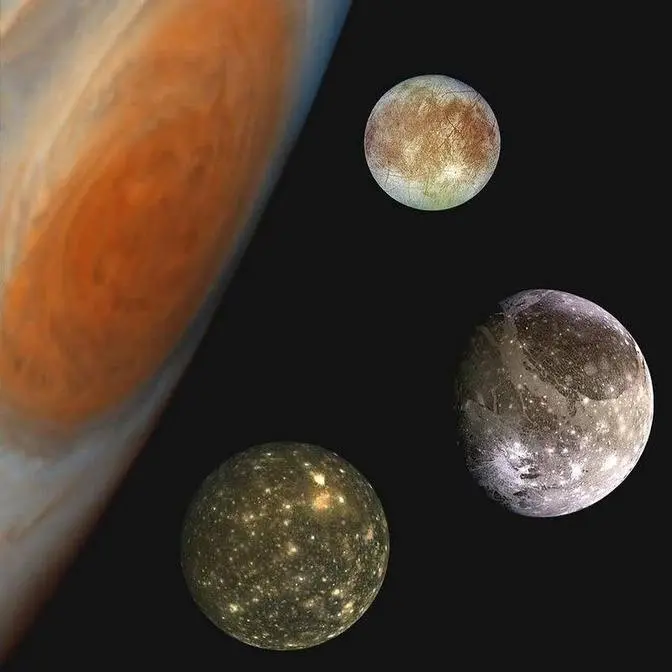
#space #spacedocumentary #universe #theuniverse #howtheuniverseworks #htuw When did life first emerge in the universe? This question takes us on a journey back to the earliest cosmic epochs, exploring the conditions that may have allowed life to begin just a few hundred million years after the Big Bang. In this compelling space documentary, we examine the formation of the first stars, planets, and essential elements, and consider whether life could have developed long before Earth even existed. With insights from astrobiology, cosmology, and exoplanet science, discover how the ingredients for life may have assembled in ancient galaxies and what that means for our place in the cosmos.
What is life? Is it something that
breathes, that moves, that simply
exists? Or is it something far more
elusive? If a strange microbe were
staring at us from a Martian rock, would
we even know it was alive? And if life
thrived in the oceans beneath Europa's
icy shell or floated in Titan's methane
skies, would we recognize it when we saw
it?
Close your eyes and imagine a tiny rock
lying in the frozen silence of
Antarctica. Just another stone half
buried in the windswept snow drifts of
Allen Hills. But this one, this one came
from another
world. Robera Score, a lab manager from
NASA's Johnson Space Center, was out
there in the white void when she found
it. At first glance, it looked like any
other meteorite. But when scientists
brought it home, examined its chemistry,
and matched its fingerprint to the
Martian surface, it revealed its true
origin,
Mars. And inside this unassuming piece
of ancient basaltt, something even more
profound, chain-like microscopic
structures uncovered through electron
microscopy features that resembled
fossilized organisms on Earth. Had we
perhaps discovered the first whisper of
life beyond Earth, locked in stone and
time, the single rock,
Alh84,0001, launched a storm of debate,
speculation, and wonder. Scientists
scrutinized every micron, every chemical
clue. Were these structures evidence of
Martian biology or just geology playing
tricks with our
expectations? But the rock posed a
deeper question. one still unanswered.
If life is out there, would we even
recognize
it? To search for life in the cosmos, we
must first ask what life truly is? How
do we define it without knowing what it
might look like elsewhere? What are the
universal signatures of life, if such
signatures even exist? Could life be
simple, hidden in dust or ocean spray?
Or could it be something far stranger
than anything we've imagined?
In this journey, we'll explore how
scientists define life not just as
something that eats or moves or
reproduces, but as a self-organizing
information storing system capable of
reaction, replication, and adaptation.
will venture from the chemistry of DNA
to the lost seas of early Mars, from the
cryogenic lakes of Titan to the boiling
vents of Europa's abyss, asking again
and again, "Is this where life
begins?" In December 1984, a small rock
resting on the ice fields of Antarctica
was picked up by Robera Score, a field
manager from NASA's Johnson Space
Center. To the untrained eye, it was an
unremarkable find. But
Alh8401, as it was cataloged, would soon
become one of the most controversial
meteorites in
history. Initially identified as a
meteorite, its chemical composition
later revealed something far more
astonishing. It originated from Mars.
This Martian exile had been launched
into space millions of years earlier by
a powerful impact event and had
journeyed silently through the solar
system before crashing into Earth and
resting undisturbed in the icy plains.
After its retrieval, scientists
conducted intensive studies and nearly a
decade later, a team led by physicist
David S. McKay made a startling
announcement.
Under electron microscopy, they observed
chain-like micro structures embedded
within the rock features they argued
could not be explained by abiotic
chemistry alone. These, they proposed,
were fossilized remains of Martian
[Music]
microorganisms. The world took notice.
NASA's announcement made global
headlines. Even President Bill Clinton
addressed the nation, framing the
discovery as a potential turning point
in human understanding of life in the
universe. But as the excitement cooled,
scrutiny
intensified. Other scientists pointed
out that such micro structures could be
formed by purely chemical processes
without any biological
involvement. The claim that
Alh8401 harbored Martian life began to
fracture under the weight of peer review
and alternative explanations.
Yet, even amid doubt,
Alh8401 continues to serve as a profound
reminder of a deeper question. Even if
alien life stood before us, would we be
able to recognize
it? The challenge of identifying
extraterrestrial life begins with the
challenge of defining life itself. To
date, scientific literature offers over
200 definitions, but most of these can
be distilled into a core framework
grounded in three essential
characteristics. First, life must
possess the ability to store
information. This means encoding details
about its internal state, structure, and
function in a stable medium. Second life
must catalyze chemical reactions.
It must interact with and respond to its
environment, acquiring energy, building
complexity and adapting to changes.
Third life must be able to replicate,
producing copies of itself that preserve
its structure and functions across
generations. The renowned physicist
Irwin Schroinger was among the first to
articulate these principles from a
physical perspective. He understood that
the transmission and preservation of
information lay at the heart of life's
persistence. From information comes
reaction and from reaction comes
replication. These processes together
enable what we observe as living
systems. Systems that move, metabolize,
respond, evolve, and above all
endure. A more concise but profound
definition was proposed later. Life is
that which undergoes Darwinian
evolution. It is the capacity for change
through selective pressure and inherited
variation that allows life to adapt and
thrive across a range of conditions. On
Earth, we see this manifest in all known
biological systems. Our own biochemistry
hinges on DNA for information storage.
RNA for information transfer and
proteins as functional
catalysts. DNA stores our genetic code.
RNA interprets that code and proteins
carry out the essential reactions of
metabolism and structure building.
Importantly, these molecules participate
in feedback loops. DNA can instruct the
creation of proteins that replicate DNA
itself. This elegant cycle is the
molecular heart of terrestrial
life. But when we seek life beyond
Earth, we are faced with the daunting
question, must alien life mirror this
same molecular choreography? If not, how
will we recognize
it? Even within Earth's biosphere, we
encounter ambiguous cases. Take viruses
for instance. They contain genetic
material and reproduce but only within a
host. They catalyze reactions but only
passively. Are they truly alive? Then
there is a biogenesis, the emergence of
life from
non-life. At some point on early Earth,
chemistry gave way to biology. Yet the
boundary between the two is neither
sharp nor well understood. It is highly
likely that early life lacked the full
DNA RNA protein
triad. One leading hypothesis suggests
that RNA alone may have been the first
self-replicating molecule giving rise to
the so-called RNA
world. Such primitive systems would be
almost unrecognizable to us today. And
yet they would meet the minimal criteria
for life. They would evolve. They would
interact. they would
replicate. To better understand what
extraterrestrial life might look like,
we must consider the physical and
chemical environments in which life is
likely to emerge. Solvents are are a
critical piece of this puzzle. Life as
we know it relies on a solvent to host
biochemical reactions, dissolve
nutrients, and mediate
transport. On Earth, that solvent is
liquid water.
Water has several remarkable properties.
It is chemically stable, capable of
forming hydrogen bonds, effective at
dissolving a wide range of compounds,
and maintains its liquid state over a
broad temperature
range. Early life on Earth almost
certainly relied on liquid water and
perhaps more importantly on moderate
temperatures that allowed water to
remain in its liquid state. Though
extremiles exist, organisms that thrive
in boiling vents or acidic lakes, the
origins of life likely occurred in more
temperate, chemically stable
environments. Moreover, early life
utilized the same elemental building
blocks that persist today. Carbon,
hydrogen, nitrogen, oxygen, phosphorus,
and sulfur.
Carbon in particular is a superstar of
molecular versatility capable of forming
stable and complex molecular structures
essential for information storage and
catalysis. The upshot is that early life
on Earth while primitive was not
entirely alien to us. It emerged under
familiar conditions using familiar
chemistry. Thus, it is reasonable,
though not guaranteed, to hypothesize
that life elsewhere in the universe may
follow similar
patterns. This hypothesis brings us back
to Mars. Billions of years ago, Mars had
liquid water on its surface, a thicker
atmosphere, and a temperate climate. If
life ever began there, it might have
been carbon-based, water dependent, and
similar enough to Earth life for us to
detect. And this is what made
Alh8401 so compelling. It could have
been a glimpse into an ancient shared
biological
heritage. However, beyond Mars, the
story grows more exotic. The icy moons
of the outer solar system offer new and
alien laboratories in which life might
exist. Europa and Enceladus both harbor
subsurface oceans beneath thick crusts
of ice. These oceans are kept liquid not
by sunlight but by tidal heating from
their host
planets. Here in total darkness, life
might rely not on photosynthesis but on
chemosynthesis, drawing energy from the
heat and chemicals emitted by
hydrothermal
vents? Could microbial life thrive in
these subsurface oceans feeding on
dissolved
nutrients? Could evolution produce more
complex organisms? Perhaps eyeless
creatures navigating by touch and echo
suspended in an alien
sea. Titan Saturn's largest moon
presents an even more bizarre
possibility. Its frigid surface is
dotted with lakes and rivers, not of
water, but of liquid methane and ethane.
At 180° C, water is as hard as rock. But
methane is fluid and could in theory act
as a solvent for a radically different
form of life. Could chemical reactions
proceed in such an environment? Could
life emerge with membranes, metabolism,
and replication, but without the warm
aquous chemistry of
Earth? The search for life in such
places pushes our definitions to their
limits. But even more extreme
possibilities beckon. Might life exist
that is siliconbased instead of
carbon-based? Might it use ammonia,
sulfuric acid, or even supercritical
carbon dioxide as a solvent? Could
quantum systems or unknown forms of
matter support a form of existence that
fulfills the criteria of life without
resembling anything we currently
understand. These possibilities remain
speculative. Our only confirmed example
of life is terrestrial. But as we begin
to explore these questions, our first
step must be disciplined. We must begin
with what we know. Thus, in the search
for the earliest life in the universe,
we ground ourselves in the strictest
definition. Life that uses water as a
solvent exists within a reasonable
thermal range and is based on carbon and
its associated
biochemistry. This definition serves as
a foundation. It is the model by which
we design instruments, craft
experiments, and interpret data. From
Mars rovers to Europa landers, from
Titan probes to telescopes peering into
exoplanet atmospheres, we begin by
searching for the familiar. And with
time, if we are fortunate, we may one
day uncover the unfamiliar. But even
then, we will ask, does it store
information? Does it catalyze reactions?
Does it replicate?
If the answer is yes, we may finally say
we are not
alone. How to make life from cosmic dust
to conscious
beings. In the spring of 1952, in a
laboratory at the University of Chicago,
graduate student Stanley Miller
initiated an experiment that would mark
a watershed moment in the scientific
search for life's origins. working under
the guidance of Nobel laurate Harold
Yuri Miller designed a deceptively
simple apparatus to simulate the
atmospheric conditions of the early
Earth. Into a sealed flask, he placed
water to represent ancient oceans and
filled the remaining volume with a gas
mixture composed of methane, ammonia,
and hydrogen molecules presumed abundant
on the prebiotic planet.
A continuous electrical spark arked
through the chamber, standing in for the
lightning strikes that would have been
common in Earth's volatile primordial
skies. At first, nothing seemed to
happen, but after a few days, the water
took on a faint pink hue. After a week,
the mixture had turned a deep
crimson. When Miller analyzed the
contents using paper chromatography, he
discovered something extraordinary. The
liquid contained a suite of organic
compounds, specifically amino acids, the
very building blocks of proteins and by
extension of
life. Miller's experiment delivered a
powerful message to the scientific
community under the right conditions.
Simple inorganic molecules can
spontaneously give rise to the
precursors of living systems. Glycine,
alanine, aspartic acid. These were not
mere curiosities. They were biochemical
fundamentals synthesized from scratch in
a glass vessel with nothing more than
water, common gases, and a source of
energy. The implication was profound. If
the chemistry of life could emerge in a
lab, perhaps it had also emerged in the
ancient pools of a young
earth. What made the experiment even
more compelling was its elemental
simplicity. The gases used methane,
ammonia, and hydrogen are among the most
common in the universe. Composed of the
basic building blocks of matter, carbon,
hydrogen, nitrogen, and oxygen. These
molecules are widespread throughout
planetary atmospheres, comets, and
interstellar
clouds. That such ordinary constituents
could
yield such complex outputs hinted at a
remarkable possibility.
Life might not be a singular fluke of
Earth, but a natural consequence of
universal
chemistry. Subsequent analysis of the
original experiments sealed vials
revealed that Miller had synthesized
even more amino acids than he initially
detected, including some not commonly
used in terrestrial biology. This raised
another tantalizing prospect. The
biochemistry of Earth may represent just
one solution among many.
Life constrained by evolutionary path
dependence had settled on 20 primary
amino acids. But chemically, the
potential permutations are far more
diverse. The Miller Yuri experiment
illuminated a key step in the transition
from chemistry to biology. But it was
only one piece in a much larger puzzle.
To trace the origin of life, we must
identify where the right ingredients,
environmental conditions, and time
scales converge. This raises the central
question, where else in the universe
could such a recipe be
fulfilled? The Earth, of course, is our
only confirmed data point. Our planet is
a wash in liquid water, bathed in
sunlight, and shielded by a thick but
balanced atmosphere. Critically, Earth
orbits within the so-called habitable
zone of the sun, a circumstellar region
where temperatures are suitable for
liquid water to exist on a planet's
surface. Move closer to the star and
water vaporizes. Move farther away and
it freezes. For life as we know it,
liquid water is
non-negotiable. Every star possesses its
own habitable zone, the location of
which depends on the stars mass and
luminosity.
For smaller stars, the zone is compact
and hugs the star tightly. For massive
luminous stars, the zone stretches far
into space. In our solar system, the
habitable zone stretches from just
inside the orbit of Venus to just beyond
that of
Mars. Yet only Earth hosts persistent
surface water today. Venus, once perhaps
Earthlike, underwent a runaway
greenhouse effect.
The increasing luminosity of the aging
sun triggered the evaporation of its
oceans, loading the atmosphere with
water vapor and driving up surface
temperatures. The result was
catastrophic. An atmosphere choked with
carbon dioxide and a surface hot enough
to melt
lead. Mars, conversely, suffered a
slower fate. Geological evidence
indicates that Mars once had a thicker
atmosphere and flowing water rivers,
lakes, and perhaps even oceans. But the
planet's small size sealed its doom with
a weak gravitational grip and a rapidly
cooling core. Mars lost its magnetic
field early in its history. Without this
shield, the solar wind stripped away its
atmosphere and the water eventually
froze or sublimated. Mars, dried out,
and fell silent.
These cautionary tales underscore how
delicate the balance is. Being in the
habitable zone is not sufficient.
Planetary mass, magnetic fields,
geological activity, and atmospheric
composition all play decisive roles.
Even galaxies have habitable zones. Too
close to the galactic center, and
radiation from supernovi sterilizes
everything. too far out and heavy
elements become scarce, hindering planet
formation. But even in the most
promising environments within a stars
habitable zone on a geologically active
world with water life cannot arise
without the essential ingredients,
organic
molecules. This returns us to the
question of where those molecules
originate. Earth may have begun with
water, but not all of it was available
at the surface. Much of the early water
became chemically bound in the planet's
interior or was lost during its molten
phase. One prevailing theory holds that
water and organics were delivered via
impacts from icy comets and carbonatous
asteroids.
These celestial messengers formed in the
cold outer regions of the solar system
retained volatile compounds and organics
which they deposited on young earth
during the so-called late heavy
bombardment. This idea gained powerful
support in 2014 with Japan's Hayabusa 2
mission to the asteroid
Ryugu. The spacecraft retrieved dust
samples and returned them to Earth.
Laboratory analysis revealed a host of
organic molecules, including several
amino
acids. These compounds had survived for
over 45 billion years in deep space,
shielded from harsh radiation. Their
presence implies that the chemistry
necessary for life was seated across the
solar system long before Earth's oceans
even
formed. Other lines of evidence reach
further still. In 2003, astronomers
detected glycine, the simplest amino
acid in giant molecular clouds. These
vast reservoirs of gas and dust are the
birthplaces of stars and planetary
systems. Spectral signatures of complex
organics have been identified not only
in our galaxy, but in others, even in
the light of distant quazars. These
findings suggest that the molecular
precursors of life are not just
widespread, but ancient.
The cosmos was cooking organics long
before our sun ever
shone. The origin of these molecules in
turn is rooted in the life cycles of
stars. The periodic table is a stellar
artifact. In 1957, astrophysicists
Margaret and Jeffrey Burbage will
William Fowler and Fred Hy published a
landmark paper describing stellar
nucleiosynthesis.
Stars through nuclear fusion forge
elements from hydrogen. Our sun is
currently fusing hydrogen into
helium. Larger stars go further, fusing
helium into carbon, oxygen, nitrogen,
and beyond up to
iron. When massive stars reach the end
of their lives, they explode as
supernova, scattering their enriched
cores into space. These explosions also
forge heavier elements like nickel and
cobalt. But the heaviest elements, gold,
platinum, uranium, require even more
extreme
conditions. It is now understood that
the collision of neutron stars with
their immense gravitational and nuclear
densities can generate the perfect
environment to produce these rare
elements. The universe, in other words,
must be thoroughly recycled by
successive generations of stars before
life can begin.
The Big Bang produced only hydrogen,
helium, and traces of lithium. It was
not until the first stars formed
hundreds of millions of years later that
heavier elements began to appear. Life
in any form must therefore wait for at
least one generation of stars to live
and die. Planets rich in carbon,
nitrogen, oxygen, and phosphorus only
emerge after stellar alchemy has run its
course.
And only then in the presence of water
and suitable environmental conditions
can amino acids, sugars and lipids begin
to
form. Life as we know it is not only
rare in its complexity, it is rare in
its
preconditions. It depends on billions of
years of astrophysical preparation. A
precise orchestration of heat chemistry
timing and stability. It is a story not
just of biochemistry but of
cosmochemistry of stars, planets,
comets, clouds and
collisions. The Miller Yuri experiment
demonstrated the plausibility of this
alchemy under the right conditions. But
the cosmic laboratory is vaster and
older than any earthbound flask.
To find the earliest possible emergence
of life, we must therefore look not just
to Earthlike planets in habitable zones,
but also to the distribution of the raw
ingredients, organic compounds, water,
and heavy elements. We must track the
chemistry of the universe backward
through time, through stellar
generations, through galactic cycles,
all the way to the first molecules that
ever formed.
And eventually to reach the ultimate
origin, we must peer into the era before
the first stars were born. Into the dark
ages of the universe when only hydrogen
and helium drifted silently through the
void, awaiting their moment to ignite
and begin the long transformation from
light to
life. The earliest possible life.
Let us imagine a future moment when
humanity finally cracks one of the
greatest mysteries of the cosmos. After
decades of relentless investigation,
theoretical models, experimental
efforts, and technological innovation,
the elusive identity of dark matter is
revealed not through myth or metaphor,
but through the clean, precise lens of
particle physics.
A single stable particle previously
unknown emerges as the
solution. It interacts only
gravitationally and occasionally through
the weak nuclear force. The standard
model of physics is updated detectors
confirm its presence and laboratories
that once buzzed with dark matter
pursuits fall quiet. The intellectual
fire dims proposals dry up and the world
of physics turns its focus elsewhere.
But not everyone moves on. A quiet
circle of researchers driven not by
consensus but by anomaly remains
unsatisfied. There is still a persistent
signal, an excess of gamma ray radiation
flowing from the center of the Milky
Way. For decades, it was dismissed as
noise or as a byproduct of mundane
interactions. But now, with the dark
matter particle confirmed, the anomaly
lingers unexplained.
Driven by curiosity and the allure of
unfinished business, these scientists
pull what little funding they can.
Building a highresolution gammaray
telescope aimed squarely at the heart of
our
galaxy. And there it is, the expected
glow of dark matter annihilation.
Predictable, consistent, except for one
detail. The signal is not steady.
Subtle, almost imperceptible
fluctuations emerge. The signal
breathes. Minute changes in intensity
repeat with maddening
irregularity. The team works tirelessly
formulating and discarding theory after
theory. Eventually, the funding expires,
disillusioned, the group disbands. Yet,
one researcher, a former graduate
student, cannot let it go. On a restless
night, she reopens the archived data and
looks again. A new filter, a new method,
a fresh eye, and then something
unmistakable, a rhythmic pattern hidden
in the noise. Every few seconds, the
gamma ray intensity shifts up, then down
precisely like a binary signal. It
continues, repeats, pauses, then resumes
again after a month. And suddenly, she
begins to write, marking each increase
as a one, each decrease as a zero. The
question is no longer about dark matter
alone. It becomes something infinitely
greater is the universe
speaking. To answer such a question, we
must first ask what is life? What is its
minimum requirement? And when could it
have first
emerged? Traditionally, life is defined
as a system that can store information,
interact with its environment, and most
importantly, replicate itself.
These are the foundational pillars of
Darwinian
evolution on Earth. This triad is
fulfilled by the interplay of DNA, RNA,
proteins, and the dynamic chemistry of
carbon-based molecules bathed in liquid
water.
But such a framework depends on a
specific environment. A rocky planet
orbiting a stable star with surface
temperatures suitable for liquid water
and access to a rich supply of elements
like carbon, hydrogen, nitrogen, and
phosphorus. When then could such a
system first have arisen in the
universe? We know that the universe
began in a blaze of radiation and plasma
nearly 138 billion years ago. For the
first several hundred thousand years, no
atoms could form. The universe was too
hot, too dense. Only after roughly
380,000 years did the cosmos cool enough
for neutral hydrogen to emerge. But even
then, there were no stars, no planets,
only a featureless expanse of cooling
gas and dark matter.
The first stars massive short-lived
beacons composed only of hydrogen and
helium ignited perhaps 100 million years
after the Big Bang. These early stars
lived briefly, exploding in titanic
supernova that enriched their
surroundings with heavier elements,
carbon, oxygen, nitrogen, the chemical
seeds of
biology. And so began the cosmic cycle
of stellar death and rebirth. With each
generation, the interstellar medium
became more chemically complex. It is
only after several rounds of such
recycling that enough raw material
accumulated to allow for the formation
of rocky planets.
If the timeline holds, then the earliest
plausible moment for Earthlike life to
arise, life built on carbon driven by
water and capable of Darwinian
evolution, must have occurred somewhere
between 100 and 500 million years after
the universe's
birth. The Earth itself came far later,
forming around 46 billion years ago,
which means the first life in the cosmos
almost certainly predates our own
planet. But this still reflects only the
biochemistry that we know. What of the
chemistry we have not yet
imagined. Astrobiologists have long
speculated on alternative
biochemistries. Water with its polarity
and thermal properties may be ideal for
Earth life, but it is not the only
conceivable solvent. Methane ammonia
hydrogen sulfide and even liquid
hydrogen fluoride have been proposed.
Phosphorus might be replaced by arsenic.
Carbon might yield its role to silicon,
which also forms long molecular chains.
Each substitution brings constraints,
but also
possibilities. In 2007, physicist Vadim
Cidovich showed that dust grains and
plasma could under the right conditions
self-organize into complex spiral
structures. These are not living things
but they hint that matter even in the
most minimal and nonbiological forms has
an innate capacity for
order. Yet even these exotic life forms
depend on chemistry and chemistry
requires atoms which in turn require
stars. No matter how alien all forms of
life conceived so far must await the
forging of elements in stellar furnaces.
If we seek to push the origin of life
even earlier, we must look beyond
conventional
matter. Theoretical physicist Frank
Drake once speculated that life could
form in the interior crust of neutron
stars. These objects, the ultra dense
remnants of massive stars, possess
unique states of matter. Nuclear pasta
that exist nowhere else in the universe.
Here, atomic nuclei are crushed into
bizarre shapes held together by the
strong nuclear force. In such an
environment, structures might
self-organize, interact, and replicate
driven by the stars intense
heat. It is speculation, yes, but within
the bounds of known physics.
Others have proposed more abstract
entities, magnetic monopoles strung
together by cosmic strings forming
networks capable of evolution. Yet the
very existence of such particles remains
unproven. And crucially, such exotic
matter still requires energy and
structure, conditions provided only by
the emergence of
stars. And so we arrive at the most
radical possibility, life in the dark
sector. Over 95% of the universe's mass
energy content lies in the form of dark
matter and dark energy entities that do
not interact with light and remain for
now invisible to our
instruments. While dark matter is
typically modeled as simple and inert,
it is possible that it may host complex
interactions of its own.
There could be multiple species of dark
matter particles governed by dark forces
capable of forming dark atoms and dark
molecules. If so, then a parallel form
of chemistry utterly alien to us may
exist in the shadows of the universe. If
dark matter possesses structure,
interactions and internal energy, then
it might also possess evolution. And if
evolution is possible, then so too is
life. Such life would not depend on
stars. It might draw energy from
interactions unknown to us. It might
have emerged in the very first moments
of the universe long before the first
photon of light escaped into the cosmic
microwave background. It might still
exist now, floating invisibly between
galaxies, brushing past our detectors
without ever triggering a signal. And
perhaps, just perhaps, it is trying to
communicate.
Perhaps those gammaray signals dismissed
as noise were structured emissions from
intelligences forged in the
dark. But such ideas remain speculative.
To find the earliest possible life we
must return to what we can
constrain. The universe did not produce
the first stars until roughly 100
million years after the big bang. Only
then could heavy elements begin to form.
Only then could planetary systems, rocky
surfaces, atmospheres, and oceans
emerge. Even under the most generous
conditions, life as we know it could not
have arisen before this
threshold. And even if more exotic forms
of life emerged earlier, we may never
have the means to detect
them. The question then becomes, not
just when life first arose, but whether
we will ever know that it did.
Information from those ancient epics is
scarce. Time has stretched and faded the
signals. The cosmos has expanded, and
with it, the evidence has cooled and
dimmed. If a civilization rose and fell
billions of years before the Earth
formed, leaving behind only faint traces
encoded in gamma rays or gravitational
waves. Would we recognize them? Would we
understand?
Perhaps life began in the shadows,
passed through fire, and emerged,
blinking into the light. Or perhaps it
danced in the dark, unseen and eternal,
whispering across the void. The first
life may not have looked like us,
thought like us, or even existed in the
matter we know. But life in all its
possible forms has one thing in common.
It leaves patterns. And if we are to
find it, we must learn how to read them.
[Music]
Where is
everybody? On a warm summer afternoon in
1950, the renowned physicist Enrico
Fairmy found himself immersed in a
seemingly casual lunchtime conversation
with colleagues at Los
Alamos. The subject, as it often does
among those who contemplate the
fundamental nature of the universe, had
drifted toward the prospect of
extraterrestrial life.
They speculated freely, throwing around
ideas about the abundance of stars, the
likelihood of Earthlike planets, the
evolution of intelligent beings, and
whether any of them might have visited
us. The discussion moved on, as
conversations do, until Fairmy, who had
been silent for some time, abruptly
posed a simple yet disarming question.
Where is everybody?
This inquiry, deceptively innocent in
tone, belied its profound
implications. It is a question that has
since reverberated through the decades
as the central premise of what is now
called the Fairmy paradox, a
contradiction between high probability
and conspicuous absence.
Given the vastness of the cosmos, the
abundance of potentially habitable
worlds, and the immensity of time
available for life to arise, why have we
seen no evidence of alien
civilizations? The paradox challenges
our assumptions about the prevalence of
life, the evolution of intelligence, and
the nature of cosmic
communication. The chain of reasoning
begins with Earth itself. Our planet is
not special in any fundamental sense. It
is a rocky world orbiting a main
sequence star bathing in the warmth of a
stable energy source replete with water
carbon-based molecules and a relatively
benign
atmosphere. It possesses a dynamic
geology, a magnetic field and a thin yet
protective layer of atmosphere factors
that together allowed life to gain a
foothold and through the crucible of
evolution eventually produce
intelligence. But these features are not
unique. In fact, our Milky Way galaxy
contains an estimated 100 billion stars.
And recent observations suggest that as
many as 5 billion of them may host
Earthlike planets within their habitable
zones, regions where temperatures permit
liquid water to exist on the surface.
And this is merely one galaxy among
possibly 2 trillion others within the
observable universe.
Moreover, the principle of mediocrity in
physics, the idea that the Earth does
not occupy a privileged position,
suggests that the conditions for life,
while complex, are not unique to our
planet. Nature rarely performs singular
acts. If a phenomenon is allowed by the
laws of physics, and if there is
sufficient time and space for it to
occur, then it is almost guaranteed to
happen more than once. Life by this
logic should be common. And given the
age of the universe
13 8 billion years, there has been ample
time for life not only to emerge but to
evolve into intelligent forms capable of
technology and
communication. Indeed, life on Earth
appeared as soon as conditions allowed.
Geological evidence places the first
microbial life at roughly 38 billion
years ago, shortly after the Earth's
surface cooled and oceans formed. The
process of a biogenesis, whereby
inanimate matter gave rise to
self-replicating chemical systems, was
not instantaneous, but nor did it
require billions of years. Life appears
to have arisen with remarkable haste
given the planet's violent
infancy. This swiftness implies that
once the right ingredients are present,
life is not only possible but perhaps
inevitable. If this is true elsewhere,
then by now the galaxy should be teeming
with civilizations. Many of them would
have had hundreds of millions, even
billions of years of head start on us.
Even at modest technological rates, such
civilizations could feasibly colonize an
entire galaxy within a few million
years. A blink in cosmological terms.
With self-replicating probes,
interstellar travel becomes not a
fantasy, but an engineering
problem. Civilizations could communicate
across light years using radio or laser
signals. Artifacts of their presence,
whether intentional or accidental,
should be detectable. The solar system
ought to be littered with evidence,
alien probes, mega structures, chemical
anomalies, or encoded transmissions
drifting in the radio
sky. Yet, we find nothing.
No signals, no probes, no artifacts, no
signs of alien technology, past or
present, not even bio signatures in the
atmospheres of distant
exoplanets. This is the silence that
farmy found so perplexing. The sheer
absence of evidence is not merely
disappointing. It is statistically
improbable under the assumption that
life is common and intelligence a
frequent byproduct.
Several explanations have been proposed
to resolve this
dissonance. The first is perhaps the
most sobering that life itself is
extraordinarily rare. The path from
chemistry to biology may require a
precise sequence of events and
environmental parameters. So exacting
that even among billions of planets,
only a handful, perhaps only one,
managed to navigate it successfully.
Perhaps the emergence of life demands
not only water and organics, but a
confluence of tectonic activity,
magnetic shielding, climatic stability,
and countless other factors still poorly
understood. If so, Earth may be a
statistical outlier, a cosmic
accident. Alternatively, life may be
common, but intelligence rare. Evolution
does not favor complexity unless it
provides a survival advantage. Microbial
life dominates Earth's history and
biomass. Intelligence, on the other
hand, has arisen only once in 4 billion
years. It is not clear that cognition of
our kind is a convergent evolutionary
strategy. Perhaps the development of
tool use language, abstract thought, and
technological capability is the
exception rather than the rule.
Countless alien biospheres may thrive
beneath alien suns, but their
inhabitants may lack the desire or the
capacity to contemplate the
stars. Yet another possibility is that
intelligence often arises, but seldom
endures. Civilizations may emerge, rise
to brilliance, and then collapse. The
threats are many. ecological collapse,
nuclear self-destruction, runaway
artificial intelligence, pandemics, or
perhaps even cosmic events like gammaray
bursts. Technological sophistication may
carry within it the seeds of
extinction. If civilizations tend to
destroy themselves before achieving
interstellar reach, the galaxy may be a
vast cemetery of dreams, worlds where
intelligence once bloomed but left
behind no lasting mark.
It is also conceivable that we are
simply not looking correctly. The
methods we use to search, listening for
radio signals, scanning for atmospheric
anomalies, hunting for Dyson spheres may
be inadequate or misguided. Alien
civilizations may use modes of
communication or technology so advanced
or so different from ours that we fail
to recognize them. Just as an ant cannot
comprehend a quantum computer, we may
lack the sensory or intellectual
apparatus to detect alien
activity, our assumptions may be
anthropocentric, blinding us to more
subtle or exotic indicators.
Some have proposed that intelligent
civilizations actively avoid contact, a
concept known as the zoo hypothesis,
suggesting that Earth is being
deliberately shielded or ignored by a
galactic community. Others speculate
that we are alone, not because life is
rare, but because we are the first
cosmic pioneers in a young and expanding
universe. If intelligence takes billions
of years to emerge, perhaps humanity
represents the beginning rather than the
middle of a galactic
story. Meanwhile, searches continue.
Seti, the search for extraterrestrial
intelligence scour the sky for radio
signals with artificial fingerprints.
Infrared telescopes hunt for signs of
waste heat from alien mega structures.
Spectroscopic studies of exoplanet
atmospheres look for bio signatures.
gases like oxygen, methane, or ozone
that cannot be explained by geology
alone. Missions to Mars, Europa,
Enceladus, and Titan seek microbial life
beneath the ice in salty plumes or
hydrocarbon
lakes. Every discovery sharpens our
understanding, but the silence
remains. Still, the paradox endures. The
more we learn about the universe, the
more likely it seems that life should
exist beyond Earth. Yet with each failed
search, the mystery deepens. Perhaps in
time, we will find that the cosmos teams
with life and that our isolation is only
temporary. Or perhaps we will confirm
that we are truly alone, an
extraordinary exception in an otherwise
lifeless void.
But if we are alone, then the
implications are profound. It would mean
that intelligence is not merely rare. It
is sacred. That our responsibility as
the sole conscious observers of the
cosmos is immense. We would be the
keepers of memory, the only eyes through
which the universe contemplates itself.
And if we are not alone, if someday we
detect a faint signal, intercept a relic
probe, or decode a message carved into
the stars, then the paradox will finally
yield. We will no longer ask where is
everybody, but instead, what will we say
to them?
Perhaps one day, far in the future, our
descendants will voyage among the stars
and uncover the tombs of ancient
civilizations. Dead worlds, derelic
machines, forgotten archives, whispering
tales of triumph and
tragedy. Perhaps they will discover that
we were not the first nor the last to
ask the question that others too once
looked to the sky and
wondered. that in the dark, somewhere
beyond the light of our sun, a monument
still waits to be found. A distant
gobeekly of alien origin left behind by
minds that once
dreamed. And in that discovery, we may
find not just answers about others, but
something essential about ourselves.