
The Truth About Empathy
2 Video Views·Apr 9, 2025
Robert Greene is the author of the New York Times bestsellers The 48 Laws of Power, The Art of Seduction, The 33 Strategies of War, The 50th Law, Mastery, The Laws of Human Nature, and most recently, The Daily Laws.
You have the latent ability everyone does with this potential to be empathetic but it is a muscle
that must be exercised because if you don't you'll simply become very self-absorbed and you won't
make those connections you'll be just locked inside of yourself. So people have this notion
of empathy which I think is a little bit false or a little bit small or thin and it's actually a
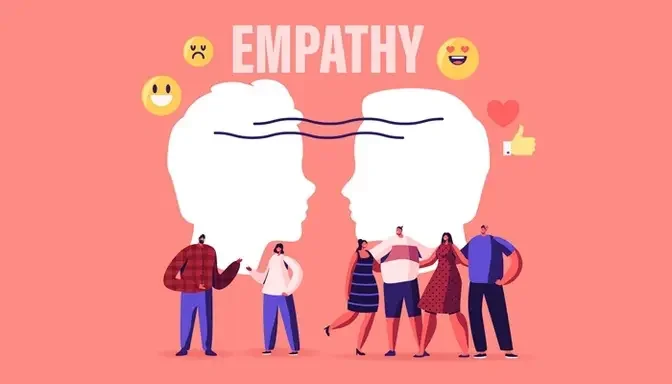
So I don't think of empathy just as the ability to sympathize with someone, to kind of understand
them. To me it's not an intellectual process, it's an emotional, it's a visceral process,
it's non-verbal really and it's very powerful and what it means is you're able to stop your
eternal monologue and focus deeply on another person and put yourself in their place and
You can never read people's minds. Let's say I'm shopping in a supermarket. I can't know what that
person's thoughts is who's serving me fish behind the counter or whatever. It's impossible. But by
paying attention, by opening myself up, by feeling empathy for that person who has this job, I can
understand how they might feel in that moment. I could pay attention to their body language,
to their energy. I can understand that they hate their job, that they're miserable,
that they're not paid enough, etc. Or I can understand they love their job. I can't understand
what they're thinking about, etc. But I can connect to their moods, their emotions and you can go
around during the course of the day and you can practice this as an exercise and I do it all the
time because I'm a writer and because that's basically what I'm supposed to be doing in life
is putting myself in other people's shoes. In fact, when I go through a history and I'm reading
a book on Napoleon or I'm reading a book about Genghis Khan or all these other historicals I've
written about, I actually do try to do the same thing. I try to go, what did it feel like to be
them in that moment? Because we have this incredibly powerful muscle. It's literally
what makes us human. It's these mirror neurons and I actually put my mind in your place and
imagine what you might be feeling in that particular moment. It's a kind of visceral
connection that you have to people, to their moods and to their emotions. And it's very,
very important as a social skill that you develop this. You have the latent ability everyone does
born as a human being with this potential to be empathetic. But it is a muscle that must be
exercised because if you don't, you'll simply become very self-absorbed and you won't make
those connections. You won't pay attention to that person behind the counter, what they might
be feeling at the moment. You'll be just locked inside of yourself. And as this occurs day after
day after day, that empathy muscle gets weaker and weaker and weaker until it atrophies and you
don't even have it anymore. You become so rigid and so locked inside of yourself.
Okay, so it's very, very important. Now the question is, and it's a legitimate question
that people asked it before, can you go too far with empathy? And yes, it is possible.
So a lot of people who get involved with toxic personalities, they feel for them because toxic
people don't announce themselves. They don't go, I'm aggressive. I'm a narcissist. I'm grandiose.
They're very clever. They're very charming. They can be very seductive and interesting when you
first meet them. And you feel empathy for them because they also maybe they have some pain in
their life and you can sense it and you open up to them. And then they prey on that openness.
They prey on your ability that you've opened up too much to them. You become too vulnerable.
You empathize too much to the point where you can't distance yourself. Okay, so the point of
empathy is to be able to get yourself inside other people's shoes, but there's a limit to it.
You can't become them. You can't so identify with yourself that their problems become your problems.
You can understand their problems. You can maybe try and help them. But at a certain point, you put
your hand up and you go, I'm not going past this particular point because the energy that's involved
if they are a toxic person will suck me up is what I call in the 48 Laws of Power, infection.
And that's the negative side of empathy where you get involved with an infecting person
and you can't disentangle yourself from them. When I'm going around practicing empathy,
I'm not involved with these people. I'm just imagining who they are. When I'm interacting
with someone who's a colleague or a friend, there's a level of trust that I know who they are.
And if I empathize and I understand why they're in pain, it's a positive thing. But if there's a
stranger that has entered my life, I'm a little bit wary of them like you should be with any
stranger. You should have a little bit of distance and go, can I trust them? Are they a person that
has good intentions? Could they possibly be toxic? And in the Laws of Human Nature, I give you ideas
about how you can identify these toxic people before you get involved. So you practice empathy
as a day-to-day thing. And when it comes to people that you know that you interact with every day,
and it's a new person in your life, you have just a little bit of wariness where you feel them out
and you go, can I trust them with involving myself emotionally with these people? So that's how I
think those are the limits to empathy for me.