
Strategy for safeguarding traditional crafts: The Bearers of Folk Craft Tradition programme
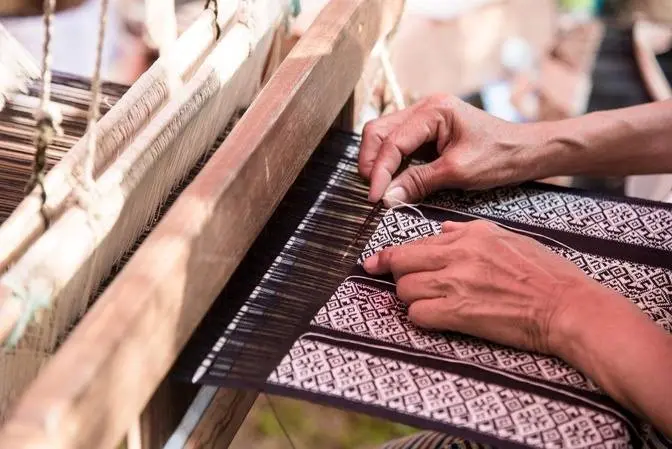
It's hard to say what is hard, when you do it with love.
There's nothing hard about it.
We've been doing this craft for 300 years.
So it's a classic, from father to son or from parents to children.
I see you're looking at this.
And this is a type of carrier of tradition.
And this is given by the Ministry of Culture
to the most diverse craftsmen,
whose craft is in great demand.
The carrier of the tradition of folk craft
is inspired by the UNESCO system,
which is called the Living Human Treasure.
UNESCO recommended that from the whole area
of the Living Human Treasures,
every country should choose the segment
that is considered the most endangered.
It's a question of the 90s.
And in our time, and unfortunately it applies to the present,
the segment that was the most endangered
was the traditional folk craft.
I've been making ceramics since 1955.
I started at Lansfelder in Stražnice.
And I've already made a lot of money.
My father taught me for four years,
because you can't learn this craft in three years.
It's not just about gaining experience,
but when I go down to the forest,
I want to get to know the trees.
We have a long tradition of weaving.
It's a family craft.
We are in Subdolsk, a bit away from Srebrenica,
and we weave baskets and other things.
We use trees that are about 100 years old.
Now I'm making a horse,
which used to sit on a sledge in Vlkonice.
Traditionally, it was made there from 150 years ago.
In the early 90s, there was a threat
that it would disappear from commerce
until the Ministry of Culture
started making these baskets.
That's how it rehabilitated us.
I'm the fifth generation,
and my son is the sixth generation,
who may be dedicated to this craft.
When you see this work,
you have to do everything from A to Z.
I think the competition is falling apart.
I have a great reputation,
just like my great-grandfather used to weave
I was awarded the title
for the production of pinched pigeons.
It's a characteristic production
that is more traditional in Wallachia.
We, Wallachians, say that the broom
is from what has grown in the forest.
It's a kind of bioproduct.
Baskets were used for everything.
Before, there was no other material.
There was no paper or artificial material.
Everything was in woven baskets.
The title of the bearer of traditional crafts
has been given by the Ministry of Culture since 2001.
It is intended for high-quality producers
who master a technology that is threatened with extinction.
At the same time, they contribute to its presentation,
but above all, to its preservation in the future.
The condition is that every producer
has his successor,
whether it is a person from his family
or a pupil who will teach him,
but who will continue to develop the craft.
This is my grandson Erik.
It's quite a difficult life,
and it also keeps me partly from the fandom,
so we don't want these three old products to disappear,
because it is a part of the national culture.
It makes you happy that it is officially appreciated.
These objects have an indisputable artistic impact,
but the art is not given primarily by an aesthetic effort.
It is given by the technology of the production
that has always respected the material.
When it was wood, it respected the carving of wood,
the direction of the train,
and the processing took place in the context of the material.
When we started to think about making this title,
we thought about how to make it visible to the public,
what the future bearers should present themselves with.
I have always admired the human creativity.
It has a touch of truth.
The craft is in it, and it persists.
The basic colour is blue-red,
so I keep it in such national colours.
We got the bearers of the tradition in the blueprint department.
We have more subtle and more detailed patterns in Volešnice.
Větelínka, Ovísek, Mlínský kolo, Vídenský kvítek,
Šnék, Housenka, Tyčka, Čárka.
It was named after what nature brought.
We founded the gallery of the bearers of the tradition in 2005,
when we presented the first fifteen bearers of the tradition.
Every year, we complement this gallery
by presenting new models of both existing and new bearers of the tradition.
I am very happy that today
we will celebrate the award
to three distinguished creators of traditional craft techniques.
As a result of making the title
Bearer of Traditional Crafts,
a number of activities and exhibitions were created,
not only in the Czech Republic, but also abroad.
I must mention the previous exhibition Homo Faber,
which we installed in the UNESCO building in Paris in 2009.
Today, its part can be seen every year
at the National Day of European Heritage,
which is held in every city in Vienna.
And in this city, this exhibition is installed.
The National Institute of Culture,
which has been cooperating with the Ministry of Culture of the Czech Republic
for two or three years,
organizes meetings,
where these creators meet,
have the opportunity to talk,
to remember.
A number of them know each other personally.
And the younger ones, on the contrary,
get to know the older bearers.
And this information is very important
so that these people,
who are really very modest,
can orient themselves in today's market conditions
and prolong the life of these products
at least until the end of this century.
The title of the bearer of the tradition is good.
I really appreciate it.
Because again, thanks to this,
you get among the other people
who have the title.
I would say it is some kind of achievement of craftsmen.
The greatest pleasure for me was
that someone appreciated
that it makes sense.
These are open doors.
It is a certain appreciation
and a lifelong work.
These are not the new fast-brewers,
as they say.
I am excited about it.
The other people perceive it
in a completely different way.
When you already have the card
of the bearer of the tradition,
you already know
that you are really a master
in this work.