
Archaeology and Abraham
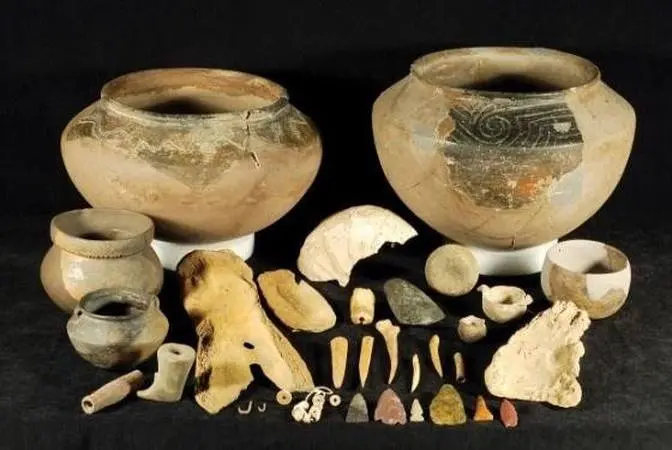
#Archaeology#archaeological artifacts
Hello, my name is Dr. George Sparks,
and this is Bible Interact.
I was asked to actually lecture about Abraham,
the historical Abraham that's mentioned in Genesis.
However, I thought it was rather difficult
to actually try to talk about an individual
or prove his existence when we have no sarcophagus
or body for Abraham.
Now we have a traditional location in Hebron
that Herod the Great built around 2,000 years ago,
and it's called Machpelah,
but understand that's just traditional.
I talked this over with Dr. Ann Davis,
and we thought this would be very interesting
to look at the historical ethnic background of Abraham
and try to locate that in the book of Genesis.
Now what do I mean by the ethnic background of Abraham?
Well, I'm from Ohio, and since I'm from Ohio,
we have a certain type of vocabulary that we use
that's unique to us.
For instance, if we offer somebody a can of soda,
we might say, would you like a pop?
And I was in Albuquerque, New Mexico,
and I was offering somebody a soda,
and I just turned around and said,
hey, would you like a pop?
And he said to me, you must be from Ohio,
and I go, what do you mean?
He goes, everybody from Ohio just says pop.
They don't say soda pop.
They don't designate what type.
They just, everything's a pop.
I go, hey, you know, you're right.
I'm from Columbus, Ohio.
You know, if we go to Southern Ohio or in Kentucky,
the English language has a slang to it, you know, a twang.
And if we go down to by Louisiana,
the English language is drawn out.
So we can identify with our own culture
and by our own language where we might be located
as individuals in different states.
Our ethnic background just here in the United States.
I wonder if other countries actually
would say the alphabet differently
than how we say it in the United States.
Our own alphabet.
Well, what I mean?
What do I mean?
And here in the United States,
we learn our alphabet basically by singing it.
How many Americans can actually say the alphabet
without turning around and start to sing it?
I think very, very few.
So we're looking at certain traditions and customs
that might be presented in the biblical narrative
that we can find associated with Abraham's ethnic origin,
thereby doing the best we can through archeology
and literature, finding the historical Abraham
of which the Bible tells us he is actually
from Ur of the Chaldees.
So in Genesis chapter 15 and seven,
I'm gonna read he, which is God.
And he said to Abram,
"'I am the Lord who brought you out of Ur of the Chaldees
"'to give you the land that is promised.'"
The land to promise.
Now, by saying this, we understand that Ur of the Chaldees
is actually a term that might be used
in an anachronism of later resource, okay?
So it's like a scribal insert.
The Ur of the Chaldees is actually from more
of an Iron Age period to say Chaldees,
but the location is still the same.
Abraham is from Ur, which would be Mesopotamia.
Here we have a map, if you will,
of the migration of Abraham.
It starts from Mesopotamia.
When we say Mesopotamia, we have the word Meso,
which means middle.
So when you say Meso or middle Mesopotamia,
it means the land between the two rivers,
Tigris and Euphrates.
And this is where we find Ur, Ur of the Chaldees.
And we start with Babylon.
We move towards the land of the Assyrians,
the Mitannes, the Hittites,
and then we start to migrate south into the land of Canaan.
And then we wind up in Egypt
because Abraham spends a short amount of time in Egypt.
Now, also we look for Abraham
in archeology through artifacts.
And archeologists like to go to certain locations
to find their artifacts.
And the easiest ones would be locations,
which we call tels, a T-E-L means strength.
What is strength?
The strength of location is designated by certain things.
First of all, is there a road next to it,
somewhere to trade, a road, a water source.
You have to have a water source.
And third, it has to be elevated
to be in a defensive location.
And this is the strength to be in a defensive location.
So places like Gezer and Megiddo and Hazor
are all very strong defended locations
along the trade route that we read about in the Bible.
So in this map, when we look at tel sites,
the earliest civilization is towards the bottom,
which we might call Chalcolithic, copper and stone.
Then we go to the Bronze Age, early Bronze Age.
And then we go to the Middle Bronze Age period.
Now the Middle Bronze Age period
is possibly the time period of Abraham, okay?
So as you look at the map, as we go towards the top
of the tel, we have these different archeological periods.
Now associated with the archeological periods,
as we go to the top of the tel
or towards the bottom of the tel, we have artifacts.
And the artifacts that you're seeing on this next chart
designate types of artifacts that are found
throughout the Herodian period or the Roman period,
also the time of the Exodus and as far back
as what we might call the Early Bronze and Middle Bronze Age.
These artifacts are being represented in this next slide.
Okay, now we have an actual pottery chart
that dates all the way down.
If you look to the bottom of it,
it says Chalcolithic period around 4000 BC.
It goes all the way up to the Byzantine period,
which dates to around 640 CE of the Common Era.
Now, we have to go back to the bottom of that chart.
And this one is actually expanded for you to see
and you'll see Middle Bronze Age too.
And here we have a selection of pottery.
Now, because of the biblical narrative,
we have literature that would date it,
if we take it very literally, possibly to 2100 BC,
but scholars date Abraham anywhere between 2100 to 1800 BC,
which still puts us in the intermediate
to Middle Bronze Age.
And there's pottery that is very distinctive
to those periods.
The most common pottery of that time period
or any period are the ancient lamps.
Now, you look at a building that you might be in
or the house that you're in,
all the light switches that you see.
Now, imagine all those light switches
to be lamps of the ancient world.
You might have 50 different switches in your house.
So think of maybe even half of that,
25 lamps per house in the ancient world.
And you can see how important it would be for archeologists
just to understand the different types of lamps
that we could find at a tell location
which designates also a time period.
For instance, this first lamp that we have
could be dated to the intermediate time period,
the time of Abraham around 2100 BC.
We call that the four-cornered lamp.
It's just a bowl that's been pinched on four sides.
And those four pinched locations
are where the ancient people
would put an old piece of cloth or a wick.
And that would be, you could say, absorbed by olive oil
and they would light it.
The next lamp is from the late Bronze Age
between 1550 and 1200 BC.
And you can see now it looks more like a shell,
like a bowl that's only been pinched on one side.
And now we have a selection of lamps
from the Roman period to the Byzantine period.
They're a little bit different
because the lamps that I showed you prior
were all made on a potter's wheel.
Now, the potter's wheel actually starts around 2000 BC.
So when we see pottery that is hand-formed,
we know that the hand-formed pottery
is more likely older than 2000 BC.
And when we start to see wheel-made pottery,
we could say 2000 BC and later.
And when we start to look at lamps,
when lamps are actually pressed into molds,
giving it different shapes and appearances,
this would date to the Hellenistic period,
Roman period, Byzantine period.
So we can date these lamps that you see
on this slide right here
pretty much to the late Roman Byzantine period.
Now, the next thing that we're gonna look at
is a type of writing style.
And this particular style is called cuneiform.
Cuneiform means wedged form
because they would not write with ink and pen on paper,
but what they would actually do
is use a little stylus and they'd press it into clay.
And this is called cuneiform.
It's a system of writing first in Mesopotamia
that begins around 3500 to 3000 BC.
It's very significant because cuneiform
would be the type of writing style
that Abraham would have used in his commerce.
Now, we have two particular styles
of cuneiform tablets in this next slide.
The first one is a teaching
round, circular cuneiform tablet.
And the cuneiform is very large
and it's fitting within lines.
Now, you think of these lines as paper
that would be used by a first or second grader
and they're learning how to write,
but they have to stay in the lines.
So this instructor, this teacher
is actually teaching these students
some 2000 plus years ago
how to write on cuneiform tablets.
Now, the reverse one is a student's tablet
and now you can see that the lines are crooked
and the cuneiform actually doesn't fit in there
as solid as the teacher's instructions on the first side.
So the first side is the teacher
and you reverse it and the second
or the reverse side of the cuneiform tablet
would be the students.
And these are called teaching tablets.
So that means that 2000, 3000 years ago,
kids, you still had homework.
Now, when we got to the cuneiform,
we're actually going to look at some
of the, you could say, historical ethnic background material
that would be similar to that we read about
or which we read about in the biblical narrative in Genesis.
Now, why is that important?
Because we're looking for the origins
of the historical Abraham.
First, we have the Enuma Elish.
These are, this one right here
happens to be a Babylonian creation tablets,
which when you say Enuma Elish,
it actually means wind from above.
It's the creation of, you could say, our world
as they saw this in the ancient Mesopotamian culture.
Okay, so what is the Enuma Elish?
It's about a thousand lines of cuneiform text
on seven large tablets.
It can date anywhere between 600 BC,
as far back as 1700 BC, but even further,
around 2100 or what we would call the intermediate period
or the time period, which would be the literal time
of Abraham in the biblical text.
It's a poetic form referring to the creation.
It gives credit to the Mesopotamian gods, such as Marduk.
Fragments are found throughout the Middle East,
even a location which I'll talk about later on,
which you'll find very interesting and significant.
The Enuma Elish, how is it similar to Genesis?
Okay, we have a divine creation of the cosmos
and the matter.
Also, we have a desolate waste area
and darkness being covered by the deep.
We have light that is created by God
in the firmaments and above the earth.
And we have the luminaries later,
such as the sun and the moon and the stars.
And towards the end of this creation theory,
the Enuma Elish, we have man being created.
And then finally, God, or in the Mesopotamian culture,
plural, they're gods rested.
So some scholars actually would think
that the Enuma Elish is mentioning
what we would call the first Sabbath, okay?
But that's just some scholars suggest.
In Genesis chapter one and verse 16, I'll read,
and God made two great lights,
the greater light to rule the day,
the lesser light to rule the night and the stars.
And there was evening and there was morning,
which he called the fourth day.
Now we also have what is called
the Adam and Eve cylinder seal.
This dates to around 2200 or 2100 BC.
And this is once again, the intermediate period,
dates to the time period of Abraham.
And here we have a male and female
sitting around a large tree.
And from the tree, we have the serpents
that are protruding from the tree.
Some scholars once said that this is depicting
the story of the book of Genesis.
Now it's highly debated.
In Genesis chapter two and verse eight,
it says, and the Lord God planned a garden in Eden
in the east, and there he put the man whom he had formed.
The tree of life was in the midst of the garden
and the tree of the knowledge of good and evil.
So here we have, you could say,
a evidence of the historical backgrounds of Abraham
through the biblical text,
as it's related also in the Mesopotamian culture,
in the Enuma Elish.
Now we have what was called the Mesopotamian Kings List.
It's a large cylinder seal.
Also it's called the Sumerian King List.
And in this slide, I'll just read quickly.
It's a list of an ancient manuscript
originally recorded in the Sumerian language,
listing the kings of Sumer.
Now, why is this important?
Because in this listing of kings,
the kings of Sumer, according to the Mesopotamian Kings List
lived for thousands of years,
10,000 years, 20,000 years.
And also in the biblical narrative,
we read how certain individuals lived for a long time,
such as Methuselah.
In Genesis chapter five and verse 25, it reads,
when Methuselah lived 187 years, he fathered Lamech.
Methuselah lived after he fathered Lamech 782 years
and had other sons and daughters.
Genesis five and 27,
thus all the days of Methuselah were 969 years and he died.
That's a long time to live, all right?
Now, did people actually live that long?
Now, if we take that text very literal,
we'd have to say yes.
Some scholars suggest,
after looking at this Mesopotamian Kings List,
that they had a different type of counting system.
Others suggested, and I like this particular one,
that what they were actually doing
is that they were suggesting
because the kings were placed in power by their gods,
or if we wanna talk about Methuselah and then later Noah,
that they were placed in their positions by God, singular,
that since they were in that position of authority,
what they did in their lifetime would be equivalent
to what an average person could possibly do in 969 years,
in 10,000 years, in 20,000 years.
So it's a symbolic number,
seemingly depicting the greatness of that king
and what he did.
And in the Bible, it does appear in some instance
that people that lived a long time,
it's depicting their closeness to the creation of Adam
or their closeness to God.
The next thing I'm gonna talk about
is the Epic of Gilgamesh.
And the Epic of Gilgamesh is an ancient Mesopotamian text
or poem about the flood.
The flood story, as it is read in the Epic of Gilgamesh,
was first discovered in 1872
by George Smith, the British Museum.
Now, it was a surprising announcement that he made
after excavating the library of Assyrian King Ashurbanipal,
which dates to the 7th century BC.
Here in translating these texts,
he found out that there was a Mesopotamian tradition,
an epic, that was very similar in structure,
I'm just gonna say similar, not exact,
to the epic event of the flood
mentioned in Genesis of the Bible.
Now, this epic poem dates to the third dynasty of Ur,
once again, 2100 BC.
I think that's significant
because we keep on reading around 2200 to 2100 BC,
which in the Bible is the literal date of the arrival
or you could say the beginnings of the Abraham tradition.
In the Epic of Gilgamesh, it starts very simply,
and you can read this slide for yourself later on,
it's slower.
We have the flood myth section.
Also, we have the leak, the secret plan of the deities,
as God would tell later Noah that the flood was coming in.
And he needs to build an ark.
So there's the building and the launching of a boat as well
and then the storm and then the calm after the storm.
And then later, as in the Book of Genesis, a sacrifice.
Now, what's interesting about the Book of Gilgamesh,
it's a sacrifice, but it's done on a mountainous,
what they call a mountainous ziggurat.
Now, here's the location where the Epic of Gilgamesh
was found in the land of Canaan.
Along the trade route, it was found at Tel Megiddo.
So here we have actual evidence,
hard archeological evidence,
that the Mesopotamian Epic of Gilgamesh,
the story of the flood, was known in the land of Canaan.
And here's a cylinder seal also depicting a individual
in a box being protected, being surrounded by water.
Some scholars depict this and it's called
the flood cylinder seal or the Noah seal.
This is an ancient ziggurat.
These are found in Mesopotamia.
This one actually has been reconstructed.
And in the Epic of Gilgamesh,
it does mention the mountainous structure
which is identified as a ziggurat.
Now, where do we read about this in the Bible?
Okay, the Tower of Babel, the tower.
Now, the word tower is Hebrew for migdal.
And the migdal is just a high structure.
In Genesis chapter 11 and verse four, it says,
Then they said, come, let us build ourselves
a city and a tower with its top in the heavens,
and let us make a name for ourselves,
lest we be dispersed over the face of the whole earth.
Now, once again, the word tower means migdal, all right?
But also the word top comes from the Hebrew word rush,
like Rosh Hashanah, the beginning of the year.
Also, rush means head, like the beginning, the top.
So when we could read the top that reaches unto heaven,
it could be the top of the structure
if we read it literally.
But we know if it goes so high,
you're gonna run out of oxygen.
So what some scholars suggest is the tower
that was supposed to be used as a pulpit
and the rush, which means the head,
or the high priest during their services
would actually reach unto heaven,
or in other words, have their services at the top.
Very similar to the way the Aztecs would do
in, you could say, Central America with their structures.
Also, we have treaties and covenants.
In Genesis chapter five and verse 15 and nine,
we have a covenant between God and Abraham.
It says, he said to him, God says to Abraham,
bring me a heifer three years old,
a female goat three years old,
a ram three years old, turtle, dove, and young pigeon.
And he brought him all these, cut them in half,
and laid each half over against the other.
But he did not cut the birds in half.
And this is very interesting,
because I have seen cuneiform tablets,
or terracotta tablets in the form of little altars.
And on these altars, it has animals divided in half,
but the birds are intact and whole,
laid next to each other.
And in Kenneth Kitchen's book,
Reliability of the Old Testament,
he actually would date this particular covenant
to around the middle Bronze Age.
We could say around in the middle 18th century BC,
this particular type of covenant.
Then the Lord made a covenant in 1517,
when the sun had gone down and it was dark,
behold, a smoking fire pot and a flaming torch
passed between the pieces.
And on that day, the Lord made a covenant between Abraham,
saying, to your offspring, I will give this land,
the river of Egypt, to the great river,
the river Euphrates.
Now, what's interesting about this particular lesson
is that we have a number of different items
that we read about in the Old Testament
that do stem from Mesopotamian traditions.
Now, this is where the Bible says that Abraham was from.
So it would make sense that if Abraham is relaying to,
you say, in tribal traditions,
about the origins of where he was from
through his, you could say,
literary verbal transactions within his people,
it would stem from early Mesopotamian traditions.
So we have, in the beginning, we have the Enuma Elish,
the wind from above, the creation text.
And then after that, we have the Sumerian king's list,
where it talks about the long reigns
of the kings of that time, such as in Genesis,
the ages of the patriarchs that lived before the flood.
And then we also have the archeological evidence
of, you could say, writing styles,
the cuneiform language, which Abraham used.
And also, we looked at a brief teaching text.
And then secondly, or thirdly,
we have the Epic of Gilgamesh, which is the flood.
And lastly, we had the mentioning of a ziggurat
in the Epic of Gilgamesh, which in Genesis,
we have the evidence of building a tower
in the beginnings of the Tower of Babel.
So here we have lots of literature
very early in the Book of Genesis
that we have similarities to in the Mesopotamian tradition
prior to and during the time of Abraham.
Now, it's interesting to note that in any culture,
we seem to hang on to what's dear to us,
whether it be, you could say, our heritage
by the way that we dress or the way that we might talk,
but also our religious beliefs as well.
And we hold that very dear.
And it seems that during times of, you could say, strife
or times that we would have of the times
where we would have great things that would happen
for ourselves or our country,
that we would include with that
the early origins of our heritage in the United States.
Now, we could say that our early heritage
was Christian to many of us.
So I think this is very interesting
because on December 24th, 1968,
this was a time where we were coming out of the,
you could say, the crisis of the revolts,
you could say, the racist parties during the mid 1960s.
And then we also had the era of Vietnam.
Our country was in great strife,
but it seems that not just our country,
but the whole world was backing one major event
that we were doing as a nation.
And that was, we were trying to walk on the moon.
So on December 24th, 1968,
the Apollo 8 actually circled around the moon,
orbited around the moon for the first time.
And on appearing or seeing the earth,
the astronauts, Bill Anders, Jim Lovell,
and Frank Borman actually quoted from Genesis
in the King James Version,
Genesis chapter one through Genesis chapter,
or Genesis verse one to verse 10.
So I'd like to end this.
My name is Dr. George Sparks, and this is Bible Interact.
But I would like to finish with the presentation
of the astronauts actually quoting from Apollo 8,
Genesis chapter one.
Thank you.
We are now approaching lunar sunrise.
And for all the people back on earth,
the crew of Apollo 8 has a message
that we would like to send to you.
In the beginning, God created the heaven and the earth.
And the earth was without form and void.
And darkness was upon the face of the deep.
And the spirit of God moved upon the face of the waters.
And God said, let there be light.
And there was light.
And God saw the light.
They was good.
And God divided the light from the darkness.
And God called the light day.
And the darkness he called night.
And the evening and the morning was the first day.
And God said, let there be a firmament
in the midst of the waters.
Let it divide the waters from the waters.
And God made the firmament.
And divided the waters which were under the firmament
from the waters which were above the firmament.
And it was so.
And God called the firmament heaven.
And the evening and the morning
was the second day.
God said, let the waters under the heaven
be gathered together into one place.
And let the dry land appear.
And it was so.
And God called the dry land earth.
And the gathering together of the waters called he seas.
God saw that it was good.
Bible Interact, uncovering the mysteries
of the kingdom of God.
At BibleInteract.tv, you will penetrate
the scriptures of the Bible.
At our store, you're just one click away
from owning your favorite books, DVDs, or study guides.
Earn a degree from our university.
And watch hundreds of video presentations
from biblical scholars, archeologists, and theologians.
By subscribing to Bible Interact,
you'll find all the resources you'll need.
So why not subscribe today?
Go to www.BibleInteract.tv, you'll be glad you did.
Interested in studying more about the temple,
the Messiah, or what God's plan is for our future?
No problem, we've got you covered.
With more than 200 DVDs, books, and workbooks,
you'll find the answers you've been searching for.
Bible Interact, uncovering the mysteries
of the kingdom of God.