
What Makes A Great Establishing Shot?
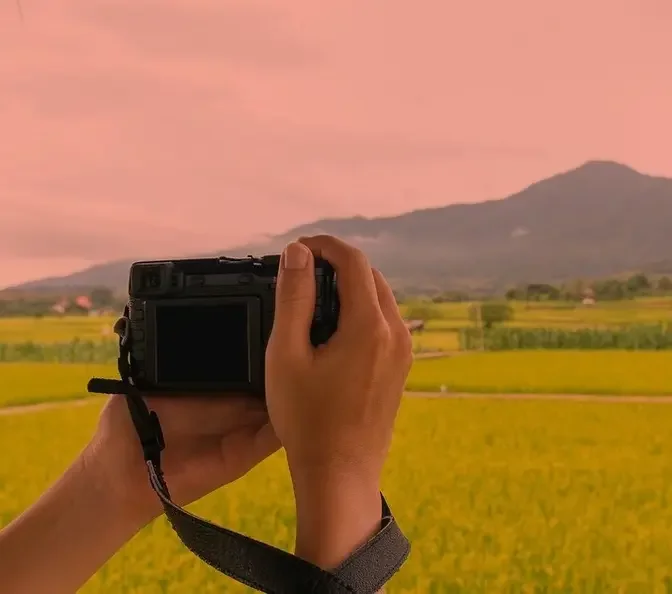
#PhotoCamera, #LandscapePhotography, #PhotographyExpert, #NatureShots, #ScenicViews, #OutdoorPhotography, #CameraGear, #LandscapeExpert, #TravelPhotography, #WideAngleShots, #PhotographySkills, #NaturalBeauty, #CameraTips, #PhotographyMastery, #LandscapeLovers
The opening or establishing shot is pretty ubiquitous in cinema.
It's at the start of nearly every scene.
But I think it's one of the most underutilized and underappreciated shots of them all.
And I think the humble establishing shot can be an incredibly powerful tool if you use it right,
and an incredible pain if you do it wrong.
Let me explain, show you some examples,
and then at the end I'll show you some of my own very amateur attempts.
Establishing shots are usually the first shot in a scene,
so I've used them for this first episode of a new series where
I take you along on my journey of learning cinematography.
I think most people would describe the establishing shot as
the wide shot that shows the audience where the scene is taking place,
which is what it does, but it's not all it does.
And I think it has the potential to be one of the most impactful shots in your whole film.
The most basic level of establishing shot is this.
On the surface level, you could say it works, right?
I mean, it shows us where we are.
Golden Gate Bridge means we're in San Francisco.
But undeniably, this shot from Dune Part 2
just has so much more impact.
Which, of course, we expect from a huge budget,
a director with enough awards to need their own Wikipedia article, and of course.
But what really makes the difference here?
I think it comes down to two key things.
One is the obvious one, visual impact.
The establishing shot is important and it's first,
so it's the perfect excuse to spend a little bit more time,
money and energy to get it to look just right and be as visually stunning as you can manage.
I mean, I've got an establishing shot from Blade Runner 2049,
another Villeneuve film,
as my desktop wallpaper, for Christ's sake.
It would make a massive impact on me if you like this video and subscribe to my channel
so that we can hang out and talk about filmmaking more often.
The thing is, not every shot in your short film or doc or movie can be a visual masterpiece.
We just don't have unlimited time or budget, especially if you're doing this solo.
So I think it's a good idea to pick which shots really matter.
And I think the establishing shot is a great candidate for that.
But it's not just the look of the shot that makes it great.
It's the feeling of the shot.
And I think that's the second and maybe the more important aspect
of what makes me love an establishing shot.
I genuinely didn't plan this video to be a Villeneuve party,
but check out this shot from Sicario.
This is one of my favorites of all time.
Is it visually stunning?
Yeah, of course.
But also, this shot doesn't just provide us with context for the following night vision sequence.
It effectively conveys the feeling of the following night vision sequence.
The silhouettes disappearing into the darkness build so much tension.
It's looming and uncertain.
Just like how the characters on screen are feeling.
And that, I think, is where a lot of establishing shots,
including this one from The Room, really fall short.
We can't see any of the characters in this shot.
We cannot see them in a house.
We cannot see them with a mouse.
You cannot see them in a car.
We cannot see where they are.
So we can't really connect to the characters as easily.
And we're missing out on a great opportunity to build those characters up
by creating feelings that are associated with them.
The feeling associated with my character,
if you felt like picking up a shirt or a print,
would be extremely grateful and happy.
There are some links below.
Placing your character in the establishing shot seems obvious,
but there are a few different challenges with that.
You don't want to create a shot that's too busy and distracting.
You need to tell the audience where they are sometimes.
And you don't want your character to distract from that important information.
So one thing a lot of great directors and DPs do
is to transition using camera movement from the establishing shot
into another shot that introduces or reintroduces the character.
A while back, I saw Patrick tweet about this shot from Dante's Peak.
So I watched the movie.
And I think it's a perfect example of this.
When you're watching, you don't even notice
how effortlessly the visual information you need is given to you.
You just follow the story.
Does this mean you always have to do this?
No.
In the opening shot sequence from Ferris Bueller's Day Off,
my personal favorite of all time,
we don't always see the Ferrari.
And that's because John Hughes intended Chicago
to be its own character in the movie.
I mean, it was initially written as a love letter to Chicago.
So the camera leaves the guys in the Ferrari for a moment
and showcases just how important the setting is.
Ultimately, I think the best establishing shots
don't just tell us where we are in the following scene.
They give us information about the characters
and the story as a whole.
And they help to create the feeling of that scene from the beginning.
After all, most of my favorite stories are about characters,
not about the location.
All of that having been said, I want to give it a crack.
So I'm going to take my camera and see what I can do.
I'm shooting on the FX30 with the Laowa 27mm 1.5x anamorphic.
I also want to give a really big shout out to SmallRig.
I emailed them and let them know about the series I was planning.
Asked them to help me rig my camera out.
They were kind enough to do so.
So they provided rig, the cage, the V-mount, all of that stuff.
And it makes my life so much easier.
If you're interested in my specific build,
I've put a little write-up in the description.
So you can click on there, see all the kit that I'm using and why.
But again, big thank you to SmallRig.
Now, my initial idea for this video was just to go and film a bunch of establishing shots.
But after learning everything we just learned, that seems not quite right.
After all, the whole idea here is that we can massively up our game
by crafting the establishing shot around the narrative, right?
So instead, I decided to do something a little bit different.
I made a few microfilms.
I don't know if that's a term.
But essentially, to tie the establishing shots to a story,
I made tiny little short films.
I gave myself a few rules.
It has to start with the establishing shot.
There's no more than four shots after that.
And it has to end on a title card.
And here you go.
That was a lot more work than I expected, but it was so much fun.
Also, did you notice the music was quite nice?
That's thanks to today's sponsor, Musicbed,
who have absorbed me into their cult, also known as the Friends of the Brand program.
The thing about Musicbed is that the music is actually good.
It's made by real artists and you can only get it on Musicbed.
And I think for narrative work, music that's real is quite important.
Musicbed wanted me to mention their new AI song search feature,
which I initially thought, it's AI.
It's probably just marketing.
No, it actually works really well.
You basically just type in any mainstream song that you know
that you kind of want to track that's similar to,
that you can license for your project.
And it works.
Switch to Musicbed and experience what you can only find
with their exclusive collection of music.
There are links in the description.
I genuinely have really enjoyed using Musicbed so far.
I would encourage you to check them out if you're looking for music for your next project.
Getting to start thinking about filmmaking for narrative
is such an interesting new challenge for me.
And I think working on tiny little micro films like this
is a great way to spend an afternoon learning and making something.
I definitely do want to do bigger scale projects in the future,
but I think really deliberately limiting my scope
allows me to spend a lot more time crafting each shot,
learning what works and what doesn't work,
and stretching my skill set to the furthest extent.
Let me know what you thought of my establishing shots.
It was pretty tricky to pull off with no one helping me,
no crew and no locations,
but I did my best.
Stay tuned.
I have a lot more cinematography content coming
as well as the usual photography stuff.
Again, thank you to Laowa for lending me that lens.
And thanks to Smallrig for helping me rig out my camera.
I genuinely couldn't have done it without them,
and I couldn't have done it without you.
So thank you for watching.
Stay hydrated.
And create art.