
Why You Need A Diffusion Filter
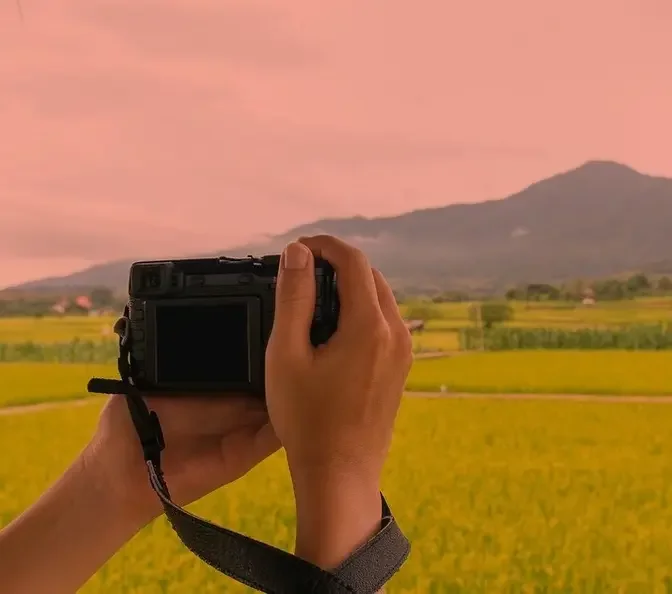
#PhotoCamera, #LandscapePhotography, #PhotographyExpert, #NatureShots, #ScenicViews, #OutdoorPhotography, #CameraGear, #LandscapeExpert, #TravelPhotography, #WideAngleShots, #PhotographySkills, #NaturalBeauty, #CameraTips, #PhotographyMastery, #LandscapeLovers
You ever feel kind of creatively stuck?
I don't know why, but recently I've just been feeling like my photos have tasted the same
for a bit too long.
But I've managed to shake things up with some surprising results.
What did I do?
I took a deep breath.
I called up my deepest reserves of creativity, fuelled entirely by blicks, inhalation and
sleep deprivation, and I bought some more gear.
Listen, I know it's gas, but hear me out, okay, because I was really surprised by this.
This is a Moment Cinebloom filter.
This one's the 10%.
And before I tried it out, I was pretty ambivalent about diffusion filters in general, but after
experiencing this one, I think I've made up my mind.
Now, if you're not familiar with diffusion filters, they're lens filters that tend to
be used to soften up your image a little bit.
They change the way highlights look, the way they bloom and roll off.
And overall, they're quite useful for just taking that digital, clinical edge off of
super modern gear.
This is especially cash money if, like me, you mostly have modern, clean lenses.
A lot of my photo lenses are Sigma Art Primes.
I really like the Sigma Art look.
It's super crispy and sharp, it has great contrast and, I think, 3D pop, but sometimes
they can actually be a little bit too clinical and too sharp for the kind of images that
I'm going for, especially if they're going to go next to other images that I've shot
on film.
Now, there's loads of different flavours of diffusion filter.
You might have heard of the Tiffen Black Pro Mist.
That's kind of the most ubiquitous one and I think that Tiffen are probably the most
popular manufacturer for lens filters in general, at least screw-on ones.
But you can also get all sorts of wacky special effects filters from all kinds of new companies
that are cropping up and a lot of them do a similar thing, but either targeted in one
specific area or jacked up to 11.
To get this look, you can also just shoot any lens made by Tamron wide open.
Some people even used to do the Vaseline on the lens thing, but I think we can collectively
agree that it's time we all moved past that now.
The Moment Cinebloom is interesting.
It's definitely not as soft as I was expecting it to be, in a good way.
It's not like I shot the photos through Vaseline, it's more like the softness blends itself
into the image really seamlessly and cohesively.
The Highlight Bloom is fun and I think it adds some atmosphere to what might otherwise
be quite harsh, boring light.
I was actually really surprised at how much I liked using the Cinebloom filter during
the day.
I thought it was going to be a night photography like, but actually it's like this thing was
built for golden hour and I really like the look that it creates.
Here's the tricky thing about lens filters like this though, is it's a look that's baked
into your image.
If you get home after your shoot and look at your files on the computer and decide that
you don't like the look, you can't un-Cinebloom it after the fact.
And honestly when you're used to shooting in RAW and having that complete flexibility
in post, having that inflexibility over one specific way the image looks can be a little
bit uncomfortable.
Especially if you're shooting street photography and you don't know what the subject will be
yet.
Now because I'm not the only camera nerd with commitment issues, some clever cookies have
figured out a solution to this.
There are some genuinely incredible plugins that can emulate the look of a whole load
of diffusion filters in post.
Video Village have no idea who I am, this is not sponsored, but their plugin Scatter
is pretty good.
It's honestly near bang on at emulating the look of a lot of mainstream diffusion filters.
The big boys do it this way too.
In David Fincher's recent film The Killer, no no not that one, they didn't use any diffusion
filters on set as far as I know, they emulated the look of them all in post.
If you think that sounds like a lot of work, they also shot the film on spherical lenses
and then achieved the anamorphic look in post by adding all of the swells and artifacts
and individual lens flares manually.
And to complete the triple threat, they actually shot a lot of the film stopped all the way
down to get everything in focus and then added lens blur in post to dial in the exact amount
they wanted.
I would bet a decent amount of money that David Fincher's spice rack is in alphabetical
order.
You know what's less crazy than that is liking this video and subscribing to the channel
so that we can hang out and talk about cameras more often.
So that's it, right?
Filters are dead.
Well, not quite.
You might not have heard of Netflix's original series 1670 because it's in Polish, but I'd
encourage you to check it out.
It's a really great period comedy mockumentary hybrid and it has a really unique look.
Somehow they managed to make it feel kind of period correct, but also very modern at
the same time and still make it cinematic.
It's just really fun to look at.
And I was reading an interview with the cinematographer Nils Krohn.
Kron?
Krohn?
He said that when they were shooting it, he made extensive use of lens filtration.
He mentioned, I think specifically the Tiffin smock filters, because a lot of the time they
were shooting with very clean lenses.
As far as I know, they used the Alexa 35 with mostly ultra and master primes, as well as
some of the older Angeno zooms.
So if there are some pros who still do use diffusion filters, what's the deal?
Well, I think there is a good reason why some DP's still use real filters and it's the same
reason I was surprised by the Cinebloom and it's also the same reason I think you should
have one in your kit.
When I went out to shoot with the Cinebloom filter, it didn't just change the way my photos
looked, it changed my mindset entirely.
As soon as it was on the lens, I was thinking about the fact that it was on there, which
as a result made me think about light differently.
It made me think about contrast and color differently.
And because of all that, I approached the scenes and subjects that I was shooting with
a completely different eye.
Just like how shooting with different kinds of cameras can change the way you shoot, using
this lens filter changed my approach.
And I think that's kind of the key here.
There's two kinds of photography, right?
There's photography verb, which is the doing bit.
And then there's the photography noun, which is the output.
And I think it's very easy to get whichever look we want with the photography noun.
I mean, there's so much you can do in post now, it's unbelievable, but you can never
go back and change the photography verb bit, the way you framed your shot, the way you
approached your subject, the way you looked at the world at that particular time.
I feel like as photographers, a lot of the time we can get really caught up in the end
results without thinking about how we can take a step back and change our approach in
the first place.
Would I slap on a Cinderbloom filter for a commercial shoot?
Not unless I'd done extensive previs, had approval from all the way up, and we were
certain it's the look we were going for.
But for weekend photo walks and pictures of my friends and little personal projects, I
think it's a really cool look.
It's both an awesome way to switch up the flavor of my creative juices.
And also, it's just fun, which I think is the most important thing for most of us.
Let me know in the comments if you've tried a filter like this one and how it made you
feel.
If you're interested in picking this one up, there's an affiliate link in the description
below.
Also, I think they're on sale this week.
So I'll see you on Friday.
Stay hydrated and create art.