
Discoveries of the Youth
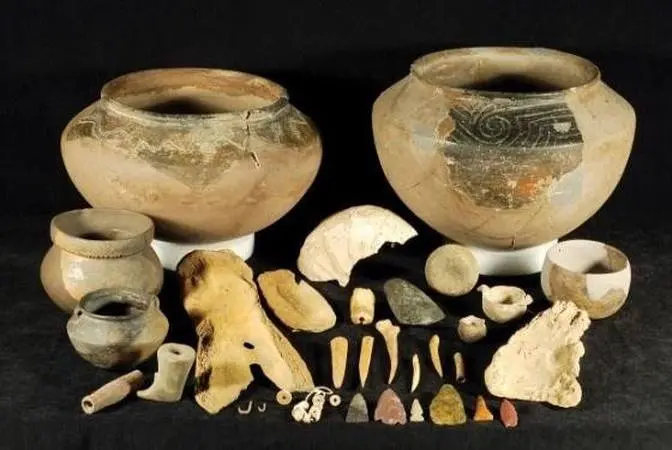
#Archaeology#archaeological artifacts
My name is Dr. George Sparks, and I've
been asked by Bible Interact to do this program, which
I'm really excited about.
I call it Discoveries of the Youth,
or Children of Coincidence.
I want you to stay with me on this program.
I think that, and I know that, you're going to really enjoy it.
We discuss a number of major archaeological finds
that have been accidentally found, by coincidence,
by young teenage children.
Major finds that are now displayed,
either in the museum in Istanbul, Turkey,
or actually in the Israel Museum, downtown Israel.
So follow with me today.
Enjoy the program.
If you have kids, bring them along.
I'm sure they'll love to see this.
The first thing I'm going to talk about
is the Hezekiah Tunnel inscription.
It was an inscription that was found in the 1800s
by some young children that were exploring
a tunnel which was dug during the time period of King
Hezekiah, probably around the mid or the late 18th century
BC, in preparation for the arrival
in the siege of the Assyrians, led under Sennacherib.
The tunnel was discovered in 1838 by Edward Robinson.
He was a very famous explorer.
Despite the tunnel being examined extensively
during the 19th century by Robinson, Charles Wilson,
and Charles Warren, they all missed
discovering the inscription, probably
due to the accumulation of mineral deposits,
making it barely, barely noticeable.
According to Eaton's Biblical Dictionary,
in 1880, a youth, Jacob Elihu, wading up the tunnel
from the Salon Pool, discovered the inscription
cut in the rock on the eastern side,
about 19 feet inside the tunnel.
The inscription was cut from the wall of the tunnel.
And in 1891, they actually removed it,
but was with broken fragments.
So they didn't remove the whole inscription,
but it was with broken fragments, which
led to a recovery effort through the efforts
of the British or British representatives.
And these, you could say, fragments were placed together
and are now in the Istanbul Archaeological Museum.
So here's a picture of a young man in Hezekiah's tunnel.
But also in the picture, I included a little map
where you can see towards the bottom, it says the Salon Pool.
And the little blue line represents Hezekiah's tunnel.
And it begins at what we call the Gihon Spring.
So this gives you an idea of what the Hezekiah tunnel would
look like.
And also, if you visit Jerusalem,
you can actually go inside Hezekiah's tunnel
and actually see the location where the young man found
the inscription, but also where it was later chiseled away.
In 2 Chronicles 32, 3 through 4, I'll
read a scripture which actually bears witness
to the inscription that was found in the tunnel.
Or we could turn around and say the inscription bears witness
to the text in the Bible.
And he took counsel, that's Hezekiah, with his officers
and his mighty men to stop up the waters of the fountains
that were outside the city.
And they assisted him.
And a large multitude gathered and stopped up
all the fountains and the streams
that flowed in the midst of the land, saying,
why should the kings of Assyria come and find much water?
OK, so we're going to stop right there.
I'm going to go over to the room of 1,000 artifacts
and show you some examples of what
was found in Hezekiah's tunnel.
OK, what I'm going to show you right now
is a reproduction of the inscription of what
we call the Salome inscription, what
was found in Hezekiah's tunnel.
And it bears witness to what was mentioned in Chronicles.
And this was found in, you could say,
19 feet inside Hezekiah's tunnel.
We're going to read a little bit about what this actually says.
It actually mentions two groups were tunneling,
one from the Gihon Spring area, one from the Salome area.
And it also describes where they both met.
And the water was flowing freely.
And that location is where they cut this inscription.
What else do we have to bear witness
to the event of the Assyrian arrival in Hezekiah's
preparation for that event?
Well, number one, we have these little jar handles.
And we can use this also as study information,
you could say, for study for you.
Look it up, Google it, all right?
This is called a lamellic handle.
The word lamellic means king.
You can see a little indentation, an imprint
that looks like a little winged bird.
Maybe it has a icon resemblance to some Egyptian influence.
But also, there's some Hebrew, paleo-Hebrew,
that mentions lamellic, or belonging to the king.
Some scholars suggest that this jar handle
belonged to a large amphora, of which they still
have representations in the Israel Museum.
But what was stored in this amphora, they have to speculate.
Was it surplus?
Was it grain that was used to feed the soldiers, or maybe
the people?
Was it to collect revenue, such as maybe silver or gold?
They didn't have coins back then.
But items that would be used to pay
those that were actually digging the tunnel in preparation
for Sennacherib's arrival, the Assyrian siege on Jerusalem.
We don't know for sure.
But we do have a representation of what
is called lamellic handles, dating
from the time of King Hezekiah.
What do we also have as a witness to the event?
Well, first of all, we have this other item right here
that's called Sennacherib's prison.
In the Bible, it tells us that Hezekiah was actually
inside the city walls of Jerusalem.
That's why they were digging the tunnels,
so the waters would be inside the city, not outside the city.
And the Assyrians were outside the wall,
threatening those people and the king inside the city,
saying, whose God is able to withstand the Assyrians?
Because all the other cities of Judea and of Israel
in the north fell.
Now, what happened?
Well, something occurred back in Assyria,
and the king left with his army.
The Bible gives one explanation, but on this particular item
right here, Sennacherib's what we call prism,
it actually says that he kept Hezekiah in Jerusalem
like a bird in the cage.
In other words, they laid siege, and Hezekiah,
along with the Hebrews inside the wall,
were trapped inside the wall.
It does agree that they sieged the city.
It does agree that Hezekiah was there
and was trapped, you could say, in the city,
but there's no indication that they had a victory.
And the Bible also mentions that the Assyrians
were not the victors.
So here we have a witness inside the city of Jerusalem
and outside the city of Jerusalem, a biblical text.
Now, once again, who found this inscription,
the Salome inscription?
But some young kids, a young boy, all right?
Next, big discovery.
How about King Tut's tomb?
King Tut's tomb.
King Tut actually was the 12th king
of the 18th Egyptian dynasty from 1861 to 1352.
After his death of only 18 years,
he disappeared from history,
although that's what we thought,
until his tomb was found in 1922 by Howard Carter.
Now he becomes probably one of the best known pharaohs
of ancient Egypt.
From something that was unknown
to one who is mostly recognized.
If we say King Tut, who doesn't know King Tut?
He was a minor figure in ancient Egyptian history,
but the boy king of the 18th Egyptian dynasty
was born from a very powerful pharaoh, Akhenaten,
also called Amenhotep IV.
But his short reign of only eight to nine years,
he accomplished very little.
But the discovery of his intact tomb in 1922,
or I should say nearly intact tomb,
has led many to speculate the mystery of the boy's life
and even his death.
King Tut's tomb discovery in itself
was through a British archeologist
whose name was Howard Carter.
And he had begun excavating in Egypt
all the way back in 1891.
And it wasn't until after World War I,
we can say like 1917,
that he began the extensive search for King Tut in common,
his tomb in the Valley of the Kings.
On November 26th, 1922,
Carter and fellow archeologist George Herbert
and the financier of the excavation,
the wealthy Earl of Carnarvon,
entered the interior of the chambers of the tomb
for the first time.
Here we have a picture.
In the center, Howard Carter,
and to his left, Lord Carnarvon.
Okay, here we have a picture of them entering into the tomb.
And now I'll tell you the story about the young boy.
See, what would happen is those that were young
would actually bring large amphoras stored,
which were used to store water,
and they would remove some of the sand
so that they could actually place the amphora
into the ground, all right?
So the amphora would have,
you could say a little point to it,
and they would dig into the sand
and fit that amphora into the sand
so that it wouldn't tip over, all right?
And as the boy was removing the sand,
he came across a very flat structure,
which actually beveled down 90 degrees.
That doesn't happen in nature.
So what he did is he went and told Howard Carter.
Howard Carter came back, and they moved some more sand,
and they found another one,
leveled and then beveled down 90 degrees.
And Howard Carter says to the little boy,
he says, well, where do you think this go?
And the boy says, hmm, down, of course.
And as they followed the steps on down,
they discovered King Tut's tomb.
Who accidentally found it?
The steps?
Well, a little boy.
To their amazement, they found much of it,
the contents and the structures intact.
Inside one of the chambers and the murals
were painted on the walls to tell the story of the funeral
and the journey of the young man,
what he would have in the afterworld.
Also in the rooms were various artifacts
for his journey, such as oils and perfumes
and toys that he played with, precious jewels,
and also statues of gold and ebony.
Here's one of the rooms intact.
And as they remove the seals, we start to find,
well, first of all, the mummy of King Tut.
In 1925, three years after the discovery of Howard Carter,
found two daggers hidden in the folds
of the materials wrapped around the pharaoh's mummified body.
In the wrappings on tomb's right thigh,
he found an iron blade, which was decorated
with a gold handle ending in a round crystal knob
encased in an ornate gold sheath,
decorated in a pattern of feathers,
lilies, and the head of a jackal.
There's also a second dagger, a second blade,
found near Tut's abdomen, which was of gold.
So understand what is neat about this is iron.
In archeology, we call the Iron Age around 1200 BCE.
This dagger was found 150 years
before archeologists actually date the Iron Age,
around 1360, it was buried with King Tut at 1350s.
That makes it almost 150 years, remember, earlier.
So maybe you have to redate the Iron Age.
Some speculate that King Tut's dagger
was actually made from a meteorite.
Here we have a very rare example of a iron,
excuse me, a bronze sickle sword.
I think the Israel Museum has one.
The Bible Lands Museum has a very nice one on display,
absolutely beautifully intact.
But just for you today, I went to the Mancini Museum
and they graciously loaned me a sickle sword
identical to the one that was found in King Tut's tomb
to show you today, with the decorated handle.
You can see the blade would be sharpened on one side
and it's made of iron.
That's a large, excuse me, it's made of bronze.
That's a large chunk of bronze.
It's very rare, a very rare example to hold
and to show you today.
I hope you appreciate that.
Second discovery, a young man who found the tomb of King Tut.
The Salome inscription, number one.
Number two, King Tut's tomb.
Let's continue and see what we can find.
In King Tut's tomb, they found a box,
but very similar, you might think,
to the construction of the Ark of the Covenant.
Notice that the lower section, it has two rods to hold
so you can carry it without actually touching the structure.
Very similar in respects to the dimensions
and you can say the structure of the Ark of the Covenant
where they were not supposed to touch the Ark itself
so they carried it with two rods.
Also, we have what is called an incantation cup.
This was actually made of alabaster.
I think this is very interesting because what we read
in Genesis 41 and verse two, and this is the Joseph story,
Joseph in Egypt.
His brothers are now coming into Egypt
because they need grain.
There's a famine in the land of Canaan
so if you remember the saga, the epic,
they start to go into Egypt so that they can
attain some food.
Along the way, Joseph notices his brothers
and he suggests that they should bring that young brother
that they talked about, Benjamin.
But he's playing a trick on them so that the whole family
later on will arrive into Egypt.
Let me share you this text, Genesis 44 and two.
He says, put my cup, the silver cup,
in the mouth of the sack of the youngest,
that would be Benjamin, with his money for the grain
and he did as Joseph told him.
As soon as the morning was light,
the men were sent away with their donkeys.
They had gone only a short distance from the city.
Now Joseph said to his steward, up, follow after those men
and when you overtake them, say to them,
why have you repaid evil for good?
Is it not from this that my Lord drinks?
Referring to the incantation cup.
And by this, that he practices divination.
Remember, he's trying to represent himself as an Egyptian.
You have done evil in doing this.
So here we have a representation, in a way,
of an incantation cup in King Tut's tomb.
You can say, in some respects, very similar to what
was probably placed in Benjamin's sack by Joseph.
So here we have a witness, indirectly, if you will,
verifying this text in the Bible.
The next one I'm gonna show you,
or share with you, is Ketuf Hinnom.
The word Ketuf Hinnom means the shoulders of Hinnom.
The Valley of Hinnom in the Old Testament
is a word where, or a Greek word,
which we get the word hell from.
So where you read hell in the Old Testament,
excuse me, hell in the New Testament,
it is from the word Hinnom, all right?
Ketuf Hinnom.
Here you see the Church of St. Andrew.
And to your left or right, you have the bone repository
and the benches.
And we're gonna take a closer look at this.
Ketuf Hinnom means the shoulder of Hinnom.
It's an archeological site southwest
of the Old City of Jerusalem,
adjacent to St. Andrew's Church.
Now on the grounds of the Menachem Begin Heritage Center.
It is located where the Valley of Raphaim
and the Valley of Hinnom meet,
on the old road from Jerusalem to Bethlehem.
I just came back from the field.
I was wearing a light brown outfit,
like I'm kinda wearing today,
except it was extremely dirty.
I noticed that there was a group of tourists
going up the road to St. Andrew's Church,
and they were looking over the edge, over the edge,
past the fence and over it and down.
And when I talked to the pastor of the church,
I asked him, well, what are they doing?
He goes, they often bring tour groups here,
but he goes, I don't know why.
A couple days later, I was in the church library
and I noticed on the wall,
pictures of the excavation of Ketuf Hinnom.
So I went back to the fence to look over,
and these were the tombs.
I had to see them.
I wanted to visit this archeological site
of major importance.
However, I had to either climb up the fence
or under the fence, and at that time,
I was quite a bit heavier than I am today.
I got really dirty giving it an attempt,
so I decided I'm going to go around
to the Menachem Begum Heritage Center
and ask if they would open it up for me
so I could go take a look.
So I went in and they were having a black tie event,
and I was covered with dirt, you can imagine.
And they looked at me like I was a half a lunatic,
and I said, hey, is there any way
I can go and see this excavation?
You know what they told me?
There was an open fence right around the building.
You just walk around, go up the steps,
and visit the archeological excavation.
That was it.
It was that easy.
The site consists of a series of rock-hewn burial chambers
based on natural caverns.
In 1979, two tiny silver scrolls inscribed
with portions of well-known of the priestly blessing
or the priestly benediction from the Book of Numbers.
And apparently, once this item, this small item,
which I'll show you, was once used as an amulet.
And this was found in one of the burial chambers.
Okay, how was it found?
The scrolls were found in 1979 in chamber 25, cave 24
at Ketophenon during an excavation
conducted by a team under the supervision of Gabriel Barquet.
The site appears to be an archeological sterile.
In other words, nothing was there.
But there was something that was going to be found.
By chance, a 13-year-old boy who was just an assistant,
actually, he was just sweeping up after the dig,
revealed that a partial collapse of the ceiling long ago
had preserved the contents of chamber 25.
In that chamber, they found a little silver,
a little silver scroll and on it, Paleo-Hebrew.
That dates to probably the 7th century B.C.
It's now in the Israel Museum.
Or the delicate process of unrolling the scroll
while developing a method that would prevent them
from deteriorating this item took over three years.
They contain what may be the oldest surviving text
from the Hebrew Bible,
dating from around the 7th to 6th century B.C.E.
It is now in the Israel Museum.
Here's a picture of Dr. Gabriel Barquet at Ketofi Noam.
Here's a blow-up of the text in silver.
And I kind of italicized the important part.
It says, may God, the Lord God, bless you and keep you
and the Lord God make his face to shine upon you.
Remember this.
This is said in a lot of services,
the conclusion of a lot of services.
This is looking inside the tomb now.
You'll see an empty tomb.
You'll see little headdress on the left-hand side.
This is where they would place their heads.
Inside the tomb, you'll see a number of different artifacts.
Now, this is a representation, I should say, of the tomb.
But the tomb itself, all right,
has authentic artifacts in it.
And you can also see the deceased,
the bones of the deceased.
So this is what the chamber would have looked like.
And among all these artifacts,
you found this little silver scroll, okay?
Now, I'm gonna show you some items
that would be very, very similar.
These decanters used for wine, for holding wine.
But also this other item right here.
This is a reproduction of the silver scroll.
This is how tiny it is.
That represents that priestly benediction,
the oldest known biblical text outside the Bible ever found,
older than the Dead Sea Scrolls,
was found by a young boy, 13 years old.
Major, major find.
Okay, the last one is the Dead Sea Scrolls.
So we're gonna go from finding the silver scrolls
to one of the major finds ever, the Dead Sea Scrolls.
Here we have a map, which is gonna show you,
in your mind, the location of these items
or where this was found.
You have Jericho in the north.
You have Qumran.
This is where the Dead Sea Scrolls were found
in the original Cave 4.
There were more caves than that and more scrolls.
You have En Gedi, where Saul chased David
in the Old Testament.
So here we have a number of very familiar sites
and also all the way in the south, Masada,
the last of the Jewish stand, 70 AD,
where the Romans overtook them.
Approximately 900 different writings and fragments
were found in 11 different caves at Kibbutz Qumran.
Between 1947 and 1956, almost 10 years of searching,
a Bedouin shepherd boy made the initial discovery.
More than 200 of the writings found in the caves
have been identified as being texts from the Old Testament,
including the Ten Commandments Scroll.
The texts are of great historical, religious,
and linguistic significance because they include
the third oldest known surviving manuscripts of works,
later including in the Hebrew Bible canon,
and along with extra biblical manuscripts
which preserve evidence of the diversity
of religious thought in the late Second Temple Judaism.
The Bedouin kept the scrolls hanging in the tent poles,
believe it or not.
They actually were gonna sell it
to an antiquity dealer in Jerusalem.
His name was Kando, who was basically a cobbler,
a shoemaker, and also a part-time antiquity dealer.
They finally sold one scroll for about 30 bucks today,
maybe even 40 bucks, but guess what?
A scroll today is worth millions,
and they sold it for 40 bucks, all right?
Something about the Qumran community
is what they did in practice, very, very similar
to what we see in the New Testament,
a communal meal where they sit around and have,
you could say, a meal between those members of that sect.
They also have ritual baths
in which they would emerge themselves in water
for guess what?
The remission of sin, kind of sounds like baptism today,
except there is also another twist.
I don't have time to get into that,
but they did practice ritual baptism.
Why?
Well, because those that were living at Qumran,
which were called the Essenes,
believed that those that sacrificed in the temple,
it was an illegitimate sacrificing system
because the priest, or the high priest at that time,
was basically elected by Herod,
by the authority of the Romans,
and they were not necessarily the descendants of Aaron,
as mentioned in the Hebrew text.
Also, they found indications of the war scroll,
which it uses terms like sons of light
and also sons of darkness,
very similar to what we read in the New Testament.
Now, we also have, besides that of the Dead Sea Scrolls,
the cave of letters that were also found.
And within the cave of letters,
there was a time of what we call the Bokobot Revolt,
the second Jewish revolt, around 130 BC.
We find items such as this.
We find handles and shovels,
handles that have the face removed
because no graven image to the Jews, right?
And we also find, which is very cool, coins.
Coins are easily dated,
and they date to the Bar Kokhba period.
So here we have a number of finds,
all by young people, major finds that are displayed
either in the Museum of Istanbul in Turkey
or today, the Israel Museum.
The Salome inscription.
Okay, King Tut's find in Egypt, all right?
The letters of Qumran.
Also, the Silver Scroll.
All really cool finds by young people.
So today, what do we learn?
That all the education, sometimes you might think
it's the young, those children of coincidence
that find the really cool things.
Thank you.
Bible Interact, uncovering the mysteries
of the kingdom of God.
At BibleInteract.tv, you will penetrate
the scriptures of the Bible.
At our store, you're just one click away
from owning your favorite books, DVDs, or study guides.
Earn a degree from our university
and watch hundreds of video presentations
from biblical scholars, archeologists, and theologians.
By subscribing to Bible Interact,
you'll find all the resources you'll need.
So why not subscribe today?
Go to www.BibleInteract.tv, you'll be glad you did.
Interested in studying more about the temple,
the Messiah, or what God's plan is for our future?
No problem, we've got you covered.
With more than 200 DVDs, books, and workbooks,
you'll find the answers you've been searching for.
Bible Interact, uncovering the mysteries
of the kingdom of God.