
MATH SYLLABUS D (ECZ)-TRIGONOMETRY COMPLETE TOPIC
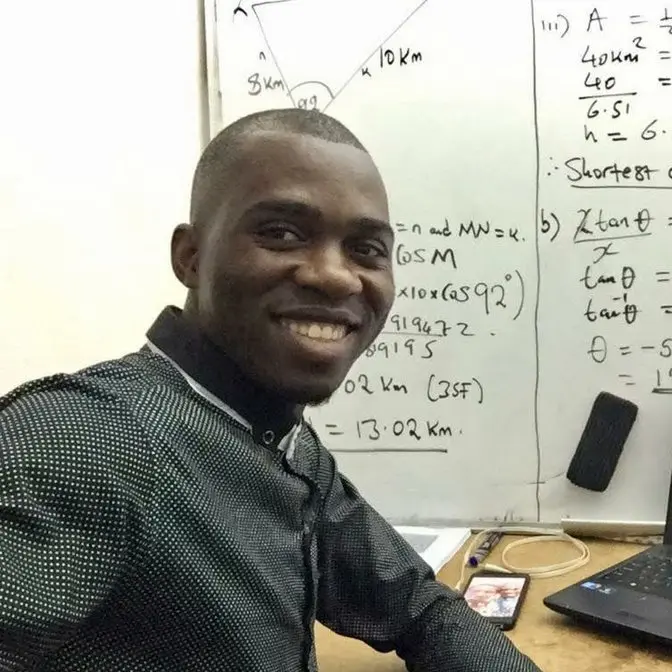
1 Video View·Feb 15, 2025
Pythagoras theorem, trigonometric ratios (SOHCAHTOA), sin ule, cosin rule, trigonometric graphs and equations
welcome to ego's concept planning room
in this video we'll take you through
senior secondary mathematics
trigonometry if you are watching us for
the first time
please click on the subscribe button so
that you can have full access to our
videos
and don't forget to like us on our
facebook page
at eagles concept academy
so what does trigonometry
involve so this video we're going to
teach you about trigonometric ratios
sine rho sketching the graph of y is
equals to cos
x for y is equals to sine x also known
as cos theta or sine theta
then we'll do cosine rho we'll also do
shortest distance and the area of a
non-right angled
triangle then we'll also
solve some equations involving
trigonometric
equations so before we can just
go straight into trigonometry we are
going to refresh our minds
about pythagoras theory right
so we remember that pythagoras theorem
was a method for a theorem that was used
to
find the sides of a right angled
triangle so this is a right angle
triangle and it has the right angle here
and we can remember from our pythagoras
theorem that
we have got the longest side here right
at the opposite of the right angle
which is called the hypotenuse then
these two sides here
they are interchangeably called the
adjacent sides
so when you're finding the longest side
here you are going to say
h squared is equals to a squared plus b
squared if you are finding any of the
shorter sides then you are going to say
h
squared minus b squared it means you
find s squared
if you want to find b then you're going
to say h squared
minus a squared all right so
this was just a brief brief summary
about the pythagoras theorem because
we'll keep on using on and on so that is
how it is done
and uh won't show much examples because
this is great nine work
rather let's go and uh
proceed to the next thing so now here we
are saying
it was just solving the sides how about
the angles so to answer the question of
how about the angles
that is where now trigger trigonometric
ratios
will come in and these trigonometric
ratios they are
uh they are they can be memorized by
using this famous word
socaton all right so the weights okay
these are the three trig ratios
that come up so this the 53
the next three there and also we have
the last three so these are the ones
that have been
uh summarized here so we have the saw
car
and tor all right so now
let's look at this triangle that is here
right here we know that this is
hypotenuse
this hypotenuse it does not change the
name no matter what
but these two here at uh pythagoras
theorem level they're just called the
adjacent but when it comes to the
trigonometric ratios when we are now
growing
who have these guys interchanging names
why
because if you are looking at this angle
here
then where this angle is facing that
becomes the opposite
adjacent then the other one remains
the adjacent if again we decide we want
to look at this
angle so with respect to this angle x
here
then this one here is going to be
opposite adjacent
and this one will remain watery adjacent
so that
is the whole idea about this one so
these
they obtain their names by virtue
of the angle being considered
so with respect to this angle this one
becomes the opposite
with respect to this angle this one
becomes the opposite so if
one becomes the opposite then the other
one automatically becomes
the adjacent side all right so now what
do these
trigonometric ratios mean so this s here
it means sine opposite over
adjacent so this is the one here sine
theta simply means an unknown angle
so sine theta is equals to opposite over
hypotenuse all right
then also we have cos is uh
cosine here is equals to adjacent over
hypotenuse so a for adjacent
h for hypotenuse or for opposite
adjacent then here we have
tan this one means tan so this is the
formula that we have here
and you have to know about these
formulas just
you know these ones for now all we are
interested in is these ones that are
here all right so we have formed these
formulas now one might be wondering
what are these done cos and signs that
are being talked about
okay so these are the ones that we have
shown here on the calculators
all right so as you can see these are
the two famous
calculators in the world so we have uh
this cast you hear the standard
classroom
and i would advise if it's for the exam
you can either go for a casio
or a shop but myself i'm a fan of cancer
all right so here as you can see this s
i n here that is the sign
that is the cost and that is a 10 year
all right so these are the buttons that
we are talking about
as we begin to make some calculations on
the calculator
these are the things that we'll be
talking about okay
all right then here now there's also
what you call when you're finding angles
there's what we call the sign invest
cost invest and return invest so
to go to those functions you just have
to press the shift button
any we press on what we need as you will
see later on
then using this calculator the shift is
called
second function so to ndf that is second
function
then you can get uh this one here
you can get here that is where we have
we have designed the course understand
this is where they are
as you can see all right so those are
the things that we are talking about
let's look at an example for a triangles
below
find the missing angles all right so
the missing angles we are supposed to
find that angle there
and that angle there so i'm just going
to demonstrate on how to calculate here
using
this angle here now this one because we
have all
the three sides here it's just to decide
which one you want
remember we have the saw
okay so we have the saw and we have the
car
okay the saw car and then we have the
torque
so so car and we have the
tor all right so here you can look if we
are considering
angle b here then this is going to be
the opposite then this one is going to
be there
adjacent this one is forever the
watching the hypotenuse
it does not change so if i want to use
this ratio to find this angle
i'm just going to say sine so i say sine
b because b that is the angle i want to
find so sine b
is simply equal to so what is there on
the opposite it's 5
so it will be 5 over
the hypotenuse here which is the 13 so
sine
5 of sine b is equal to that one so now
we are still going so we continue
we write our sign b there okay sine b
is equal to then you just punch on your
calculator
simple division 5 divided by 30 which
will give us
0
punching through also don't just watch
like a tv okay
and so on and so forth so you write all
the figures
now remember we are finding an angle so
in order for you to find an
angle from here you are going to the
next step which is going to say
sine okay in this you have to find the
sine inverse of r t
of b so sine inverse of b is equals to
then
you are going to your calculator okay so
to your calculator let's go back to our
calculator so you are going to press
this button
shift and then after you press shift you
press
sign here and then when you press this
sign here it is going to bring
on your screen of the calculator this
symbol is going to come so when this
symbol comes
then you just type in these numbers that
are there when you type in the numbers
that are there
then you say is equal to and you are
going to find your angle b
as 20 uh two pointy
six degrees to one decimal place
all right if you want because you have
all the sides here
even if you use the car here the answer
was to be the same
so here you can also use so this is just
the situation one
then in the second scenario you can also
use car meaning it will be course
b okay course b is equal to
so cos b now you know that it will be
adjacent over hypotenuse so
with respect to this angle we know that
this is our opposite
and this is our adjacent and this is the
forever hypotenuse
so this one will just be 12 divided by
30
by 13 so this one you continue this one
is going to be
cos b which will be equal to so you
divide this one punch on the calculator
you're going to find 0.923 so this is
0.9
to 3 as well as some other numbers
inside make sure you write all of them
then you go to the next thing since you
find whenever you are finding an
angle you have to go to this stage of
finding the inverse of cos inverse of
b and this one will be equal to so again
you do the same thing
you go to your calculator if you're
using a casio you just press on
shift and then you press on course when
it gives that sign you're punching the
numbers or if you're using this one you
just press on me
second function that's when you press
what it costs
thereafter if you bring this one and
then you just
keep in these numbers and you discover
that it will still be 22
26 degrees to one decimal place
okay now in the exam there won't be such
simple situations where you have all the
sides no
it's either you are given this side and
this side or this side and this side
so you have to choose which ratio to use
based on the information that you have
beneath
given all right so now i've just
demonstrated on how to find this angle
why
because i can simply say angles in a
triangle
up to 180 so i can just add this one
plus this one
then the answer i subtract it from one
eighty and finally
missing side here but even if i wanted
to find the angle a
with respect to angle a then this one
will become the opposite
this one there adjusting and then you
get me
substitute appropriate all right so you
can also go
via that route all right
there is also what we call some special
angles now in the case of uh mathematics
paper one
you are not supposed to use a calculator
so this is where
these special angles are going to be
very
applicable so you are supposed to master
these angles in your head now
some things are not necessary to master
so i'm just going to teach you
you're supposed to master this you're
supposed to master that
and you're supposed to master that and
uh
that so let me just master so you're
supposed to know sign zero okay sign
zero
is zero then you're also supposed to
know sine thirty
it's always zero point five which is the
same as half then you are also supposed
to know side ninety
which is one okay then when you go to
course you're also supposed to know cos
zero because zero easy one okay
then you're also supposed to know
because so cause 60
is the one that is 0.5 all right and in
the exam they like it for some reason
whatever whether they bring stuff in 30
or they'll bring constant
it is very famous so let's master them
then cos c
90 is actually zero okay so at least
let's know this one sign
and cost but if you are have the
capacity you can master all these
special angles
sine rule let's look at this triangle
here
so sine rho this one is applied when you
are dealing with it
none right and what triangles so this
one can be used to finding
a side or angles right it can be used to
find
both sides and angles of none right
angle
triangles so for example when you're
given this triangle a
b and c what you first have to do is
first
this this capital letter here is a
vertex
or it represents the angle so cut the
letters
they represent angles so this calculator
the opposite should be a small letter so
the smaller represents a side
smaller does represent a sign so the
capital letter on the opposite should be
the smaller
this capital letter on the opposite will
be smaller this capital letter here
on the opposite is a smaller so now if
you want
me i like this one because that's what i
was taught you can either use this one
as a over sine a
is equals to b over sine b which is
equals to c over sine c
or you can start by writing these ones
that they told at the bottom you write
them at the top
if the answer will still be the same it
is too acceptable now
in case someone is wondering is it
always that i'm going to have a triangle
abc
the answer is no there will be certain
situations
where you have uh let's give this
triangle here
okay we give this triangle here and it
won't have abc but
it has instead uh it has the uh
q uh error so let's just give it
q okay error so remember the vertex
use calculator so this is q era
and w okay so q arrow
and w so meaning here what you're going
to do is this this error here the
opposite here will be smaller
error then this q the opposite would be
smaller q
this w the opposite will be smaller w
then the sine rule in this case can also
become
as if this q okay smaller than q
over sine mean okay so this is over sine
q right is equal to
error okay over sine
error okay which is equal to
w over
sine w okay so w
over sine w it can also be like that so
just follow the simple rules the
calculators represent the angles that's
why they are written on the vertex
then the opposite should be a small
letter which represents our t
a site all right so stay tuned
and see how we can apply the sign rule
but before we can uh go into solving an
exam question
using the sign rule let me also just
give a conclusion by saying
the sign rule is used when are given two
angles
and one side okay so when you're given
two angles on one side
then you can use the sine rule to find
the other side or the other
angle right or a situation where you're
given two sides and
a non-included angle so these are the
situations
in which you can use the sign rule but
there are other tips
that i'll give and officially of course
but it does always work
when you see that you are solving a
right and unright angle triangle and
you're finding distance
and the number of marks given to you is
four marks then automatically
you know that i'm supposed to use it
sign the rule so you just see the four
max
the sign rule all right stay tuned and
see
what i'm talking about question one
reads
three villages a b and c
are connected by straight paths as shown
in the diagram we know
so we have a b and c all right
so this is what we we have and they are
saying given that
a b is 15 kilometers angle abc is 790
degrees
and angle abc is equals to 40
degrees calculate the distance ac
so like i was saying this is under
trigonometry
and trigonometry when calculating
distances it's either you're using the
sine rule
or the cosine rule all right that is
what works when it comes to
this such type of logic triangles
now you also have to memorize the rules
that you are given for example when you
are given
two angles and one side and you are
supposed to find another cycle another
angle you can use
the sign now those things tend to be a
little bit hectic to memorize
so instead what you can use is just a
simple trick it has been noticed from
the past examination paper that
and other literatures that whenever they
give you
four marks or less then what you have to
apply is what they
sign wrong but if they give you five
marks and beyond
then you have to apply their team
because i know so
that is a simple trick that you can use
it in trying to discover
which methods to use instead of you
wasting time in exam trying to
think okay when given two sides whatever
angle don't even waste time just check
the number of months and let the number
of marks
guide you on what method you are going
to use
all right so we have discovered that
this is what it this is
a design we are going to use but before
we can start solving the side rule
then you have to also ensure that you
are level like this
this capital letter b the opposite side
will be smaller than b
this is calculated the small and the
opposite side
then you just have to pick two elections
either this one and this one or that one
and that one so
because we are finding b automatically
we are choosing this one
then you have to look at a complete side
now why can't we use a
a
degrees this one should be equal to uh
so c okay so this one was the actual
sign b so it's 79.40
so this is 79.59 over
this one and that one what you're going
to have is
b sine 14 is equal to so
b sine 40 is equals to 15 multiplied by
sine 79 all right so this one divided by
sine 14 even this side also you're going
to divide by one t
sine d fourth all right so this one and
that one goes therefore
p is equal to then on your calculator
you're going to
and this one is giving us this one
is giving us 14.72440775
so we can round off this one to 14.27
kilo meters and we have found
our site all right
then the next question simply says
calculate the area
of triangle abc so triangle
a b c now area of a non-right angle
triangle
is given by the formula so area is given
by the formula
half
[Music]
now what does it mean now we have two
side cases b
we have so we are saying this side now
but send the new kilo meters
okay then if you you know you have this
side
okay so we have our our uh
this side we have and we have this side
so the best thing that we have to do
here is
we have to also find this now
we can't use this angle because we can't
use this angle
because this side if we have this side
and this side
[Music]
okay so this is x plus so we just add
79 here plus 14
so i said 9 plus 40 this is 119 so plus
1
and 2 is equal to 20
so this one the x is equal to 1 8 minus
1
1 so x is equal to
so that is 180 minus 190 it is
giving us 618 degrees so this angle here
is final white 61 degrees all right so
it's substituting here area will be
equal to
half multiplied by our our area
our side is not electron a just puts two
sides
so you can say times 15 10 times 40
times you 14.87 n
times z sine e 61 and
you are going to find your t your area
all right
so we multiply here we are saying
1 over 2 multiplied by
15 multiplied by 14.7
multiplied by sine 61. this one is
giving us
96 96.80
[Music]
four kilometers square so area is always
[Music]
square all right so that is
what we have okay so that is what we
have and the area we are found to be
96.4
kilometer squared all right let me just
clear what to create some space for
other questions
okay so the other question reads
the other question reads calculate
the shortest distance from b to ac so
from
b to a c now shortest distance
is this distance so you're going to draw
a perpendicular line from there
but draw a perpendicular line
so this is the shortest distance the
shortest distance you have to find the
perpendicular distance and equal that
h so the moment you do that there is
another formula of the area
that will come in which is the area of
the right angle body
triangle all right so area of the right
angle triangle will
all right so there are two areas that
you are connecting here
this area you are from finding the area
on this question you already know it
has 96.4 kilometers so you're just going
to write this is your 96.4
kilometer squared is equal to half
multiplied by your base you already have
this ac
[Music]
so you can multiply this 14.7 multiplied
by half
so 14. 14
0.7 multiplied by
0.5 which is the same as half this one
is giving us
seven
[Music]
[Music]
six divided by
7.35 this one is giving us
h being equal to 13.11564626
all right therefore h is equals to 18.1
kilo negative this is the shortest
quantity
distance all right so that is
what happens when sorting out such
questions all right let's proceed we go
to the next question
which says solve the equation cos theta
is equal to that one
so what you're going to do is you're
just going to write this one cos
theta is equal to uh
that is zero point zero point nine
three seven so if you want to find
this theta here this theta is an unknown
angle so if you have to know that angle
you're just going
to say cos inverse of theta
is equal to so when you go to your
calculator
you are going to do shift so on your
calculator there is a shift button
so you are going to press shift okay you
ensure that
it shows you so shift then you go to
where it says
course here so when you press on course
you will see that
what i've written here
then after it appears then you press
0.937
then you say equal to then it is giving
me
[Music]
20.44630112
all right now let's check this is the
angle that we have found now they are
saying
four zero is this equal to theta
theta is this or equal to so meaning the
answer that you have between zero
or which one you check here you
all right so that is how you find this
one
so uh question c simply reads
sketch the graph of y is equal to
sine b theta four zero
is less than or equal to three hundred
and thirty sixty so what you have to do
here is just
simply sketching the graph now in here i
know we are answering the question
so let me include some equation so that
we have
c one and c so that we do the one
because there are only two graphs that
will ask you
the one for sine theta and one for
[Music]
so what you do is simply do is
[Applause]
[Music]
so this is how
so since you are dealing with sine theta
then you begin to punch all your
calculators and now
you certainly sign zero so if you find
that
zero is equal to zero
so sine zero is equal to zero and you go
to sine 90
so this is sine 19 which is equals to
one okay then you go to sine 180
sine 180 which is equal to
zero then you go to sine 270
sine 270 which is equals to
negative 4 1 then finally you do side b
360 which is equals to zero these are
the values that you have
then you sketch the x y plane okay
with x y right so this is
[Music]
[Music]
[Music]
this one here then you join into three
hands
with the pencil first okay so free hand
but for this one and that one you can
use the ruler then for joining
you use freehand you should go like that
and to find that
it reaches there and you have sketched
it's that simple and straightforward you
have sketch
you graph okay so let me also take this
opportunity
to also sketch the graph of course okay
so in the in in paper two you're going
to have a calculator like this
so it will be easier to write these
things but for paper one
there is what we call the special angles
so these special angles you are supposed
to
memorize them okay memorize the special
angles
for example cosecant
[Music]
what is because uh for example if i say
cos zero
if you know the x2 remember that was
zero it should be one
okay let's let's just try so the graph
for sine theta is this one let's try
also now
the graph forwarding for cos theta
okay so the procedure is the same except
that
in here different values
okay so we are now doing for cos
here instead of beta the sine we are now
going to have
the cos theta so we have cos
theta right so we have the first data
there
and then what we'll be doing is we start
now
[Music]
[Music]
course 180 which will give us the value
of negative one
then we go to course 270 so
course 270 which will give us a zero
and then we go to cost risk listing
which will definitely give us a one
shot so cosplay system it will give us a
one
okay so we use the same our
y value and our
x so this is our zero that is our 19
that is our 180 that is 270
and finally we have one twist so in here
we just
have a one there and negative one
so here is just negative one zero one
then we've been deployed so the first
one is zero of one
so zero for one which is this point
there the ninth comma zero is right here
then one eighty for my negative one
which is
right here the 270 comma 0 right here
then 360 comma one which will be right
there then join these points okay
so join these points and that is how
our graph will come out
cosine rho is another row and the
trigonometry
that is used to find also the missing
sides and angles
of a non-right angled triangle all right
so let's look at this triangle for
example a b c
of course by now you know that uh the
capital letter a
the opposite small letter a and the
smaller represent the size
the capital letter will represent the y
t uh will represent the
angle all right so for this one this is
what these are the formulas that you can
come up with
we can say a squared is equals to b
squared plus c squared
minus 2 bc cos c a so it's just about
following the pattern
look at this one this one be when you
start with a meaning even at the end
here you should be capturing that
a all right so when you start with a
here there should be the others that are
missing then minus
you just put these two together so that
is how easier it is to memorize the yt
the formula all right so this one is it
b squared you've seen
written s squared plus c this is squared
minus so just a two the same one
a and c so two s is then called c b so
because we started with b
even here to be i captured that b event
c
it could be the same all right so these
formulas that are here are useful
when you're finding one team are useful
when you're finding a site how about
when you're finding an angle so when
you're finding an
angle you have to make uh this part here
cos a you make it the subject of the
formula
all right so when making it the subject
of the formula let me let me just
demonstrate that one
let me just demonstrate so in making the
subject to the formula let's say this
one here
we want to make uh want to make cos a
the subject of the formula
so what you're going to do is this one
will be a
squared okay then this b will cross over
here
so minus b squared okay they need
minus c squared because the c now making
this one we want this one to remain on
its own so everything else
should go this side so this one has gone
then this one will be equal to
minus 2 b
c cos a okay
now this cos a is together this minus 2
b c cos a is together
so what you do you're just going to
divide over
minus e to b and
c all right so what you do this side
you're also going to do that side so
this is minus
2 e and c so that
this one will cancel with this one we
want to remain with cos a now what
happens here
remember it would not retain any sign
then this is a positive so
positive divided by negative it will
give us what is negative
okay so this one is going to be minus a
square then this negative and the
negative will give us
a positive so it becomes a plus then
also this negative and this negative
also this is plus b squared then this
negative and this negative it also give
us plus c
c squared so over
2 b c and this one should be equal to
cos a right course
a now let's write it from the top due to
lack of space
so now we are not supposed to start with
the negative so this is how come we're
going to start with these ones first
so we write it as it cos a okay
cos a is equal to so we start with a b
square there
so this is b squared plus c squared
okay this squared plus c squared minus c
a
squared then this one is over
to be c so this is how come
they are coming up with it these
formulas so use these ones
when finding an angle all right
same applies also like i said in the
previous sine rule
i say it's not always that they will
give you
these letters abc but they can give you
for example like i said
let's use p here and we put
q and we put what error so this thing
will change where there is q
here we are going to have a small letter
q where is r we're going to have a
smaller
r where is p we are going to have
smaller p so if we are making formulas
let's use v for example it is just going
to be p squared
okay p squared is equals to uh
is equals to q squared plus
r squared okay then minus
2 uh q arrow
for c so 2 q error because c
chord c uh because we started it's also
it could be called c
p here okay so this one will because
all right so other letters will also
work
just know how it flows how the formula
is coming about that easy
how best it can happen
all right when do we use
cosine rho so cosine rho is used
when we are given either three sides
okay when we are given either
three sides or two sides and the
included angle now
that is the standard one but as we are
going to be solving the example always
remember
when we are solving a side in in
non-right angle triangle
and they've given the number of marks to
be five marks then automatically you
know
you are supposed to use the cosine rule
so let's not waste time in the exam
when you are given five marks use cosine
row when you are given less than five
marks for example four which is famous
you need sign rule so four max sign rule
five max
cosine rho all right five max cosine
rule
format sine rule that is uh how you are
supposed to do all right we are talking
about cosine rule
just stay tuned and see from this sample
question
on how you can apply it in solving
questions
all right so question two reads the
diagram below
shows a triangle kmn in which km
is equals to eight kilometers f n is
equals to 10 kilometers
and k m n is equal to 92 degrees
the first question says calculate k n so
the first thing that you have to do is
you have to know this is
like i said if you just notice that the
number of grams
is five you don't need to start
thinking over and over you just
what you just need to do is just know
that you're using what's in you
because i know if it is in five months
so if that's been a case then we are
going to write since we are finding
m here so since we know that k
a r k n is the same as n
and we know that n squared will be equal
to
k squared rather
this is m so we have m squared
is equals to k squared
plus c n squared minus
2 k n then cos
so we substitute we are going to have
our k layer
which is 10 squared plus 8 squared
minus 2 open brackets this is 10
multiplied by 8
multiplied by cos 92
so we have cos 92 so we solve this one
10 squared plus 8 squared that is 164.
so before you can write the sign there
you can just say okay minus 2 and inside
the brackets there
you multiply that is 10 multiplied by 8
multiplied by cos 92
which is giving us negative 2.791959736
and negative a negative so this one
would be 164
plus multiply uh multiply by
negative rho 2 that would give us plus
5.58394
and seven two so you add these together
remember you pick the m squared here we
get m squared
so this one is m squared is equal to 169
so you add one to the negative
so this one at 164.
it gives you 169.5
8 3 9 one
nine five so square root square root
there
and your m is equals to the square root
of answer
square root answer which will give us
13.024
[Music]
all right so this one is in 13
kilometers
all right so proceed that is 18
kilometers you go to b they are saying
we find the area
of triangle kfn which is the same thing
that we did
in the next uh in the previous question
so we are saying area is equal to
half a half
that is m k then sign in
92 all right so this one we seem to be
half
multiplied by 10 multiplied by 8
multiplied by
sine 92 so we punch that from the
calculator
we are saying this is 0.5 multiplied by
10 multiplied by 8
multiplied by sine 92
so this is sine 92 and we have our
39.
which can be rounded off to 40
kilometer square