
ECZ MATHS EXAMS SIMPLIFIED SINE RULE
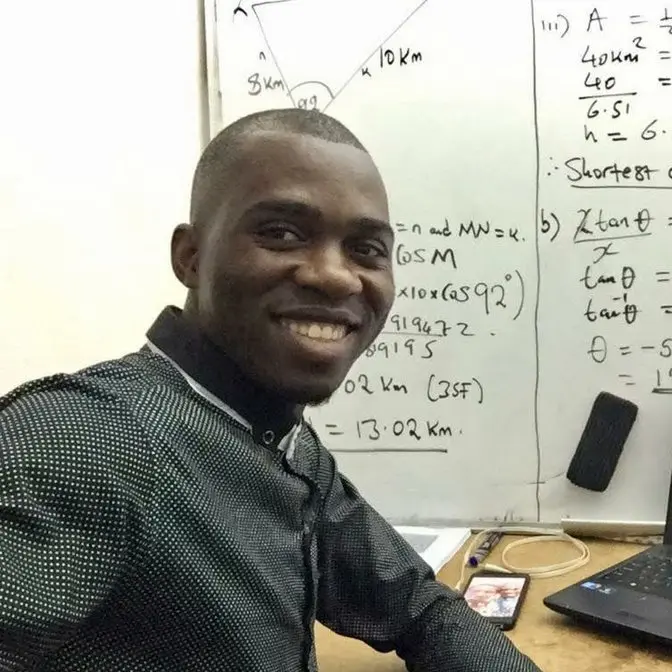
4 Video Views·Jan 20, 2025
this videos is meant to give tips on how to handle sine rule in solving non right angled triangles
Let's look at this triangle here.
So sine rule, this one is applied
when you are dealing with the non-right angled triangles.
So this one can be used to finding a side or angles, right?
It can be used to find both sides and angles
or non-right angled triangles.
So for example, when you are given this triangle A, B,
and C, what you first have to do is first,
this capital letter here is a vertex
or it represents the angle.
So capital letters, they represent angles.
So this capital letter, the opposite should be a small letter.
So the small letter represents a pipe.
Small letters represent a pipe.
So the capital letter on the opposite
should be a small letter.
This capital letter on the opposite will be a small letter.
This capital letter here on the opposite is a small letter.
So now if you want me, I like this one
because that's what I was taught.
You can either use this one as A over sign A
is equals to B over sign B,
which is equals to C over sign C.
Or you can start by writing these ones at the bottom,
you write them at the top.
The answer will still be the same, it is still acceptable.
Now, in case someone is wondering,
is it always that I'm going to have a triangle A, B, C?
The answer is no.
There will be certain situations where you have,
let's give this triangle here.
Okay, we give this triangle here and it won't have A, B, C,
but it has instead, it has Q, R,
so let's just give it Q, okay, R,
so remember the vertex use capital letters,
so this is Q, R, and W.
Okay, so Q, R, and W.
So meaning here, what you're going to do with this,
this R here, the opposite here with the small letter R,
then this Q, the opposite with the small letter Q.
This W, the opposite with the small letter W.
Then the final rule in this case can also become
as if this Q, okay, small letter Q over sign, okay,
so this is over signing Q, right,
is equal to R, okay, over signing R, okay,
which is equal to W over signing W, okay,
so W over sign W.
It can also be like that,
so just follow the simple rules.
The capital letters represent the angles,
that's why they are written on the vertex.
Then the opposite should be a small letter,
which represents what is a sign.
All right, so stay tuned and see
how we can apply the sign rule,
but before we can go into solving an exam question
using the sign rule,
let me also just give a conclusion by saying
the sign rule is used when we are given
two angles and one side, okay,
so when you're given two angles and one side,
then you can use the sign rule
to find the other side or the other angle, all right,
or a situation where you're given two sides
and a non-included angle,
so these are the situations
in which you can use the sign rule,
but there are other tips that I'll give,
and officially, of course, but it does always work.
When you see that you are solving
a non-right angle triangle and you're finding distance,
and the number of marks given to you is four marks,
then automatically you know
that I'm supposed to use the sign rule,
so you just see the four marks, it's sign rule.
All right, stay tuned and see what I'm talking about.
Question one reads, three villages, A, B, and C,
are connected by a straight path
as shown in the diagram below,
so we have A, B, and C, all right,
so this is what we have,
and we are saying given that A, B is 15 kilometers,
angle A, B, C is equal to 790 degrees,
and angle A, B, C is equal to 40 degrees,
calculate the distance A, C.
So like I was saying, this is under trigonometry,
and trigonometry, when calculating distances,
it's either you're using the sign rule or the cosine rule.
All right, that is what works
when it comes to these such type of triangles.
Now, you also have to memorize the rules that you are given.
For example, when you are given two angles and one side,
and you are supposed to find another side or another angle,
you can use the sign rule.
Now, those things tend to be a little bit hectic to memorize,
so instead, what you can use is just a simple trick.
It has been noticed from the past examination paper
and other literatures
that whenever they give you four marks or less,
then what you have to apply is what?
Sign rule, but if they give you five marks and beyond,
then you have to apply the cosine rule,
so that is a simple trick that you can be using
in trying to discover which method to use
instead of you wasting time in exam trying to think,
when given two sides, whatever angle, don't even waste time.
Just check the number of marks
and let the number of marks guide you
on what method you are going to use.
All right, so we have discovered that this is what it,
this is the sign rule we are going to use,
but before we can start solving the sign rule,
then you have to also ensure that you label like this,
this capital letter B,
the opposite side of the small letter B.
This is capital letter A,
the small, the opposite side of the small letter A,
and so on and so forth.
Then you write the sign rule,
okay, so this is the formula here,
then we know that the S that we are finding
is the same as B,
that is the B that we have written there, all right?
Then you just have to pick two letters,
either this one and this one, or that one and that one.
So, because we are finding B automatically,
we are choosing this one,
then we have to look at the complete side.
Now, why can't we use A?
Quite right, we don't have A,
and we don't have the angle,
so this one can't work, it is out.
So, C, we have the sign C,
and we have the angle C,
so this one can definitely do a,
can definitely work.
So, now we substitute.
So, B, there, it is going to remain as B over sign C,
which is the angle there,
sign 40 degrees,
this one should be equal to,
so C, okay, so this one was the actual sign B,
so it's 79, not 40,
so this is 79,
we have our 79 there,
then our C, this is actually 15 kilometers,
so 15 over our C there,
which is 40 degrees,
which is sign 40,
angle is sign 40,
and from there, you are going to do a D,
you cross multiply,
so you cross multiply this one and that one,
what you are going to have is B,
sign 40 is equal to,
so B, sign 40 is equal to 15 multiplied by sign B, 79.
All right, so this one you divide by sign 40,
given this sign also,
you are going to divide by our two,
sign B, 40.
All right, so this one and that one both,
therefore B is equal to,
then on your calculator,
you are going to place now 15,
so you press 15 multiplied by sign B,
so there is a sign here on the calculator,
press there, so sign B, 79,
and this one is giving us,
this one is giving us 14.72440775,
so we can round off this one to 14.7 kilometers,
and we have found our site.
All right, then the next question it says,
calculate the area of triangle ABC,
so triangle ABC.
Now, area of a one right angle triangle
is given by the formula,
so area is given by the formula,
half, okay, AB sine C,
that is the formula,
so half AB sine C,
all right, now what does it mean?
Now we have two sides,
this is B we have,
so we are saying this side now is 14.7 kilometers,
okay, then if you know you have this side,
okay, so we have our,
this side we have and we have this side,
so the best thing that we have to do here,
we have to also find the angle here.
Now, we can't use this angle because,
we can't use this angle because we don't have this side,
if we have this side and this side
we would have used this angle,
if we have this side and this side
we would have used this angle,
but here we have this side and that side,
so we have to find that angle.
Now remember, angles in a triangle,
they add up to 108,
so we're just going to add this angle 0.8,
so we are just going to add x plus it 79 plus 40 is equal to 108 okay so this is
x plus so we just add 79 here plus 14 so 79 plus 14 this is 119 so plus 119 is equals to what?
x is equals to 180 minus 119 so x is equal to so that is 180 minus 119 it is giving us 61 degrees
so this angle here is fine at what 61 degrees all right so substituting here area will be equal to
half multiplied by our our area our side not any triangle we just put two sides so you can say
times 15 then times 14 times 0 14 27 then times z sine 61 and you are going to find what in
your area all right so we multiply here we are saying 1 over 2 multiplied by
14.7 multiplied by 61 this one is giving us 96 96.4 268 2271 so we can round off to one decimal
square so area is always in kilometer square all right so that is uh what we have okay so that is
what we we have and the area we are finding to be 96.4 kilometer squared all right let me just
create some space for other questions okay so the other question reads
the other question reads calculate the shortest distance from b to a c so from b to a c now
shortest distance is this distance so you're going to draw a perpendicular line from there
so this is the shortest distance the distance from here to there so since it's a perpendicular
line you're going to call this one h okay then whenever you do this now so always remember
when you're finding the shortest distance you have to find the perpendicular distance and you
call that one edge so the moment you do that there is another formula of the area that will
which is the area of the right triangle all right so area of the right angle triangle
will be given by area is equals to half this height all right so there are two areas that
you are connecting here since area you are from finding area on this question you already know it
as 96.4 kilometers so you're just going to write this is your 96.4 kilometer squared is equals to
half multiplied by your base you already have the base a c already from 14.7 kilometers so this is
14.7 kilo meters then multiplied by h okay so solve this one 96.4 is equal to so you can multiply
by half so 14.7 multiplied by 0.5 which is the same as half this one is giving us 7.35 times h
7.35 then this side by 7.35 this one the other one you are saying 96.4 divided by 7.35
this one is giving us h being equal to 13.11564626 all right therefore h is equals to
18.1 kilo meters so this is the shortest parting distance all right so that is what happens when
sorting out such questions all right let's proceed and go to the next question which says
solve the equation cos theta is equals to that one so what you're going to do is you're just
theta is equal to uh that is zero point zero point nine three seven so if you want to find
this theta here this theta is an unknown angle so if you want to know that angle
you're just going to say cos inverse of theta is equal to so when you go to your calculator
you are going to do shift so on your calculator there is a shift button so you're going to press
shift okay you ensure that it shows you so shift then you go to where it says cos here
so when you press on cos you see that what i've written here you're giving up here on your
calculator then after it appears then you press a zero point uh nine three seven then you say
then it is giving me 20.44630112 all right now let's check this is the angle that we have found
now they are saying four zero is less or equal to theta theta is less or equal to so meaning the
answer that you are finding should be between zero and three or which when you check here
you discover that this is in between so our theta is finite equal to 20.4 all right so that is how
we find this one so uh question c simply reads sketch the graph of y is equal to sine theta
for zero is less than or equal to 330 cdc so what you have to do here is just simply sketching the
now in here i know we are answering the question so let me include something in the equation so
that we have c1 and c2 so that we do the one because there are only two graphs that will ask
you the one for sine theta and one for cos theta so the first one is this to do the sketch of y
is equals to sine theta so they've given us from zero to 360 so what you do is simply do this
you're going to make your x and y coordinates like that then what you're going to do here
you are going to make your coordinates like that that is the first thing so you're going to write
now the angles you start right zero then from zero you go to 90 from 90 you go to 180 from 180 you
360 so this is how the angles they move so we are just adding by 90 0 plus 99 90 plus 91
360 and 360 is the complete revolution so since you are dealing with sine theta
then you begin to punch all your calculator now you start with sine zero so if you punch
zero is equal to what zero so sine zero is equal to zero then you go to sine 90 so this is sine
90 which is equals to one okay and you go to sine 180 sine 180 which is equals to zero then you go
sine 270 which is equals to negative one then finally you do sine 360 which is equals to
zero all right so these are the values that you have then you sketch the x y plane okay the x y
of that so this is my y here and here i'm going to have my x so in the x i have from zero to 360
so this is my zero and i go to 90 and i go to 180 and from there i go to 270 and from 270 i now
go to 360 all right then in here i just have zero one zero negative one so i just have negative one
zero one so this is zero already so definitely this one has to be the one and put it anywhere
since it is in sketching and the negative one will definitely be at the bottom here then you
begin to sketch the first point is zero comma zero which is right here then the next one is 90
comma one so 90 comma one will meet somewhere which is there then you go to 180 comma zero
which is there then you go to 270 comma negative one that is at the bottom here 270 and negative
360 comma zero which is in this one here then you join it three hands with the pencil of course
okay so free hand but for this one and that one you can use the ruler then for joining
you use free hand which will go like that until finally it reaches there and you have sketched
it's that simple and straightforward you have sketched the graph okay so let me also take this
opportunity to also sketch a graph of course okay so in the in paper two you are going to
have a calculator like this so it will be easier to write these things but on paper one there is
what we call the special angles so these special angles you are supposed to memorize them okay
memorize the special angles for example cos 60 sin 30 all those are special angles and including
you are supposed to memorize in your head if i just wake up and say okay what is uh
sine 180 should be able to tell me zero what is because for example if i say cos zero even
after today still remember that was zero it should be one okay let's let's let's give it a try so the
graph cosine theta is this one let's try also now the graph for cos theta okay so the procedure is
except that in here different values okay so we are now doing for cos theta so here instead of
having the sine we are now going to have the cos theta so we have cos theta right so we have the
cos theta there and then what we'll be doing is we start now cos zero so cos zero this one three one
cos 90 so cos 90 and this one will give us a value of zero then we go to cos 180 which will
give us the value of negative one then we go to cos 270 so cos 270 which will give us a zero
and then we go to cos 360 which will definitely give us one so cos 360 it will give us a one
okay so if you listen our y there and our x so this is our zero that is our 90 that is our 180
that is 270 and finally we have boom 360 so in here we just have boom the one there and negative
one so here is just negative one zero one they will be in the plot so the first one is zero
which is this point there then 90 comma zero is right here then 180 comma negative one which
is right here 270 comma zero right here then 350 comma one which will be right there then
join these points okay so join these points and that is how our graph