
OTITIS EN PERROS | Síntomas, causas y prevención - Lauvet
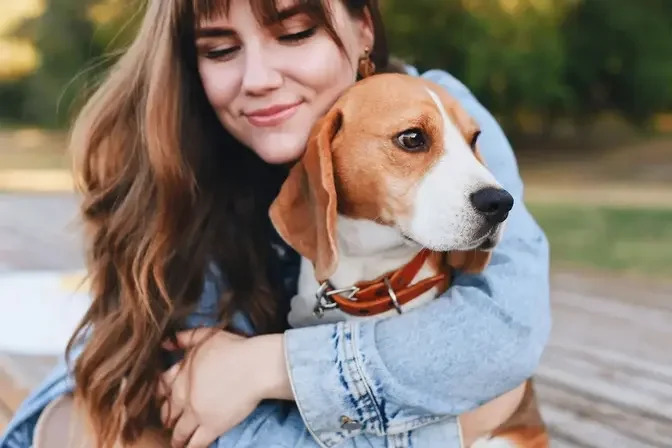
64 Video Views·Jan 18, 2025
Si quieres saber todo sobre la otitis en perros, este video es para ti. Hoy te enseño las causas de la otitis en perros y los síntomas mas frecuentes ya que que van desde el rascado excesivo hasta el mal olor. También aprenderás a, tomar medidas rápidas y lo más importante a saber como prevenir la otitis en tu perro.
La otitis es una enfermedad muy incomoda que afecta a muchos perros, y también muy común, en especial en algunas razas de perros que tienen mayor predisposición a padecerla, el Bernés de la Montaña, el Golden Retriever, el Perro Salchicha y otros perritos de orejas caídas.
Recuerda que debes evitar los remedios caseros para tratar la otitis en perros ya que puedes empeorar el problema.
Hello everyone, welcome to a new video on my channel.
I'm Laura Londoño, veterinarian and zootechnician,
expert in animal behavior,
and today we are going to talk about dog's otitis.
Otitis is a very frequent alteration in our hair
and it is when there are inflammations, irritations or infections
in the ears of our dogs.
As its word says, otitis speaks of any inflammation in the ear
that can be caused by different reasons.
Today we are going to see what those more frequent causes can be,
how we can prevent otitis in our hair,
and very important, what we should do when it occurs.
We will also learn to identify it,
we will talk about the most frequent symptoms in dogs,
because many times otitis can go unnoticed
and it begins to become a chronic problem
when a few days, weeks or even months
of the progression of this alteration are already passing.
And it can become a chronic problem
that is increasingly difficult to treat.
So we are going to know how to identify it in time
and very important how we are going to avoid and prevent this alteration,
because we also have racial predispositions,
different alterations that are more frequent in some dogs,
so we are going to talk about everything related to otitis.
Stay to watch this video if you want to learn about the health of your dog,
remember to subscribe to my channel,
in the part below, in the button where it says subscribe,
and do not forget to activate the bell, the notifications,
so that you can learn about many other issues related to health,
the behavior of your dog,
and thus be the best dad or the best mother dog.
Otitis can have different causes
and it is very important that your veterinarian
determine what that cause is,
to prevent it from happening again.
Otitis can be caused by infections,
either bacterial infections or by viruses.
And there are also parasitic alterations
that can generate these inflammations,
such as mites.
They are parasites that easily generate otitis in our dogs
and generate more secretion.
Depending on the cause,
our veterinarian will indicate a treatment,
but there is something very important that I recommend you do
before consulting with your veterinarian,
in case you see any of the following symptoms.
The most frequent symptoms of otitis
is when our dogs shake their heads constantly,
sometimes people do not relate
that our dog is shaking
because his ears are bothering him,
then they begin to shake their heads from one side to the other,
or to have contact with different sofas,
beds or walls,
or even with ourselves.
They begin to scratch on our legs
in search of relieving pain or discomfort.
As many of them have their ears down,
that is, covered,
the auditory canal is not exposed,
so for them it is sometimes difficult to scratch.
And since they do not have hands,
they do not have fingers like us,
for them it is difficult to alleviate that discomfort.
So they look to scratch or scratch
against different objects.
They can also scratch against the ground,
so sometimes it seems like a fun behavior
because we think that our dog is playing,
having fun, having a good time,
but the truth is that he may be scratching against the ground.
In many cases, when our dog has otitis,
we see a secretion of different colors,
we see dark secretions, like black or brown,
white secretions, green secretions,
and if we see any other color,
it is important to consult with our veterinarian.
But we must know that the ears
normally have a secretion that is dark, brown,
and that is part of the physiological processes of animals.
The problem is when this secretion is more increased than normal
and when we clean it and it continues to come out frequently.
Dogs will always have wax, like any other animal,
but it is important to know that this wax should not have an overproduction
because that would indicate that the body may be trying to expel
some type of infection or some type of microorganism,
such as mites.
When dogs have some infestation or mites,
there may be a much more exacerbated brown secretion,
and that is when we should consult.
The ears of our fur can be cleaned every 15 days or every 20 days,
and it is normal that there is a secretion in that cleaning.
Normally, it must be secretions of these brown colors.
If we see white, green, or other color secretions,
it would no longer be normal and we should consult.
Otitis also comes accompanied by inflammation,
and it means that this area of the ear would be much redder,
much hotter.
When you touch the ear, it feels much hotter
and there may also be pain or swelling.
When there is the presence of otitis,
there may also be a kind of smell that is different from normal.
In a natural way, the dogs' ears have a specific smell,
but when there is an overgrowth of microorganisms,
this smell can change.
So it is very important that if we feel a bad smell,
we consult with our veterinarian,
or also if we have several animals at home,
it is very common that one of the dogs
begins to sniff the other's ears much more,
or if we have a cat, they also begin to sniff
the ears of that dog that has otitis.
And this could also be a sign or a symptom
that indicates that there is an overgrowth of bacteria,
of microorganisms, and that we should consult.
In many cases, this same smell is very striking for other animals.
So in addition to wanting to sniff the ear,
they start licking it.
And by licking, all they are doing is depositing
many more bacteria and more microorganisms
and generating humidity in that area.
Therefore, if we see that another of our dogs or our cats
are licking the ears of our cats, we should avoid it,
because this is only going to make the problem worse,
because normally in the mouth of animals there are many bacteria
and even more microorganisms would be depositing.
We have already talked about the symptomatology
and some of the causes that can generate otitis in our cats,
and it is very important to have a cleaning protocol,
either the moment we identify that our cat has an overload
of this secretion, or also in a preventive way
to avoid the accumulation of microorganisms.
I recommend that you have routine cleaning products
with your cat, such as ear solutions.
These solutions should not include anti-inflammatory,
antibacterial, or antibiotics.
It is only an ear solution that will help us clean the ear.
We can use this ear solution even in a recurring way.
If our dog is healthy, we can use it every 15 days or every 20 days.
But if we see that there is more secretion than normal,
or our dog is starting with some symptoms of otitis,
we can use this ear solution every day
and do a daily cleaning of the ear of our dog
to prevent more microorganisms from accumulating.
We can use a gauze, it is important that it is dry,
do not use damp cloths, and do not use gauzes that are damp,
because we are going to use this ear solution,
we are going to apply it on both ears,
and with a gauze for each ear, we are going to remove the excess.
We should not use cups, or soaps,
nor are we going to introduce anything into the internal auditory canal.
This cleaning is only in the external auditory canal.
And with that gauze, we are going to eliminate
the greatest amount of residue, of secretion that there is,
and the excess of the product.
The goal is that the ear is not damp,
but that we manage to dry it completely.
It is very important to use a gauze for each ear
so as not to have cross infections,
for example, if in one ear we had some type of bacteria,
some type of microorganism, that we do not pass it to the other ear.
And we must clean and see if this cleaning improves,
because sometimes the only thing that happens
is that there is an excess of secretion
that begins to cause discomfort in our ear.
If we see that in two or three days this does not improve,
and on the contrary, it begins to worsen,
there we should go to our veterinarian.
This routine cleaning process with our ear,
every week, every 15 days, or every 20,
will also prevent autism from being generated.
And we must be especially careful with the ears that have fallen ears.
These fallen ears, since the ear is not exposed,
can accumulate more dirt and more moisture.
Moisture is a gateway for many microorganisms
that need these conditions to live.
For example, the little feathers that have the ears standing,
which are uncovered, as there is air all the time,
and all the time they are much more aerated,
there are many microorganisms that cannot grow in these conditions,
and therefore they need moisture to grow and reproduce.
So when the feathers have their ears very wet,
or for example, one day it rained and their ears got wet,
or one day they were in the park and they got into a puddle,
in a lake, in a pool, and those ears are very wet,
that moisture generates an optimal environment for the growth of microorganisms.
So make sure if your feather gets wet for some reason,
to dry it with a dry towel or with a gauze to avoid this moisture.
There are many dogs that have a predisposition to suffer from otitis.
For example, large dogs that are very hairy,
can also more often generate otitis,
such as the Bernese of the Mountain, the Golden Retriever, the Terranova,
or dogs with fallen ears, such as the sausage, the Basset Hound, the Cocker Spaniel.
All of these are dogs that, due to their anatomy,
can have a greater predisposition.
Dogs that are very hairy have more hairs,
and those hairs can sometimes generate discomfort in the ears,
and the hairs also generate dirt.
So in the hair there can be fungi, microorganisms, parasites,
that more often can get into the ears.
It is very important that under no circumstances,
we cut the hairs that dogs have in their ears,
because just as these hairs sometimes promote the entry of microorganisms,
they also help them get out.
So it is also a way to maintain the optimal health of the ears,
and they should never be cut.
When we consult with our veterinarian,
he will be in charge of doing a complete physical exam,
to evaluate if there is pain, if there is a presence of secretion.
And what we should do as veterinarians, in many cases,
is to do a cytology,
and it is to take a sample of this secretion,
along with a swab,
and in a plate or object holder,
we are going to deposit this secretion.
And under the microscope, we are going to identify
if there are bacteria,
if there is a presence of a virus,
if there is a presence of mites,
or of any other microorganism,
to understand what treatment we should install.
It is very important that we follow the letter,
the treatment indicated by our veterinarian,
and that we avoid inconsistency.
Because these treatments must have a constant period,
where the drops are applied,
or the treatment is performed,
so that it is optimal.
If we are not constant,
and we apply a drop,
then the next day we do not apply it,
the treatment is lost,
and it would be ideal to start again.
And lastly, it is very important that we reuse formulas.
Because in many cases,
if our dog already had a titi episode,
if we have the formula,
or even if we have the medicines stored,
people sometimes tend to use them,
and this is a serious mistake.
Because the veterinarian is the one who should indicate
if those drops can be used or not.
Because in some cases,
the drops we use are an antibiotic.
But it turns out that what your dog has in this case,
is, for example, a condition of acharosis.
In this case, the antibiotic would not work.
And we would be administering a drug,
to which the animal can begin to generate resistance.
So, drops should not be used
without knowing specifically what our dog has.
What we could use,
would be the ear solutions,
which, as I mentioned at the beginning,
do not have antibiotics,
do not have antimicrobials,
do not have anti-inflammatories,
and will not worsen the problem.
But I also recommend that when you go to consult
with your veterinarian,
the ears should not be extremely clean.
So that your veterinarian can evaluate
what color is the secretion,
what aspect does it have,
what smell does it have,
and very important,
so that he can take the sample of that secretion.
If the ears are completely clean,
we will not be able to do this cytology
and take these samples in the appropriate way.
In many cases,
the treatment must be accompanied
by Abelino collar.
The Abelino collar will prevent the dog
from scratching his ear.
Because a very frequent complication
and consequence of autitis
are the otohematomas.
As its name says,
they are hematomas in the ears.
Hematomas are blood clots.
So, for example,
if a dog has a lot of pruritus,
he is scratching his ear a lot,
because he has an infection,
he starts scratching with his leg,
or he scratches against the tips of the tables,
objects,
and what happens
is that a blood vessel can burst,
and therefore,
blood accumulates in that ear,
and an otohematoma is generated.
To avoid this,
we must use Abelino collars
while we control
the discomfort in our dog's hair,
which is one of the first things
that your veterinarian will indicate.
He will install a treatment
so that he does not scratch,
so that it does not hurt him
and does not bother him,
and thus avoid scratching.
And finally,
a very important recommendation
is that you avoid using
home treatments or home remedies.
Many times we find on the internet
remedies with ginger,
with medicinal plants,
which can even worsen the problem,
because this area,
when the ear is already inflamed,
is much more sensitive.
The skin is more sensitive,
it is easier to generate allergies,
and to avoid a greater complication
in the external and internal auditory channel,
we must avoid applying things
that we do not know they contain.
Avoid using human drops,
avoid using ginger,
apple cider vinegar,
or any home remedy,
because in some cases it could work,
but if we do not have a clear diagnosis
and our veterinarian does not give us
green light to use those treatments,
it will be indicated not to bother
that area to avoid complications.
This was all for today's video,
I hope you have learned a lot more
about Autitis in your dog,
so that the day you face
one of these situations,
you understand how to handle it,
you know what are the most common symptoms,
and you can have much more clarity
about this disease.
See you in a next video,
and remember to subscribe to my channel
for many more videos like this.
Bye Bye!