
10 Korean Dishes You Can’t Leave Seoul Without Trying!
100 Video Views·Jan 8, 2025
I share 10 of the best Korean foods you can’t miss eating when you’re in Seoul! This video is not sponsored. I have no affiliation with any of the restaurants mentioned in this video.
I'm taking you to the 10 best local Korean food spots in Seoul.
There are so many restaurants here that it can be overwhelming, so I've narrowed it
down to 10 must-eat Korean foods.
Keep watching to save them for your next trip.
Korean barbecue is a must when visiting Korea.
There are different types of meat you can order to barbecue, but my favorite item to
order at a Korean barbecue place is sogarbi, which is marinated beef short ribs.
It's sort of like a honey, sweet flavor with a slightly smoky taste.
It's both sweet and savory with a hint of earthy, nutty flavor.
The galbi here is very high quality, extremely tender, plus the atmosphere is very spacious
and clean so my dad treats me and my husband to a delicious meal here every time we visit Seoul.
In some Korean barbecue places, you have to grill it yourself, which can be a bit of a
hassle trying to make sure the meat is not undercooked or overcooked, but they grill
everything for you at this place which is very convenient.
I also love how they give you a variety of banchan or side dishes and they are all amazing.
They are included in the price of your meal and there are free refills if you want more
of any of the side dishes.
Don't be shy about asking for more.
I especially love the lotus roots in creamy sesame sauce and the naengchae, which is a
cold jellyfish salad.
You can enjoy the meat alone or with any of the side dishes and I personally thought it
pairs really well together with this onion salad.
After you have enjoyed your barbecue, Koreans typically order a stew with rice for some
noodle dish.
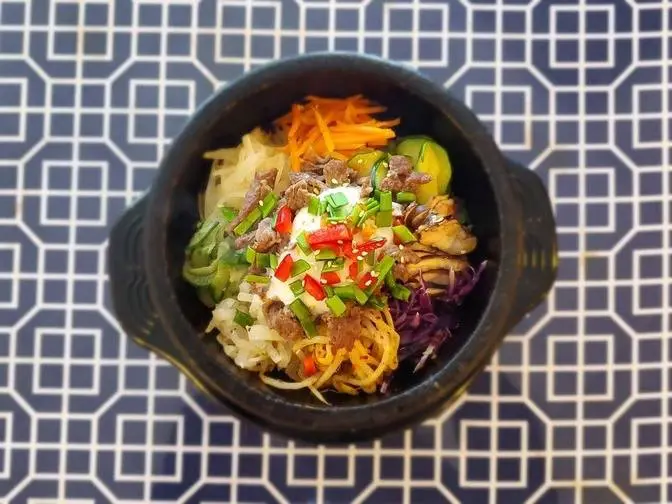
I highly recommend getting dolsotbap, which is stone pot rice with doenjang jjigae, the
soybean paste stew.
You scoop out the rice to eat with the stew and then pour this broth into the stone pot,
close the lid and it'll create delicious nurungji, which is scorched rice.
The bottom part of the rice is slightly crunchy because of the stone pot and the broth is
really warm and hearty.
Doenjang jjigae has a rich, deep umami flavor with a slightly salty and fermented taste.
I was really full at this point, but my husband and I also shared mul naengmyeon, which is
Korean cold noodles.
The broth is made from dongchimi, which is fermented radish water kimchi and beef stock.
The noodles are chewy and the broth is slightly sweet and so refreshing.
It's the perfect way to end the meal.
Next is the famous myeongdong gyoja.
The menu is short and sweet with only three regular items, kalguksu, mandu, and bibimguksu,
plus a seasonal kongguksu that's only available during the warmer months of late spring to
early autumn.
We got one of each, but if you're only ordering one dish, kalguksu, which is hand-cut noodles
in a warm broth, is a must.
The ingredients are simple.
It has noodles, broth, minced meat, mini wontons, zucchini, and leeks.
Sometimes you'll notice that kalguksu in other restaurants are lighter, but the broth
here is thick, rich, and full of flavor.
It's so warm and hearty.
Mandu, or dumplings, are filled with pork, leeks, and vegetables.
They're steamed, not too heavy or salty.
The skin is thin and it's filled with juicy pork.
Each mandu dish comes with 10 dumplings, so it's great to order one and share between
two or three people if you're also trying other noodle dishes.
Their signature kimchi made in-house here is extremely garlicky and one of the spiciest
kimchi I've had, which pairs well with kalguksu and mandu, but just try a little bit at a
time if you can't handle spicy food.
Bibim guksu, which is Korean spicy noodles, is really good too.
They scoop a thick, gooey sauce made with gochujang, spicy red pepper paste with cucumbers
and sesame seeds on top of the noodles.
Make sure to give it a good mix.
It's very red in color, but it's not as spicy as you think.
The noodles are firm and chewy, which is the exact texture I prefer in a noodle.
Also, if you want some rice to eat with your dishes, you can ask for rice for free here.
The main store is located in Myeongdong, but I went to the one in Itaewon this time, and
I thought all the dishes tasted exactly the same.
Kalguksu and bibim guksu are both 11,000 won each, which is about $8, an amazing Michelin
approved restaurant with delicious food at affordable prices.
Third on the list is a famous Korean makchang and daechang barbecue restaurant.
These are ingredients that may not be familiar to some of you, so let me explain.
We got the modum gui, which is the one I would recommend getting as you can try all of their
signature menu including galbi, beef short ribs, makchang, beef abdomen, and daechang,
large intestines.
If makchang and daechang are not your thing, you can just order the beef short ribs, or
they also have other options like beef briskets.
Unlike the regular Korean barbecue meats, what really sets makchang and daechang apart
is the texture.
It has a slightly crunchy exterior with a softer lining and an inner paste.
It's so chewy.
Makchang and daechang tend to be quite fatty and the fat is what makes it so flavorful.
The galbi, beef short ribs, are tender and perfectly marinated in a garlicky sauce.
They also give you sundubu, which is Korean spicy soft tofu stew, various side dishes,
and dipping sauce to enjoy the beef, makchang, and daechang with.
The side dishes include potato salad, cucumber salad, non-spicy baek kimchi, and geotjeori,
which is Korean lettuce salad.
They also give you some rice cakes and garlic to grill and it's nice that they grill it
for you instead of having it to grill it yourself.
If you go to this place, you have to finish off the meal with ddukbaegi yangbap, which
is a cow stomach fried rice.
It comes in a stone pot and you have the option to have it with cheese or without cheese,
but we added cheese.
The stone pot makes it extra hot and it has little pieces of cow stomach and kimchi
topped with stretchy cheese.
It's extra delicious if you wrap it in a seaweed they give you.
I would highly recommend getting it if you have room in your stomach.
Also, as for the atmosphere, they have a cool retro local style vibe.
Fourth on the list is a kaisendon restaurant which is technically Japanese food, but I
can tell you that the food here is just as good or if not even better than the ones I
had in Japan and a place I've visited at least 20 times so I had to include it.
For anyone unfamiliar, kaisendon is a seafood rice bowl.
It has rice on the bottom and is topped with a variety of freshly sliced sashimi.
This is what you get when you order kaisendon at this restaurant.
The color and presentation just makes me so happy even before I eat.
The bowl also comes with seaweed, pickled radish, miso soup, and wasabi and soy sauce.
I like to eat it by taking a slice of seaweed, putting a bit of rice, and a slice of sashimi
dipped in soy sauce and wasabi.
It's a perfect blend of flavors and textures.
I love how all the sashimi here is quite thick, extremely fresh, and smooth.
It just melts in your mouth.
They give you a variety of toppings including salmon, tuna, shrimp, yellowtail, egg, and
more so it's nice to be able to try various kinds.
Also, you can get free refills on rice, seaweed, pickled radish, and miso soup if you run out.
If you're not into raw seafood, they do have other options like grilled eel rice bowl
and udon.
I just love how everything is so clean and fresh here and I feel full after this meal
but still feeling healthy and not overly stuffed.
It's definitely one of my favorite spots in Seoul that I go back to again and again.
Fifth place on the list is an octopus restaurant.
Octopus is not something I get to have often in the US so I love eating it when I visit
Korea.
I went to the one inside Hyundai City Outlet department store but they have many locations
across Seoul so you can just go to the one that's close to you.
We got nak-gop-sae which is stir-fried octopus, small intestines, and shrimp all in one dish.
They cook it in front of you and also bring all the side dishes.
Once it's all cooked, the waiter or waitress will take the lid off and let you know it's
ready to eat.
Later, the shrimp tempura that we ordered also came out.
I can tell it was freshly fried.
The shrimp was quite big and the outside was crispy and paired well with the creamy sauce
they gave you.
The name nak-gop-sae is an acronym of nakji, octopus, gopchang, beef small intestines,
and saeu, shrimp.
You can enjoy the different textures of the ingredients with a taste that is sweet and
spicy.
They also have other options like nak-ja-sae which is stir-fried octopus, beef briskets,
and shrimp without the small intestine and they also have nak-sae which is just octopus
and shrimp so you can pick based on your preference.
You put a scoop of nak-gop-sae on top of the rice and add in these side dishes like kongnamul
which are bean sprouts.
Mix it up and eat it together and it adds another level of crunchiness and freshness.
I'm someone who kind of cares about the ambience so this is what the restaurant looks like.
Very clean and spacious.
If you're someone who likes spicy seafood, you'll want to try this while you're in
Korea.
Sixth place on the list is a jokbal restaurant.
Jokbal is a braised pork dish that's very popular among Koreans.
They serve you banchan or side dishes like any other Korean restaurant.
We ordered banban jokbal which is half classic and half spicy.
Jokbal is a Korean style braised pig's leg and feet which might sound strange to some
of you and honestly I didn't try this dish until I met my husband and it was delicious.
Jokbal is braised for hours in soy sauce, spices, onion, and garlic until the meat becomes
super tender and the meat absorbs the flavors.
I personally like ordering half half so I can enjoy both classic version and the spicy
one but you can just go with the classic one if you're not into spicy food.
I like to dip the classic one into the saeu-jeot which is a shrimp seasoning they give you
and wrap it on perilla leaves or lettuce.
The meat is so tender it just melts in your mouth and the perilla leaves adds in freshness
with hints of mint and basil.
They also have pieces of rice cakes that come with the jokbal.
Rice cakes are so chewy I love them.
Apparently the skin part of jokbal is good for your skin cause it has collagen.
Ddakguksu which is buckwheat noodles with vegetables also comes with the jokbal.
Mix up the sweet and spicy sauce they pour on the top.
The buckwheat noodles are quite chewy which I like and it has a slightly nutty and earthy
taste compared to regular noodles and it goes well with the fresh crunchy vegetables.
I went to the one in Seodaemun-gu district but they have different locations across Seoul.
I personally rarely drink but jokbal is a very popular anju in Korea.
Anju is a Korean term for food consumed with alcohol so if you like drinking,
this will be a perfect dish to try and even if you don't drink like me, still very delicious.
7th place on the list is sundae gukbap which is a soup with blood sausage.
We ordered one regular sundae gukbap and a spicy one.
And they give you 3 simple side dishes.
Pickled onion, kkakdugi or diced radish kimchi, and regular kimchi.
You can add a little bit of saeuja to the soup which is salted fermented shrimp if you'd like.
It adds a bit of saltiness and umami flavor.
The soup has big slices of Korean blood sausage,
rice, and additional cuts of pork and pork intestines such as liver and heart.
The perilla seeds powder adds the additional depth and abundance flavor.
I always get the regular non-spicy sundae gukbap and my husband prefers the spicy one
so you can pick based on your spice level.
It has the same ingredients inside but one is just spicy and one is not.
This place's specialty is sundae gukbap but if you're not into blood sausage,
they have a lot of other soups like suyu gukbap which is boiled pork rice soup.
There's a ton of amazing Korean food but for money,
I think there's nothing that beats a savory stew.
8th place on the list is a kimbap place which is seaweed rice roll.
You order through the kiosk.
It isn't Korean but they have pictures of everything
and the staff will come and help you if you're stuck.
After you order, they make the kimbap in front of you.
A lot of kimbap places will have it pre-made
but this place wrapping the kimbap when you order makes it taste extra fresh.
Plus the vibe is very clean and cute.
I got it to go but you can choose to eat it at the restaurant too.
I always get their signature egg kimbap but they have over 10 different kinds
like tuna kimbap, ham kimbap, and many more.
There's a ton of amazing kimbap places in Korea
but what I especially like about this kimbap in particular
is that they don't skimp out on the ingredients.
They put a thin layer of rice and they pack the kimbap with fresh ingredients inside.
The egg kimbap has spinach, carrots, egg, odeng which is fish cake,
braised burdock roots, and also yubu which is fried bean curd
adding a slightly sweet and juicy element.
I've been seeing frozen kimbap going viral in Trader Joe's selling out immediately.
I mean kimbap is definitely delicious and one of the most popular snacks were street food in Korea
so I highly recommend trying some freshly rolled kimbap on your trip to Korea.
Ninth on the list is a tteokbokki place which is spicy rice cakes,
another extremely popular Korean street food.
This restaurant has a very local vibe and you can see from the wall here
they've been featured in several tv shows in Korea.
We got tteokbokki and you can see here she's making a big pot of tteokbokki
and she scoops out a serving for you when you order.
We also got tegim which is the Korean version of tempura.
They have six different kinds of tempura so you can mix and match and pick whichever one you want.
We got the food to go but they have plenty of seating if you want to eat here.
This is what we got.
The tteokbokki on the left has rice cakes and fish cakes in a gochujang based sauce that's spicy and sweet.
What I like about this place is that the sauce isn't overly spicy.
I can handle spiciness to a certain extent but if it's too spicy I kind of find it to be torturing.
We also got five different kinds of tempura.
Korean sweet potato, dumpling, kimari which is seaweed roll and a veggie one.
This is the dumpling one with glass noodles inside
and it tastes extra delicious if you dip it in the tteokbokki sauce.
My favorite tempura were the veggie one and the octopus one.
The rice cakes are super chewy and the fish cakes are really good too with mild flavors of fish.
By the way, this tteokbokki is one serving and it cost 3,500 won which is $2.62
and it was enough to feed two of us.
It's a great place to try some Korean street food at cheap prices with big portions and friendly staff.
Lastly, the final place on the list is Paengmi-dang,
one of my favorite Korean dessert places in Seoul.
They specialize in organic milk soft serve ice cream.
We got one soft milk ice cream and one milk and chocolate mix one.
You can choose between a cone and a cup and we all went with a cup.
The ice cream here is made using 1A grade organic milk
from cows grown in a non-chemical fertilized environment.
Their parent company is Namyang Dairy which is one of the top three dairy companies in Korea.
The ice cream is extremely smooth and satisfying with the perfect level of sweetness
that isn't overly sweet.
They also have a ton of other flavors like soy milk ice cream,
matcha ice cream, and also coffees and cakes.
I went to the one in Gangnam but it currently operates 34 stores in Seoul and 72 stores nationwide
so definitely try it out if you like the pure taste of milk in an ice cream.
Besides this dessert place, if you walk down the streets in Seoul, you will find cafes everywhere.
For example, this Breitzling cafe I went to almost felt like a museum with the story of their brand.
Very stylish, chic, and modern interior and their bathroom was really pretty as if it's a photo spot.
So I recommend trying out at least a few cafes in Seoul to grab some coffee or dessert
and just enjoy the vibe.
That wraps up today's video and please let me know in the comments
any of your experiences, thoughts, or questions you have.
Thanks so much for watching and like and subscribe for more useful Korea content.
See you in the next video!