
Flying the Gulfstream G-IV into San Francisco!
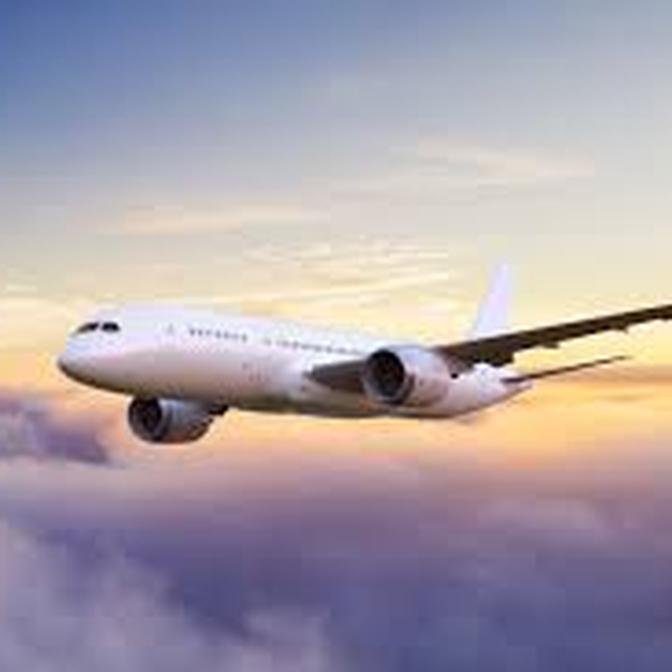
#Aircraft Join Curt and I as we fly the Gulfstream into the busy San Francisco International Airport! In a short flight like this it’s important we be on our game and stay ahead of the airplane. As always thank you for watching, and subscribe for more exciting episodes! I have a lot of good stuff in the pipeline, stay tuned.
Hello from San Martín, California. My day as a corporate pilot starts here
in my hangar with the Bonanza. This is my commute to work today.
My first stop is Oceanside where I'm going to pick up the other pilot
and we're going to head to Santa Barbara, fly the Gulfstream back up to the Bay Area. Let's do it.
Alright, quick stop here at Oceanside picking up my man Curtis.
Saves you, what, a four-hour drive to Santa Barbara. So,
happy to help when I can. So, let's get back in the Bonanza, finish my commute to Santa Barbara,
and we're going to go fly the Gulfstream back to the Bay Area. Let's hit it.
Alright, now that is how you commute to work. We got the commuter, the Bonanza,
and there's the office right there. So, let's go get her fired up, get some gas, and head to San Francisco.
Alright, let's turn this old girl on. You guys know the drill. There's the alarm and the light.
Pump on and fire in the hole.
Alright, APU's up. Hawks power on. She's awake. So, you'll notice we're in plain clothes today.
That's because we are repositioning the airplane up to the Bay Area for an early morning departure
tomorrow. So, no passengers means no uniform, which means flying in comfort, and I'm all for that.
So, we're going to get some fuel and we'll be out of here. Alright, so we'll get our performance
data for this flight. Alright, so we're going up to 28,000 feet today.
Winds up there are going to be 255 at 86. I'm just pulling that directly from the flight plan.
Zero passengers, and we got winds of 240 at 20. There you go. There's our V speeds.
We want to create some separation between these two, so we'll put 119 to balance the field.
Boom, there we go. Perfectly balanced. We've got our speeds and they should populate
right there. So, there we go. We're all set.
Alright, let's hit it.
Alright guys, looking forward to the Gulfstream G4. We're going to go through my before starting
flow and then run the before start checklist. So, you can go ahead with that, Curtis.
Starting engine checklist. Alright, here we go. Start engine. Start page. It is up. HP fuel cocks. Air shut.
Fuel levers. Sorry, power levers. Idle. Desk lock. It's off. Beacon switch. Beaconing. APU air.
It is above 25. Fuel boost pumps. One each side. Electrical power. Below 35. Engine start master.
It is on. Engine start switch. How's it look on the right? And we are clear right. Okay, here we go.
Start valve ignition. HP is turning. And there we go. Firing the hole.
We got light off. TGT is on the rise. Start valve ignition is extinguished. Roll back.
We got 0-3-3-0. Single rotor limit. Alright, that's a good start.
3-3-0-0. Single rotor limit is out. Go through our after start flow. Start master.
Ground spoilers, you ready? Ready.
They're up. Down. Still down.
Light. Light. Test page.
Cross 1-5 right and left. Continue hotel to Juliet.
Good test. Alright, my controllers, here we go. 1-2-3.
Awesome. Good test. And I got one. Both. Good, both up. Okay, coming back.
And we're on the limit. Alright, after start checklist, please. Okey-dokey. After start
engine check. Start master. It is off. Electrical master. Left and right power switches. Both on.
External electrical. Didn't use it. Ox. Electrical power and air. Off. Battery. Transition. Charging.
Battery amp. Essential DC bus power source. Auto left main. Emergency power. It is armed. Doors.
Closed. Lights are out. NAIC switches. All on. Cow wing NAIC switches. Not needed today.
Alright, we got pressurization control. We got flight auto ADC 1. Fuel boosts,
pumps and cross flow. Auto closed. Nose wheel steering. Off in the test. Ground spoiler. Tested.
Stall barrier. Tested. Flight control bungee. Rotor torque limiter. All checked. Yaw dampener.
It's on. Nose wheel steering. On. Pedal steering disconnect. Don't have it. Ox hydraulic pump. Armed.
And brake test switch. And tested. Alright, that's after start check complete. Alright,
I am ready to taxi. Alright, here we go. I'll call him. Roger. Santa Barbara ground,
roll stream. Atlantic with hotel ready to taxi. Roll stream. Santa Barbara ground,
good afternoon. Runway 25, taxi via Charlie Mike Hotel, hold short. Runway 15 right.
Charlie Mike Hotel to 25 and hold short 15 right. Alright. Clear to taxi. Clear right. Clear left.
Looking good. Alright, so we're going Charlie Mike Hotel, huh? You got it. Here's Mike right here.
Alright. Cross stream. Cross stream is 15 right and 15 left on hotel. See you via hotel Juliet.
Alright, cross 15 right and 15 left on hotel then to Juliet.
Thanks. Alright, flaps 20, taxi check complete. Here we go. Flaps are now 20.
Alright, transponders on exterior lights. Coming across. There we go. Clear on the right. Exterior
lights are on. Cow wing anti-ice. Not needed. Brake check when you're ready. Yeah, your side
looked good on the crossing. Yep, clear right. And crossing the first and still looks clear over
here for the second. Alright, I got your lights for you. Thank you and you can continue with that.
Alright, brake check. They are good over here. Slip indicators, compass, flight instruments.
40, blue over brown, no flags. I see 075, 1, 2, 3, 4. And I see 2996 on the meter and VSI zero.
Alright. Thrust reverser operational, check. Check. And thrust reverser lights.
Looks good, armed. Alright, fuel temperature. Looks good. Curve briefing for Vspeeds. Alright, let's see
takeoff. Standard callouts. Anything below 80, abort. Anything below 80 or V1, we'll come back.
We'll abort for engine fire, failure, lost directional control. Anything above that,
we'll take it in the air, treat it as a flight emergency, come back here and land. And I'll fly,
you fix and run. Any questions? No questions. Awesome. Okay, trip settings. I got you at
8, 0, and 0. Awesome, should be good. ATMS overheat. Flaps and stab. I got 20, takeoff, and stab degrees.
Engine instruments. All white, all right. Alright. Hydraulic pressure. C3300. APU.
And flight guidance panel. Santa Barbara Tower, runway 25, line up and wait.
Line up and wait, runway 25. Flight guidance panel. Alright, 3 green, 3 amber, 5 headlines.
Alright, warning inhibit is on, track seat report check is complete. Cool, lineups go for it, and I'm
staying up. Alright, lineups are good. Clear on the left, as you said. Clear on final. Awesome.
Got a... Alright, this is good. You got one up, here come the ground spoilers.
I see runway 25, as we are. Box left, box right. Very good. Engine instruments are white, we are
looking good for lineups. Lineup check complete.
Wind 290 at 16, runway 25, cleared for takeoff. Cleared for takeoff, runway 25.
Alright, your tops. Alright, our tops. Runway 25 cleared to land. A lot of throttles.
Alright, airspeed is alive and holding. 80 knots. My tops. Your tops.
V1. Rotate. Positive rate. Gear up. Gear up. Alright, there's your 400 feet. Alright, flaps at
man speed 200, felch please. Alright, here we go. Flaps coming up. Contact departure.
Over to departure. Alright, 200 knots at 250 right now. Roger. Over to departure.
Departure, Goldstream. 1,500 climb and 3,000 on departure.
Santa Barbara departure, radar contact, climb maintain 8,000. Climb 8,000.
Gear 9, Bravo, contact tower 119.7, good day. A little wind over the bridge, over the ridge, yeah.
Alright, there's 8,000. Awesome, thank you. Airspeed chart, Victor, contact Santa Barbara
approach 124.15, good day. I'll take the autopilot please. Alright, autopilot. We're
gonna stay in 200 just so we can get that out. Contact Los Angeles center 119.05, good day.
1905, good day. Departure, Goldstream. 6,500 for 8,000. Remember,
LA Center, climb maintain FL230 and best rate of climb through 1,0,000 for traffic.
Alright, climb 230, best rate for traffic. Alright, now we're at a 10, we'll accelerate.
Sounds good. 117 Delta Alpha, 1,0,000. Alright, I entered your landing data. Your VREF is 143.
Yeah, we're still only going to use about 3,500 feet of runway though.
Awesome. But you got a nice long runway, so good weather, dry runway there.
Contact LA Center 126.52, good day. 2652. LA Center, Goldstream. 1,4,500, climbing 230.
LA Center, climb and maintain FL280, maintain 300 knots or greater. 300 or greater, climb 280.
Alright, I see 28, thank you, and we're going fast. 28, leave the pack. Alright, so if you guys notice,
Curtis already computed our landing data, and on short flights like this, staying ahead of the
airplane is super important, so props to him for getting ahead on that. So he put in the weather
info and all our arrival data, so we have our REF speeds today. And before we even left, we actually
pre-tuned the inbound course for the localizer, just another thing we can do before we even take
off, just so we're not falling behind the airplane on a short flight like this. Alright, so as
corporate pilots, one of our jobs is to help save costs for the owner, never to compromise safety,
but where we can, we'll always look out for him and try and save some money. So today we're going
to San Francisco from Santa Barbara, and fuel down in Santa Barbara is a lot cheaper than it is up in
San Francisco. And tomorrow we're flying across the country to the east coast, so we're going to need
a lot of fuel. But why would we take a lot of fuel in San Francisco when it's expensive? We're going
to tanker and take as much fuel as we can at Santa Barbara where it's cheap. So we've calculated the
numbers that we're under landing weight, but still have a lot of fuel, so it's less we have to take
in San Francisco. So there's no compromise for safety there, it's all looking out for the owner and
saving money where we can. Curtis, what was the cost of fuel savings between Santa Barbara and
San Francisco approximately? About four dollars a gallon. Yeah, so you add that up. Yeah, so we're
going to take minimal fuel in San Francisco. Exactly. About 500 gallons. Yeah, that makes a big difference.
So we probably saved about six thousand dollars just by doing that. Yeah, that's a lot of money,
so stuff like that where we just look out for him, you know, but there's never any corners or anything like that.
Approach, 135.65. 3565, good day. Approach, cold stream 7,000, descending via the surfer for the tiptoe to the left.
NorCal approach, maintain 210 knots, descend and maintain 4,000. 210 on the speed and then down to 4,000.
Well, Cosmic Terms, there's a heavy 777 ahead on the right, two o'clock, eight miles north side of
All right, we have the traffic on site for, we'll use caution. Maintain visual separation,
you'll be pairing with the 737 Delby on the right, I'll point them out as we get closer,
for now maintain 4,000. All right, we'll maintain 4,000, we'll look for the 737 for the pairing.
And you said 210? 210. Okay. 210 down to 4. Let's go flaps 10, please. Here we go, flaps 10 coming in.
Do you have either of the bridges or the airport in sight? We have both in sight, all in sight.
Descend and maintain 3,000. Down to 3,000.
You're pairing traffic, the 737 traffic is at your one o'clock,
eight miles on the downwind out of 6,000, they'll be on the right. All right, we're looking for them.
It's a beautiful hour right now, dude. Yeah, you can't beat this, man. Yeah.
The 737 traffic's two o'clock, six miles southeastbound, 5,000 for the right.
Oh, we're still looking.
Descend and maintain 2,600. 2,600, and we have the traffic on site for.
Maintain visual separation, they'll have you in sight as well,
you are cleared to visual 28 left approach. Cleared to visual 28 left.
737, behind you now for the right, they do have you in sight. Maintain one
seven zero knots to the bridge, connect center to the tower, 120.5, good day.
All right, 170 to the bridge, over to tower.
All right, let's go gear down, four lane checks, please. Here we go, gear's coming down.
All right, nutcracker test, looks good, ground spoilers are armed, all right.
One way to the left, good land. Good land to the left.
Thanks for calling Atlanta Air Signal, sir.
500. You can continue the southbound transition.
Delta's fairly even with 400.
So you'll see an airplane's probably right after that guy, because that's Echo.
300.
And if you need more, you need more.
Maintain visual separation from the heavy airbus.
Speed's good, plus check.
200.
Take all the runway you need.
100.
Power's out.
That looks good to me.
50, 40, 30, 20, 10.
Looking good, just take your time.
There we go.
All right, six lines.
My tops.
Right turn at Delta, hold short of runway 28R.
Right at Delta, short of 28R.
All right, so it should be the next right.
Yes.
And it is, this one coming up.
That's me, if you hear any buttons.
That's all me.
All right, pulse is off.
I'll answer your strobe on.
All right.
Go ahead and clean around.
All right, here we go.
Airplane landing on the right.
Awesome.
Starting up APU.
Cross runway 28R, contact ground.
Cross 28R, contact ground.
All right, clear left.
You got it.
You're clear right.
Awesome.
21, 8.
Low tower, skies 56, 17, we're visual 28L.
Echo.
Ground, Goldstream.
Cross 28R, go on the ceiling and check.
All right, I got your taxi light off.
But yeah, you got lots of room here.
This looks great.