
Blind Dog Was About To Give Up On Life, Then THIS Cat Did Something NO ONE Expected!
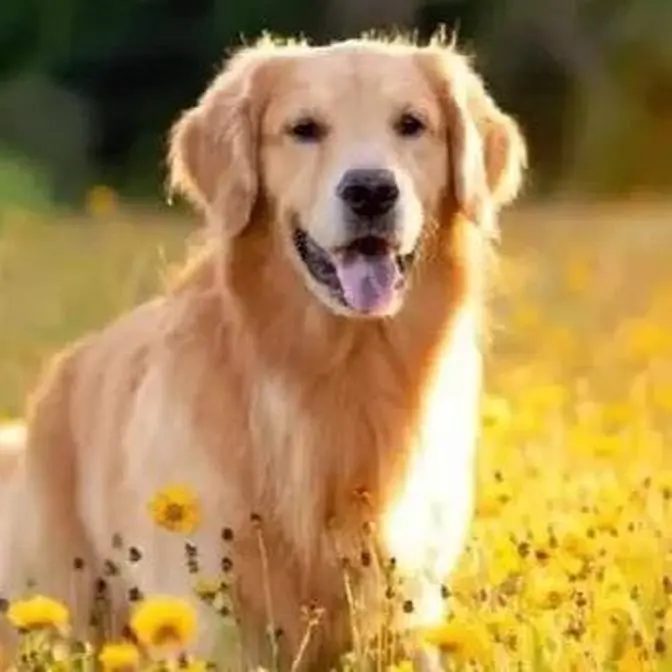
Blind Dog was about to give up on life, then this cat did something no one expected.
Old Charlie had been the Anderson family's golden retriever for 12 wonderful years.
His muzzle had turned white, but his tail never stopped wagging,
and his gentle nature made him beloved throughout the neighborhood.
However, this past spring, Margaret Anderson noticed Charlie bumping into furniture more
frequently. Something's not right with Charlie, Margaret told her husband, Tom,
one evening. They watched as their faithful companion cautiously made his way across the
living room, nose almost touching the floor. The vet's diagnosis was devastating,
progressive cataracts in both eyes. Charlie's going completely blind, dear, Roberts explained
gently. It's not uncommon in older golden retrievers, but the progression is happening
quite rapidly in his case. Over the next few weeks, Charlie's world grew darker.
He became hesitant to move around, spending most of his time curled up in his bed by the fireplace.
His tail, once constantly in motion, now only offered occasional weak wags.
The joy seemed to be draining from their old friend. Margaret, a retired school teacher,
spent hours researching ways to help blind dogs. She rearranged furniture to create clear paths,
put scent markers around the house, and added textured mats to help Charlie navigate.
But still, their once vibrant dog seemed to be fading into depression.
He needs something more than we can give him, Margaret said one morning,
watching Charlie refuse to venture into the backyard for his usual morning routine.
He needs a friend who can understand his world in a way we can't. That's when their granddaughter,
Sophie, showed them a video of a cat guiding a blind dog at a shelter in another state.
The idea seemed far-fetched, but Margaret couldn't shake the feeling that this might
be exactly what Charlie needed. We're going to the shelter, she announced to Tom, today.
Little did they know that this decision would not only change Charlie's life,
but would lead to one of the most remarkable animal friendships their small town had ever
witnessed. The local shelter was bustling with activity when Margaret and Tom arrived.
The cacophony of barking dogs and meowing cats filled the air,
but they were there with a specific mission in mind. A cat for a blind dog? Sarah, the shelter
manager, raised her eyebrows but then smiled warmly. Actually, I might have just the right
candidate. We have a rather unusual cat that came in last month. Sarah led them to a quiet
corner of the cat room where, perched on a high shelf, sat a striking gray cat with unusual golden
eyes, unlike the other cats who were either sleeping or clamoring for attention. This one
was carefully watching everything happening below. This is Luna, Sarah explained. She's about three
years old. The interesting thing is, she's been helping our elderly cats find their food bowls
and guiding them to the litter boxes. We've never seen anything quite like it. Luna tilted her head,
studying Margaret and Tom with intelligent eyes. When Sarah reached up to bring her down,
Luna gracefully descended into her arms without protest. She was found in a nursing home parking
lot, Sarah continued. We think she might have been a therapy cat because she's incredibly patient
and intuitive. Watch this. Sarah placed Luna near a blind, elderly cat who was sleeping in the
corner. Luna immediately sat beside the old cat, and when it woke up disoriented, she gently pressed
against its side, guiding it toward the water bowl. That's remarkable, Margaret whispered,
her eyes welling with tears. But how would she react to a dog? The shelter staff arranged a
careful introduction in a quiet room. They brought Charlie in, his movements hesitant and uncertain
in the new space. Luna, who was already there, watched the old dog with focused attention.
What happened next left everyone in the room speechless. Luna approached Charlie slowly,
making a soft, trilling sound. Charlie's ears perked up at the unusual noise. Instead of showing
fear or aggression, Luna walked in a figure-eight pattern around Charlie's legs, letting her body
brush against him gently. Charlie, who had been standing stiffly, began to relax. His tail gave
a small wag, the first genuine sign of happiness they'd seen in weeks. Then Luna did something
extraordinary. She walked a few steps away from Charlie and made another trilling sound.
Charlie turned his head toward the sound, and Luna repeated it, like she was calling him.
Tentatively, Charlie took a step toward her voice.
She's… she's showing him the way, Tom said in amazement.
The first few days of Luna's arrival at the Anderson home were filled with careful adjustments.
Margaret and Tom had prepared everything. A special cat bed, litter box, and climbing posts.
But Luna seemed more interested in Charlie than any of the new amenities.
From the very first night, Luna established her own routine. She slept not in her plush new bed,
but on the edge of Charlie's large cushion near the fireplace. When Charlie would stir in the night,
uncomfortable or disoriented, Luna would make her special trilling sound,
a gentle reminder that he wasn't alone. The real breakthrough came during breakfast time
on the third day. Charlie had been reluctant to walk to his food bowl since losing his sight,
often waiting until someone guided him. But that morning, Margaret and Tom watched in amazement
as Luna orchestrated a remarkable scene. Luna walked to Charlie's bowl, tapped it twice with
her paw making a distinct sound, then returned to Charlie. She brushed against his side and walked
a few steps, waited, then repeated the process. Step by step, she led Charlie to his breakfast.
It's like they're dancing, Margaret whispered to Tom, not wanting to break the spell of the moment.
Soon, Luna had developed a complete system of signals. A soft meow meant step up for the porch
stairs. A gentle pat with her paw meant careful, obstacle ahead. And her special trill always meant
follow me, it's safe. Charlie's confidence grew daily. With Luna by his side, he began venturing
into the backyard again. She would walk slightly ahead of him, stopping at any changes in the ground,
guiding him around flower beds and past the old oak tree. The neighbors couldn't believe
the transformation. Where once they had seen a defeated old dog, now they watched Charlie
walking with his head held higher, his tail wagging more frequently. Luna was always there,
his faithful feline companion. Her gray form a constant shadow to his golden one. One afternoon,
Mrs. Jenkins from next door came over in tears. I just watched the most beautiful thing,
she told Margaret. Charlie was sleeping in the sun and he started whimpering in his dreams.
That cat of yours, Luna. She went right over and pressed against his side until he calmed down.
Then she groomed his face just like a mother would do for her pup. But perhaps the most touching
moments were the quiet ones. In the evenings, as Margaret and Tom watched TV, they would look down
to see Luna and Charlie curled up together. The cat's gray form nestled against the dog's golden
fur, both peacefully sleeping two souls who had found exactly what they needed in each other.
As autumn turned to winter, the Anderson family faced a new challenge. The first snowfall
transformed their familiar backyard into an unfamiliar landscape and Charlie became disoriented
by the changing textures under his paws. One particularly cold morning, Charlie stood
hesitating at the back door, his nose twitching at the strange, cold scent of snow. For the first
time since Luna had arrived, he seemed truly afraid to step outside. Luna, however, had a plan.
She ventured out first, her delicate paws making distinct impressions in the fresh snow.
Then she returned to Charlie, shaking the snow from her paws near his nose so he could smell it.
Slowly, methodically, she began creating a path for him.
Tom, come look at this, Margaret called from the kitchen window. They watched in amazement
as Luna walked back and forth, packing down the snow in a narrow corridor. She would return to
Charlie every few steps, touching his paw with hers, then leading him forward.
She's making him a safe path, Tom marveled. That cat is smarter than most people I know.
The winter brought other challenges too. The shorter days meant Charlie had to go out in the
dark more often and the cold made his old joints stiff. But Luna adapted to each new challenge
with remarkable ingenuity. She learned to push small rugs into place with her nose, creating
textured pathways through the house. When Charlie's arthritis made it hard for him to get up in the
morning, she would give him gentle massages with her paws until he felt ready to move.
The local veterinarian, Dr. Roberts, was so impressed with their partnership that she began
documenting their story. This is more than just a friendship, she told Margaret during Charlie's
checkup. Luna isn't just guiding Charlie, she's actively problem solving to improve his quality
of life. It's extraordinary. Word of the unusual pair spread through the small town. People would
stop by just to watch Luna guide Charlie through his daily routines. She became known as the seeing
eye cat and their story even made it into the local newspaper. But the most magical moment came
during the holiday season. The Andersons had worried about putting up their Christmas tree,
fearing it would confuse Charlie's mental map of the house. But Luna spent an entire afternoon
walking Charlie around the tree, helping him understand this temporary change in his environment.
That evening, as the family sat admiring the twinkling lights, Charlie lay beneath the tree
with Luna curled up beside him. The cat had positioned them perfectly so that the colorful
lights cast a warm glow over both of them, creating a living Christmas card that brought tears to
Margaret's eyes. As winter melted into spring, Charlie and Luna's remarkable partnership had
unexpected ripple effects throughout their community. The local animal shelter, inspired by
their success, began carefully pairing senior and disabled animals together, creating what they
called the Charlie and Luna program. One sunny morning, Sarah from the shelter called Margaret
with excitement in her voice. Would you believe it? We've successfully paired three elderly cats
with younger ones who help guide them around. And we just matched a deaf Great Dane with a small
terrier who acts as his ears. But the most significant impact came when the local elementary
school asked if Charlie and Luna could visit. Margaret was hesitant at first, worried about
how Charlie would handle a new environment. Luna, however, seemed to understand the importance of
their mission. On the day of their visit, Luna guided Charlie through the school halls with
extraordinary precision. The children sat in a circle on the floor, watching in wonder as Luna
used her different signals to help Charlie navigate around them. This, their teacher explained, is what
true friendship looks like. It doesn't matter if you're different or if you need help sometimes.
Real friends find ways to help each other. A little girl in a wheelchair raised her hand.
Just like my best friend helps me carry my books, she exclaimed, and her classmate beside her beamed
with pride. The visit was so successful that it became a monthly event. The school counselor
noticed that children who struggled with disabilities or differences began to feel
more confident. If a cat can help a blind dog, one young boy said, then maybe it's okay that I need
help reading. Back at home, Charlie and Luna's bond continued to deepen. Luna had developed an
uncanny ability to anticipate Charlie's needs. She seemed to know when his joints were stiff,
spending extra time warming them with her body heat. On stormy nights, when the thunder made
Charlie anxious, she would press closer to him, purring loudly until his trembling stopped.
One afternoon, while Charlie and Luna were enjoying the spring sunshine in the backyard,
Margaret overheard two neighbors talking over the fence. You know, one said, I used to think cats
and dogs could never really be friends, and I certainly never thought a cat could be so
purposeful in helping others. Makes you wonder, doesn't it? The other replied, how many other
assumptions we make about who can help whom or who can be friends with whom? Margaret smiled,
watching as Luna gently guided Charlie back toward the porch steps, patiently waiting as
he navigated each one. In their own quiet way, this unlikely pair was teaching their community
about compassion, adaptation, and the limitless possibilities of friendship. As summer approached,
Charlie was slowing down more noticeably. At 14 years old, his muzzle was now completely white,
and despite Luna's devoted care, age was taking its inevitable toll. Yet Luna's dedication never
wavered. If anything, she became even more attentive. One particularly memorable morning,
the Anderson family witnessed something extraordinary. Charlie seemed to be having
difficulty getting up from his bed, his old joints especially stiff. Without hesitation,
Luna ran to Margaret, meowing insistently until she followed. Then, the clever cat led her to
where they kept Charlie's arthritis medication. She had learned to recognize when Charlie needed
extra help. She's not just his eyes anymore, Tom observed softly. She's become his voice too.
The local veterinary college heard about their story and asked to document their unique
relationship for a study on animal bonds and adaptive behaviors. Researchers were amazed by
Luna's extensive vocabulary of signals and her ability to modify them based on Charlie's changing
needs. During one of their observations, they recorded Luna developing a new signal.
When Charlie seemed confused about which direction to turn, Luna would use her tail
to gently brush his left or right side, indicating which way was safe to move. The researchers called
it innovative interspecies communication. As Charlie's mobility decreased, Luna adapted their
routine. Instead of long walks in the yard, she created smaller adventure zones on the porch.
Using different textures she would find, like leaves or flower petals, to give Charlie new
sensory experiences. She would bring him small treasures, a fallen feather, a soft leaf, each
one carefully placed where he could discover it with his nose. Their story spread further,
inspiring a children's book author to write The Cat Who Became Eyes. The book became popular in
hospitals and therapy centers, helping children understand that disabilities didn't define anyone,
human or animal. One autumn evening, as golden light filled the living room,
Margaret watched Luna guiding Charlie to his favorite spot by the fireplace. Charlie's steps
were slower now, but Luna matched his pace perfectly, never rushing, never leaving his side.
You know, Margaret said to Tom, her voice thick with emotion. When we went to the shelter that day,
we thought we were finding a guide for Charlie, but Luna showed us something far more important.
She showed us that love doesn't just help you see, it helps you transform. Tom nodded,
watching as Luna settled beside Charlie, her gray form contrasting with his golden fur,
just as it had that first day, and she showed us that sometimes the best teachers come in
unexpected packages. Charlie and Luna's story continued to inspire their community,
reminding everyone that the purest forms of love and friendship know no boundaries,
not between species, not between abilities, and certainly not between hearts that recognize in
each other exactly what they need. As the sun set on another day, Luna's gentle purr mixed with
Charlie's contented sighs, creating a symphony of companionship that spoke of a love that could
bridge any gap, overcome any obstacle, and light the way through any darkness. One peaceful winter
morning, Charlie quietly passed away in his sleep, with Luna faithfully curled beside him.
He had lived two remarkable years with his feline guide, far exceeding the veterinarian's
expectations for his quality of life after going blind. Luna had given him not just guidance,
but a reason to embrace each new day. In the days that followed, Luna's grief was palpable.
She would sit by Charlie's empty bed, occasionally making her special trilling sound,
the one that had always been just for him. But just as she had taught Charlie to adapt,
Luna too found her way forward. Margaret noticed that Luna started spending more time by the window,
watching the neighborhood. One day, she began meowing urgently at the window,
refusing to stop until Margaret looked outside. There, struggling up the sidewalk, was Mr.
Peterson from three houses down, recently returned from the hospital after his stroke,
using his walker for the first time. Without hesitation, Margaret invited him in for tea.
Luna immediately approached him, using the same gentle, patient demeanor she had shown with Charlie.
By the end of the visit, Mr. Peterson was smiling, his first real smile since his stroke.
This became a new routine. Luna seemed to have found a new purpose, helping people in the
neighborhood who were struggling with mobility issues or loneliness. The local physical therapy
center even invited Luna to become a therapy cat, where she showed an uncanny ability to know which
patients needed encouragement the most. The Charlie and Luna program at the shelter continued to grow.
A special wing was dedicated to pairing animals with complementary needs and abilities.
Above its entrance hung a large photo of Charlie and Luna together, with the words,
Love Lights the Way, inscribed beneath it. On the one-year anniversary of Charlie's passing,
the Andersons received an unexpected package. It was from a family in another state who had
adopted a blind puppy through the Charlie and Luna program. Inside was a letter and a photo
of their blind puppy being guided by a gray cat, remarkably similar to Luna.
Your story gave us the courage to believe in possibilities, the letter read. Charlie and Luna
showed us that sometimes the greatest acts of love come from the most unexpected friendships.
Luna lived out her years continuing to touch lives, both human and animal. She never forgot
Charlie on sunny afternoons. She could often be found napping in his favorite spot by the window,
where the light made her fur glow gold, just like his hat.
Years later, when people in town spoke of Charlie and Luna, they didn't just tell a story about a
blind dog and the cat who became his eyes. They told a story about how love can bridge any divide,
how compassion can light the darkest path, and how the purest forms of friendship can
leave a legacy that continues to guide others long after the original story ends.
In the end, Charlie and Luna had taught their community that sometimes the most
beautiful light comes not from what we can see with our eyes, but from what we can feel
in our hearts. The impact of Charlie and Luna's story continued to ripple outward in unexpected
ways. The local veterinary college established the Charlie and Luna scholarship for students
studying animal behavior and therapy. Each year, the scholarship was awarded to students who showed
innovative approaches to helping animals with disabilities. The children who had met Charlie
and Luna during their school visits never forgot their lessons. One of them, Jenny Martinez,
grew up to become a veterinary technician specializing in rehabilitative care for disabled
pets. She often told her patients' families about the blind dog and his feline guide who had
inspired her career choice. Luna's influence on the therapy program led to groundbreaking research
in animal-assisted rehabilitation. Medical journals published studies about the Luna effect,
the phenomenon where animals naturally stepping into caregiving roles showed increased cognitive
development and emotional intelligence. The Andersons kept a special photo album dedicated
to Charlie and Luna's journey. Its pages were filled with moments that captured their extraordinary
bond. Luna teaching Charlie how to navigate the garden after the spring replanting. The pair
sharing a sunbeam on Christmas morning. Luna guiding Charlie through his last autumn, gently
clearing fallen leaves from his path. Their final nap together, peaceful and content. After Luna's
passing several years later, the Andersons established a fund at the local shelter called
the Guiding Light Fund, which helped cover medical expenses for senior and disabled animals.
The fund's motto became Luna's legacy. Sometimes the best guide is an open heart. Today, in the
town's Central Park, there stands a small bronze statue of a golden retriever and a cat walking
side by side. Children often stop to run their hands over the smooth metal and parents tell them
the story of Charlie and Luna. A tale that continues to teach new generations about the transformative
power of love, patience, and understanding. The plaque beneath the statue reads,
For Charlie and Luna, who taught us that true friendship, lights the way through any darkness,
and that love knows no boundaries. And on quiet mornings, some say they can still feel the special
magic that Charlie and Luna brought to their little town. In the way the sunlight dances
through the trees, in the gentle kindness of animals helping each other, and in the endless
possibilities that open up when we learn to see with our hearts.