
5 Fascinating Myths From Ancient Egypt Explained.
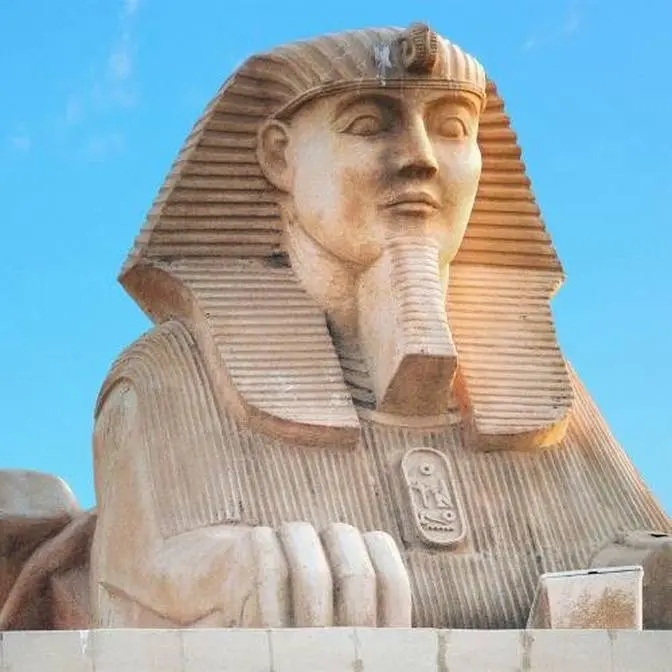
Today we are uncovering 5 incredible myths from Ancient Egypt.
Myths that not only shaped their culture but also continue to captivate us today.
Welcome to our channel and let's begin.
Number 1. The Creation Myth.
How the world began.
Long before time began, there was nothing but the Nun.
The dark and endless waters of chaos.
In this formless void, the first God, Adam, arose from the waters of Nun.
Adam, in Egyptian thought, wasn't created.
He simply existed, embodying both creation and destruction.
Adam first created Shu, the god of air, and Tefnut, the goddess of moisture.
Their union gave birth to Geb, the earth, and Nut, the sky.
The myth continues with Geb and Nut producing two more gods,
Osiris and Isis, key figures in Egyptian mythology.
This creation story symbolizes the beginning of the natural order,
where chaos gave way to structure, and the gods set the foundations of the world.
For the Egyptians, this creation process wasn't just a myth.
It was a cosmic truth.
They believed that the world itself was an ongoing creation,
constantly being maintained by the gods to prevent chaos from taking over again.
Adam's creation laid the groundwork for the divine order
that governed all of Egypt's gods, people, and the land itself.
One of the most well-known and deeply impactful myths in ancient Egypt
is the story of Osiris, the god of life, death, and the afterlife.
Osiris was once a powerful and benevolent king who ruled over Egypt with wisdom and fairness.
But his younger brother Set, the god of chaos, became jealous of Osiris' popularity and power.
Driven by envy, Set tricked Osiris,
trapping him inside a coffin and casting it into the Nile River, where it was swept away.
When Osiris' wife, Isis, learned of his death,
she mourned deeply and embarked on a perilous journey to find his body.
After searching across the land and enduring many trials,
Isis finally found Osiris' body and performed a ritual of resurrection, bringing him back to life.
However, Osiris could no longer rule over the living world, and instead,
he became the god of the underworld, where he would judge the souls of the dead.
Osiris' death and resurrection symbolized the eternal cycle of life, death, and rebirth,
a cycle that the Egyptians believed was fundamental
to their understanding of the world and the afterlife.
It's from this myth that the practice of mummification and elaborate burial rituals
developed, as the Egyptians believed preserving the body
was essential for the soul's journey in the afterlife.
3. Horus vs. Set – The Battle for the Throne
After Osiris' death, Egypt was plunged into a conflict over who would take the throne.
Osiris' son, Horus, a god associated with the sky,
stepped forward to avenge his father's death.
Horus and Set, the god of chaos, entered into an epic and lengthy battle for control of Egypt.
This conflict wasn't just a fight for the throne.
It was a struggle between the forces of order and chaos, life and destruction.
Horus' quest for vengeance took many forms.
In one myth, he and Set transformed into animals and fought in a series of trials,
each more dangerous than the last.
Set, representing disorder and violence,
was determined to prevent Horus from taking his father's place.
However, Horus, with his resilience and strength,
ultimately triumphed over Set.
This victory wasn't just personal.
It was a cosmic event that restored balance and order to Egypt.
For the Egyptians, this myth was deeply symbolic.
Horus' victory over Set was seen as the triumph of order and justice over chaos and violence,
a powerful reminder of the role the pharaoh played as a divine ruler,
an embodiment of Horus' strength and righteousness on Earth.
Number 4.
The Journey of Aray, The Sun God's Daily Adventure
In Egyptian mythology, Aray was the most important of all gods.
He was the sun god, the creator of life, and the ruler of the sky.
But Ra's journey was no simple one.
Every day, Aray sailed across the sky in a golden bark,
bringing light, warmth, and life to the world.
Yet this journey wasn't without its dangers.
As Aray traveled across the sky, he also traveled through the Duet, the Egyptian underworld.
Here, he had to battle the serpent Apep, the embodiment of chaos and darkness,
who sought to devour Aray and plunge the world into eternal night.
The struggle between Aray and Apep was considered one of the greatest
and most dangerous battles in Egyptian mythology.
If Aray failed, it would mean the end of the world.
The Egyptians believed that every night, Ra's solar bark entered the underworld,
where he would be reborn and triumph over the darkness.
This eternal cycle of death and rebirth symbolized the daily renewal of life
and the balance between light and dark.
The sun's journey was not just a physical event.
It was the key to the very survival of life itself.
Number 5.
The Curse of the Pharaohs, An Ancient Warning
Perhaps one of the most intriguing and mysterious legends associated with
ancient Egypt is the Curse of the Pharaohs.
This curse is said to punish anyone who dares to disturb the tombs of the ancient rulers.
The most famous example of this curse came with the discovery of the tomb of
King Tutankhamen in 1922 by archaeologist Howard Carter.
Shortly after the tomb's opening,
several members of the excavation team died under strange or unexplained circumstances.
Many believe this was the result of the curse,
a supernatural force meant to protect the pharaohs and their treasures from grave robbers.
Over the years, the curse became a major part of the legend of King Tut,
adding an air of mystery to his tomb and the ancient Egyptian burial practices.
While modern science suggests the deaths may have been caused by bacterial infections
or other natural factors,
the myth of the Curse of the Pharaohs still fascinates and captivates us today.
The idea that the spirits of the dead could rise up to protect their tombs from intrusion
is a powerful reminder of how seriously the ancient Egyptians viewed the afterlife
and the sanctity of the burial rituals.
These five myths are just a glimpse into the rich and fascinating world of ancient Egyptian mythology.
From creation to the afterlife,
these stories taught the Egyptians about the balance of order and chaos,
life and death, and the eternal struggle between light and dark.
They influenced everything from daily rituals to the construction of monumental tombs and temples.
Which myth caught your attention the most?
Or is there another Egyptian legend you'd like to explore?
Let us know in the comments below.
If you enjoyed this video, make sure to like, subscribe,
and hit the bell icon for more deep dives into the mysteries of ancient Egypt.
Thanks for watching, and we'll see you in the next video.