
Karnak Temple 3D Scanning Project ~ WORLD SCAN PROJECT’s Challenge
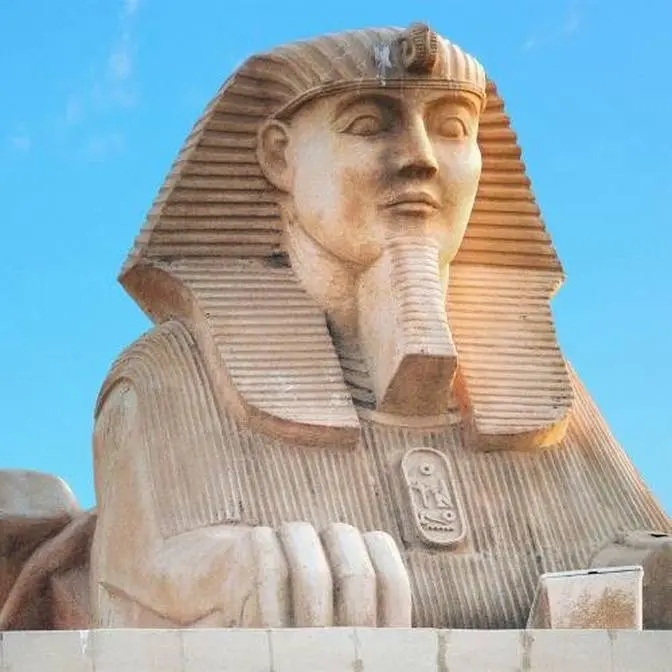
In ancient Egypt, many temples were built to worship the gods and demonstrate the power
and divinity of the pharaohs. Among these, the Karnak Temple stands out for its unparalleled scale.
Hello everyone, I am Yasumasa Ichikawa, CTO of the WorldScan Project. Today I would like to
introduce you to the magnificent Karnak Temple, located on the east bank of Luxor in Egypt.
Construction of the Karnak Temple began around 2000 BC and continued for about 2000 years,
with successive pharaohs expanding it outwards. It consists of a complex of numerous temples,
pylons, and other buildings, covering an area of 100 hectares. At the heart of the temple complex
is the Great Temple of Amun, which served as the focal point of the New Kingdom Stephen Triad,
which revolved around the god Amun. Thus, the heads of the sphinxes,
lining in front of the first pylon, are modeled after the ram, the sacred animal of the god
Amun-Ra. Passing through the first pylon into the courtyard, one finds the bark shrines built by
Seti II and Rameses III, where the Triad of Amun-Ra, his consort Mut, and their son Khonsu
were each worshipped in their respective shrines. Among the colossal statues in Karnak Temple,
the most famous is that of Rameses II. Rameses II was one of the greatest pharaohs of ancient
Egypt, for leading the country from decline to a powerful state, and his numerous achievements are
preserved in the Abu Simbel Temple he built. Opposite the statue of Rameses II stands the
statue of the high priest King Pinujum I, known as the Colossal Statue of Pinujum. In addition,
Karnak Temple contains numerous reliefs and sculptures paying homage to Rameses II,
including those on the second pylon and the outer walls. In the magnificent Great Hypostyle Hall,
134 columns represent the primeval swamp teeming with papyrus plants were erected.
An ingenious use of light creates an almost mystical space that seems to invite visitors
into the realm of the gods. The surfaces of the columns are covered with reliefs of kings and gods,
hieroglyphs, and much more. Thanks to restoration efforts, it's possible to witness the vibrant
appearance of this space as it would have looked over 3,000 years ago. Walking through the Great
Hypostyle Hall, the obelisks of Thutmose I and Queen Hatshepsut come into view. Among them,
the obelisk of Queen Hatshepsut stands out for its immense size, reaching a height of 30 meters
and a weight of 323 tons. The surface is beautifully inscribed with Queen Hatshepsut's
titles and the history of the obelisk's construction. Here is the holiest place in
the Karnak Temple, the Sanctuary. The existing sanctuary contains a stone pedestal for the divine
bark carrying the statues of the god, and traces of the stars once painted on the ceiling against
a deep blue night sky can still be seen. Karnak Temple was built by successive pharaohs to
demonstrate their power, divinity, and devotion to the god Amun. The temple reveals the advanced
technical skills and artistic sensibilities of the ancient Egyptians, with murals and reliefs
intricately depicting myths and historical events, making them historically significant artifacts.
At World Scan Project, we have meticulously captured the grandeur of this temple
in its entirety using 3D scanning technology, capturing every detail with high precision.
It will allow us to accurately understand the original condition of the ruins,
even in the event of damage from human activity or natural deterioration, and aid in restoration
efforts. Using digital technology to pass on ancient knowledge and culture to future generations
is our dream and our mission. Scanning historic sites around the world, we are the World Scan Project.