
Unraveling Egyptian Chronology: Myths and Realities
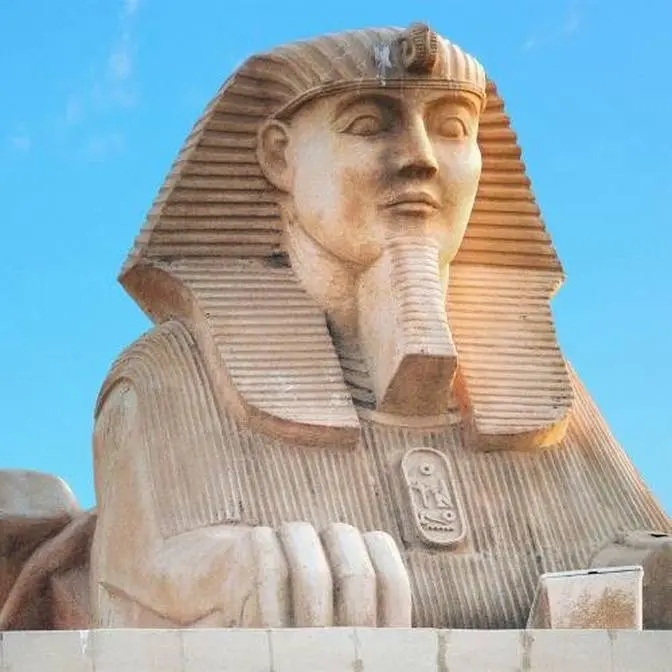
Have you ever wondered how we know what we know about Ancient Egypt?
A question that prompts us to delve into the intricate world of Egyptian chronology.
The study of time and order of events in Ancient Egypt is like untangling a complex web,
filled with challenges that make understanding it more fascinating.
Now, let's take a step back and look at the broad strokes.
Our textbooks present us with a panorama of Egyptian history, featuring about 120 kings,
neatly categorized into 30 dynasties, spanning from 3000 BCE to the Persian conquest in 525 BCE.
But here's the catch. These king lists are not something we stumble upon in archaeological digs.
They are primarily the brainchild of one man,
Manetho, an Egyptian scribe from the 3rd century BCE.
Manetho's work, penned thousands of years after the events he narrated,
has become a cornerstone in the world of history.
His writings have influenced archaeological research not just in Egypt,
but also in the Middle East and Greece.
However, it's important to note that much of his work is viewed as exaggerated or
unreliable by modern scholars.
For example, his description of a history spanning over 4000 years includes
some claims about the duration of certain dynasties that seem implausible.
Despite these inconsistencies, only parts of his accounts have been adopted by modern scholars,
while others have been either ignored or rejected.
This selective acceptance has led to a myriad of contradictions and gaps
in our chronological record of Ancient Egypt.
As we delve deeper, we will uncover the complexities and contradictions in this chronology.
So, buckle up as we journey back in time to unravel the mysteries of Ancient Egypt's timeline.
Stay tuned as we explore the influence of Manetho, the limitations of archaeology,
the fragility of Egypt's historical record, and the challenges presented by the Sothic cycle.
It's going to be a ride filled with intrigue,
discovery, and perhaps a few surprises along the way.
So, who was this Manetho and why is his work so fundamental to our understanding of Egyptian history?
Manetho, an Egyptian scribe from the 3rd century BCE,
is an influential figure in the realm of ancient history.
His accounts, despite being written thousands of years after the events they describe,
have become the cornerstone of our understanding of Ancient Egypt.
Manetho's work was a grand undertaking,
intending to glorify Egypt by positioning it as the oldest culture in human history.
His narratives have become the primary source for the historical structure we use today,
influencing archaeology not only in Egypt but also in the Middle East and Greece.
His contemporary, Berossus, attempted something similar for the Babylonians,
but with less success, further highlighting the significant impact of Manetho's accounts.
However, as grand and influential as Manetho's work has been,
it is not without its limitations and controversies.
Many parts of his work are considered exaggerated, unreliable, or even implausible.
For instance, he describes a history spanning 4,000 years
with certain dynasties lasting unrealistically long periods.
As such, modern scholars have adopted only parts of his accounts,
often ignoring or rejecting others.
This selective acceptance has led to contradictions, gaps,
and a skewed perception in the chronological record of Ancient Egypt.
Beyond the limitations of Manetho's work,
our understanding of Ancient Egypt is further hindered
by the limitations of archaeological findings.
Dr. Joshua Berman highlights that 99% of the papyri from the relevant period were lost,
especially from the eastern Nile Delta, the biblical land of Goshen.
The few written sources available are inscriptions on monuments,
which do not provide a complete or reliable documentation of historical events.
With these limitations in mind,
it becomes clear that our understanding of Ancient Egypt
is based on partial and sometimes unreliable sources.
The influence of Manetho's work and the challenges of archaeology
remind us that the picture we have of Ancient Egypt is far from complete,
and there is much more to discover and understand.
What happens when the archaeological record is incomplete or inaccessible?
Imagine trying to assemble a puzzle, but half of the pieces are missing or locked away.
This is the predicament faced by historians and archaeologists
when it comes to unearthing Egypt's past.
A significant portion of Egypt's antiquities remains undiscovered.
Zahi Hawass, head of the Egyptian Antiquities Authority,
has been quoted saying that only a fraction of Egypt's buried treasures have been unearthed.
This means that potentially crucial pieces of the historical jigsaw puzzle
are still buried beneath the sands of Egypt, waiting to be discovered.
But it's not only about what hasn't been found.
It's also about what has been found but remains inaccessible.
The control over archaeological material by the Egyptians themselves
presents another layer of complexity.
While it is understandable and indeed necessary
for a nation to protect and preserve its cultural heritage,
this can sometimes pose challenges to the global scholarly community.
Restrictions on excavations and research can limit the scope of exploration and understanding.
A case in point is Professor Manfred Bittach's research in Avarice.
His work suggests connections to the biblical narrative,
including mass graves that could potentially be linked to the plague of the firstborn.
But his attempts to further explore these hypotheses
have been hampered by the restrictions imposed by the Egyptian authorities.
So, we are left with a tantalizing glimpse of what might be,
but without the freedom to fully explore and understand the implications.
This is not to undermine the importance of safeguarding cultural heritage.
Rather, it highlights the delicate balancing act between preservation and exploration,
between national control and global understanding.
These challenges make piecing together Egypt's history even more complex.
But they also make it even more intriguing.
Because every new discovery,
every piece of the puzzle that is unearthed and studied,
brings us one step closer to a fuller understanding of this ancient civilization.
How do we date events in ancient Egypt without reliable historical records?
This is a question that has puzzled historians and archaeologists alike for centuries.
The answer often lies in a method known as the Sothic Cycle.
The Sothic Cycle is a cycle that spans a theoretical 1,460 years
based on the helical rising of the Sirius star,
also known as the Sothis in ancient Greek.
This event, the first visibility of the Sirius star before dawn,
was of great importance to the ancient Egyptians as it coincided
with the annual flooding of the Nile, a vital event in their agricultural calendar.
The dating of Egyptian history often relies heavily on this Sothic Cycle.
However, this method comes with its own set of challenges.
The primary issue is that the cycle is based on assumptions and interpretations
with no clear evidence from Egyptian tradition to back it up.
The Egyptians did not record the date of the Sirius stars rising,
leaving historians to estimate the dates based on other historical events.
Moreover, the cycle assumes a perfect calendar system that did not account for leap years,
a concept unknown to the ancient Egyptians.
This lack of precision leads to a potential error margin of several decades,
if not centuries, when dating events.
Complicating matters further are contradictions with carbon-14 testing,
a scientific method for dating ancient organic materials.
While this technique has proven to be a valuable tool in archaeological dating,
it often produces results that conflict with the dates derived from the Sothic Cycle.
These inconsistencies highlight the uncertainties
inherent in our understanding of Egyptian chronology.
They remind us that the Sothic Cycle, while a useful tool,
is not a definitive answer to the complex puzzle of Egypt's ancient history.
The Sothic Cycle, like many aspects of Egyptian chronology,
is fraught with challenges and contradictions.
From assumptions and interpretations to conflicts with scientific dating methods,
the Sothic Cycle underscores the complexities and uncertainties
that come with piecing together the timeline of one of the world's oldest civilizations.
So, what does all this mean for our understanding of ancient Egypt?
We've traversed the intriguing terrain of Egyptian chronology
from the influential but contentious accounts of Manetho
to the limitations of archaeology in providing a complete picture of Egypt's history.
We've explored the fragility of Egypt's historical record,
where significant portions of antiquities remain undiscovered
and the control over archaeological material has hindered our understanding.
We've also delved into the challenges of the Sothic Cycle,
a dating method that has led to discrepancies and contradictions.
All these elements illustrate that Egyptian chronology isn't a straightforward timeline,
but a complex tapestry woven from various threads of evidence, interpretation, and assumption.
The lack of complete or reliable documentation,
the restrictions on archaeological exploration,
and the reliance on theoretical dating methods
all contribute to a historical record that is as fascinating as it is elusive.
Yet despite these challenges, the study of Egyptian chronology remains a vibrant field,
constantly evolving as new discoveries and interpretations emerge.
It is a testament to our enduring curiosity about the past
and our relentless pursuit of knowledge.
It's crucial to remember, though, that while chronology provides a structure,
the true essence of history lies in the content and the events themselves.
The stories, the characters, the triumphs and tragedies,
these are what breathe life into the skeletal timeline and make history resonate with us.
As we continue to unearth the mysteries of ancient Egypt,
let's focus not just on the when, but also on the what and the why.
Let's strive to understand the context of events,
the motivations of the people involved,
and the impact of their actions on the course of history.
It's clear that Egyptian chronology is a complex and challenging field,
but one that continues to fascinate and intrigue us.