
Zhu Yuanzhang -The Hongwu Emperor, Founder of the Ming Dynasty
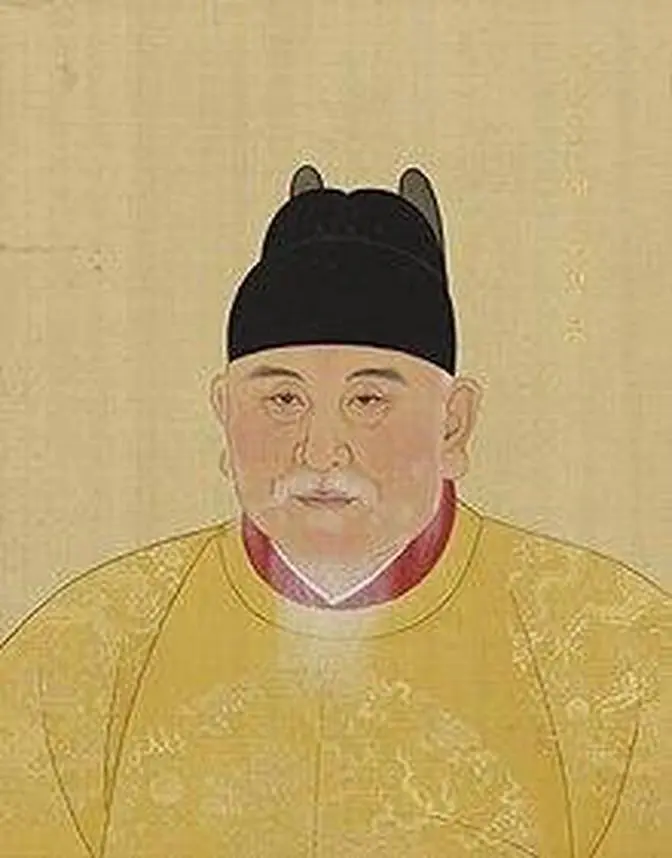
Zhu Yuanzhang's first troop and consistent victories. Later, he returned to his hometown
and recruited his first army with about 700 people, including his childhood friends,
refugees, and soldiers from other failed armies. Since none of his soldiers were professional,
Zhu Yuanzhang spent lots of time training his troops from an inattentive army to a professional
and aggressive one. During this time, he encountered and recruited the most important
Meanwhile, he and his wife adopted many children, some of whom grew up to be exceptional marshals.
Assisted by intelligent officials and brave warriors, his army kept winning. Soon,
his army expanded to a large troop with over 300,000 soldiers, but Zhu Yuanzhang still
respected Guo as his commander until Guo passed away. Establishment of the Ming Dynasty
Zhu Yuanzhang was not only a remarkable general, but also a thoughtful monarch.
Unlike other armies who would collect food from civilians of their occupied cities,
Zhu Yuanzhang asked his army to do farm work. They even helped local people to construct water
conservancy projects. By doing this, he gained the civilians' heartiest support, and his warriors
became more responsible, competitive, and disciplined. After years of intense wars,
Zhu Yuanzhang defeated other strong uprising armies in southern China and established the
Ming Empire. Then, he continued to march northward, under the name of expelling nomads
and recovering ancestors' reign. This effectively inspired most northern Han people still under
Empire Yuan's rule. A few months after the establishment of the Ming Dynasty,
Zhu Yuanzhang's army marched toward the Yuan Empire's capital, Beijing. The last emperor of
Yuan Dynasty, Togon Temur, an excellent engineer and astrologer, took his people and escaped
northward after reading the divination from the stars. Then, the Ming Empire occupied most places
in China south of the Great Wall. Wars against the former Yuan Dynasty
The escape of Emperor Togon Temur preserved most of his people and their powerful Mongolian
cavalrymen troops. Hence, they built another government, the Northern Yuan, on the north side
of the Great Wall. Therefore, in the following 26 years, Emperor Zhu Yuanzhang initiated eight
northern expedition wars against this new government to perish their effective strength.
Except for a big failure of the second northern expeditions, the Ming Empire's army succeeded in
all the other wars, while the Mongol army kept losing and retreating. In the sixth northern
expedition, an excellent marshal named Lan Yu led 150,000 of the Ming soldiers, carried very little
food and water, and arrived at the current Bell Lake. They ambushed the northern Yuan government
and captured about 80,000 of their people, including many princes and princesses and other nobles.
This was the Battle of Beer Lake, after which Genghis Khan's golden family officially lost
control over the Mongolian plateau. Their kingdom was then separated into three regimes.
Those three clans all complied and tribute Ming as monarch. They still had wars against the Ming
sometimes, but the tributary system and complied relationship had barely changed. Because Zhu
Yuanzhang's policy concerning soldiers should do farm work and supply themselves, Empire Ming's
armies could almost be self-sufficient under his ruling period. Consequently, despite those
long-term and large-scale wars, Zhu Yuanzhang never delayed development within his empire.
Great Hangu Emperor and His Policies
As one of the most extraordinary emperors in Chinese history, Zhu Yuanzhang's policies and
governance displayed distinct personal characteristics. Because of his poverty origin,
his painful childhood experience, and everything he had suffered and witnessed during his three
years of begging life, he truly cared about ordinary people's well-being. One of the best
welfare systems in Chinese history was established under his reign. The government offered free
medication, foster care, houses, and tombs. People over 70 and people who respected their
parents could get free food and money. Childless old people would be taken care of by the government.
The only child of older adults would be exempted from national labor services. Economically,
Emperor Zhu Yuanzhang exempted or lowered taxes, encouraged agriculture, suppressed business,
and built many irrigation systems nationwide. He also implemented a vast immigration activity,
which evened the north and south populations and cultivated more farmlands. Meanwhile,
the imperial examination and many Han etiquettes abolished in the Yuan dynasty were re-established.
Many intelligent people from low-income families were selected and supported to study at the
National College. Intense battles against corruption during the reign of Hangu Emperor
Another feature of his governance was his great hatred for corruption.
As an emperor, Zhu Yuanzhang was very frugal and diligent, and he tried his best to promote
this lifestyle to his officials. Everything that he had suffered in his early years,
most of which, he believed, was caused by greedy officials and the corrupted system.
After he became the monarch, he enhanced centralized power and combated corruption
with very strict penalties. About 150,000 officials were sentenced to death because
of corruption, no matter how much they illegally occupied. He encouraged civilians to learn about
laws and specific terms regarding the punishment of corrupt officials and created a system that
allowed civilians to sue officials directly to the emperor or other superior ministers.
The government would cover civilians' travel costs if they wanted to escort law-breaking
officials to the capital themselves. He also established a famous military spy agency,
Jinniwei, to monitor officials, which was abolished in his later years.
From Zhu Yuanzhang's perspective, civilians' interests triumphed over bureaucrats.
All those officials should be seen as servants instead of the ruling classes with privileges.
The loss of the beloved crown prince Besides his wonderful queen,
he also had a perfect heir named Zhu Biao, the first son of him and his beloved queen.
Zhu Biao was a kind and talented crown prince whom Zhu Yuanzhang loved and supported heartily.
Zhu Yuanzhang sent his best ministers and marshals to teach and serve him. Whenever he led an army
and fought far away, the crown prince would be trusted with everything on the home front.
Zhu Biao always managed everything well and gained the respect and support of all marshals
and ministers of the Ming Empire through his genuine kindness and exceptional political talent.
However, the capable and contributive crown prince, his favorite and beloved first son,
passed away when Zhu Yuanzhang was 62. Besides the extreme grief, this also
left the old emperor with a big problem. Who should be his next heir?
Massacres for the new heir Many of his other sons were mature
and excelled in the military since most had followed Zhu Yuanzhang and fought on the
battlefield several times. But the emperor chose his late crown prince's first son,
his beloved grandson, as the legit heir of his empire and commanded his other sons to support
this young crown prince. After nominating his young grandson as the heir, he started a mass
slaughter, the most controversial decision in his life. At that time, many excellent generals with
exceptional military accomplishments were also related to other of Zhu Yuanzhang's sons through
marriage. Those people were, Zhu Yuanzhang believed, very possible to overthrow the young
heir to support their related princes to become the new emperor, thus potentially leading to
further wars. Consequently, the emperor used some excuses to sentence many people whom he suspected
to have the potential to rebel. Tens of thousands of people were executed in his later years.
As a great emperor, Zhu Yuanzhang probably had not expected this to be a big mistake for the
flawless empire that he left to his grandson. He believed his other sons with excellent military
skills were excellent enough to protect the Ming empire, which was correct. However, he
overestimated the family bond while severely underestimating the desire for power and the
throne. Years later, his fourth son Zhu Di snatched his beloved grandson's throne through a war,
the incident of Jingnan, accomplishments and legacy of Hongwu Emperor Zhu Yuanzhang.
Zhu Yuanzhang joined the uprising army as a common soldier when he was 25 and established
the Ming dynasty when he was 40. From a poverty-stricken orphan and beggar monk to an
accomplished general and revered monarch, his journey and achievements were truly remarkable.
During his 31 years of reign, he decisively defeated the former powerful empire's effective
strength, established an intelligent and efficient system, and brought prosperous
and stable lives to his people. Hongwu Emperor Zhu Yuanzhang was sometimes criticized for his
later years. However, he highly restrained the power of the ruling class. He was always
caring and thoughtful to his civilians, making him an epic politician and a magnificent monarch
in the history of China. After he departed, many of his strict policies aimed at restraining
officials were gradually abolished. Maybe, unlike Zhu Yuanzhang, most emperors still
considered themselves allies of the bureaucracy, which was an important assistance in their reign.